Road Surfacing Case Studies: UK Projects
Reviewing road surfacing case studies UK property owners and commercial managers can relate to is one of the most effective ways to understand what truly delivers long-term performance. While specifications and materials are important, real-world applications demonstrate how planning, workmanship and site conditions come together to produce durable results.
Across the UK, road surfacing projects vary widely. From commercial estates and school grounds to housing developments and industrial yards, each site presents unique requirements. Case studies allow clients to see how different challenges are addressed in practice, rather than simply in theory.
For decision-makers responsible for infrastructure budgets and site safety, understanding previous project outcomes provides reassurance and clarity before committing to new works.
Commercial Estate Access Road – Bedfordshire
One of the more common project types featured in road surfacing case studies UK wide involves commercial estate access roads. In this Bedfordshire project, the existing surface had deteriorated due to sustained heavy goods vehicle traffic and inadequate drainage.
Cracking and fretting had developed across large sections of the carriageway. Surface water was pooling along the edges, accelerating structural wear and creating safety concerns for vehicles entering and exiting the estate.
Assessment and Planning
A full site survey identified that while the sub-base remained largely stable, surface layers had reached the end of their serviceable life. Rather than undertaking piecemeal patching, a phased resurfacing plan was developed to minimise disruption to businesses operating on site.
Traffic management was carefully coordinated to maintain access throughout the works. Scheduling was arranged during a period of favourable weather to ensure optimal installation conditions.
Installation Process
The worn surface was planed off to the required depth before localised base repairs were completed. Attention was given to correcting surface levels to improve water runoff.
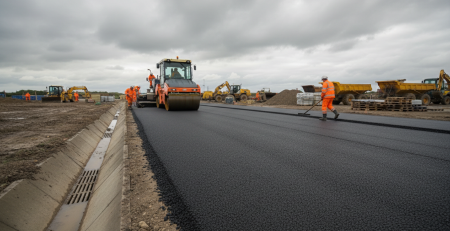
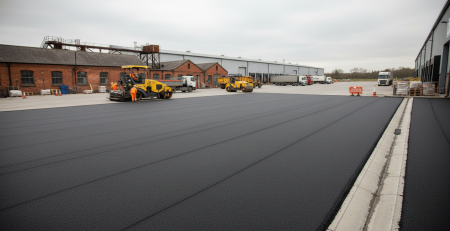
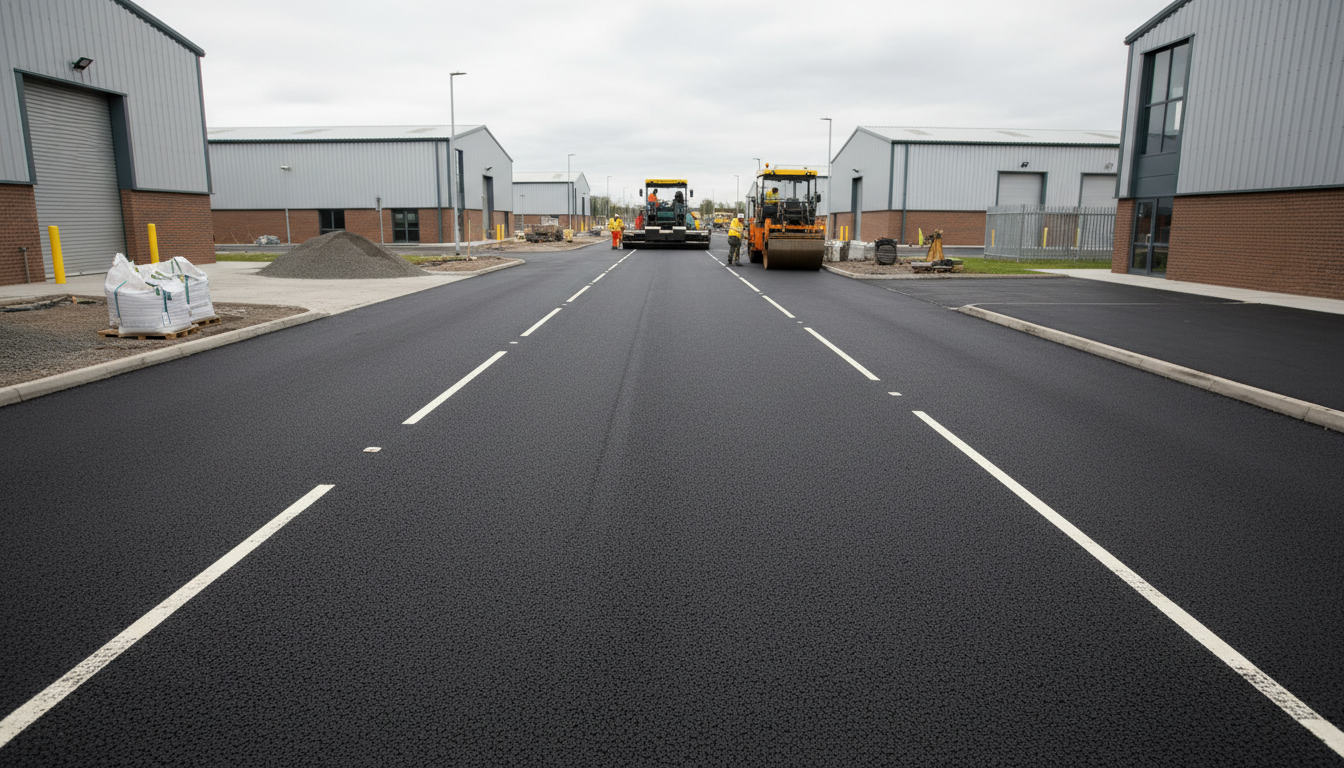
Machine-laid tarmac was selected to provide a consistent, high-density finish suitable for heavy traffic. The use of professional machine lay tarmac ensured uniform thickness and compaction across the entire carriageway width.
The result was a smooth, durable access road designed to withstand sustained commercial use while significantly improving the visual appearance of the estate.
School Car Park and Access Improvements – Cambridgeshire
Another example frequently highlighted in road surfacing case studies UK clients review involves educational facilities. In this Cambridgeshire project, a school required resurfacing of its car park and main access route.
The existing surface had developed potholes and uneven areas, creating trip hazards and drainage issues. Safety was the primary concern, particularly given the high footfall during term time.
Timing Around Operational Constraints
The project was scheduled during the summer holiday period to avoid disruption to staff, students and parents. Careful planning ensured the entire scheme could be completed within the limited timeframe available.
Early engagement allowed materials and plant to be organised in advance, reducing the risk of delays once works commenced.
Surface Preparation and Drainage
Surface water had previously pooled near pedestrian crossings. The resurfacing design incorporated improved falls and drainage channels to direct water away from key access points.
Preparation works were carried out using professional tarmac installation road surfacing services to ensure the sub-base was stable and correctly graded before the new surface layer was applied.
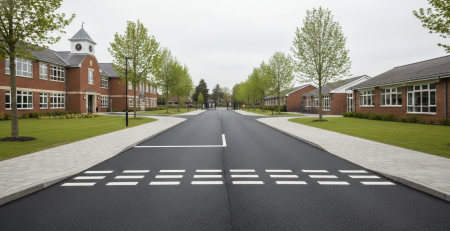
The completed surface provided improved safety, clearer line markings and a professional finish suitable for a public environment.
Industrial Yard Resurfacing – Essex
Industrial sites often feature prominently in road surfacing case studies UK due to the demanding conditions these environments create. In this Essex project, a distribution yard was experiencing rutting and deformation caused by constant HGV manoeuvring.
Surface failure had progressed to the point where standing water and loose aggregate were affecting operational efficiency.
Structural Reinforcement
A detailed inspection revealed that certain sections of the sub-base required reinforcement. Rather than simply overlaying the existing surface, weakened areas were excavated and rebuilt to support anticipated loading.
The resurfacing specification included a heavy-duty binder and wearing course designed for industrial use. Proper compaction was critical to ensure long-term resistance to deformation.
Minimising Downtime
Because the site operated six days a week, works were phased in sections. This approach allowed the client to maintain partial operations throughout the project.
This case demonstrates how road surfacing case studies UK wide highlight the importance of tailoring installation methods to operational realities.
Residential Development – Hertfordshire
New build housing developments present different challenges compared to refurbishment projects. In Hertfordshire, a developer required final surfacing works across a multi-phase estate.
Temporary surfaces had been in place during construction, but the final wearing course needed to be installed once heavy plant movements were complete.
Coordinated Programme Delivery
Timing was critical. Surfacing too early would risk damage from ongoing works, while delaying too long could affect handover schedules.
Close coordination with the principal contractor ensured surfacing was completed at the correct stage. The finished roads were installed using experienced commercial surfacing contractors familiar with development standards and local authority expectations.
The final result delivered a clean, uniform appearance that enhanced kerb appeal while meeting structural performance requirements.
Highway Improvement Scheme – Oxfordshire
Public highway schemes feature prominently in road surfacing case studies UK due to their scale and regulatory complexity. In Oxfordshire, a local improvement project required resurfacing of a heavily trafficked link road.
The surface had reached the end of its design life, with cracking and surface wear affecting ride quality.
Compliance and Quality Control
Working on adopted highways requires strict adherence to specifications and safety standards. Detailed quality checks were undertaken throughout installation to ensure compliance.
Specialist teams experienced in highway surfacing delivered the works within a controlled traffic management environment.
Night-time working was used to minimise disruption to motorists. Despite tight timescales, the finished surface met performance criteria and improved driving comfort for road users.
Common Themes Across Road Surfacing Case Studies UK
While each project differs in scale and environment, certain themes consistently emerge when reviewing road surfacing case studies UK clients rely on for reassurance.
Early assessment is crucial. Understanding ground conditions, drainage performance and traffic loading informs the correct specification from the outset.
Preparation is often the decisive factor in longevity. Surfaces laid on poorly prepared bases are significantly more likely to fail prematurely.
Professional machinery and experienced operatives ensure consistent compaction and finish quality. Machine-laid applications provide measurable improvements over manual methods on larger schemes.
Clear communication between contractor and client supports effective scheduling, particularly where operations must continue during works.
The Value of Reviewing Case Studies Before Your Project
For property owners and site managers considering resurfacing works, reviewing completed projects offers valuable perspective. Case studies demonstrate not only technical capability but also the contractor’s approach to problem-solving and project management.
Whether overseeing a private estate, managing an industrial yard or planning improvements to a commercial facility, examining proven outcomes reduces uncertainty.
By exploring previous projects delivered across regions such as Bedfordshire, Cambridgeshire and Essex clients gain insight into how similar environments have been successfully resurfaced.
Moving from Case Study to Project Planning
Road surfacing case studies UK wide demonstrate that no two sites are identical. However, the principles of careful preparation, correct material selection and skilled installation remain constant.
Engaging experienced professionals early allows for realistic budgeting, practical scheduling and clear specification development. A structured approach ensures works are delivered under suitable weather conditions and aligned with operational needs.
For those planning future improvements, reviewing detailed examples through dedicated case studies provides further clarity on project scope and outcomes.
Successful surfacing is not simply about laying new material. It is about understanding the environment, anticipating stresses and delivering a surface designed to perform reliably for years to come.