Drainage Considerations in Road Surfacing Projects
Drainage is one of the most important but often underestimated elements of any road surfacing project. In the UK climate, where rainfall is frequent and ground conditions can change rapidly, managing surface water correctly is essential to long-term performance. Road surfacing drainage UK projects that fail to account for water movement often suffer from early deterioration, structural weakness, and ongoing maintenance issues.
Water that cannot escape from a road surface will always find a way to undermine it. Over time, standing water penetrates surface layers, weakens the base, and accelerates cracking and deformation. For property owners and site managers, this usually results in increased repair costs, operational disruption, and safety concerns that could have been avoided through proper drainage planning from the outset.
Effective drainage does not mean adding complexity for the sake of it. Instead, it means understanding how water behaves on and beneath a surfaced area and designing the road structure to manage that water safely and efficiently.
Understanding How Water Damages Road Surfaces
Water is one of the most destructive forces acting on road surfaces, particularly in temperate climates such as the UK. When water sits on the surface, it slowly works its way into joints, cracks, and porous materials. Once beneath the surface, it compromises the strength of the sub-base, leading to movement under traffic loads.
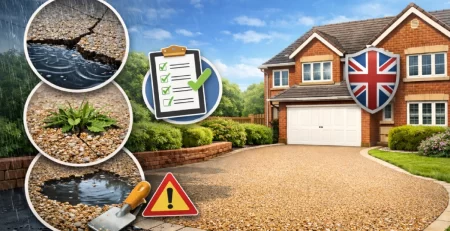
During colder months, trapped water expands as it freezes, forcing cracks wider and breaking down the integrity of the surfacing. Over time, this cycle creates potholes, edge failure, and uneven surfaces that pose risks to vehicles and pedestrians alike. Even in warmer conditions, water saturation reduces load-bearing capacity and shortens the lifespan of the installation.
This is why professional contractors treat drainage as a structural requirement rather than an optional add-on. Good road surfacing drainage UK design protects the entire construction, not just the visible surface.
Assessing Site Conditions Before Surfacing
Every successful drainage strategy begins with a thorough assessment of the site. Ground conditions, natural gradients, surrounding land use, and existing drainage infrastructure all influence how water should be managed. A site that appears flat on the surface may still have subtle levels that affect water flow once surfaced.
Soil type plays a significant role in drainage planning. Clay-heavy ground, which is common across many parts of the UK, drains poorly and holds water for extended periods. Without appropriate measures, water can become trapped beneath the surface, leading to long-term instability. In contrast, free-draining soils may still require controlled outlets to prevent erosion or localised pooling.
Professional surfacing contractors assess these factors during the planning stage to ensure the finished surface performs as intended. This level of preparation is a key reason why experienced commercial surfacing contractors are often preferred for complex or high-use sites.
Surface Water Management and Falls
One of the simplest but most effective drainage techniques is the correct use of surface falls. A fall is a subtle gradient built into the surface that encourages water to flow towards designated drainage points rather than pooling randomly. Even a small fall, when properly designed, can significantly improve water runoff.
In road surfacing drainage UK projects, falls must be carefully calculated to balance effective drainage with safe vehicle movement. Excessive gradients can cause discomfort, steering issues, or water to flow too quickly, while insufficient gradients allow water to remain on the surface.
Surface water should always be directed away from buildings, entrances, and pedestrian routes. This reduces the risk of water ingress, ice formation, and surface staining. Well-designed falls also reduce reliance on mechanical drainage systems, lowering long-term maintenance requirements.
Sub-Base Drainage and Structural Protection
While surface water management is visible, sub-base drainage is equally important and often more critical. The sub-base provides structural support for the road surface, and its performance depends heavily on remaining dry and stable.
A well-constructed sub-base uses graded aggregates that allow water to move through rather than becoming trapped. In areas with poor natural drainage, additional measures such as geotextile membranes may be used to separate the sub-base from underlying soils. This prevents contamination and maintains load-bearing capacity over time.
Ignoring sub-base drainage is one of the most common reasons for premature surface failure. Even the highest-quality surfacing materials cannot compensate for a waterlogged foundation. This is why professional tarmac installation always considers drainage as part of the structural design, not just the finishing layer.
Linear Drains, Gullies, and Drainage Channels
In many road surfacing projects, especially those serving commercial or industrial sites, surface falls alone are not sufficient. Linear drains, gullies, and channels are used to collect and redirect water safely away from trafficked areas.
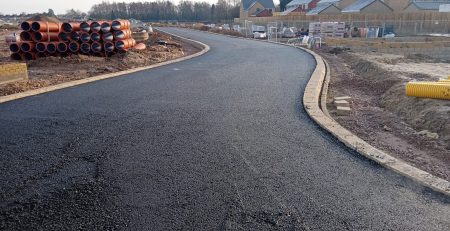
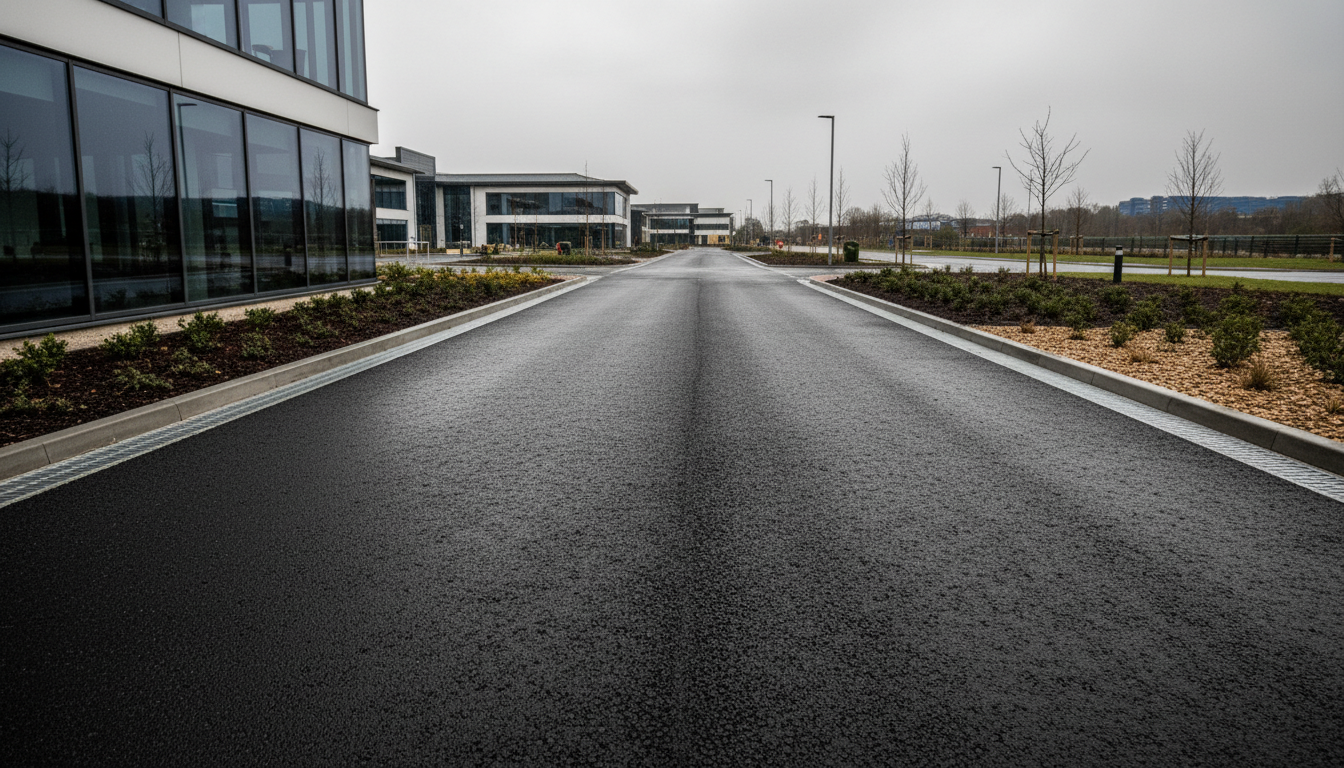
Linear drainage systems are commonly installed along the edges of access roads, car parks, or loading areas where water naturally accumulates. These systems are designed to handle high volumes of water while maintaining a flush surface that does not interfere with vehicle movement.
Gullies are typically positioned at low points to collect runoff and connect it to underground drainage networks. Their placement must be carefully coordinated with surface levels to ensure they function effectively without creating trip hazards or maintenance issues.
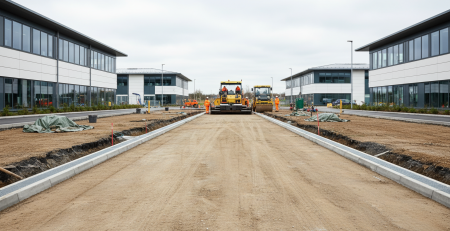
For high-traffic environments, machine-installed surfaces combined with integrated drainage systems often deliver the most consistent results. This is particularly relevant for projects that benefit from machine lay tarmac, where precision levels and uniform falls are essential.
Drainage Considerations for Different Site Types
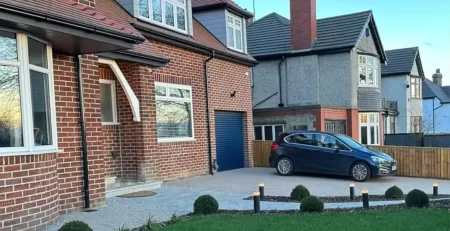
Drainage requirements vary significantly depending on how a road or access route is used. Residential developments typically focus on managing runoff safely away from homes and shared spaces, while commercial sites often prioritise durability under heavier loads and frequent vehicle movements.
Industrial yards, for example, require drainage systems that can cope with large surface areas and intense rainfall without becoming blocked by debris. In these environments, poor drainage quickly leads to surface breakdown and costly operational disruption.
Public and education settings must also consider pedestrian safety, ensuring that drainage features do not create slip hazards or standing water near entrances. Contractors experienced in highway surfacing and public environments understand how to balance regulatory compliance with practical drainage design.
Compliance With UK Drainage Regulations
Road surfacing drainage UK projects must comply with local authority requirements and national regulations governing water management. These rules are designed to prevent flooding, protect groundwater, and ensure new developments do not overwhelm existing drainage networks.
In many cases, sustainable drainage systems are encouraged or required, particularly for larger developments. These systems aim to manage runoff at source, slowing water flow and promoting natural absorption where possible.
Failure to comply with drainage regulations can result in planning delays, enforcement action, or the need for costly remedial works. This reinforces the importance of involving experienced professionals early in the project to ensure drainage design meets all necessary standards.
Long-Term Maintenance and Drainage Performance
Even the best-designed drainage system requires ongoing attention to remain effective. Leaves, debris, and surface wear can reduce drainage efficiency over time if not addressed. Regular inspections help identify minor issues before they escalate into structural problems.
Surface repairs should always consider drainage performance. Simply patching a damaged area without addressing underlying water issues often leads to repeat failures. In some cases, targeted pothole repairs may be sufficient, while in others, more comprehensive drainage improvements are required.
A long-term approach to maintenance ensures that drainage continues to protect the surface throughout its lifespan. This reduces overall costs and maintains safe, functional access for all users.
Planning Drainage Into Your Road Surfacing Project
Successful road surfacing drainage UK solutions begin with informed planning and professional input. Drainage should never be treated as an afterthought or a separate issue from surfacing itself. Instead, it must be integrated into the design, construction, and maintenance strategy from day one.
Property owners and site managers benefit most when drainage decisions are based on site-specific conditions rather than generic solutions. Working with experienced contractors who understand UK ground conditions and regulatory requirements ensures that water management supports long-term performance rather than undermining it.
By prioritising drainage alongside materials and workmanship, road surfacing projects achieve greater durability, improved safety, and better value over their full service life.