Emergency Pothole Repair in the UK – Stronger and Longer-Lasting Repair
Across the UK, potholes have moved from being an occasional nuisance to a persistent infrastructure challenge. Seasonal weather changes, increased traffic volumes, and aging road construction combine to create surface failures that appear suddenly and worsen rapidly.
What often begins as a shallow surface crack can evolve into a deep structural defect within weeks. Emergency pothole repair is therefore not just a reactive task, but a critical maintenance strategy.
With long-standing industry experience, Total Surfacing Solution approaches emergency repairs through expert assessment, correct material selection, and disciplined installation methods. This ensures roads, car parks, and driveways remain safe, compliant, and functional under real-world conditions.
Emergency Pothole Repair in the UK: What Actually Works?
Emergency pothole repairs only succeed when speed is balanced with engineering precision and proven surfacing practice. Effective emergency pothole repair in the UK relies on a clear understanding of surface behaviour, traffic loading, and environmental exposure.
Methods such as cold patch, hot tarmac, Machine Lay Tarmac, structured Tarmac Installation, and engineered Pothole Repair techniques each play a role at different stages of failure.
Professional emergency repairs focus on restoring structural continuity rather than simply filling voids. This involves stabilising edges, sealing against moisture ingress, and ensuring load transfer across the repaired area.
Key principles that define reliable emergency repairs include:
- Proper edge preparation to prevent the spread of cracking
- Moisture removal to protect bond strength
- Temperature control for effective compaction
- Correct layer depth to support traffic loads
- Surface sealing to slow future deterioration
When these fundamentals are respected, emergency repairs transition from short-term fixes into durable surface solutions.
Why Emergency Pothole Repairs Matter in the UK?
Emergency repairs protect safety, budgets, and infrastructure longevity across the UK network. The UK’s road and driveway network experiences constant stress from heavy vehicles, frequent braking zones, and water penetration caused by rainfall.
Emergency pothole repair plays a crucial role in interrupting the damage cycle before structural layers are compromised. Timely repairs help maintain:
- Safe vehicle movement and pedestrian access
- Drainage performance by preventing standing water
- Surface lifespan across roads and access routes
- Compliance with duty-of-care obligations
Without emergency intervention, surface damage accelerates, and repair costs increase exponentially.
Common Causes of UK Potholes
Most potholes develop due to a combination of environmental pressure and construction limitations. The potholes in UK roads typically form through repeated exposure to moisture and traffic loading.
Water penetrates surface cracks, weakens the underlying layers, and expands during colder conditions. This expansion forces asphalt to fracture and dislodge under vehicle movement.
Common contributing factors include:
- Freeze and thaw cycles
- High axle loads from commercial traffic
- Poor drainage or standing water
- Aging or brittle asphalt
- Inadequate historic repairs
Understanding these causes allows repair teams to select the most effective Pothole Repair method for long-term performance.
Risks of Ignoring Road Surface Damage
Minor surface defects rarely remain minor for long under UK conditions. When early-stage potholes are ignored, water infiltration spreads beneath the surface. This undermines adjacent areas and increases the repair footprint.
Risks associated with delayed repair include:
- Rapid surface breakup
- Increased accident risk
- Damage to vehicles and property
- Higher insurance exposure
- Requirement for full resurfacing
Emergency pothole repair limits disruption and preserves existing infrastructure.
Professional Pothole Repair Services Explained
Professional pothole repair is a controlled construction process, not a reactive patch job.
Total Surfacing pothole repair services follow a structured methodology that prioritises safety, durability, and compliance. Each repair begins with a site assessment to determine failure depth, moisture presence, and traffic classification.
The professional repair process includes:
- Defect measurement and profiling
- Removal of loose and failed material
- Edge definition to create clean boundaries
- Selection of appropriate repair material
- Mechanical or machine-assisted compaction
This systematic approach ensures repairs integrate seamlessly with surrounding surfaces and perform under sustained use.
Types of Emergency Pothole Repairs Used in the UK
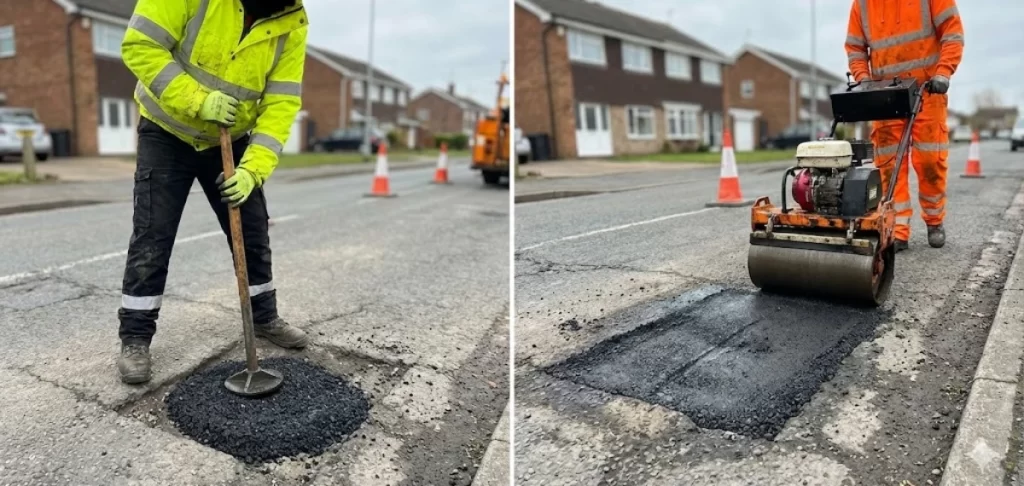
Different pothole conditions require different emergency repair techniques. Such as:
Spray Injection Patching
Spray injection patching uses a combination of aggregate and binder applied at high pressure. It is particularly effective for treating multiple small defects quickly, especially on rural or secondary roads.
Cold-Lay Tarmac
Cold-lay tarmac provides flexibility during colder months or emergency scenarios. While not designed for long-term structural repairs, it restores surface safety until permanent solutions can be applied.
Hot Mix Asphalt Patching
Hot mix asphalt offers superior bonding and compaction. When conditions allow, it delivers a durable repair suitable for high-traffic areas.
Infrared Thermal Recycling
Infrared recycling reheats existing asphalt, allowing it to be reworked and compacted. This creates a proper repair that combines with all the surrounding surfaces.
High-Velocity Patching
High-velocity patching enables fast material placement with minimal traffic disruption. It is commonly used for urban routes and time-sensitive work.
Key Factors That Decide the Right Repair Method
Selecting the wrong repair method shortens lifespan and increases repeat costs. Choosing the correct emergency pothole repair method depends on:
- Traffic intensity and vehicle type
- Ambient temperature and moisture levels
- Depth and spread of failure
- Required reopening time
- Planned future surfacing works
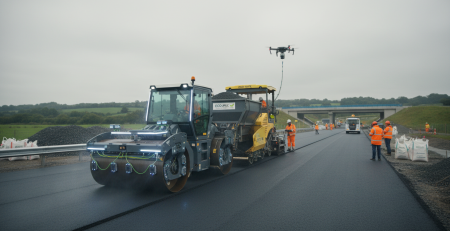
For heavily trafficked or commercial areas, Machine Lay Tarmac delivers consistent compaction and long-term performance.
Comparing Pothole Repair Costs Across the UK
True cost should be measured over time, not at the first invoice.
| Repair Method | Typical Performance Period | Relative Cost |
| Cold Patch | Short-term control | Low |
| Spray Injection | Medium-term | Medium |
| Hot Tarmac | Long-term | Medium |
| Machine Lay Tarmac | Extended lifespan | Higher initial |
Well-executed repairs reduce lifecycle costs and service interruptions.
Regional Emergency Surfacing Services Across the UK
Local knowledge strengthens emergency response and regulatory alignment. Total Surfacing Solution delivers region-specific emergency surfacing services designed to meet local authority and commercial standards.
Essex Emergency Surfacing
Essex sites benefit from rapid mobilisation and local material sourcing. Our services include:
- Driveways surfacing services in Essex
- Resin-bound driveways services in Essex
- Machine lay tarmac services in Essex
- Pothole repair services in Essex
Surface solutions are often complemented by:
- Grey resin driveways for modern developments
- Resin driveways for permeability and strength
- Coloured resin driveways for zoning and design
Hertfordshire Emergency Surfacing
Hertfordshire projects require careful coordination due to traffic density and residential access. Services include:
- Driveways surfacing services in Hertfordshire
- Resin bound driveways services in Hertfordshire
- Machine lay tarmac services in Hertfordshire
- Pothole repair services in Hertfordshire
Frequently Asked Questions
How long does an emergency pothole repair usually last?
The lifespan of an emergency pothole repair depends on several factors including traffic load, underlying base condition, weather exposure, and the repair method used. Temporary methods like cold patch may last only a few weeks to months, providing immediate risk control.
Hot mix asphalt and Machine Lay Tarmac repairs, when executed correctly with proper compaction and edge preparation, can last several years. Regular inspections and preventive maintenance can further extend the life of repaired surfaces, ensuring long-term performance and reducing the need for repeated interventions.
Are emergency pothole repairs suitable for high-traffic areas?
Yes, but the method must be carefully selected. High-traffic zones place significant stress on surfaces, so quick fixes like cold patch are only temporary solutions. Hot tarmac and Machine Lay Tarmac are ideal for these areas, providing structural integrity that can withstand repeated axle loads.
Professional surfacing teams also incorporate traffic management plans to ensure repairs are safe while traffic continues to flow, minimizing disruption while maintaining durability.
Is cold patch safe for public roads?
Cold patch is a reliable temporary solution that restores surface integrity and reduces accident risk. It can be applied quickly, even in adverse weather, making it ideal for urgent interventions.
However, it does not bond as strongly as hot tarmac or machine-laid options and is not designed for long-term load-bearing performance. For permanent repair, cold patch areas should be replaced with hot mix asphalt or Machine Lay Tarmac when conditions permit, ensuring long-lasting durability.
When should a pothole be resurfaced instead of repaired?
Resurfacing becomes necessary when multiple potholes or surface defects indicate that the underlying base is compromised. Repeated repairs on a failing surface are costly and short-lived. Signs that resurfacing may be the better option include widespread cracking, subsidence, or deteriorated base layers.
Emergency pothole repairs can stabilize the surface temporarily, but if the pavement shows systemic failure, a full resurfacing ensures structural integrity, longer lifespan, and a cost-effective long-term solution.
Get Emergency Pothole Repairs Done Right to Prevent Future Surface Failure
Emergency pothole repair is not simply about reacting quickly. It is about making the right technical decision at the right moment to protect the wider surface structure.
Across the UK, potholes develop faster due to climate pressure, traffic intensity, and aging construction layers. When these defects are addressed early using the correct method, long-term deterioration can be controlled rather than compounded.
A successful emergency repair balances speed, material selection, and installation discipline. Temporary measures such as cold patch play an important role in risk control, while permanent solutions like hot tarmac and Machine Lay Tarmac restore load-bearing strength and surface continuity.With a structured approach, regional knowledge, and proven surfacing systems, Total Surfacing Solution ensures emergency pothole repairs deliver more than short-term relief. The focus remains on durability, safety, and asset preservation.