How Much Does It Cost to Asphalt a Driveway in the UK?
Asphalting a driveway in the UK typically costs £50 to £90 per square metre, with total project expenses ranging from £1,500 to £6,300 depending on size and complexity. A standard 50-square-metre driveway (suitable for two cars) averages around £4,500, though additional foundation work can add approximately £1,000 to your budget.
The final price is influenced by factors such as driveway dimensions, material quality, ground preparation requirements, and regional labour rates. Understanding these cost variables helps homeowners make informed decisions when planning their surfacing project.
This guide explores pricing breakdowns, installation options, and money-saving strategies to help you achieve a durable, attractive driveway without overspending.
Factors Affecting the Cost of Asphalt Driveways
Several key elements determine how much you’ll pay for your new asphalt surface. Understanding these factors allows you to budget accurately and make choices that align with your financial constraints and property needs.
Driveway Size and Layout
The total square metreage represents the most significant cost driver for asphalt installation projects. Smaller driveways measuring around 30 square metres typically cost between £1,500 and £2,700, whilst medium-sized areas of 50 square metres range from £2,500 to £4,500.
Larger driveways exceeding 100 square metres can easily surpass £5,000, with costs scaling proportionally to the surface area. Complex layouts featuring curves, slopes, or irregular shapes require additional labour and material wastage.
These design elements increase installation time and demand greater precision from contractors. Straightforward rectangular or square driveways prove more economical due to simplified material calculations and faster installation processes.
Ground Preparation Requirements
Proper foundation work ensures longevity and prevents premature deterioration. Excavation and disposal of existing materials costs approximately £28 per square metre, whilst sub-base installation adds around £23 per square metre.
Properties with poor drainage or unstable soil require deeper excavation and thicker sub-bases, substantially increasing project expenses. Sites with existing driveways in reasonable condition may only need resurfacing, which costs significantly less at £1.86 to £2.80 per square foot.
However, severely damaged or uneven surfaces necessitate complete removal and replacement. The condition of your current driveway directly impacts whether you need basic overlay work or comprehensive reconstruction.
Material Quality and Type
Standard asphalt remains the most affordable option at £7.45 to £10.40 per square foot, delivering reliable performance for typical residential applications. Porous asphalt provides superior drainage capabilities, costing slightly more at £7.90 to £11.15 per square foot, making it ideal for properties in flood-prone areas.
Stamped or coloured asphalt offers enhanced aesthetic appeal at premium prices ranging from £8.36 to £11.15 per square foot. The choice between hot vs cold asphalt mix significantly influences both cost and performance characteristics.
Hot mix asphalt requires temperatures between 150-165 degrees Celsius during application, sets within hours, and provides superior durability with stronger aggregate binding. Cold mix asphalt works at 10-25 degrees Celsius, takes several days to cure fully, but offers lower environmental impact and greater flexibility for smaller repairs or projects in cooler weather conditions.
Labour and Regional Variations
Professional installation labour accounts for a substantial portion of total expenses. Tarmac surfacing specialists charge varying rates depending on location, with London and South East England commanding higher fees than northern regions.
For UK residential and commercial surfacing projects, obtaining multiple quotes from local contractors helps identify competitive pricing whilst ensuring quality workmanship. Contractor experience and reputation also influence pricing significantly.
Established firms with proven track records may charge premium rates but typically deliver superior results and offer comprehensive warranties. Budget operators might quote lower prices, yet quality and longevity could suffer without proper expertise and equipment.
Average Asphalt Driveway Costs in the UK
Breaking down typical expenses by project scale provides realistic expectations for homeowners planning asphalt installations. These figures encompass materials, labour, and standard groundwork requirements.
Small Driveway Projects
For compact driveways in Essex measuring approximately 30 square metres, expect total costs between £1,200 and £2,100 for basic tarmac or asphalt installation. This size typically accommodates one vehicle comfortably and suits terraced properties or narrow access areas.
Basic groundwork and material costs dominate the budget at this scale. Small projects offer opportunities to explore gravel-look resin surfaces as alternative options.
These materials cost between £40 and £70 per square metre for resin-bound varieties, potentially reaching £2,100 for similar-sized areas. Whilst initially pricier than standard asphalt, resin options provide customisable aesthetics and excellent permeability for sustainable drainage solutions.
Medium-Sized Installations
A standard 50-square-metre driveway represents the most common residential project size in the UK. Installation costs range from £2,400 to £4,200 for conventional asphalt, with the average settling around £4,500 when including necessary groundwork.
This size comfortably fits two vehicles and suits semi-detached or detached properties with moderate frontage. At this scale, homeowners gain greater value from tailored resin finish alternatives, which cost approximately £2,000 to £3,500 for 50 square metres.
Resin-bound surfaces offer 15-20 years of longevity with minimal maintenance compared to asphalt’s 5-10 year maintenance cycle. The higher upfront investment delivers better long-term value through reduced repair frequencies.
Large Driveway Installations
Extensive driveways exceeding 90-100 square metres suit larger properties, multiple vehicle households, or commercial premises. Asphalt installation for these projects starts around £3,600 and extends beyond £6,300 depending on specific requirements.
Large-scale projects benefit from economies of scale, with per-square-metre costs decreasing slightly due to efficient material usage. Commercial or mixed-use properties requiring robust surfaces should consider premium materials.
Standard asphalt remains cost-effective, yet high-traffic areas benefit from reinforced mixes or alternative solutions. Professional contractors specialising in commercial work ensure compliance with regulations and deliver surfaces capable of withstanding heavy usage patterns.
DIY vs Professional Installation
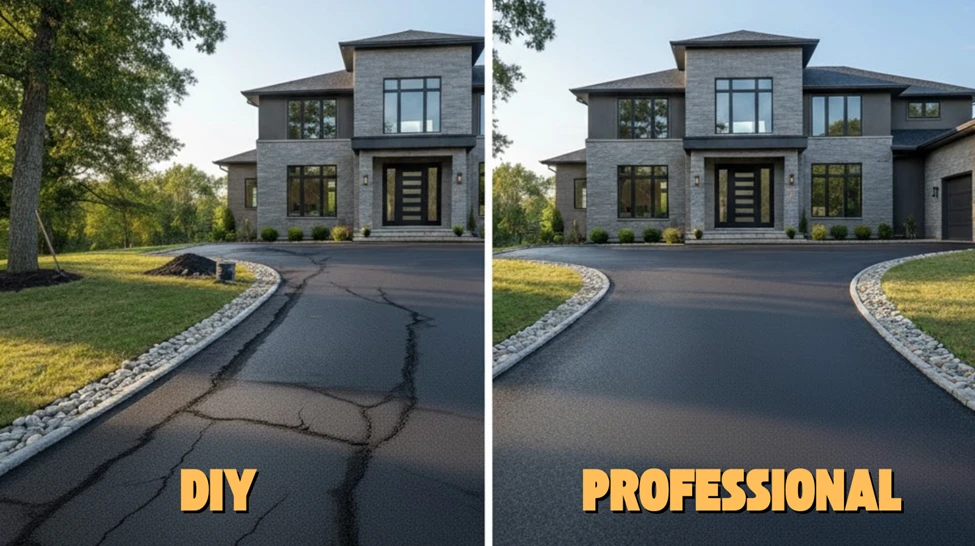
Choosing between self-installation and hiring experts involves weighing cost savings against quality concerns, time investment, and potential complications. Each approach suits different scenarios and skill levels.
Professional Installation Benefits
Hiring experienced contractors guarantees proper surface preparation, correct material application, and adherence to best practices. Professional teams possess specialised equipment, including heavy rollers, heating apparatus, and precise levelling tools unavailable to DIY enthusiasts.
This equipment ensures uniform compaction and smooth finishes that significantly extend driveway lifespan. Reputable installers provide warranties covering workmanship defects for periods typically ranging from 5 to 10 years.
These guarantees offer peace of mind and financial protection against premature failures. Professional work also complies with local planning regulations and drainage requirements, avoiding potential legal issues or costly remedial work.
Contractors complete installations efficiently, usually finishing standard residential driveways in Hertfordshire within 2-3 days. This timeline includes excavation, sub-base preparation, asphalt laying, and final finishing.
DIY Installation Considerations
Self-installation appeals to budget-conscious homeowners willing to invest significant time and physical effort. Material costs alone represent roughly 40-50% of total professional quotes, offering substantial savings.
However, successful DIY projects require research, appropriate tools, and a realistic assessment of personal capabilities. Cold mix asphalt proves more DIY-friendly than hot mix alternatives due to lower temperature requirements and extended working time.
Pre-mixed cold asphalt eliminates heating equipment needs and allows gradual application over multiple sessions. Despite these advantages, achieving professional-quality results demands meticulous attention to preparation and compaction techniques.
DIY projects carry risks, including uneven surfaces, inadequate drainage, and premature deterioration if executed poorly. Equipment rental costs for compactors and rollers add expenses that reduce overall savings.
Hybrid Approaches
Some homeowners compromise by hiring professionals for groundwork and base preparation, whilst completing the final asphalt laying themselves. This strategy ensures critical foundation elements receive expert attention whilst reducing overall labour expenses.
However, coordination between DIY and professional phases requires careful planning. Another option involves professional consultation followed by supervised DIY execution.
Experienced contractors provide guidance on material selection, quantity calculations, and technical advice for a consultation fee. This approach suits competent DIYers seeking expert insight without full installation costs.
Tips to Reduce Asphalt Driveway Costs
Strategic planning and informed decision-making significantly reduce project expenses without compromising quality or longevity. Multiple approaches exist for cost-conscious homeowners.
Optimise Timing and Scheduling
Booking installations during off-peak seasons (typically November through March) often secures discounted rates from contractors seeking winter work. Demand drops during colder months, encouraging competitive pricing.
However, weather limitations may restrict working days, potentially extending project timelines. Combining your project with neighbouring properties creates bulk purchasing opportunities for materials and shared mobilisation costs.
Group bookings incentivise contractors to offer preferential rates whilst maintaining profit margins through increased volume. Coordinating with neighbours requires organisation but delivers mutual savings.
Material Selection Strategies
Opting for standard asphalt over premium alternatives provides substantial savings whilst delivering adequate performance for typical residential applications. Coloured or stamped varieties add aesthetic appeal but cost 20-40% more than basic black asphalt.
Assess whether enhanced appearance justifies additional expenditure based on property value and personal priorities. Consider reclaimed or recycled asphalt for budget-conscious projects, costing £6.20 to £8.75 per square foot.
This environmentally friendly option performs adequately for light domestic use, though longevity may fall short of virgin asphalt. Recycled materials suit secondary driveways, pathways, or low-traffic areas where premium durability proves unnecessary.
Minimise Groundwork Requirements
Resurfacing existing driveways in reasonable structural condition costs dramatically less than complete replacement. Surface overlay refreshes appearance and extends service life at £1.86 to £2.80 per square foot versus full installation rates.
Professional assessment determines whether existing bases support overlay work or require replacement. Maintaining existing drainage systems and layouts avoids expensive modification work.
Altering gradients, adding soakaways, or relocating drainage points increases labour and material costs. Working within current infrastructure constraints maximises budget efficiency unless significant functional improvements justify additional investment.
Obtain Multiple Competitive Quotes
Soliciting detailed written quotations from at least three contractors reveals market rates and identifies outliers. Ensure quotes specify identical specifications, including depth, materials, groundwork scope, and finishing details.
Comparing like-for-like proposals prevents misunderstandings and facilitates informed selection. Scrutinise quotes for hidden costs such as skip hire, waste disposal, or restoration work to surrounding areas.
Comprehensive quotations itemise all project elements, avoiding unexpected charges during or after completion. Clarify warranty terms, payment schedules, and project timelines before committing to any contractor.
Where Total Surfacing Solutions Delivers Quality in UK
Total Surfacing Solutions operates across major areas of the UK, providing trusted driveway and surfacing services that keep outdoor spaces safe, strong, and visually appealing. Our primary focus areas include Hertfordshire and Essex.
Hertfordshire:
We support Hertfordshire residents and businesses with a wide variety of surfacing options, including tarmac, resin bound, concrete, and natural stone finishes. Our team handles driveway construction, road resurfacing, car park builds, playground installations, and professional line marking. Whether it’s a small repair or a large-scale project, we deliver clean and durable results.
Essex:
In Essex, we provide high-quality surfacing solutions designed to last. Our services cover resin driveway design, tarmacadam surfacing, driveway upgrades, commercial resurfacing, and specialist play surface installations. Every project is completed with precision and a strong focus on long-term performance.
No matter where you are in Hertfordshire or Essex, Total Surfacing Solutions is your reliable partner for premium surfacing work.
Frequently Asked Questions
How long does an asphalt driveway last in the UK?
Standard asphalt driveways typically last 10 to 20 years with proper maintenance, though lifespan varies based on installation quality, usage intensity, and climate exposure. Regular sealing every 2-3 years and prompt crack repairs extend longevity significantly.
Heavy vehicle traffic, harsh winters, and poor drainage reduce durability, whilst well-maintained surfaces in moderate conditions often exceed 20-year expectations.
Is asphalt cheaper than resin driveways?
Asphalt proves significantly cheaper upfront at £50-90 per square metre compared to resin-bound surfaces costing £40-120 per square metre, depending on specification. However, resin driveways last 15-20 years with minimal maintenance versus asphalt’s 5-10 year maintenance cycle, requiring periodic resealing and repairs.
Long-term cost analysis often favours resin for homeowners prioritising durability over initial savings.
Can I install asphalt over an existing driveway?
Asphalt overlay installation works successfully over structurally sound existing surfaces, including old asphalt, concrete, or compacted bases. The existing surface must be stable, properly drained, and free from significant damage or movement.
Professional assessment determines suitability, as severely cracked or settling bases require removal before new installation. Overlay thickness typically ranges from 50-75mm for residential applications.
What time of year is best for asphalt installation?
Late spring through early autumn (April to October) provides optimal conditions for asphalt installation in the UK. Warm, dry weather ensures proper material curing and compaction whilst minimising weather-related delays.
Summer installations benefit from higher ambient temperatures, aiding asphalt workability. Winter projects remain possible but face increased weather risks and potentially slower curing times, affecting quality.
Value Beyond Initial Investment
Selecting the right driveway surface balances upfront costs against long-term performance and aesthetic preferences. Asphalt delivers economical, durable surfacing suitable for most UK residential properties when installed correctly.
Understanding cost factors empowers homeowners to make informed decisions aligned with budgets and expectations. Professional installation ensures quality results and longevity, whilst strategic material choices and timing optimise expenditure.
Whether choosing traditional asphalt or exploring modern alternatives, thorough research and competitive tendering maximise value. A well-planned driveway investment enhances property functionality, appearance, and value for decades ahead.