How Thick is a Tarmac Driveway in the UK? Expert Guides
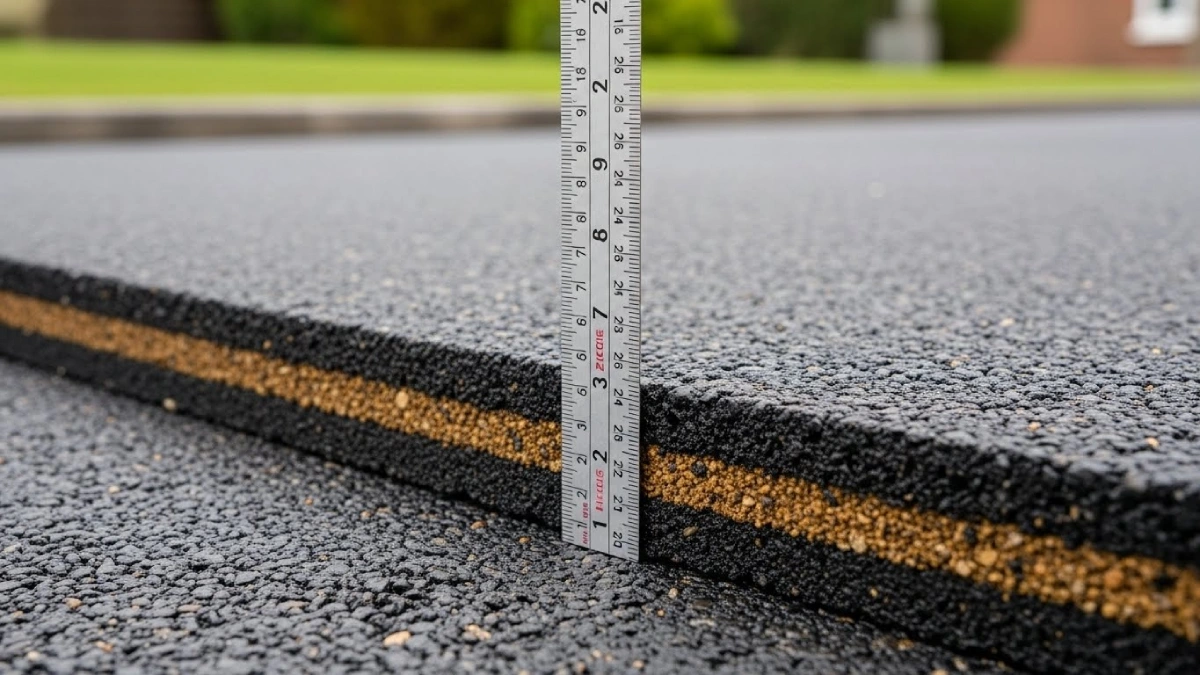
Understanding how thick a tarmac driveway in the UK should be is critical for long-term performance. Thickness is not just a technical detail. It directly controls strength, stability, and lifespan. A driveway that is too thin will crack early. One that is built to the correct depth can last decades.
Proper thickness allows the surface to handle daily vehicle weight. It also helps distribute pressure evenly across the base. This reduces sinking, rutting, and surface movement. UK weather adds another challenge. Also, heavy rain and freeze-thaw cycles quickly expose weak installations.
Professional tarmac installation road surfacing services calculate thickness based on real site conditions. This includes soil type, drainage, and expected traffic. Using hot tarmac and machine lay tarmac services ensures consistent depth and strong compaction.
How Thick Should a Tarmac Driveway Be in the UK?
The correct answer depends on vehicle load, usage frequency, and ground preparation. A professionally installed driveway is never a single layer. It is a structured system designed to distribute weight evenly and resist deformation.
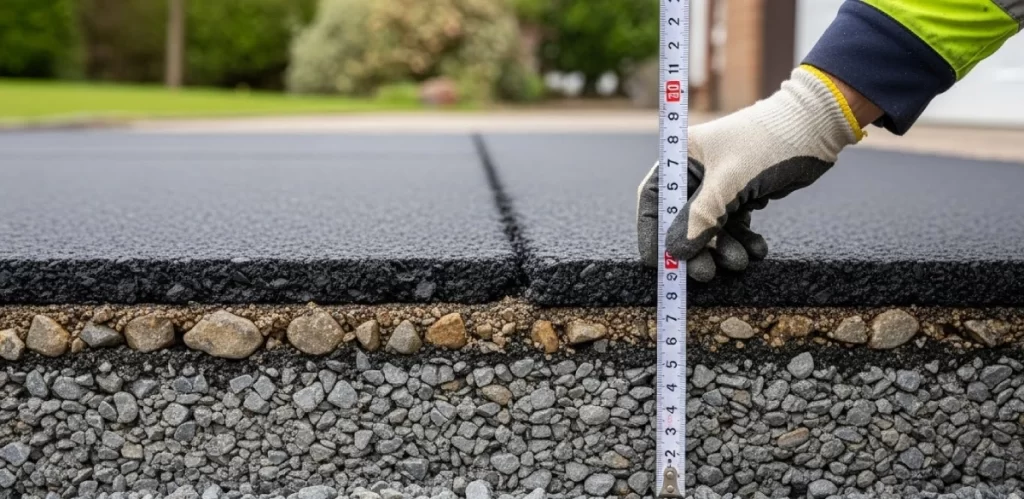
For standard domestic driveways, the recommended finished thickness is 75mm to 100mm (3–4 inches). This thickness is achieved by combining a 50–60mm base course (binder course) with a 25–30mm wearing course of hot tarmac.
Driveways exposed to vans, caravans, or light commercial vehicles require increased thickness. In these cases, total depth rises to 120–150mm or more, supported by a reinforced sub-base. Without this extra depth, surface deformation, rutting, and early cracking become unavoidable.
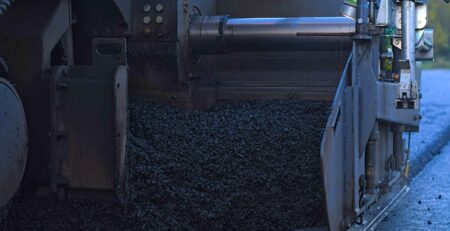
Professional Machine Lay Tarmac ensures consistent compaction, uniform thickness, and long-term stability. Unlike hand-laying methods, machine laying eliminates weak spots that lead to potholes and water ingress. This is why reputable road surfacing contractors insist on mechanical installation for driveways and access roads.
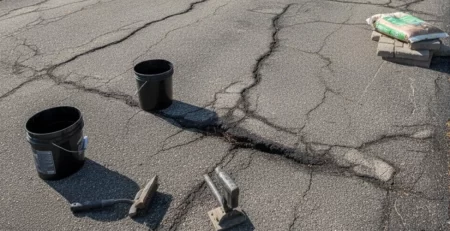
Incorrect thickness often results in early resurfacing, costly repairs, or temporary fixes like cold patch, which only mask deeper structural issues. Choosing experienced machine lay tarmac services in Essex ensures thickness standards are met from the base upward.
Why Thickness Matters for Tarmac Driveways in the UK?
Thickness plays a decisive role in the structural integrity and lifespan of a tarmac driveway. UK driveways face constant stress from braking, turning, and static loads, all intensified by rain and temperature changes.
A driveway with insufficient depth cannot distribute weight properly. Pressure concentrates on the surface layer, leading to cracks that expand during freeze-thaw cycles. Over time, water penetrates these cracks, weakening the sub-layers and accelerating failure.
Load-bearing requirements are another critical factor. Even standard family vehicles exert repeated pressure on the same wheel paths.
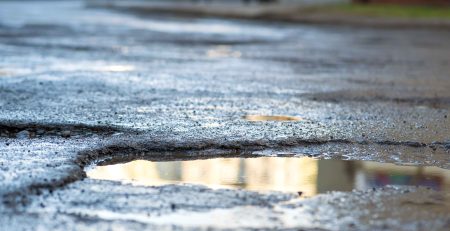
A properly designed thickness absorbs this stress across multiple layers, preventing sinking and wheel ruts. This becomes even more important for properties requiring pothole repair services due to past under-spec construction.
Weather performance is especially relevant in the UK. Heavy rainfall demands a thickness that works alongside drainage systems to prevent water retention beneath the surface. Thin installations trap moisture, softening the base and causing movement.
Surface deformation and cracking are almost always symptoms of incorrect thickness rather than poor materials. Professional tarmac installation addresses this by calculating depth based on usage, soil type, and access patterns, ensuring long-term reliability rather than short-term appearance.
Standard Thickness Guidelines for Tarmac Driveways in the UK
Industry standards followed by tarmac installation road surfacing services provide clear thickness benchmarks based on usage type. These guidelines are not estimates; they are proven specifications used by professional contractors nationwide.
Domestic Driveways
For residential use, the total tarmac thickness should fall between 75mm and 100mm. This typically consists of:
- 50–60mm binder course for structural support
- 25–30mm wearing course for surface durability
This specification supports daily car use while maintaining flexibility against minor ground movement. When installed using machine lay tarmac services in Hertfordshire, this depth ensures consistent compaction and a smooth finish.
Driveways for Larger Vehicles or Frequent Use
Properties accessed by delivery vans or commercial vehicles require a thicker build. Here, total depth increases to 120–150mm or more, often supported by a strengthened sub-base. This prevents compression failure and surface fatigue.
Below is a clear reference table:
| Usage Type | Total Tarmac Thickness | Recommended Installation |
| Standard cars | 75–100mm | Machine Lay Tarmac |
| Vans & caravans | 120–150mm | Reinforced Machine Lay |
| Commercial access | 150mm+ | Heavy-duty surfacing |
Professional road surfacing contractors in Essex apply these standards consistently to avoid premature wear and repeated repairs.
Driveway Construction Layers Explained
Every durable driveway relies on properly constructed layers. Thickness alone is ineffective without correct sequencing and compaction.
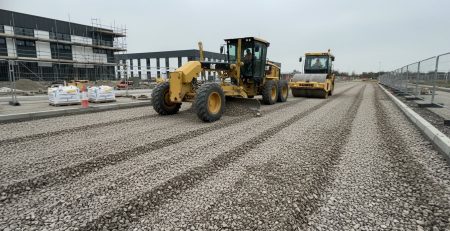
The sub-base forms the foundation. Typically constructed from compacted MOT Type 1, it stabilises the ground and distributes load evenly. Weak sub-bases are the most common reason resurfacing fails.
Above this sits the base course (binder course). This layer provides strength and flexibility, absorbing stress from vehicle movement. At 50–60mm, it prevents cracking under load while bonding effectively to the surface layer.
The wearing course is the visible finish. At 25–30mm, it provides skid resistance, weather protection, and aesthetic appeal. Proper compaction ensures water runs off rather than penetrating the surface.
Professional Machine Lay Tarmac in Hertfordshire guarantees each layer meets the specified thickness, avoiding uneven settlement and future pothole repair services.
Factors That Influence Required Thickness
Several site-specific factors determine the final thickness specification. Ignoring these leads to early failure regardless of the materials used.
Expected load is the primary consideration. More weight demands greater depth to prevent compression. Soil type and ground conditions also matter. Clay soils require thicker builds due to movement during wet and dry cycles.
Drainage and water movement influence thickness indirectly. Poor drainage softens sub-layers, requiring additional depth to compensate. UK climate conditions, particularly frost and heavy rainfall, demand a structure that can flex without cracking.
Professional tarmac installation assesses these variables before construction, ensuring thickness aligns with real-world conditions rather than assumptions.
Choose Professional Tarmac Driveway Services in UK
Selecting experienced contractors ensures thickness standards are met without shortcuts. Total Surfacing Solution delivers precision-engineered driveways using machine lay tarmac services, ensuring durability, compliance, and clean finishes.
For homeowners seeking alternatives, our services also include grey resin driveways, resin driveways, and coloured resin driveways, offering modern aesthetics with excellent permeability.
Coverage Areas for Tarmac Driveway Services in the UK
We provide specialist services across key regions:
- Resin bound driveways in Hertfordshire
- Road surfacing contractors in Hertford
- Resin bound driveways installers in Hertford
We also cover:
- Resin bound driveways in Essex
- Road surfacing contractors in Essex
- Resin bound driveways installers in Essex
Each project follows strict thickness and compaction standards to ensure long-term performance.
Frequently Asked Questions (FAQ)
How long does a properly thick tarmac driveway last in the UK?
A correctly built tarmac driveway can last 20 to 25 years in UK conditions. Longevity depends heavily on proper thickness. The right layer depth helps spread vehicle weight evenly. This reduces stress on the surface.
Professional tarmac installation also ensures strong compaction. Good drainage plays a key role. Water that drains away prevents base failure. Regular light maintenance extends lifespan further. Poorly installed or thin driveways often fail within a few years.
Is thicker tarmac always better?
Thicker tarmac is not always the best solution. Thickness must match usage and ground conditions. Too much depth without a stable sub-base can still fail. Strength comes from the full structure, not just surface depth.
Correct design balances sub-base, binder course, and wearing course. Professional contractors calculate thickness carefully. This avoids wasted material and future movement issues. Proper engineering always outperforms guesswork.
Can thin driveways be fixed with a cold patch?
The cold patch is only a temporary repair. It fills surface holes but does not fix structural weakness. Thin driveways fail from the base upward. A cold patch cannot strengthen the foundation.
Water still penetrates beneath the surface. This leads to repeat cracking and potholes. Permanent repair requires resurfacing or full reconstruction. Professional pothole repair services assess depth issues before applying long-term solutions.
Does machine lay tarmac really make a difference?
Yes, it makes a significant difference. Machine Lay Tarmac ensures consistent thickness across the entire driveway. Compaction is even and controlled. This removes weak spots.
Hand-laid surfaces often vary in depth. That leads to early cracking. Machine laying also improves surface smoothness. It enhances durability and appearance. Most professional road surfacing contractors rely on machine laying for lasting results.
Is resin thicker than tarmac?
Resin surfaces are usually thinner than tarmac. Strength comes from the base below. Resin systems require a solid foundation to perform well. When installed over a properly prepared base, resin is very durable.
It offers excellent drainage and modern aesthetics. Resin is ideal for decorative driveways. Tarmac remains better for heavy load areas. Both materials depend on correct groundwork for long-term success.
Final Thoughts on Tarmac Driveway Thickness in the UK
Understanding how thick a tarmac driveway in the UK should be is essential for long-term performance. Thickness directly affects strength, safety, and lifespan. A properly designed driveway spreads vehicle load evenly. This reduces cracking and surface movement.
Correct depth also improves resistance to UK weather conditions. Rain, frost, and temperature changes place constant stress on the surface. Professional tarmac installation ensures each layer is built to specification. Using Machine Lay Tarmac delivers consistent compaction and uniform thickness.This prevents weak points that lead to early failure. Choosing an experienced contractor like Total Surfacing Solution means correct planning, quality materials, and proven methods. The result is a durable driveway that performs reliably and adds lasting value to your property.