Road Surfacing for Industrial Sites and Yards
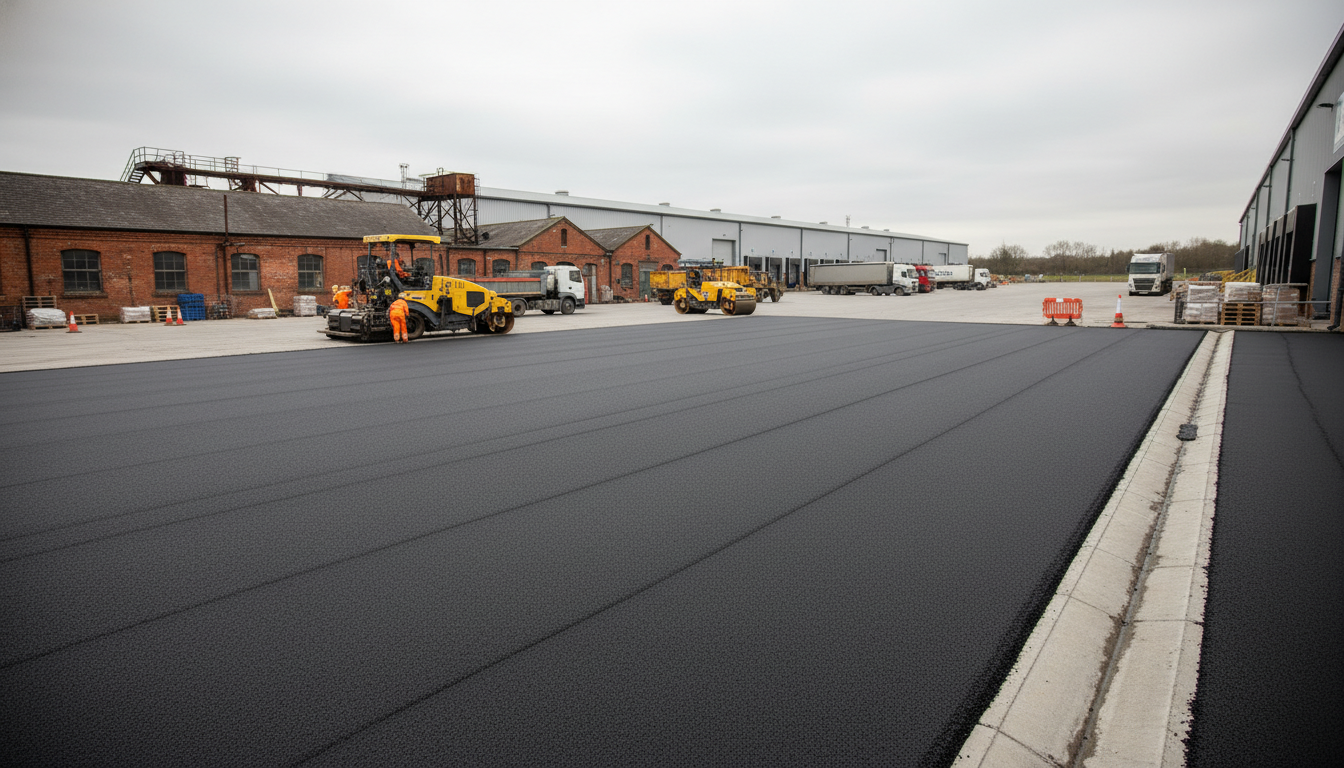
Industrial road surfacing UK projects differ significantly from residential or light commercial works. Industrial sites and yards are exposed to constant vehicle movements, heavy axle loads, tight turning circles, and operational pressures that leave little room for surface failure. These environments often include HGV traffic, forklifts, plant machinery, and delivery vehicles operating throughout the day, placing exceptional stress on road surfaces.
For site owners and facilities managers, the road network within an industrial setting is a critical part of operational efficiency. Poor surfacing can lead to vehicle damage, safety risks, drainage problems, and unplanned downtime. Industrial road surfacing must therefore prioritise strength, resilience, and long-term performance rather than short-term cost savings.
Why Industrial Sites Require Specialist Surfacing Solutions
Industrial environments are rarely uniform. Yards may include loading bays, access roads, turning areas, and parking zones, each subjected to different levels of stress. Unlike standard road surfacing, industrial projects must account for concentrated loads, slow-moving heavy vehicles, and frequent braking and turning that accelerate surface wear.
Professional industrial surfacing design considers ground conditions, traffic patterns, and drainage requirements from the outset. Without this level of planning, surfaces are more likely to crack, rut, or fail prematurely. Engaging experienced commercial surfacing contractors ensures these challenges are addressed before installation begins.
Surface Materials Suitable for Industrial Yards
Material selection plays a central role in industrial road surfacing UK performance. Tarmac and asphalt remain the most common choices due to their proven durability, flexibility, and ease of maintenance. When correctly specified, these materials can withstand heavy traffic while providing a smooth, safe surface.
Industrial-grade asphalt typically incorporates stronger base layers and thicker surface courses than standard applications. This layered construction distributes load more effectively and reduces the risk of deformation. Professional tarmac installation ensures materials are laid and compacted to achieve the required structural strength.
The Importance of Ground Preparation
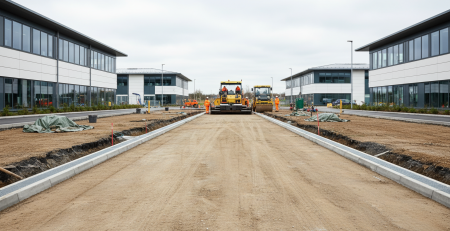
Ground preparation is often the determining factor in whether an industrial surface succeeds or fails. Industrial sites frequently sit on previously developed land with varying sub-base conditions. Without proper assessment and preparation, even high-quality materials will struggle to perform.
Preparation typically involves excavation, sub-base stabilisation, and compaction to create a solid foundation capable of supporting heavy loads. Attention to detail at this stage reduces future settlement and surface movement. Skipping or rushing preparation may reduce initial costs but almost always results in higher repair expenses later.
Drainage Considerations for Industrial Road Surfacing
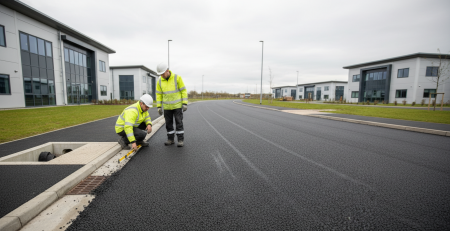
Effective drainage is essential in industrial road surfacing UK projects. Standing water weakens surface layers, increases slip risks, and accelerates structural deterioration. Industrial yards often include large impermeable areas, making surface water management a critical design element.
Drainage solutions may include gradients that direct water away from high-use areas, integrated drainage channels, or permeable elements where appropriate. Addressing drainage during installation significantly extends surface lifespan and reduces maintenance demands.
Machine-Laid Surfacing for Industrial Consistency
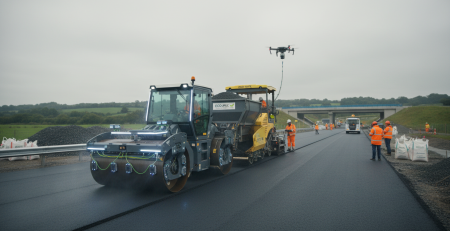
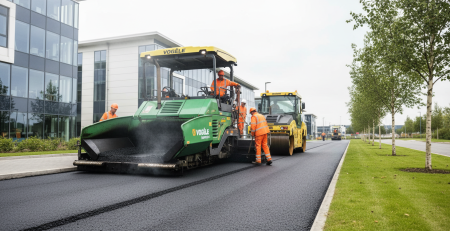
Machine-laid surfacing is particularly beneficial for industrial sites due to the scale and performance requirements involved. Machine installation delivers a consistent depth, uniform compaction, and smooth finish across large areas. This consistency is vital in environments where uneven surfaces can disrupt operations or damage equipment.
Professional machine-laid tarmac also improves efficiency, reducing installation time and minimising disruption to site activities. For busy industrial operations, faster completion without compromising quality is a significant advantage.
Safety and Compliance in Industrial Environments
Health and safety considerations are paramount on industrial sites. Poor road surfacing increases the risk of vehicle incidents, pedestrian slips, and equipment damage. Clear line definition, smooth transitions, and appropriate surface textures all contribute to safer working environments.
Industrial road surfacing UK projects must also align with relevant standards and site-specific safety requirements. Professional contractors understand how to integrate surfacing works within operational sites while maintaining compliance and minimising risk.
Managing Repairs Versus Full Resurfacing
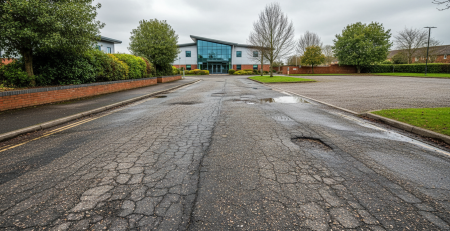
Industrial sites often operate continuously, making it tempting to rely on repeated repairs rather than full resurfacing. While targeted repairs can be effective in the short term, frequent patching often leads to uneven surfaces and escalating costs.
Timely pothole repairs are essential to prevent water ingress and further damage, but there comes a point where full resurfacing offers better long-term value. Assessing surface condition regularly allows site managers to plan resurfacing works strategically rather than reacting to failures.
Long-Term Performance and Maintenance Planning
Industrial road surfacing should be viewed as a long-term asset. Surfaces designed for heavy use require ongoing monitoring and maintenance to preserve performance. Regular inspections identify early signs of wear, drainage issues, or structural movement that can be addressed before they escalate.
A planned maintenance approach reduces unplanned downtime and extends surface lifespan. This proactive strategy is particularly important for sites operating under tight schedules where access disruptions can affect productivity.
Environmental Considerations in Industrial Surfacing
Sustainability is increasingly relevant in industrial developments. Industrial road surfacing UK projects can incorporate recycled materials, efficient installation methods, and designs that reduce long-term environmental impact. Durable surfaces that require fewer repairs contribute positively by minimising material use over time.
Working with experienced contractors allows sustainability to be balanced with performance, ensuring environmental considerations do not compromise operational requirements.
Choosing the Right Contractor for Industrial Projects
The success of industrial road surfacing depends heavily on contractor expertise. Industrial environments demand a clear understanding of load requirements, site logistics, and operational constraints. Contractors with experience across varied industrial settings are better equipped to deliver surfaces that perform reliably under pressure.
Reviewing completed case studies provides valuable insight into a contractor’s ability to manage complex industrial projects and deliver durable results.
Investing in Reliable Industrial Road Surfacing
Industrial road surfacing UK solutions are not simply about creating a finished surface. They are about supporting safe operations, protecting vehicles and equipment, and ensuring reliable access across demanding environments. Well-designed and professionally installed surfaces reduce long-term costs by minimising repairs and disruption.
For industrial site owners and managers, investing in high-quality surfacing delivers operational confidence. By prioritising preparation, material quality, and expert installation, industrial road surfaces can perform effectively for many years under the toughest conditions.