Road Surfacing for Private Estates and Drive Roads
Private estates, gated communities and shared access roads require a higher level of planning and workmanship than many standard surfacing projects. Unlike public highways, these roads are often the responsibility of residents, management companies or private landowners. This means that decisions about materials, installation standards and long-term maintenance directly affect property value, safety and ongoing costs.
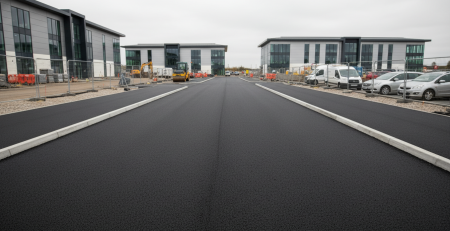
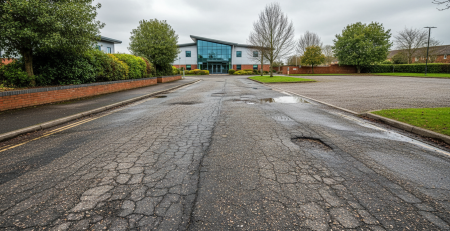
Private road surfacing UK projects must balance durability with appearance. Estate roads form part of the overall presentation of a development. Cracked, uneven or poorly drained surfaces can quickly undermine the quality of an otherwise well-maintained site. In contrast, a properly installed and well-finished road surface creates a clean, professional look while ensuring reliable access for residents, visitors and service vehicles.
For property managers and landowners, the objective is not simply to resurface a road, but to create a long-term solution that reduces disruption and avoids repeated repairs.
Common Challenges with Private Roads
Private drive roads and estate access routes often present unique structural and logistical challenges. Many were originally constructed with minimal sub-base depth or installed decades ago to standards that no longer meet modern traffic demands.
Over time, increased vehicle ownership, delivery traffic and refuse collection vehicles place additional stress on surfaces that were not designed for regular heavy loads. Water ingress, especially where drainage is inadequate, accelerates deterioration and can lead to potholes, edge breakdown and surface cracking.
In rural or semi-rural estates, poor ground conditions can further complicate matters. Clay-heavy soils common in parts of Bedfordshire, Hertfordshire and surrounding counties are particularly prone to movement during wet and dry cycles. Without proper ground preparation, resurfacing alone will not resolve underlying instability.
This is why experienced contractors assess not just the visible wear but the structural integrity beneath the surface before recommending a solution.
Choosing the Right Surface for Private Road Surfacing UK
Material selection is central to the success of any private road surfacing UK project. The right surface must suit traffic levels, aesthetic expectations and budget considerations.
Tarmac for Estate Roads
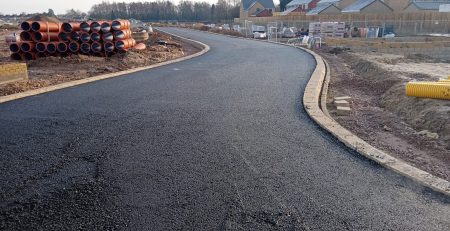
Tarmac remains one of the most widely used materials for estate and private access roads. It provides a smooth, durable finish and performs reliably under regular traffic. When professionally installed through a structured tarmac installation service, it delivers strong resistance to cracking and surface wear.
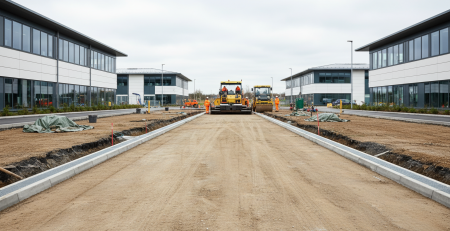
Machine-laid applications are particularly effective for longer private roads where consistency is essential. Using a paver ensures uniform depth and compaction, reducing weak points that can lead to premature failure. Specialist machine lay tarmac solutions are often recommended for larger estates requiring precision and efficiency.
Asphalt for Higher Traffic Estates
Where estates experience heavier vehicle movement, such as developments with multiple dwellings or mixed-use sites, asphalt may be specified for increased load-bearing capacity. Asphalt mixtures can be tailored to withstand heavier traffic and offer excellent longevity when correctly laid.
Resin-Bound Finishes for Premium Developments
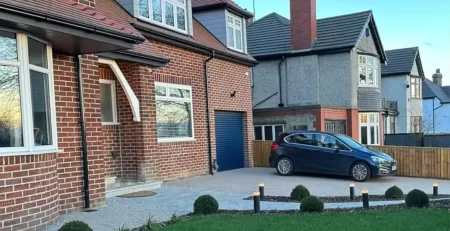
For high-end gated communities, aesthetic considerations may lead to the use of resin-bound surfacing in selected areas such as entrance features or shared driveways. Professionally installed resin driveways can enhance visual appeal while maintaining permeability and compliance with drainage requirements.
Each material must be chosen based on function first, appearance second. A visually attractive road that lacks structural strength will quickly become a liability.
The Importance of Proper Ground Preparation
No private road surfacing UK project succeeds without adequate preparation. The visible surface layer is only as strong as the foundation beneath it.
Sub-Base Assessment and Strengthening
Before resurfacing begins, contractors should assess the condition of the existing sub-base. Where failure is evident, partial or full reconstruction may be required. Installing a new Type 1 sub-base and ensuring correct compaction levels creates a stable platform capable of supporting future traffic loads.
Skipping this stage to reduce upfront costs often results in recurring issues that ultimately prove more expensive to resolve.
Drainage Considerations
Water is one of the primary causes of surface deterioration. Effective drainage must be incorporated into the design of estate roads, particularly where gradients direct water towards properties or communal areas.
This may involve installing channel drains, improving falls, or incorporating permeable surfacing solutions in suitable locations. Without proper water management, even newly surfaced roads can deteriorate prematurely.
Access and Traffic Management During Works
Private estates remain operational during surfacing works. Residents require access to homes, emergency services must be accommodated and deliveries cannot always be postponed.
Careful planning is therefore essential. Phased working programmes, clear communication with residents and temporary access arrangements minimise disruption. Experienced commercial surfacing contractors understand how to coordinate works efficiently while maintaining site safety.
For smaller shared drive roads serving a limited number of properties, works may be completed in sections to allow partial access throughout the project.
Long-Term Maintenance of Private Estate Roads
Once installation is complete, ongoing care determines the lifespan of the surface. Private road surfacing UK does not end with the final layer being compacted.
Regular inspections help identify early signs of wear, such as minor cracking or drainage blockages. Prompt attention to small defects prevents them from developing into more serious structural problems.
Targeted pothole repairs can extend surface life when addressed quickly. However, reactive repairs should not replace planned maintenance strategies.
Estate management companies often benefit from establishing a clear maintenance schedule that includes periodic cleaning, edge inspections and drainage checks. This proactive approach reduces the likelihood of large-scale resurfacing being required sooner than expected.
Compliance and Responsibility
Unlike public highways maintained by local authorities, private roads place full responsibility on landowners or management companies. This includes ensuring that surfaces are safe for use and do not present trip or vehicle hazards.
In some cases, particularly where estates include commercial units or educational facilities, compliance standards may align more closely with public infrastructure requirements. Contractors with experience in highway surfacing or education surfacing projects bring valuable understanding of durability and safety expectations.
Professional installation helps reduce liability risks by ensuring correct materials, compaction standards and drainage design are applied from the outset.
Enhancing Property Value Through Quality Surfacing
Well-maintained estate roads contribute directly to property values. Prospective buyers often form their first impression upon entering a development. Smooth, clean and professionally finished surfaces signal good management and long-term investment in the site.
Conversely, visibly deteriorating roads can raise concerns about future maintenance costs and shared liabilities. For developments in regions such as Bedfordshire, Hertfordshire or Cambridgeshire, where property standards are generally high, estate presentation plays an important role in maintaining competitiveness within the market.
Quality surfacing should therefore be viewed not simply as an expense but as an asset protection measure.
Planning a Private Road Surfacing UK Project
Successful projects begin with a thorough site assessment. This includes evaluating traffic volumes, identifying drainage concerns, examining existing structural layers and understanding the expectations of residents or stakeholders.
Transparent communication about timelines, costs and access arrangements helps prevent disputes during works. Where multiple property owners share responsibility, clear agreements regarding funding and scope should be established before contractors are appointed.
Working with experienced professionals who understand both residential and commercial surfacing requirements ensures that technical decisions are made with long-term performance in mind.
Selecting the Right Contractor
Choosing the correct contractor is critical to achieving lasting results. Experience in estate and access road projects demonstrates an understanding of both structural and practical considerations.
Reputable contractors will provide detailed proposals outlining preparation works, material specifications and installation methods. Reviewing previous projects through documented examples can offer reassurance about workmanship standards. Access to relevant project portfolios, such as those found within established case studies, allows property managers to assess comparable work.
Clear communication, appropriate insurance cover and a structured approach to health and safety should all form part of the selection criteria.
A Long-Term Approach to Private Road Surfacing UK
Private road surfacing UK projects demand more than a surface-level solution. From ground preparation and drainage planning to material selection and installation technique, each stage influences performance and longevity.
For estate managers and private landowners, investing in professional design and installation reduces long-term maintenance costs, improves safety and enhances overall site presentation. When properly executed, a resurfaced private road can provide many years of reliable service with minimal disruption.