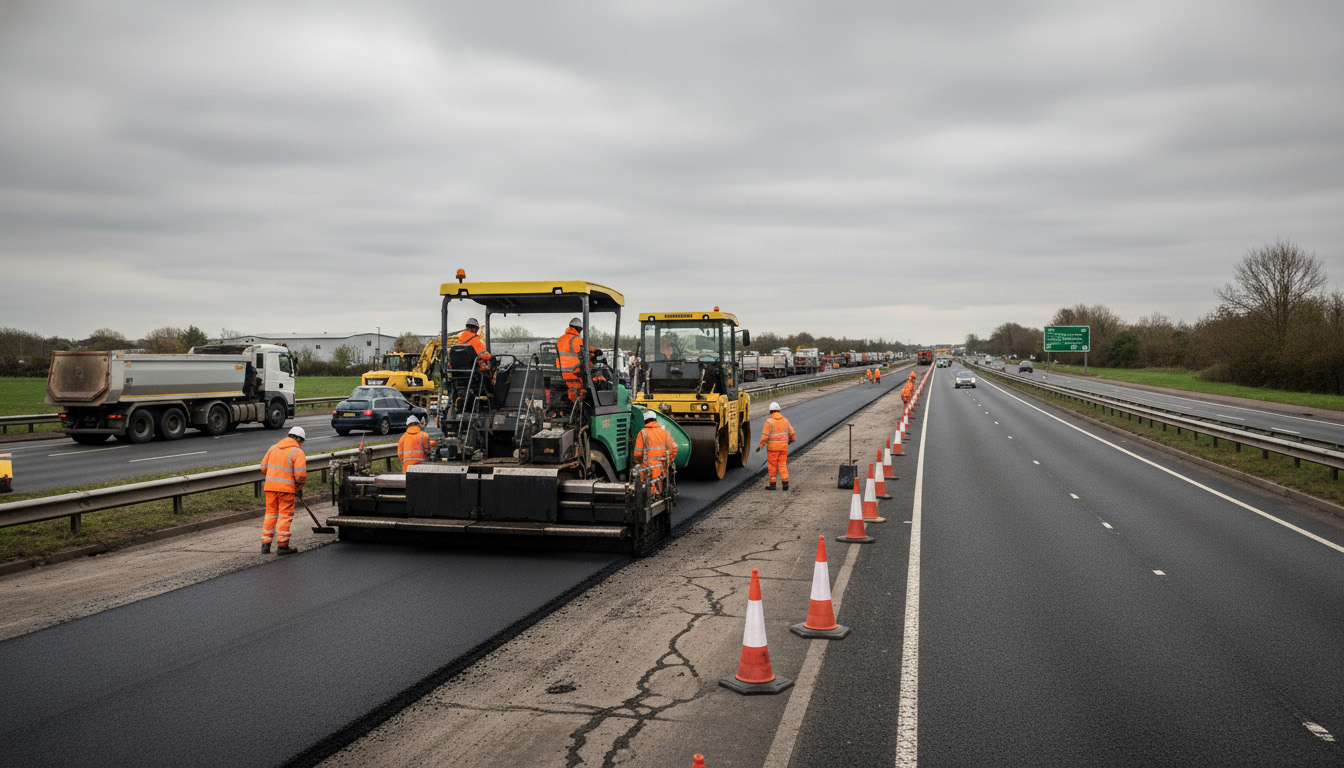
Planning Your Next Road Surfacing Project
Road surfacing planning UK property owners undertake before any installation work begins has a direct impact on durability, cost control and long-term performance. Whether the project involves a commercial access road, an industrial yard, a private estate roadway or a car park, success is rarely down to the surface layer alone. It begins with thorough preparation, realistic expectations and a clear understanding of site requirements.
For commercial site managers in particular, disruption must be minimised and safety maintained throughout the works. Without careful planning, projects can overrun, budgets can escalate and finished surfaces may not meet operational demands. Professional planning ensures the surface is designed for the specific traffic loads, drainage conditions and usage patterns of the site.
Assessing the Existing Surface and Ground Conditions
Every successful surfacing project starts with a detailed site assessment. This stage identifies whether the existing surface can be overlaid or whether full reconstruction is required. In many cases, underlying issues such as sub-base failure, water ingress or inadequate edge restraint are the true causes of deterioration.
Ground conditions across the UK vary significantly, from clay-heavy soils that retain moisture to more free-draining substrates. A proper survey evaluates load-bearing capacity, current levels, drainage falls and any signs of structural cracking. Where heavy traffic is expected, particularly in logistics environments, a more robust build-up may be required than for light-use access roads.
Where existing damage is localised, targeted works such as pothole repairs may be sufficient. However, where structural failure is widespread, full resurfacing or reconstruction is often the more cost-effective long-term option.
Defining the Purpose and Traffic Demands
Road surfacing planning UK projects often fail to consider future usage. A surface designed only for light vehicle traffic may deteriorate rapidly if delivery lorries or plant machinery are introduced later.
When defining project requirements, it is essential to consider the following factors within the planning stage, discussed thoroughly with your contractor during consultation. The frequency and weight of vehicle movements, turning stresses at junctions and loading bays, pedestrian interaction zones, and any planned expansion of the site should all be factored into the design.
For example, surfaces within distribution centres demand a different specification compared to residential estate roads. In commercial settings, engaging experienced commercial surfacing contractors ensures that pavement design aligns with operational needs rather than simply aesthetic expectations.
Drainage and Water Management
Water is one of the primary causes of premature surface failure. Poor drainage leads to standing water, weakening of the sub-base and eventual cracking or pothole formation. As part of road surfacing planning UK developments, drainage strategy must be addressed early.
This includes assessing existing gullies, channels and falls, as well as ensuring the finished surface directs water away from buildings and pedestrian areas. In some cases, new drainage channels or soakaways may be required before surfacing begins.
Failing to resolve drainage issues before installation can result in recurring defects that undermine the entire investment. Proper planning prevents costly remedial work and ensures compliance with UK standards relating to surface water management.
Choosing the Right Surfacing Method
Material selection plays a central role in long-term performance. Tarmac remains one of the most widely used materials for UK road surfacing due to its durability, flexibility and cost-effectiveness. However, the method of installation significantly influences the final result.
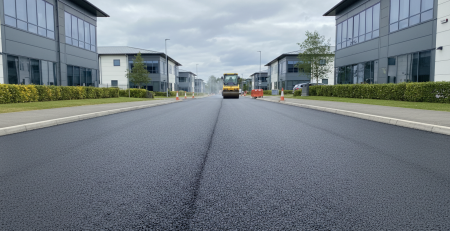
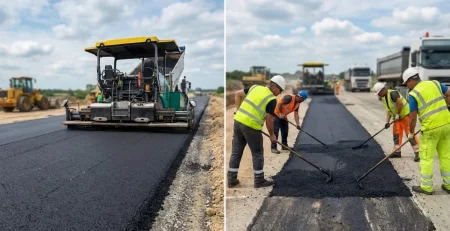
For larger projects requiring uniform compaction and consistent finish, machine lay tarmac offers enhanced accuracy and structural integrity. This approach reduces the risk of uneven thickness and weak points, particularly important for high-traffic areas.
In smaller or more intricate areas, hand-laid methods may be appropriate, provided sub-base preparation and compaction standards remain high. Consulting specialists in tarmac installation road surfacing services ensures the correct approach is selected for the specific project scope.
Budget Planning and Long-Term Value
Cost considerations naturally form part of any project. However, effective road surfacing planning UK clients undertake focuses not just on initial installation cost but on lifecycle value.
A lower upfront quote may exclude essential groundwork, drainage corrections or adequate surface thickness. Over time, this can result in premature deterioration and further expenditure. Investing in proper construction depth and high-quality materials typically reduces maintenance requirements and extends service life.
Planning discussions should include projected maintenance intervals, potential future resurfacing timelines and expected durability under site-specific conditions. A well-planned installation is more predictable, both financially and operationally.
Minimising Disruption During Installation
For operational commercial sites, maintaining access is often a priority. Road surfacing works can temporarily restrict entry points, loading areas or pedestrian routes. Early planning allows contractors to phase works in manageable sections.
Communication with tenants, staff or residents is equally important. Clear scheduling and defined work zones reduce safety risks and prevent confusion during installation. Professional contractors develop traffic management plans tailored to each site, ensuring safe vehicle and pedestrian movement throughout the process.
For public-facing environments such as schools or shared spaces, working with experienced education surfacing specialists ensures safeguarding and safety considerations are properly integrated into the project schedule.
Compliance with UK Regulations and Standards
All surfacing projects must comply with relevant UK standards, including health and safety regulations, drainage requirements and, where applicable, highways specifications. Failure to meet these standards can result in liability issues and additional corrective work.
Planning should involve confirming whether the road is privately owned or adopted, as this affects specification requirements. Highways-standard construction may be necessary in certain developments, particularly where roads are intended for adoption by local authorities. In such cases, consulting professionals experienced in highway surfacing ensures compliance from the outset.
Scheduling Around UK Weather Conditions
The UK climate plays a significant role in surfacing outcomes. Excessively cold temperatures, heavy rainfall or saturated ground conditions can delay works or affect curing times. Effective road surfacing planning UK contractors carry out includes selecting appropriate seasonal windows where possible.
Spring and summer often provide optimal installation conditions, although experienced teams can work effectively in cooler months with appropriate planning. Factoring weather contingencies into the project timeline reduces the risk of rushed installation or compromised finish quality.
Future Maintenance Planning
Even the highest-quality surface will require maintenance over time. Planning should include a strategy for inspections, minor repairs and eventual resurfacing. Proactive maintenance prevents small defects from developing into structural failures.
Engaging with a contractor who offers ongoing support provides continuity and a clear understanding of the original build specification. Reviewing previous case studies can help property owners understand how surfaces perform over time in similar environments.
Working with the Right Contractor
Perhaps the most important element of road surfacing planning UK clients must consider is contractor selection. Experience, transparency and clear communication are essential indicators of reliability.
A reputable contractor will provide detailed site assessments, written specifications, clear timelines and realistic costings. They will also demonstrate a track record across multiple sectors, from domestic access roads to large-scale commercial developments.
Learning more about the team, their experience and approach can provide additional reassurance before committing to works. Reviewing information about Total Surfacing Solutions offers insight into company standards and project delivery methods across the regions they cover, including Hertfordshire, Bedfordshire, Cambridgeshire, Essex and Oxford.
Bringing Your Project Together
Successful road surfacing planning UK property owners undertake is a structured process rather than a single decision. It involves technical assessment, drainage evaluation, correct material selection, compliance checks and realistic scheduling.
When approached methodically, the result is a durable, safe and professionally finished surface that supports daily operations without ongoing disruption. Careful preparation not only protects your investment but also ensures that the finished road or access area performs as intended for many years.
For tailored advice or to begin planning your next project, you can contact us to arrange a site assessment and detailed consultation.