The Road Surfacing Process Explained Step by Step
The road surfacing process UK contractors follow is structured, methodical, and designed to deliver surfaces that perform reliably under British traffic and weather conditions. For property owners, facilities managers, and commercial site operators, understanding this process provides clarity on what happens on site, why each stage matters, and how professional installation reduces long-term maintenance issues. Road surfacing is not simply about laying a new surface. It involves careful planning, ground preparation, correct material selection, controlled installation, and post-completion checks to ensure compliance and durability.
Initial Site Assessment and Planning
Every successful road surfacing project begins with a thorough site assessment. This stage allows contractors to understand the existing ground conditions, traffic demands, drainage requirements, and any structural issues that may affect the finished surface. In the UK, site conditions can vary significantly depending on location, soil type, and previous construction work. Assessing these factors early helps avoid unexpected problems during installation.
During planning, access requirements are considered carefully. Commercial premises often need phased works to maintain vehicle movement, while residential or private access roads may require temporary closures. Measurements are taken, levels are assessed, and the most appropriate surfacing method is selected. This planning stage ensures the road surfacing process UK professionals follow is efficient and suited to the specific site rather than a one-size-fits-all approach.
Ground Preparation and Excavation
Ground preparation is one of the most critical stages in the road surfacing process UK contractors carry out. Existing surfaces that are damaged or unsuitable are removed, and excavation is completed to the required depth. The depth depends on expected traffic loads, with heavier-use areas requiring deeper foundations to prevent movement and surface failure.
Once excavation is complete, the subgrade is inspected. Weak or unstable ground must be addressed before construction continues. This may involve soil stabilisation or additional groundwork to create a firm base. Skipping or rushing this stage often leads to premature cracking, rutting, or sinking, particularly in areas exposed to regular heavy vehicle use.
Sub-Base Installation and Compaction
The sub-base forms the structural foundation of the road surface. Typically constructed from crushed stone or Type 1 aggregate, this layer distributes loads evenly and prevents movement from the ground below. In the road surfacing process UK standards require proper compaction of the sub-base to achieve long-term stability.
Compaction is carried out using specialist machinery to ensure the material is tightly packed and level. Moisture levels are monitored during this stage, as overly wet or dry conditions can affect compaction quality. A well-installed sub-base reduces the risk of surface deformation and significantly extends the lifespan of the finished road.
Installing Edgings and Kerbs Where Required
Edgings and kerbs provide structural support and define the finished surface boundaries. They are particularly important for access roads, car parks, and commercial yards where vehicle movement places pressure on surface edges. Properly installed kerbs help prevent lateral movement of the surfacing material and protect against edge breakdown over time.
In many UK projects, concrete kerbs are installed and set before surfacing begins. This ensures clean lines and provides a secure framework for the surface layers. While sometimes overlooked, this stage plays an important role in maintaining the integrity of the road surfacing process UK professionals aim to deliver.
Drainage Considerations Within the Surfacing Process
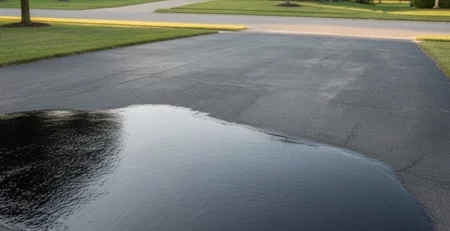
Effective drainage is essential to prevent water-related damage. Standing water can weaken the surface structure, accelerate wear, and lead to potholes or cracking. During the road surfacing process UK contractors assess natural water flow and incorporate drainage solutions where required.
Drainage channels, gradients, and surface falls are designed to move water away efficiently. In some cases, additional drainage systems may be installed beneath the surface to manage groundwater. Addressing drainage at this stage protects the investment and ensures the surface performs well throughout the year, particularly during periods of heavy rainfall.
Base Course Laying and Compaction
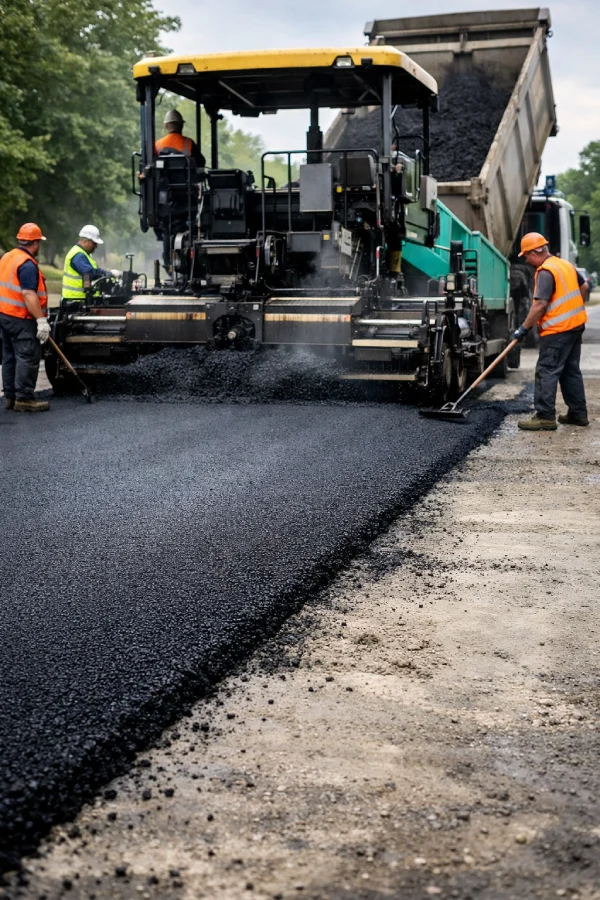
The base course is the first asphalt or tarmac layer laid over the prepared sub-base. This layer provides strength and load-bearing capacity. It is laid to precise thickness specifications and compacted using rollers to achieve uniform density.
Temperature control is critical during base course installation. The material must be laid and compacted while hot enough to bond properly but without overheating. This balance is part of the professional road surfacing process UK specialists are trained to manage, ensuring a strong bond between layers.
Surface Course Installation
The surface course is the final visible layer and plays a key role in appearance, skid resistance, and durability. This layer is designed to withstand daily traffic while providing a smooth and safe finish. Material selection depends on site use, with different mixes used for residential roads, commercial access routes, and industrial areas.
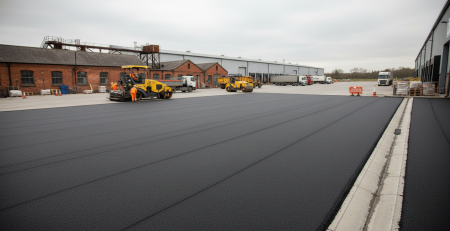
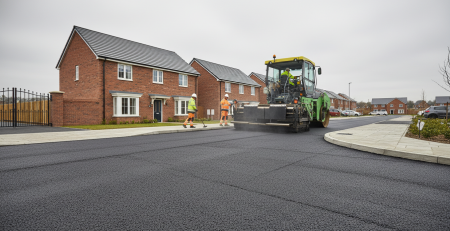
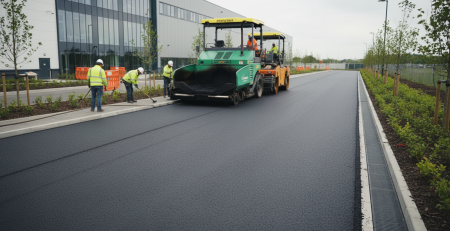
Precision is essential during surface course installation. The layer must be laid evenly, with consistent thickness and proper joint alignment. Machine laying is often preferred for larger areas to achieve a uniform finish, while smaller or complex sites may require skilled hand laying. Professional contractors offering tarmac installation ensure this stage is completed to a high standard.
Compaction and Joint Sealing
Once the surface course is laid, compaction begins immediately. Rolling ensures the material is dense, smooth, and securely bonded to the layers beneath. Proper compaction improves durability and resistance to water penetration. Joints between sections are sealed carefully to prevent weak points forming within the surface.
This stage of the road surfacing process UK projects rely on heavily influences long-term performance. Poorly compacted surfaces are more likely to deteriorate quickly, leading to costly repairs or early resurfacing.
Cooling and Initial Curing Period
After installation, the surface must be allowed to cool and cure before being opened to traffic. The curing time varies depending on weather conditions, material type, and layer thickness. In cooler UK conditions, curing may take longer, and access restrictions are maintained until the surface reaches sufficient strength.
Allowing adequate curing time prevents surface damage such as scuffing or deformation. Responsible contractors clearly communicate access timelines so property owners can plan accordingly.
Quality Checks and Final Inspection
The final stage in the road surfacing process UK professionals follow involves detailed inspection and quality checks. Levels, surface finish, drainage performance, and joint integrity are reviewed to ensure compliance with project specifications and industry standards.
Any minor adjustments or remedial work are completed at this stage. A thorough inspection ensures the finished surface meets both functional and aesthetic expectations and performs as intended from day one.
Long-Term Performance and Maintenance Considerations
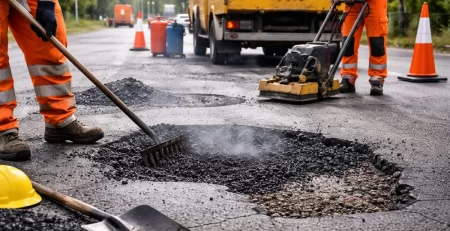
While the road surfacing process UK contractors deliver creates a durable surface, long-term performance also depends on ongoing care. Regular inspections, prompt repair of minor defects, and effective drainage maintenance help extend the lifespan of the surface. Property owners managing larger sites often benefit from working with experienced commercial surfacing contractors who understand the demands of high-traffic environments.
Professional installation reduces the likelihood of premature failure, but proactive maintenance ensures the surface continues to perform safely and efficiently throughout its service life.
Why Following a Professional Process Matters
Each stage of the road surfacing process UK standards require serves a specific purpose. Skipping steps, using unsuitable materials, or rushing installation can compromise the entire surface. By following a structured and professional approach, contractors deliver results that meet safety requirements, withstand daily use, and provide long-term value for property owners.
Understanding this process allows clients to make informed decisions, recognise quality workmanship, and appreciate the importance of proper planning and execution in road surfacing projects.