Benefits of Machine-Laid Road Surfacing
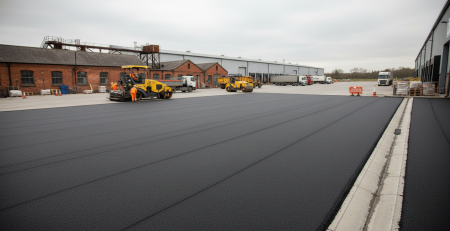
Machine laid road surfacing UK refers to the installation of asphalt or tarmac using specialist paving machinery rather than manual methods. The process involves a paving machine distributing and levelling the material in a continuous, controlled operation before compaction with heavy rollers. This method is widely used for commercial sites, industrial yards, housing developments and access roads where consistency and durability are essential.
Unlike hand-laid surfacing, which relies heavily on manual spreading and shaping, machine laying ensures even thickness across the entire surface. This uniformity plays a significant role in long-term performance, structural strength and visual finish. For property owners and site managers responsible for safety and maintenance budgets, these factors directly affect lifecycle costs.
Machine laying is commonly delivered as part of professional tarmac installation road surfacing services where precision and efficiency are required to meet commercial standards.
Why Consistency Matters in Road Surfacing
Consistency in road surfacing is not simply about appearance. It has structural and safety implications that can influence how a surface performs over many years.
Structural Integrity and Load Distribution
A road surface must distribute weight evenly across its sub-base. If the material thickness varies significantly, weak spots can develop. These areas are more likely to suffer cracking, rutting or premature failure under repeated traffic loads.
Machine laid road surfacing UK projects reduce this risk by applying material at a consistent depth. The paving machine regulates the flow and width, ensuring a controlled layer that supports even compaction. This consistency enhances load-bearing capacity, particularly important in commercial settings where delivery vehicles and heavier traffic are common.
For sites requiring additional strength, such as logistics hubs or industrial estates, working with experienced commercial surfacing contractors ensures the specification matches the demands of the environment.
Improved Surface Finish
An even finish reduces trip hazards, standing water and visual defects. On private estates, business parks and retail areas, surface presentation contributes to the overall impression of the property.
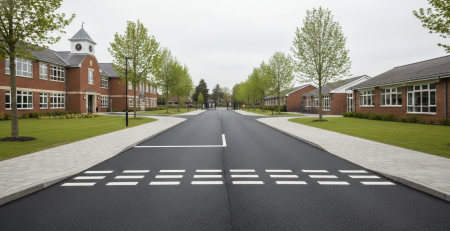
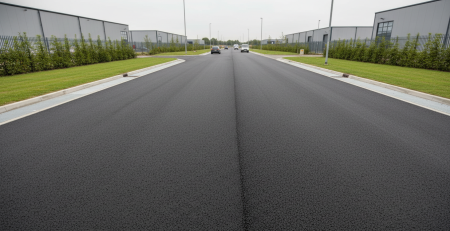
Machine laying produces smooth, uniform lines and seamless joints. The result is a professional finish that not only performs well but also enhances kerb appeal. For organisations managing public-facing spaces, this consistency reflects positively on the site’s standards.
Efficiency and Reduced Disruption
One of the most practical benefits of machine laid road surfacing UK is the speed of installation. For commercial properties, downtime can directly impact operations and revenue.
Faster Installation Times
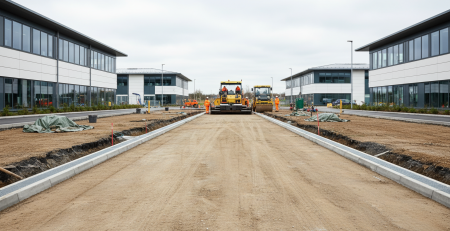
A paving machine can lay large areas in a single continuous pass. Compared with manual methods, this significantly reduces installation time. For car parks, access roads or estate roads, faster completion means reduced closure periods and less inconvenience for users.
Efficiency also supports better material management. Continuous laying minimises cold joints and reduces the likelihood of uneven bonding between sections.
Better Planning for Live Environments
Many surfacing projects take place in operational environments such as schools, retail centres or business premises. In these situations, careful scheduling and rapid execution are essential.
Machine laying allows contractors to plan works in phases, completing substantial areas quickly while maintaining safe access where required. This approach is particularly relevant for projects involving education surfacing where safety and time constraints are tightly managed.
Enhanced Durability and Longevity
Durability is often the primary concern for property owners considering resurfacing. While materials play a crucial role, the method of installation is equally important.
Proper Compaction
After the paving machine lays the material, rollers compact it to achieve the required density. When the surface depth is consistent, compaction is more effective. This reduces air voids and strengthens the bond between aggregates and binder.
Poorly compacted areas are more vulnerable to water ingress and freeze-thaw damage, particularly in the UK climate. Machine laid road surfacing UK projects help mitigate these risks by creating a dense, uniform surface.
Resistance to Premature Defects
Uneven hand-laid sections may cool at different rates, leading to weak seams. Over time, these areas can develop cracks or depressions. Machine laying minimises these inconsistencies by maintaining a steady material temperature and continuous placement.
For high-traffic routes, including those requiring highway surfacing, this structural reliability is critical to long-term performance.
Cost-Effectiveness Over the Long Term
While initial project costs vary depending on size and specification, machine laid road surfacing UK often provides better value over the lifespan of the surface.
Reduced Maintenance Requirements
A uniform surface is less prone to early failure. Fewer weak points mean fewer reactive repairs. Over time, this reduces expenditure on patching and remedial works.
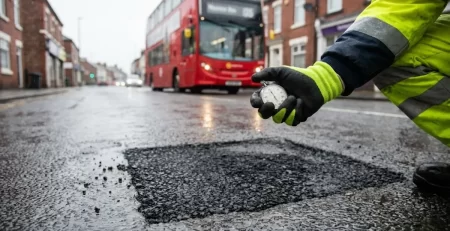
Where localised damage does occur due to external factors, professional pothole repairs can be undertaken efficiently without compromising the surrounding structure.
Lower Lifecycle Costs
When assessing value, it is important to consider total lifecycle cost rather than installation cost alone. A surface that lasts several years longer before requiring resurfacing delivers measurable financial benefits.
Machine laying contributes to this extended lifespan by ensuring optimal thickness, compaction and finish from the outset.
Suitability for Different Project Types
Machine laid road surfacing UK is adaptable to a wide range of environments, from private developments to large-scale infrastructure.
Housing Developments and Estates
New build estates and private developments require smooth, consistent roads that meet regulatory standards and provide long-term reliability. Machine laying ensures that estate roads are completed efficiently and to specification.
For developers and managing agents overseeing residential projects, engaging experienced domestic contractors helps ensure the final finish aligns with both planning requirements and homeowner expectations.
Industrial and Commercial Yards
Industrial environments often involve heavy vehicle movements and concentrated load points. Consistent depth and proper compaction are essential to prevent rutting.
Machine laid surfaces provide the structural integrity needed for these demanding conditions, making them suitable for distribution centres, manufacturing sites and logistics yards.
Access Roads and Car Parks
Access routes must accommodate frequent turning movements, braking forces and variable traffic volumes. An even, well-compacted surface improves safety and reduces long-term maintenance.
In car parks, a smooth finish enhances drainage performance and reduces standing water, contributing to safer pedestrian and vehicle movement.
Weather Considerations in the UK
The UK climate presents specific challenges for road surfacing, including rainfall, temperature fluctuations and seasonal freeze-thaw cycles.
Machine laid road surfacing UK projects benefit from controlled installation processes that reduce the risk of weather-related defects. Continuous laying minimises exposed edges and weak joints where water might penetrate. Proper compaction further limits moisture infiltration.
Professional contractors plan works carefully to avoid adverse conditions and ensure materials are laid within appropriate temperature ranges. This attention to detail supports long-term performance in varied British weather.
Quality Control and Professional Standards
Machine laying does not remove the need for skilled oversight. In fact, experienced operators and supervisors are essential to achieve the full benefits of the method.
Contractors monitor levels, gradients and compaction rates throughout the process. This ensures compliance with specifications and maintains surface tolerances. For clients seeking reassurance, reviewing previous projects through detailed case studies can provide insight into workmanship and outcomes.
Working with an established provider such as Total Surfacing Solutions ensures that both equipment and expertise are aligned with UK standards.
Comparing Machine-Laid and Hand-Laid Methods
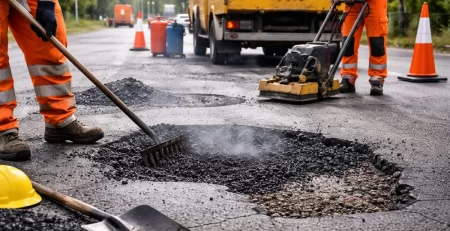
There are circumstances where smaller repairs or confined areas may require manual methods. However, for larger surfaces, machine laying generally provides superior consistency and efficiency.
Hand laying can be more susceptible to uneven thickness and visible joins. While skilled operatives can achieve good results, the margin for variation is greater. Machine laying reduces this variability by automating depth control and material distribution.
For projects exceeding small patch repairs, machine laid road surfacing UK typically offers a more reliable solution, particularly when long-term performance is a priority.
Planning a Machine-Laid Surfacing Project
Effective planning is essential to maximise the benefits of machine laying. This includes assessing sub-base condition, drainage requirements and expected traffic loads.
Site preparation must be thorough to ensure the new surface bonds correctly and performs as intended. Proper excavation, base installation and edge restraint all contribute to overall durability.
Engaging experienced professionals early in the process helps avoid specification errors and ensures the finished surface meets operational needs.
Conclusion
Machine laid road surfacing UK provides measurable advantages in consistency, durability and efficiency. By ensuring uniform thickness, effective compaction and a smooth finish, this method supports long-term performance across commercial, residential and industrial environments.
For property owners and site managers seeking a reliable solution that balances structural strength with professional appearance, machine laying offers a practical and cost-effective approach. When delivered by experienced contractors using appropriate equipment, it forms the foundation of a surface designed to perform reliably for years to come.