Do Resin Driveways Crack or Fade Over Time? 8 Common Causes
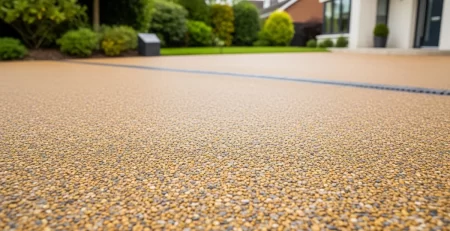
Resin driveways can crack or fade when their construction, materials, or surface conditions deteriorate. Although resin bound surfacing offers a durable finish, poor groundwork, excessive vehicle loads, and unsuitable resin formulations may cause visible damage. Understanding resin driveway cracking helps homeowners identify problems before minor defects develop into more extensive repairs.
Surface discolouration can also cause concern, especially when lighter aggregate finishes become yellow or uneven. Some changes result from ultraviolet exposure, while others come from dirt, staining, or moisture. A cracked resin driveway may require structural attention, but ordinary fading may sometimes improve with suitable maintenance.
Total Surfacing Solutions supports residential and commercial surfacing projects across Hertfordshire, Bedfordshire, Oxford, Cambridgeshire, and Essex. This guide explains eight common causes of resin surface damage, practical warning signs, repair considerations, and maintenance methods that may improve long-term driveway durability.
Quick Check: Resin driveway cracks, loose stones, and uneven fading should be assessed before repair or resurfacing. Total Surfacing Solutions provides access to resin bound surface specialists for homeowners considering suitable surfacing improvements.
Do Resin Driveways Crack or Fade Over Time? 8 Common Causes

Yes, resin driveways may develop cracks, fading, or surface deterioration over time. These problems are not inevitable, but the risk increases when the base moves, materials are unsuitable, drainage fails, or the surface experiences loads beyond its design.
Resin driveway durability depends on the complete installation rather than the visible aggregate alone. The resin binder, stone mixture, supporting base, weather conditions, and regular maintenance all influence how the surface performs.
Common Causes of Resin Driveway Damage
| Cause | Visible Warning Sign | Possible Consequence |
| Unstable sub-base | Straight or spreading cracks | Reflective cracking |
| Ground movement | Uneven or lifted areas | Surface separation |
| Heavy vehicle loads | Indentations or damaged turning areas | Structural stress |
| Tree roots | Raised sections and irregular cracks | Localised displacement |
| Incorrect installation | Loose stones or uneven patches | Reduced surface strength |
| UV-unstable resin | Yellowing or colour changes | Visible discolouration |
| Inadequate drainage | Persistent water and damaged edges | Moisture-related deterioration |
| Poor maintenance | Stains, moss, and surface grime | Reduced appearance and usability |
Poor Sub-Base Preparation
One major reason for resin driveway cracking is inadequate preparation beneath the decorative surface. Resin bound material needs a stable supporting base designed for the expected vehicle use and ground conditions.
A weak or poorly compacted foundation may settle after installation. As the base moves, stress can transfer into the resin surface above, creating cracks or uneven sections.
The resin driveway foundation preparation requirements explain why correct groundwork matters before laying a decorative finish.
A well-prepared base reduces avoidable movement. However, the surface still needs suitable drainage, edge support, and construction depth.
Ground Movement and Reflective Cracking
Ground movement may cause existing cracks beneath the resin to appear through the finished surface. This process is called reflective cracking.
The problem can occur when an old concrete or tarmac base contains moving joints or cracks. Covering those defects without suitable treatment may allow them to reappear.
The underlying driveway crack progression factors provide useful information about how existing cracks may become more serious.
Some soils expand or shrink as moisture conditions change. Where this movement affects the foundation, the resin finish may develop stress fractures.
Heavy Vehicles and Excessive Loads
Domestic resin driveways should be designed around their expected vehicle loads. Cars and light vans place different demands on a driveway than heavy commercial vehicles or loaded delivery lorries.
Problems may appear where vehicle wheels repeatedly turn, brake, or remain stationary under concentrated loads.
The resin bonded surface traffic load considerations explain why traffic requirements should influence surface specifications.
Where heavy vehicles are expected, the supporting construction needs appropriate structural design. An ordinary domestic installation should not automatically be treated as suitable for industrial traffic.
Tree Root Growth Beneath the Driveway
Tree roots may contribute to cracking when they lift or disturb the driveway foundation. The visible resin layer cannot fully resist substantial movement beneath it.
Cracks associated with root pressure may appear near planted borders, mature trees, or areas where the driveway has become raised.
A resin driveway crack repair should address the underlying movement before replacing the damaged finish.
Root management requires care because excavation or cutting may affect tree stability and health. Appropriate assessment should guide any work near established trees.
Incorrect Resin Mixing and Installation
The correct resin-to-aggregate ratio is important for long-term surface performance. Insufficient binder may leave stones loosely connected, while excessive material can affect the intended texture and permeability.
Incorrect mixing, unsuitable installation temperatures, and poor finishing techniques may also create inconsistent areas.
The resin installation workmanship and mixing standards explain the preparation and installation stages involved in laying resin bound surfacing.
Resin systems also require suitable curing conditions. Premature traffic, unexpected rain, or installation errors may affect the surface before it reaches its intended strength.
UV-Unstable Resin and Colour Fading
Resin driveway fading may occur when a binder reacts to ultraviolet radiation from sunlight. Some non-UV-stable resin systems can develop yellow or amber discolouration.
This change may be especially noticeable on white resin driveways, pale stone blends, and light grey resin surfaces.
UV-stable resin formulations are designed to resist this form of yellowing. However, natural aggregate colours, contamination, and weather exposure may still affect the finished appearance.
Total Surfacing Solutions provides resin driveway finishes for projects where aggregate selection and appearance are important.
Poor Drainage and Moisture Problems
Water-related problems may contribute to surface deterioration when drainage beneath the driveway is inadequate.
A permeable resin bound finish allows rainfall to pass through the aggregate layer. However, the supporting construction must also provide a suitable drainage route.
The resin bound drainage system performance factors explain why the visible surface is only one part of the drainage system.
Persistent ponding, weak edges, and saturated supporting layers should be investigated before repairs begin.
Neglected Cleaning and Surface Maintenance
Dirt, moss, algae, and organic debris may collect on resin driveways. These deposits can change the surface appearance and may be mistaken for resin fading.
Regular cleaning helps prevent contamination from building up between exposed aggregate particles.
The resin surface cleaning and stain prevention methods explain suitable cleaning considerations for established surfaces.
Cleaning cannot restore a failed foundation or severely deteriorated binder. Structural problems require a different response.
Why Resin Driveway Cracking Happens

Understanding why resin driveways crack begins with identifying where the movement or deterioration originates. A crack in a resin driveway may develop within the decorative layer or reflect a defect beneath it.
The position, shape, and extent of the damage can provide useful clues. However, surface appearance alone cannot confirm the underlying cause.
Different Types of Resin Driveway Cracks
| Crack Pattern | Possible Cause | Suggested Assessment |
| Fine surface cracks | Binder stress or minor substrate movement | Check surface and base condition |
| Straight-line cracks | Existing base joints or reflective cracking | Inspect the underlying substrate |
| Irregular spreading cracks | Ground movement or structural weakness | Investigate foundation stability |
| Cracks near edges | Weak restraints or localised settlement | Check edge construction |
| Cracks beside trees | Root activity or ground displacement | Assess root and base movement |
A crack appearing shortly after installation may indicate a different problem from damage developing after years of use.
For example, newly visible joints may suggest reflective cracking. Progressive cracking combined with sinking could indicate a deeper foundation issue.
Different types of cracks in resin driveway surfaces may indicate different underlying problems. Fine cracks could develop from binder stress, while wider cracks may suggest ground movement, poor sub-base preparation, or repeated heavy vehicle loads.
Inspect the shape, location, and width of each crack before choosing a repair method. Cracks near driveway edges may indicate weak restraints, while spreading damage could require further investigation of the supporting foundation.
Can Resin Crack Without a Failed Foundation?
Yes, resin bound surfacing may experience damage within the decorative layer itself.
Incorrect binder proportions, unsuitable aggregates, incomplete curing, or concentrated loading may contribute to surface problems.
Does resin crack even when the underlying foundation remains stable? Yes, some resin bound surfaces may develop cracks because of incorrect mixing ratios, unsuitable aggregates, incomplete curing, or concentrated vehicle pressure.
However, cracks spreading across wider sections often justify an assessment of the supporting base.
Total Surfacing Solutions offers resin bound services hertford for appropriate residential and commercial surfacing projects.
Resin Driveway Fading and UV Damage
Resin driveway fading is not always caused by the aggregate losing its natural colour. In some installations, the resin binder changes appearance after prolonged sunlight exposure.
Non-UV-stable systems are more likely to develop visible yellowing. UV-stable formulations generally resist this effect more effectively, although outdoor surfaces still experience environmental wear.
The resin driveway sunlight and weather resistance information provides further context about exposure to changing UK conditions.
Signs of Resin Surface Discolouration
Common appearance changes include:
- Yellowing around pale decorative stones
- Uneven colour between shaded and exposed areas
- Dark patches caused by embedded dirt
- Surface staining from leaves or organic material
- Localised colour variation following repairs
Not every change indicates structural failure.
A dirty driveway may respond to appropriate cleaning, while genuine binder discolouration may require specialist assessment.
Can Faded Resin Driveways Be Restored?
Some faded resin surfaces may benefit from an approved rejuvenation treatment. However, product compatibility must be confirmed before application.
Applying an unsuitable coating could change the texture, appearance, or permeability of resin bound surfacing.
The resin driveway protective treatment compatibility information explains why sealing should not be treated as a universal remedy.
Where fading results from significant binder deterioration, localised repairs or resurfacing may provide a more appropriate option.
How Long Does a Resin Driveway Last?
The resin driveway lifespan depends on construction quality, binder formulation, traffic conditions, drainage, and ongoing maintenance.
Some correctly specified resin bound systems are designed to provide service for well over ten years. Longer service life is possible, but a fixed 15–25-year lifespan should not be assumed for every installation.
A resin surface laid over an unstable base may deteriorate much earlier than one supported by suitable construction.
Resin Driveway Durability Factors
| Factor | Influence on Lifespan |
| Sub-base stability | Reduces movement-related cracking |
| Resin formulation | Influences UV resistance and binder performance |
| Aggregate quality | Supports consistent texture and finish |
| Surface thickness | Must suit aggregate size and expected use |
| Drainage | Helps manage moisture beneath the surface |
| Traffic loading | Determines structural demands |
| Maintenance | Limits avoidable contamination and wear |
The long-term resin surface preservation practices explain how cleaning and maintenance may support better service life.
Resin Driveway After One Year
A resin driveway after 1 year should generally remain structurally sound when correctly installed and used within its design limits.
Minor dirt accumulation or seasonal staining may develop during ordinary use.
However, significant cracking, widespread loose aggregate, or major surface movement should not be dismissed as routine ageing.
Early defects deserve inspection because the cause may involve installation, drainage, or the supporting construction.
Resin Driveway After Five Years
A resin driveway after 5 years may show ordinary signs of use, including staining, tyre marks, or slight changes in appearance.
A well-maintained surface may still perform effectively, provided the binder, drainage, and supporting base remain sound.
Homeowners should inspect areas exposed to repeated turning movements, heavy loads, and persistent moisture.
Widespread cracking or aggregate loss is not an unavoidable consequence of reaching five years.
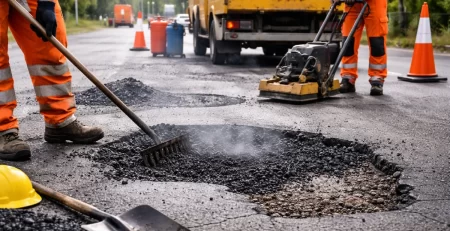
How to Repair a Cracked Resin Driveway
Repairing cracks in a resin driveway requires identifying their cause before choosing a treatment.
A small isolated defect may need a localised repair. However, active movement beneath the resin can cause damage to return if the supporting problem remains untreated.
The residential driveway defect repair assessment provides related information about matching repair methods to surface conditions.
Resin Driveway Crack Repair Options
| Surface Condition | Possible Response |
| Small isolated crack | Compatible localised repair after assessment |
| Loose aggregate | Remove unstable material and reinstate appropriately |
| Widespread cracking | Investigate the supporting structure |
| Sunken resin section | Examine base settlement and drainage |
| Severe binder deterioration | Consider partial or full replacement |
Repair materials should be compatible with the original resin system.
A generic driveway crack repair kit may not match the binder, aggregate size, or colour of the existing surface.
Can Resin Driveways Be Repaired?
Yes, some resin driveways can be repaired without replacing the entire surface.
The suitability of repairs depends on the amount of damage, stability of the foundation, and availability of compatible materials.
Small repaired areas may remain visible because older resin and aggregate can differ in appearance from newly installed material.
When damage affects a large section, replacing the affected area may provide a more practical result than repeated small patches.
When Does Resurfacing Make More Sense?
Resin driveway resurfacing may be considered when the existing finish has widespread cracks, severe aggregate loss, or recurring surface failure.
The existing base must also be assessed before a replacement layer is installed.
A damaged driveway should not simply be covered with new resin if underlying movement remains unresolved.
Total Surfacing Solutions provides resin coated driveways hertford surfacing options for homeowners considering a new or replacement finish.
How to Prevent Resin Driveway Cracking and Fading
Preventive maintenance begins with protecting the surface from avoidable damage and recognising changes early.
Resin bound driveways are often described as low maintenance, but that does not mean they require no care.
Total Surfacing Solutions offers low maintenance driveway surfacing options for homeowners seeking practical finishes with manageable upkeep requirements.
Clean the Surface Regularly
Sweep leaves, dirt, and loose debris away from the driveway.
Wash the surface using products and methods approved for the installed resin system.
Avoid aggressive chemicals that may affect the binder or decorative aggregate.
Total Surfacing Solutions provides resin driveway cleaning in Hertfordshire for suitable outdoor surfaces requiring professional cleaning attention.
Protect the Surface From Heavy Loads
Avoid placing concentrated loads on areas not designed to support them.
Heavy skips, construction equipment, or commercial vehicles may stress domestic resin installations.
Where temporary heavy objects are unavoidable, suitable load-spreading measures may help protect the surface.
Repeated steering while stationary should also be limited where practical.
Monitor Cracks and Drainage
Check the driveway after periods of heavy rainfall or freezing conditions.
Persistent puddles, new cracks, and loose stones may indicate maintenance problems requiring assessment.
The driveway freeze thaw deterioration mechanisms explain how moisture and freezing temperatures can affect vulnerable construction layers.
Early inspection can help homeowners distinguish cosmetic changes from developing structural damage.
Choose Suitable Resin Materials
UV-stable resin formulations may reduce the risk of yellowing.
Aggregate grading, binder proportion, surface thickness, and curing conditions also influence durability.
The resin installer specification and workmanship criteria explain why careful installation planning matters.
A decorative finish should be selected according to the property’s actual use rather than appearance alone.
Resin Driveway Cracking and Fading Area Coverage
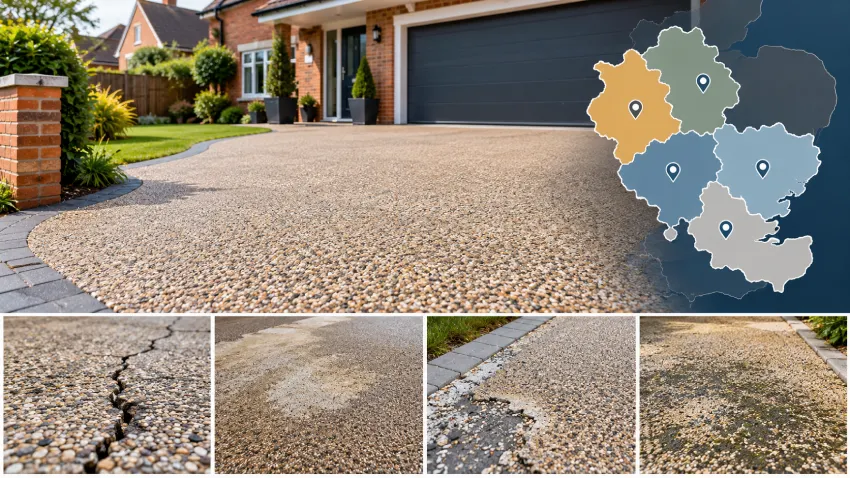
Resin driveway durability depends on construction, traffic, drainage, and local weather exposure. Total Surfacing Solutions serves Bedfordshire, Oxford, Cambridgeshire, Essex, and Hertfordshire. Homeowners across these areas may experience staining, surface wear, or cracking for different reasons. Understanding the existing driveway condition helps identify suitable cleaning, repair, or replacement work.
Bedfordshire Resin Driveway Cracking and Surface Repair
For Bedfordshire properties, resin driveway cracks may indicate problems with base stability, drainage, or repeated vehicle loading. Total Surfacing Solutions provides resin bound surfacing options for homeowners considering suitable installation or replacement work.
Oxford Resin Driveway Fading and Durability Assessment
Oxford homeowners should assess whether fading comes from UV exposure, surface contamination, or ageing binder materials. Total Surfacing Solutions supports resin bound surfacing projects where preparation, drainage, aggregate selection, and long-term performance matter.
Cambridgeshire Resin Driveway Lifespan and Maintenance
In Cambridgeshire, resin driveway durability should be evaluated through surface condition, foundation stability, and water movement. Total Surfacing Solutions provides resin bound surfacing services for properties requiring suitable construction and maintenance considerations.
Essex Resin Bound Driveway Cracking and Fading
Essex resin driveway owners should investigate loose aggregate, cracking, and uneven colour before applying cosmetic treatments. Total Surfacing Solutions supports resin bound installations where compatible materials and suitable supporting construction are important.
Hertfordshire Resin Driveway Durability and Repairs
Hertfordshire homeowners should inspect resin driveways for movement, fading, and worn traffic areas. Total Surfacing Solutions provides resin bound surfacing options where driveway construction, vehicle loading, and long-term maintenance require careful planning.
Final Advice From Total Surfacing Solutions
Resin driveways can crack or fade over time, but these problems are not unavoidable. Structural movement, incorrect installation, UV-unstable materials, heavy loads, and poor drainage can all affect performance.
The right response depends on the cause. Cleaning may improve surface staining, while damaged binder or an unstable foundation may require professional repairs.
Total Surfacing Solutions helps property owners across Hertfordshire and surrounding counties consider durable resin surfacing options. Inspecting defects early and choosing suitable maintenance methods can help protect long-term performance.
FAQs About Resin Driveway Cracking and Fading
Why Do Resin Driveways Crack?
Resin driveways may crack because of unstable foundations, ground movement, poor installation, or excessive loading. Reflective cracking can occur when defects in the supporting base transfer into the resin surface. Identifying the underlying cause is important before repair.
Does Resin Driveway Crack Easily?
A correctly installed resin bound driveway should resist ordinary domestic use. However, resin is not immune to cracking. Structural movement, poor substrate preparation, and unsuitable materials may increase the risk of damage.
How Long Does a Resin Driveway Last?
A properly specified resin driveway may remain serviceable for many years. Some systems are designed for more than ten years of use. Actual lifespan depends on construction quality, traffic, drainage, materials, and maintenance.
Are Resin Driveways Durable?
Yes, resin bound driveways can provide durable outdoor surfaces when their construction suits the expected use. Suitable base preparation, binder quality, aggregate selection, and surface thickness contribute to durability. Heavy loads or structural movement may still cause damage.
Can Cracks in a Resin Driveway Be Repaired?
Some resin driveway cracks can be repaired using compatible materials. However, structural movement or a failing base must be addressed first. Localised repairs may remain visible because newly installed materials can differ from aged surfaces.
Does Resin Fade in Sunlight?
Some resin formulations may yellow after ultraviolet exposure. UV-stable resin systems are designed to resist this effect. Natural aggregate variation, dirt, and outdoor weathering may also influence appearance over time.
Why Has My Resin Driveway Cracked After One Year?
Early cracking may suggest installation defects, substrate movement, drainage problems, or loading beyond the surface specification. The crack pattern and surrounding conditions should be investigated before selecting a repair method.
Does Resin Break Down Over Time?
Resin materials can deteriorate through prolonged environmental exposure, mechanical stress, and ageing. However, the rate varies by formulation and installation conditions. A well-specified resin bound system may remain functional for years with suitable care.
Do Resin Bound Driveways Crack in Winter?
They can develop cracks during winter if moisture and freezing temperatures affect vulnerable supporting layers. Seasonal ground movement may also transfer stress into the surface. Correct drainage and stable construction help manage these risks.
Can a Faded Resin Driveway Be Resealed?
Some resin surfaces may accept approved rejuvenation treatments. However, not every driveway needs resealing, and unsuitable coatings may affect permeability. Product compatibility and the original resin system should be checked before applying additional material.