Why Commercial Yards Require Stronger Surfacing Than Car Parks
At a glance, commercial yards and car parks may appear similar, as both are surfaced areas designed to support vehicle use. However, the demands placed on each are significantly different. Car parks are generally used by lighter vehicles such as cars and small vans, with relatively predictable traffic patterns and limited load stress.
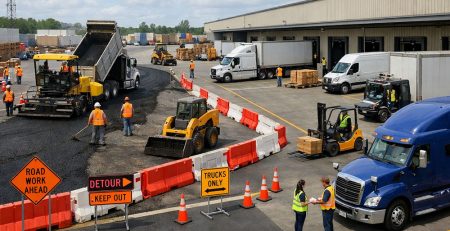
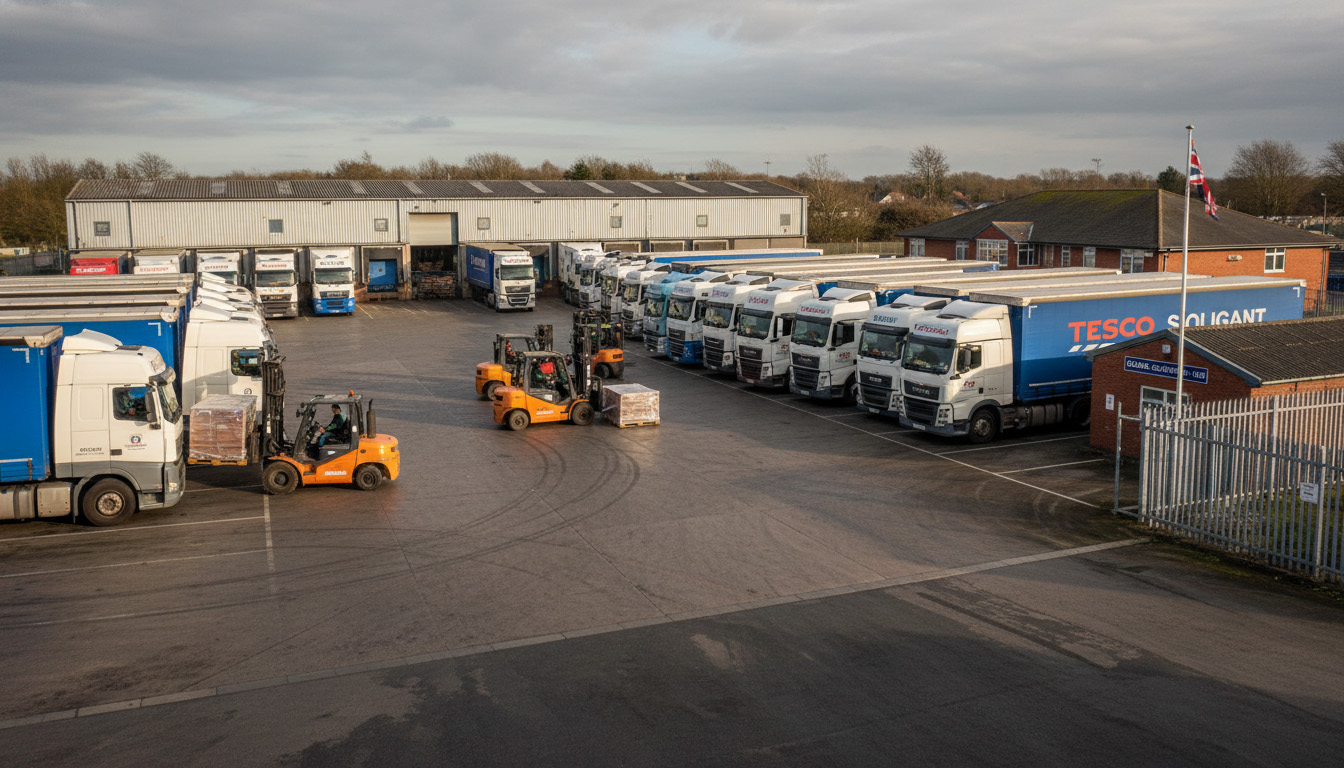
Commercial yards, by contrast, are working environments. They are frequently used by heavy goods vehicles, forklifts, delivery lorries, and plant machinery. These vehicles not only weigh considerably more but also apply pressure to the surface in more concentrated and repetitive ways. This fundamental difference in usage is the primary reason why stronger surfacing is essential.
In many cases, businesses rely on these yards for daily operations, meaning that surface failure is not just an inconvenience but a direct disruption to productivity and safety.
Load Bearing Requirements and Surface Stress
Heavy Vehicle Weight and Repeated Pressure
One of the most critical factors in surfacing design is load bearing capacity. Commercial yards are subject to far greater loads than standard car parks. Heavy vehicles exert intense pressure through their tyres, particularly when stationary or manoeuvring at low speeds.
Unlike moving traffic on roads, vehicles in yards often turn tightly, brake sharply, and remain stationary for loading and unloading. These actions create concentrated stress points that can quickly lead to deformation if the surface is not properly constructed.
Car parks, on the other hand, experience lighter and more evenly distributed loads. Even in busy environments, the stress applied is significantly less demanding, allowing for thinner surface layers and less robust sub-base construction.
Impact of Static Loads and Point Pressure
Commercial yards frequently experience static loads from parked lorries or stored equipment. These loads can remain in one position for extended periods, placing continuous pressure on a single area.
Without adequate structural strength, this can lead to rutting, cracking, or surface collapse. This is why professional solutions such as tarmac installation are often designed with deeper layers and stronger materials to withstand these conditions.
Sub-Base Construction: The Foundation of Durability
Why Sub-Base Strength Matters
The visible surface is only part of the equation. The true strength of any surfacing system lies beneath, in the sub-base. For commercial yards, the sub-base must be carefully engineered to distribute heavy loads evenly and prevent ground movement.
A standard car park may require a relatively modest sub-base, as the loads are lighter and less frequent. In contrast, commercial yards demand a thicker, more compacted foundation, often using high-quality aggregates designed to resist shifting under pressure.
Failure to install an adequate sub-base is one of the most common causes of premature surface failure in heavy-duty environments.
Ground Conditions and Site Preparation
Commercial yards are often constructed on sites with varied or previously disturbed ground conditions. Proper preparation is essential to ensure long-term performance.
This process may involve excavation, stabilisation, and drainage planning, all of which contribute to the overall strength of the finished surface. Working with experienced commercial surfacing contractors ensures that these factors are addressed correctly from the outset.
Material Selection for Heavy-Duty Performance
Tarmac and Asphalt for Commercial Use
Not all surfacing materials are created equal. While standard tarmac may be suitable for car parks, commercial yards often require enhanced mixes designed for durability and strength.
Heavy-duty tarmac or asphalt incorporates specific aggregate sizes and binding agents to improve resistance to wear, deformation, and cracking. These materials are designed to cope with constant use and extreme loads without compromising performance.
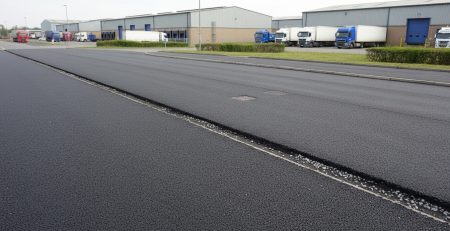
Machine-laid applications, such as machine lay tarmac, are commonly used in commercial yards to ensure a consistent and compact finish that enhances strength and longevity.
Resistance to Wear and Environmental Factors
In addition to load-bearing capacity, commercial yard surfaces must also withstand environmental challenges. Oil spills, fuel exposure, and chemical contaminants are far more common in these settings than in standard car parks.
The chosen material must be resistant to these substances to prevent surface degradation. Furthermore, the UK climate introduces additional stress through temperature changes, moisture, and freeze-thaw cycles, all of which can accelerate wear if the surface is not properly designed.
Traffic Movement and Surface Design
Turning Circles and Shear Forces
One of the key differences between commercial yards and car parks lies in vehicle movement patterns. Car parks typically involve straightforward entry, parking, and exit movements with minimal turning stress.
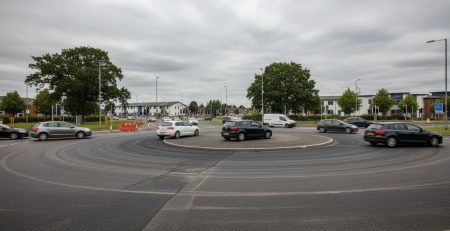
Commercial yards, however, require vehicles to manoeuvre in confined spaces. This often results in tight turning circles, reversing movements, and pivoting, all of which generate shear forces across the surface.
These forces can quickly damage weaker surfaces, leading to cracks and deformation. Stronger surfacing systems are specifically designed to resist these stresses and maintain structural integrity over time.
Continuous Operational Use
Commercial yards rarely have downtime. Many operate throughout the day and night, meaning the surface is under constant use. This continuous demand requires a higher standard of construction to prevent rapid deterioration.
Car parks, particularly in residential or office settings, typically experience periods of low usage, allowing the surface to recover and reducing overall wear.
Safety Considerations in Commercial Environments
Preventing Surface Failure and Hazards
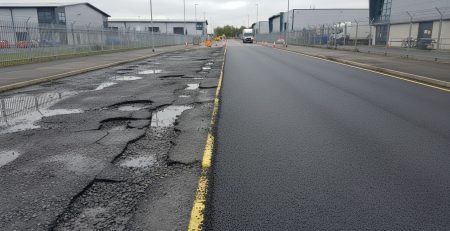
Surface failure in a commercial yard can create serious safety risks. Uneven surfaces, potholes, and cracks can affect vehicle stability and pose hazards for pedestrians and workers.
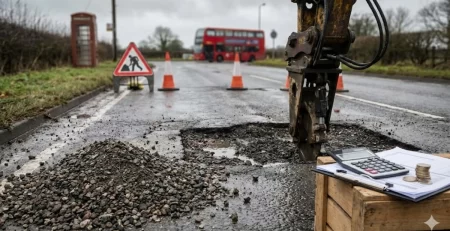
Regular maintenance, including timely pothole repairs, is essential, but the initial construction quality plays a far more significant role in preventing these issues from developing.
A well-designed surface reduces the likelihood of accidents and ensures that operations can continue safely and efficiently.
Compliance and Professional Standards
Commercial sites are often subject to stricter safety and compliance requirements than standard car parks. This includes ensuring that surfaces are fit for purpose and capable of supporting operational demands.
Working with experienced professionals helps ensure that all relevant standards are met, reducing liability and improving long-term performance.
Long-Term Cost Efficiency and Investment Value
The Cost of Under-Specifying a Surface
Choosing a surface designed for lighter use in a commercial yard may seem cost-effective initially, but it often leads to higher expenses over time. Frequent repairs, operational disruptions, and premature resurfacing can quickly outweigh any initial savings.
Investing in a stronger, properly specified surface from the outset provides better value by reducing maintenance requirements and extending the lifespan of the installation.
Minimising Disruption to Operations
For commercial sites, downtime can have significant financial implications. A failing surface may require sections of the yard to be closed for repairs, disrupting logistics and productivity.
A robust surfacing solution minimises the need for ongoing maintenance and ensures that the yard remains fully operational for longer periods.
Drainage and Surface Longevity
Managing Water Effectively
Water is one of the most damaging elements for any surfaced area. In commercial yards, poor drainage can lead to standing water, which weakens the surface and sub-base over time.
Effective drainage design is essential to ensure that water is directed away from the surface and does not compromise structural integrity. This is particularly important in heavy-duty environments where water combined with load stress can accelerate deterioration.
Preventing Long-Term Damage
By incorporating proper drainage systems and high-quality materials, commercial yard surfaces can maintain their strength and performance for many years. This reduces the need for costly repairs and ensures consistent usability.
Conclusion
Commercial yards demand a significantly higher standard of surfacing than car parks due to the intensity of their use, the weight of vehicles, and the operational requirements of the site. From sub-base construction to material selection and drainage design, every aspect must be carefully considered to ensure durability and safety.
While car parks can function effectively with lighter-duty solutions, commercial yards require robust, professionally installed surfaces capable of withstanding constant stress. Investing in the right approach not only improves performance but also delivers long-term cost savings and operational reliability.