How Long Does Machine‑Laid Tarmac Last in the UK Climate: Know the Timeframe
UK driveways and roads face relentless challenges from the climate, wet winters, freeze–thaw cycles, heavy rainfall, and fluctuating summer heat. These conditions cause cracks, potholes, surface wear, and premature failure, leaving homeowners and businesses frustrated and facing costly repairs.
Many people underestimate the difference between temporary fixes like cold patching and professional machine‑laid tarmac services from Total Surfacing Solution, leading to disappointing results and shorter lifespans.
The reality is that machine‑laid tarmac, when installed with precise base preparation, hot tarmac application, and expert compaction, provides a long‑lasting, durable surface capable of withstanding years of use.
Today, we explore how long machine‑laid tarmac lasts in the UK climate, the main factors affecting its lifespan, and practical solutions to extend its performance, ensuring your driveways and roads remain safe, smooth, and resilient.
Machine Lay Tarmac Services & Expected Durability
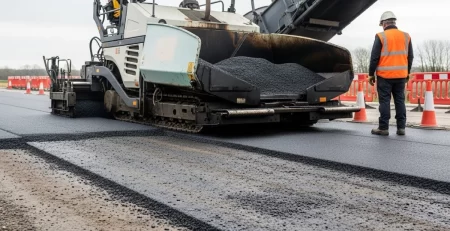
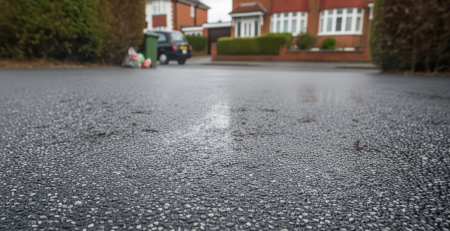
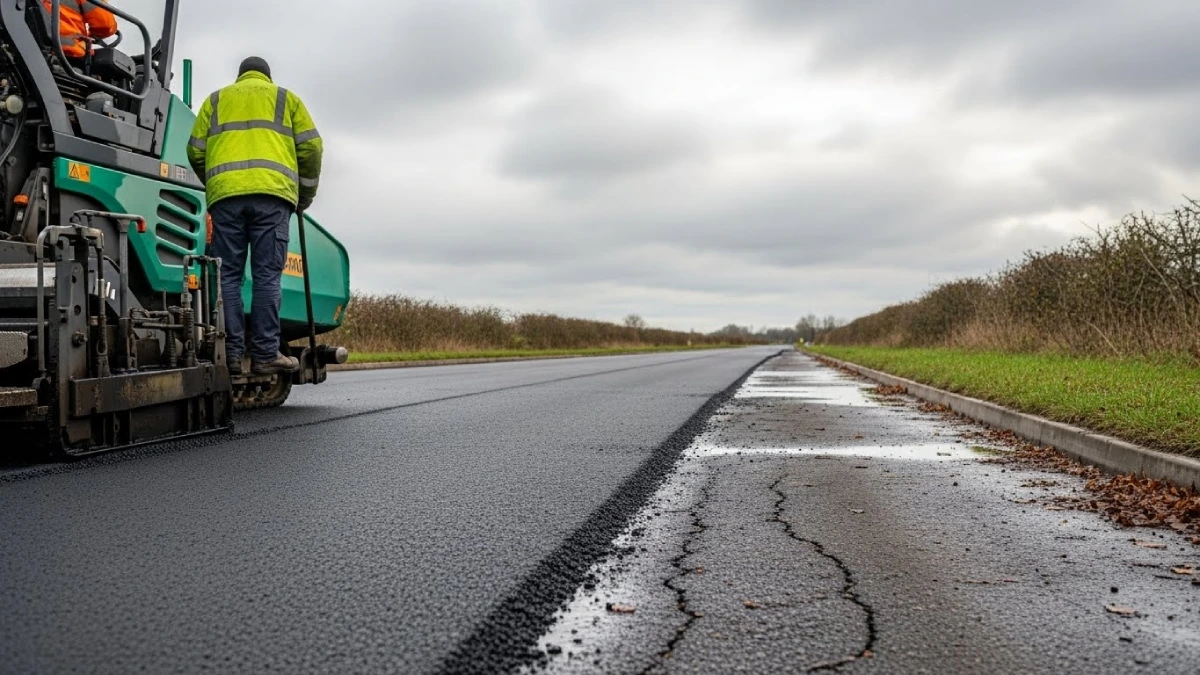
Machine Lay Tarmac represents the pinnacle of professional surfacing, an industrially precise method where hot tarmac is evenly laid and deeply compacted. This approach ensures a dense, uniform surface, significantly reducing weak spots, air pockets, and water ingress.
Unlike hand‑laid or DIY surfacing, machine-laid tarmac delivers exceptional structural integrity, making it ideal for both domestic driveways and commercial roads exposed to heavy traffic and harsh UK weather conditions.
The combination of hot tarmac application, precise thickness, and expert compaction ensures surfaces are resilient to freeze-thaw cycles, rainwater infiltration, and daily wear.
Typical Lifespan Ranges
- Domestic driveways: With proper sub-base preparation, drainage, and regular maintenance, machine-laid tarmac can last 15–25 years, providing a smooth, durable surface that withstands both vehicle weight and seasonal weather changes.
- Commercial roads & car parks: Depending on traffic intensity, weight loads, and routine inspection, these surfaces generally last 15–20+ years, offering a long-term, cost-effective solution for high-use areas.
- Heavy traffic zones: Surfaces not designed for consistent heavy loads may see reduced lifespan, often 10–15 years, emphasizing the importance of tailored design and high-quality installation.
Why Machine-Laid Tarmac Is So Durable?
- Prevents micro-void formation: Expert compaction eliminates tiny gaps where water can infiltrate, a common cause of early deterioration.
- Uniform thickness: Avoids thin spots prone to cracking, especially under repeated vehicle stress.
- Resistant to weather extremes: Hot tarmac bonds effectively to the base layer, preventing frost, rain, or heat-related damage.
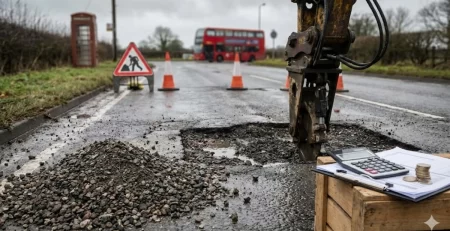
In contrast, cold patch solutions are suitable only for temporary fixes. They don’t integrate structurally with the underlying layers, making surfaces prone to recurring cracks. Professional pothole repairs using hot tarmac, however, restore durability and help maintain the long-term lifespan of the driveway or road.
Benefits of Machine Lay Over Traditional Surfacing
Traditional hand‑laid methods or DIY cold patch repairs simply cannot match the precision, consistency, and durability of machine‑laid tarmac.
For homeowners and commercial clients in the UK, choosing the right surfacing method directly impacts lifespan, maintenance costs, and performance under harsh weather conditions. Machine‑laid tarmac delivers a combination of strength, uniformity, and structural integrity that older methods cannot replicate.
- Uniform compaction: Machine-laid tarmac creates a smooth and evenly compacted surface, eliminating tiny voids that can trap water. This significantly reduces water infiltration, which is the main cause of cracking and potholes in the UK climate. The precise application ensures consistent thickness across the entire surface, preventing weak spots that can fail under traffic.
- Stronger resilience: By compacting hot tarmac evenly, crack formation is minimized, reducing the frequency of surface failures. The improved resilience means fewer potholes, less surface deformation, and a safer, smoother driving experience. This is especially important for high-traffic areas like commercial roads or busy residential driveways.
- Reduced maintenance: Because the surface is laid with expert precision and the base is correctly prepared, long-term repair needs are minimized. Unlike hand-laid or patchwork repairs, machine-laid tarmac forms a structurally integrated layer that resists deterioration, saving both time and money over its lifespan.
- Commercial-grade quality: Machine-laid surfaces can handle heavier loads and frequent traffic, making them ideal for business sites, car parks, and municipal roads. The durability ensures that surfaces remain functional and visually appealing for years, even under demanding usage conditions.
The hot tarmac used in machine-laid services bonds more effectively to the sub-base, creating a structurally sound, long-lasting surface rather than a purely cosmetic finish. It’s this combination of strength, precision, and resilience that sets professional machine-laid tarmac apart from traditional methods and DIY solutions.
Residential & Commercial Road Surfacing Longevity Factors
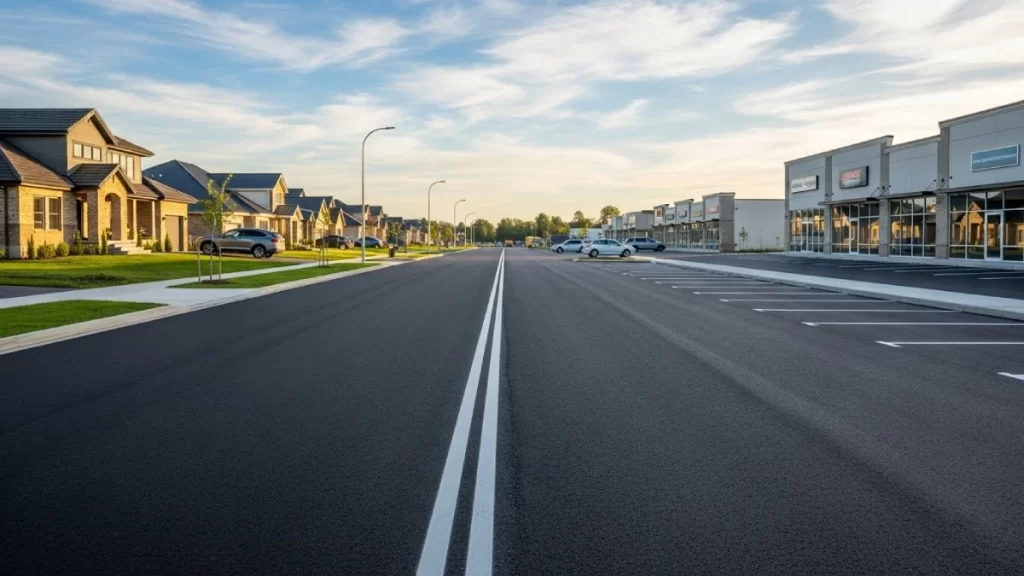
Driveway or road lifespan isn’t a fixed number; it’s influenced by key controllable factors.
Ground Preparation & Base Quality
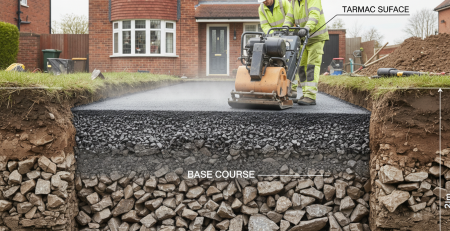
- Solid sub‑base: properly excavated, leveled and compacted before laying
- Correct gradients: prevent water pooling and freeze‑thaw stress.
- Adequate drainage: essential for the UK’s frequent rain conditions.
Why it matters: Poor base preparation leads to early sinking, cracking, and potholes long before the expected lifespan.
Traffic Load & Usage Intensity
- Residential cars: lower stress helps surfaces reach 20+ years.
- Vans, HGVs, or industrial traffic: requires a stronger base and thicker layers.
High‑stress surfaces demand premium machine lay tarmac services with reinforced bases.
Climate & Weather Impact
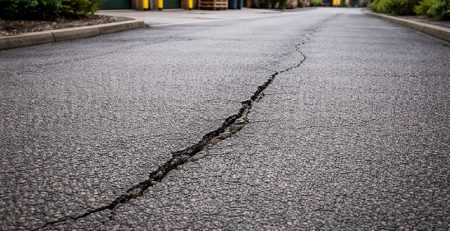
- Freeze–thaw cycles: water expands in cracks, worsening damage.
- Heavy rain: without drainage, water undermines the sub‑base.
- Sun/UV exposure, over many years, can dry the binder.
Effective design anticipates these stresses and protects against them.
Maintenance Practices
- Annual inspection catches cracks early.
- Prompt pothole repairs stop deep base failures.
- Surface sealing (optional): can help protect against oxidation.
Proactive maintenance often adds 5–10+ years to the useful life of surfaces.
Why Choose the Total Surfacing Solution in the UK?
At Total Surfacing Solution, our approach is built on technical precision, regional knowledge, and long-term performance, not shortcuts. We understand how UK soil conditions, rainfall levels, and seasonal temperature shifts directly impact surface lifespan, and every project is planned accordingly.
Our team delivers machine lay tarmac services in Essex and Hertfordshire using professional-grade equipment and controlled hot tarmac application. This ensures consistent compaction, accurate thickness, and a surface that performs reliably under daily traffic and changing weather.
We specialise in driveway surfacing services in Hertfordshire that begin with correct excavation and base preparation. This prevents settlement issues, standing water, and early cracking, which are the most common causes of premature failure in poorly installed surfaces.
For businesses and public areas, our commercial surfacing and road surfacing services are designed to handle higher traffic loads and long-term wear. We specify stronger sub-bases and tailored layer depths to ensure durability without unnecessary future disruption.
Our pothole repair services focus on permanent restoration rather than temporary patching. By using hot tarmac where appropriate, we stop surface damage from spreading into the sub-base, significantly extending the overall lifespan of the road or driveway.
Every tarmac installation we complete is guided by local weather insight, drainage planning, and years of on-site experience. The result is a surface built for longevity, reliability, and real value, not just visual appeal.
Areas We Cover: Ensuring Local Support
Local presence means quicker support and better contextual design. Total Surfacing Solution proudly serves:
- Essex: machine lay tarmac services, driveway surfacing, and pothole repairs in Essex.
- Hertfordshire: driveway surfacing, commercial surfacing, and pothole repair services.
- Surrounding UK regions with tailored installation and ongoing maintenance plans.
Local climate familiarity directly influences longevity, because installation is tailored to drainage, ground conditions and seasonal temperature patterns.
Machine-Laid Tarmac: Built for Decades in UK Conditions
Machine‑laid tarmac remains one of the most durable, cost‑effective and weather‑resilient surfacing options in the UK climate.
When installed with professional base preparation, proper compaction and thoughtful drainage, you can confidently expect 15–25+ years of service, often much longer with regular inspection and early pothole repair.
Unlike short‑term cold patch fixes, true machine‑laid hot tarmac becomes a structural part of your driveway or road surface, resisting water ingress, seasonal stresses and heavy traffic.
Getting the right installation and ongoing care is the difference between surfaces that fail in under a decade and surfaces that deliver decades of reliable performance tailored to UK weather conditions.