How to Remove Oil Stains from Driveway Effectively: Professional-Grade Solutions
Oil stains don’t have to be permanent eyesores ruining your property’s curb appeal. Whether you’re battling fresh drips or stubborn old marks, the right approach makes all the difference.
This comprehensive guide reveals proven removal techniques ranging from simple household remedies to professional-grade solutions that actually work. You’ll learn how to identify various stain types, select the most effective cleaning method for your specific driveway material, and implement preventive measures.
Find out why immediate action matters, which common mistakes cause more harm than good, and when professional intervention becomes necessary. Transform your stained driveway into a pristine surface that enhances your home’s value and makes a lasting first impression.
Tip: Fresh oil stains are much easier to remove than old, set-in marks. If your driveway needs professional cleaning or restoration, Get A Free Quote and let our experts restore its appearance.
The best way to remove oil stains from driveway surfaces depends on how long the oil has been present, the driveway material, and how deeply the contamination has penetrated. Homeowners researching how to remove oil from driveway UK surfaces should start with a material-compatible method rather than applying the strongest available chemical.
Quick Check: How to Remove Oil Stains from Driveway
| Driveway Condition | Recommended First Step | Important Precaution |
| Fresh oil spill | Absorb oil with cat litter or absorbent powder | Avoid spreading liquid with water |
| Old oil stain | Apply a suitable driveway degreaser | Test on a hidden area |
| Concrete driveway | Use a concrete-compatible oil cleaner | Avoid unsuitable acidic products |
| Tarmac driveway | Use an asphalt-compatible degreaser | Avoid solvents that soften the binder |
| Resin-bound driveway | Blot and use a resin-safe cleaner | Avoid harsh chemicals and strong pressure |
| Block paving | Absorb oil and clean individual affected areas | Protect jointing materials |
| Engine oil stains | Identify the spill and use a suitable treatment | Dispose of contaminated absorbents properly |
| Pressure washing | Use controlled pressure after pretreatment | Prevent contaminated runoff entering drains |
For how to clean oil spots on driveway surfaces, absorb the fresh spill before applying a suitable cleaning solution. The best oil stain remover for driveway use is not necessarily the strongest degreaser; it should match the material and type of contamination.
Know About the Different Types of Oil Stains
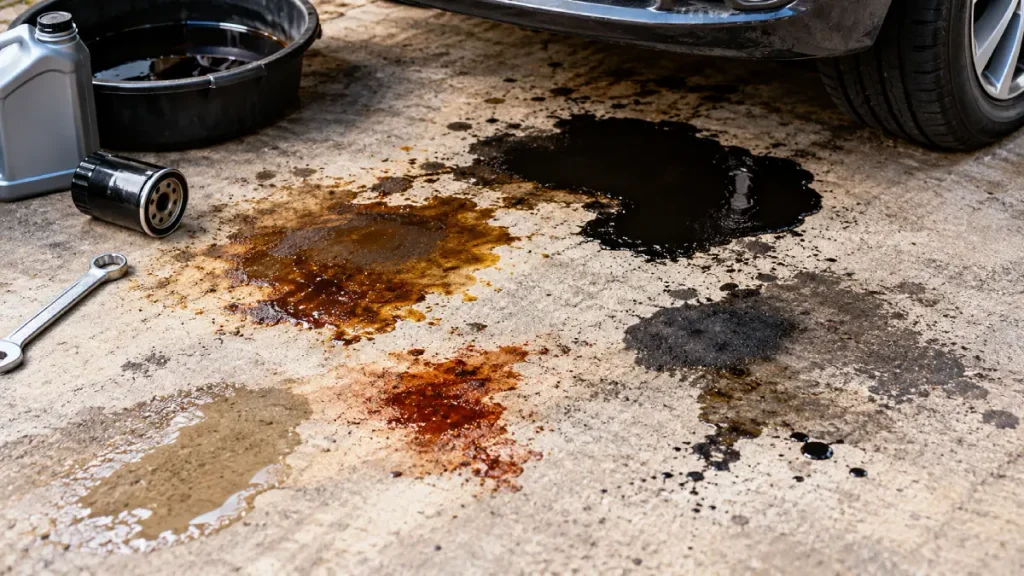
Fresh oil stains are considerably easier to remove than older, set-in marks because the oil hasn’t fully penetrated the driveway surface. When oil first spills, it sits primarily on top of the material, allowing for quick absorption with cat litter, sawdust, or baking soda.
When assessing oil stains on driveway surfaces, distinguish fresh liquid contamination from older dark patches. A dried oil stain on driveway materials may require multiple treatments, especially when oil has penetrated porous concrete or joints between paving blocks.
Fresh Spill Response
Immediately after an oil spill, cover the area with absorbent material like cat litter, cornstarch, or baking soda. These substances soak up the excess oil before it penetrates deeper into the surface. Leave the absorbent material in place for at least 30 minutes, or overnight for larger spills.
After absorption, sweep away the material and dispose of it properly in accordance with local hazardous waste guidelines. Fresh stains typically respond well to this initial treatment, though you may need to repeat the process if oil residue remains visible on the surface.
For how to clean up oil spill on driveway surfaces, prioritise containment and absorption rather than immediately washing the area. A controlled oil spill treatment driveway process helps prevent the contamination from spreading across the surface.
Using baking soda to remove oil stains on driveway areas can help absorb fresh residue. However, absorbent powder alone may not fully remove older contamination that has penetrated the pavement.
Chronic Stain Identification
Chronic oil stains appear as dark, embedded marks that have resisted previous cleaning attempts. These often indicate repeated oil drips from vehicles or equipment stored in the same location. Regular maintenance and proper vehicle care can prevent these recurring problems from developing further.
Consider addressing the source of oil leaks simultaneously with stain removal efforts. Fixing vehicle issues prevents new stains from forming while you work to eliminate existing marks, protecting your Concrete Driveway Cost investment and maintaining property value.
For how to remove old oil stains from driveway surfaces, repeated gentle treatment may be preferable to aggressive scrubbing. Effective removal of old oil stains from driveway preparation begins with identifying the affected material and choosing a compatible product.
If you need to remove engine oil from driveway areas, first check whether the vehicle is still leaking. A recurring oil leak on driveway surfaces can make even successful cleaning temporary.
Material Compatibility
Different driveway surfaces require tailored cleaning approaches to avoid damage. Resin-bound driveways in Hertford and custom resin driveways typically withstand stronger cleaning agents better than traditional asphalt. Understanding your surface material prevents inadvertent damage during the cleaning process.
Before applying any cleaning solution, test it on a small, inconspicuous area. This precautionary step ensures compatibility and prevents widespread surface discoloration or deterioration, particularly important for premium surfaces like clear resin driveways in Hertfordshire and clear resin driveways in Essex.
For how to remove oil stains from concrete, start with absorption and a concrete-compatible cleaner. The procedure for how to remove oil stains from asphalt driveway surfaces is different because unsuitable petroleum-based solvents may soften or damage asphalt.
Similarly, how to remove oil stains from block paving depends on the paving material, joint condition, and whether a protective treatment has previously been applied. When cleaning oil spills on a resin-bound driveway, follow the resin system’s maintenance recommendations and avoid assuming every degreaser is safe.
Household Cleaning Solutions
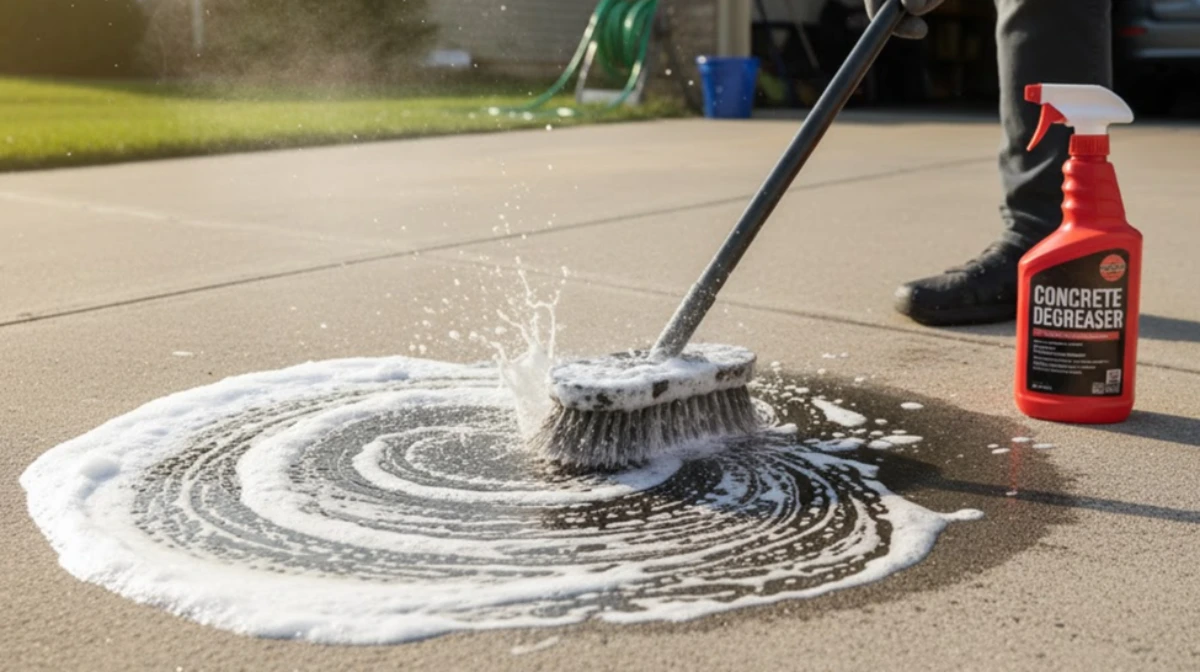
Dish soap and hot water create an effective first-line defense against oil stains. Mix several tablespoons of grease-cutting dish soap with hot water, then scrub the stained area vigorously with a stiff-bristled brush.
For homeowners looking for an oil off driveway home remedy, mild washing-up liquid is often a reasonable first treatment for small, fresh marks. A DIY oil stain remover driveway approach should still be tested before use, particularly on coloured paving, resin-bound finishes, and previously sealed surfaces.
Vinegar Applications
White vinegar combined with baking soda creates a powerful fizzing reaction that helps lift embedded oil. Sprinkle baking soda over the stain, then spray or pour white vinegar on top. Allow the mixture to bubble and work for 30 minutes before scrubbing with a stiff brush.
This natural combination proves particularly effective for maintenance between more intensive cleaning sessions. Regular applications prevent stains from becoming deeply set, reducing long-term maintenance costs and preserving your driveway’s appearance without harsh chemicals or professional intervention.
People asking does white vinegar remove oil stains from driveway surfaces should recognise that the outcome depends on the material and the stain. Vinegar is acidic, and combining it with baking soda largely neutralises the two substances rather than producing a reliably effective degreaser.
For will vinegar remove oil stains from concrete, avoid assuming that acidic household mixtures are harmless. Acidic cleaners can affect some concrete finishes, sealers and paving materials, making a compatible detergent a more predictable starting point.
Coca-Cola Method
Cola contains phosphoric acid that can help break down oil stains through its acidic properties. Pour regular Coca-Cola (not diet) over the stained area and let it sit for several hours. The carbonation and acidity work together to loosen oil particles from the surface.
After soaking, scrub the area with a brush and rinse thoroughly with water. While this method may seem unconventional, many homeowners report success with cola for light to moderate oil stains, making it worth trying before investing in commercial products.
The question does coca cola remove oil stains from tarmac has no universally reliable answer. Cola is not a purpose-formulated oil degreaser, and its acidity and sugary residue can create further cleaning requirements. Use a surface-compatible cleaning product where possible.
Laundry Detergent Technique
Powdered laundry detergent designed for heavy-duty cleaning contains enzymes and surfactants that break down grease effectively. Sprinkle generous amounts of powder directly onto the dry stain, add a small amount of water to create a paste, and scrub vigorously with a brush.
Let the detergent paste sit for at least 30 minutes, keeping it moist by adding water periodically. This extended contact time allows the cleaning agents to penetrate deep into the stain, improving removal success rates even on older marks.
When choosing a detergent to clean oil stains from driveway materials, avoid powders or mixtures that leave residue or affect existing sealers. A product specifically intended for outdoor hard surfaces may be more suitable for recurring stains.
Commercial Degreasers and Solutions

Industrial-strength degreasers provide more powerful cleaning action for stubborn stains that resist household remedies. These products contain specialized chemicals formulated specifically to get rid of oil stains quickly and effectively.
A suitable driveway oil stain remover should be selected according to the surface, stain age, and product instructions. Choosing a degreaser for driveway oil stains requires checking compatibility with concrete, asphalt, resin or block paving before application.
For old or widespread contamination, professional driveway cleaning oil stains services may provide equipment and cleaning methods better suited to difficult surfaces. Specialist assessment is particularly useful where staining occurs alongside surface softening, cracking or deterioration.
Biodegradable Options
Eco-friendly degreasers utilize plant-based ingredients that break down naturally without harming surrounding vegetation or waterways. These options appeal to environmentally conscious homeowners who want effective cleaning without introducing harsh chemicals into their property’s ecosystem or local water systems.
Biodegradable products often require longer dwell times but prove equally effective on many stains. Their safer composition makes them ideal for homes with children, pets, or sensitive landscaping near the driveway area, where chemical runoff could cause problems.
Even with biodegradable products, driveway oil stain removal should account for contaminated rinse water. Oil residues can still damage local waterways, so prevent runoff from entering surface drains and dispose of collected waste appropriately.
Pressure Washer Enhancement
Combining commercial degreasers with pressure washing delivers powerful results on deeply embedded stains. Apply the degreaser according to instructions, allow adequate dwell time, then use a pressure washer to blast away loosened oil particles and cleaning residue simultaneously.
Pressure washing also benefits other aspects of Driveway Resurfacing Cost considerations by revealing underlying surface damage that might need attention. Regular pressure washing maintenance extends driveway lifespan and keeps surfaces looking fresh between more intensive cleaning sessions.
For how to remove oil stains from driveway with pressure washer, pre-treat the stain rather than relying on water pressure alone. Before attempting to pressure wash oil stains on a driveway, consider the age of the surface, the nozzle, and whether water could displace jointing materials or damage resin-bound aggregate.
Homeowners asking whether a power washer will remove oil stains from driveway surfaces should understand that deeply embedded oil may remain after washing. A suitable degreaser and controlled rinsing are often more important than increasing pressure.
Solvent-Based Products
Petroleum-based solvents offer aggressive cleaning power for the most stubborn oil stains. Products like mineral spirits, acetone, or specialized automotive degreasers dissolve oil effectively but require careful handling due to their flammability and potential environmental impact.
Use solvent-based products only in well-ventilated outdoor areas, away from ignition sources. Apply sparingly with absorbent rags rather than pouring directly, and dispose of used materials according to local hazardous waste regulations to prevent environmental contamination.
For how to remove oil from tarmac driveway surfaces, avoid using general-purpose petroleum solvents without specific product approval. A tarmac degreaser formulated for asphalt-compatible cleaning may be a safer option.
Similarly, homeowners investigating how to remove old oil stains from tarmac driveway areas should check for softened binder or loose aggregate before cleaning. If the surface is structurally weakened, stain treatment alone will not restore its integrity.
UK Regions We Proudly Serve
Total Surfacing Solutions supports customers across the UK with professional driveway installation and surface repair services. Our main areas of operation include Hertfordshire and Essex, where our experienced teams deliver long-lasting, visually appealing results for both domestic and commercial projects.
Hertfordshire:
Across Hertfordshire, our specialists provide high-quality tarmac, resin-bound, and other surfacing options suited to homes, roads, and business premises. From creating brand-new driveways to resurfacing playgrounds and car parks, we focus on delivering durable finishes built to handle everyday wear. Our line marking solutions also help schools, industrial sites, and retail areas maintain safe, clearly defined spaces.
Essex:
In Essex, we continue to be a trusted name for resurfacing and driveway improvements. We design and install resin driveways, complete tarmacadam surfacing, repair older driveways, and carry out commercial projects for local businesses. We also construct playground and sports surfaces using strong, weather-resistant materials that keep outdoor areas functional and attractive year-round.
Wherever you are in Hertfordshire or Essex, Total Surfacing Solutions provides dependable workmanship and surfaces designed to last. If you’re planning improvements or need expert help with repairs, our team is ready to assist.
How to Remove Oil Stains from Driveway Area Coverage
Removing oil stains from driveway surfaces requires different methods depending on whether the material is concrete, tarmac, block paving or resin-bound aggregate. Total Surfacing Solutions works across Hertfordshire, Bedfordshire, Oxford, Cambridgeshire and Essex, helping property owners assess cleaning-related surface damage and choose suitable driveway maintenance, repair or resurfacing options.
Bedfordshire Resin Driveway Oil Stain Care
For Bedfordshire homes, oil contamination on resin-bound driveways should be treated promptly with a compatible cleaner. Total Surfacing Solutions can help homeowners assess surface condition and determine whether persistent staining, loose aggregate or drainage problems require further attention beyond routine cleaning.
Oxford Resin Driveway Cleaning And Maintenance
In Oxford, resin driveway oil stains require careful treatment to avoid disturbing the decorative aggregate. Total Surfacing Solutions helps property owners evaluate resin-bound surface conditions where cleaning alone may not correct discolouration, structural damage or recurring contamination.
Cambridgeshire Resin Driveway Stain Removal Considerations
For Cambridgeshire driveways, vehicle oil spills can become difficult to remove when contamination remains on the surface. Total Surfacing Solutions assesses resin-bound driveway conditions and can advise on suitable maintenance or resurfacing options where stains are accompanied by surface deterioration.
Essex Resin Driveway Oil Stains And Surface Care
In Essex, driveway cleaning should account for oil spills, tyre marks and the condition of the resin binder. Total Surfacing Solutions helps homeowners assess existing resin-bound surfaces before considering repairs or replacement. Using appropriate cleaning products can reduce the risk of unnecessary surface damage.
Hertfordshire Resin Driveway Cleaning And Repair Planning
For Hertfordshire properties, older oil stains may remain visible even after repeated washing. Total Surfacing Solutions can assess whether resin-bound driveway discolouration is superficial or associated with deeper deterioration. This helps homeowners decide whether cleaning, local repairs or resurfacing may be appropriate.
Frequently Asked Questions
How Long Does It Take to Remove Oil Stains?
Fresh oil stains may require just 30 minutes to a few hours depending on the absorption and cleaning method used. Older, set-in stains typically need multiple treatments over several days, with each application requiring dwell time of several hours before scrubbing and rinsing.
Professional services often complete stain removal in a single visit lasting 2-4 hours for standard driveways. However, extremely stubborn stains might require follow-up treatments or surface restoration, extending the timeline to several days or weeks for complete resolution.
Can Oil Stains Damage My Driveway Permanently?
Yes, oil can cause permanent discoloration and structural damage if left untreated, particularly on porous surfaces like concrete. Oil breaks down asphalt binder, softening the surface and creating weak spots prone to cracking.
Concrete absorbs oil deeply, causing dark stains that may become permanent if not treated promptly. Regular sealing provides significant protection against permanent oil damage by creating a barrier that prevents deep penetration.
Even with staining, properly maintained driveways typically avoid structural problems if contamination is addressed reasonably quickly through appropriate cleaning methods.
Are Commercial Degreasers Better Than Household Products?
Commercial degreasers offer stronger formulations designed specifically for tough oil stains, making them more effective on old or stubborn marks. However, household products like dish soap and baking soda work surprisingly well on fresh stains and light contamination without harsh chemicals.
For routine maintenance, household products provide adequate effectiveness at lower cost and reduced environmental impact. Reserve commercial degreasers for situations where household methods prove insufficient, using the minimum strength necessary to achieve desired results and protect surface integrity.
Final Thoughts on Driveway Stain Removal
Maintaining a clean, oil-free driveway requires consistent effort combining prompt spill response, appropriate cleaning methods, and preventive measures. While household products effectively handle fresh stains, older marks may demand commercial degreasers or professional intervention.
Understanding your driveway’s material characteristics ensures appropriate treatment selection, preventing damage while achieving desired cleanliness. Regular maintenance, including sealing and periodic professional cleaning, protects your investment far more effectively than reactive crisis management.
Establish inspection routines, respond quickly to new stains, and address vehicle leaks promptly. These proactive steps preserve appearance and structural integrity while minimizing lifetime costs associated with driveway ownership.