The Most Expensive Mistake in Commercial Car Park Surfacing
Commercial car park surfacing is often judged by how it looks on the day the work is completed. A smooth black finish, clear access, and a tidy appearance can make a site feel upgraded immediately. For business owners, facilities managers, landlords, and commercial property managers, that first impression matters. A well-surfaced car park supports customer confidence, staff safety, vehicle movement, and the overall professionalism of the premises.
However, the most expensive mistake in commercial car park surfacing is not usually choosing the wrong colour, finish, or layout. It is failing to address the condition beneath the surface before the new material is installed. Poor preparation is the hidden problem that leads to early cracking, sinking, standing water, potholes, loose edges, and repeated repair costs.
A car park surface is only as reliable as the foundation beneath it. When the base, drainage, levels, and load requirements are not properly assessed, even a fresh surface can begin to fail far sooner than expected. This is why professional commercial surfacing contractors place so much importance on preparation before any tarmac or asphalt is laid.
The Real Cost of Poor Surface Preparation
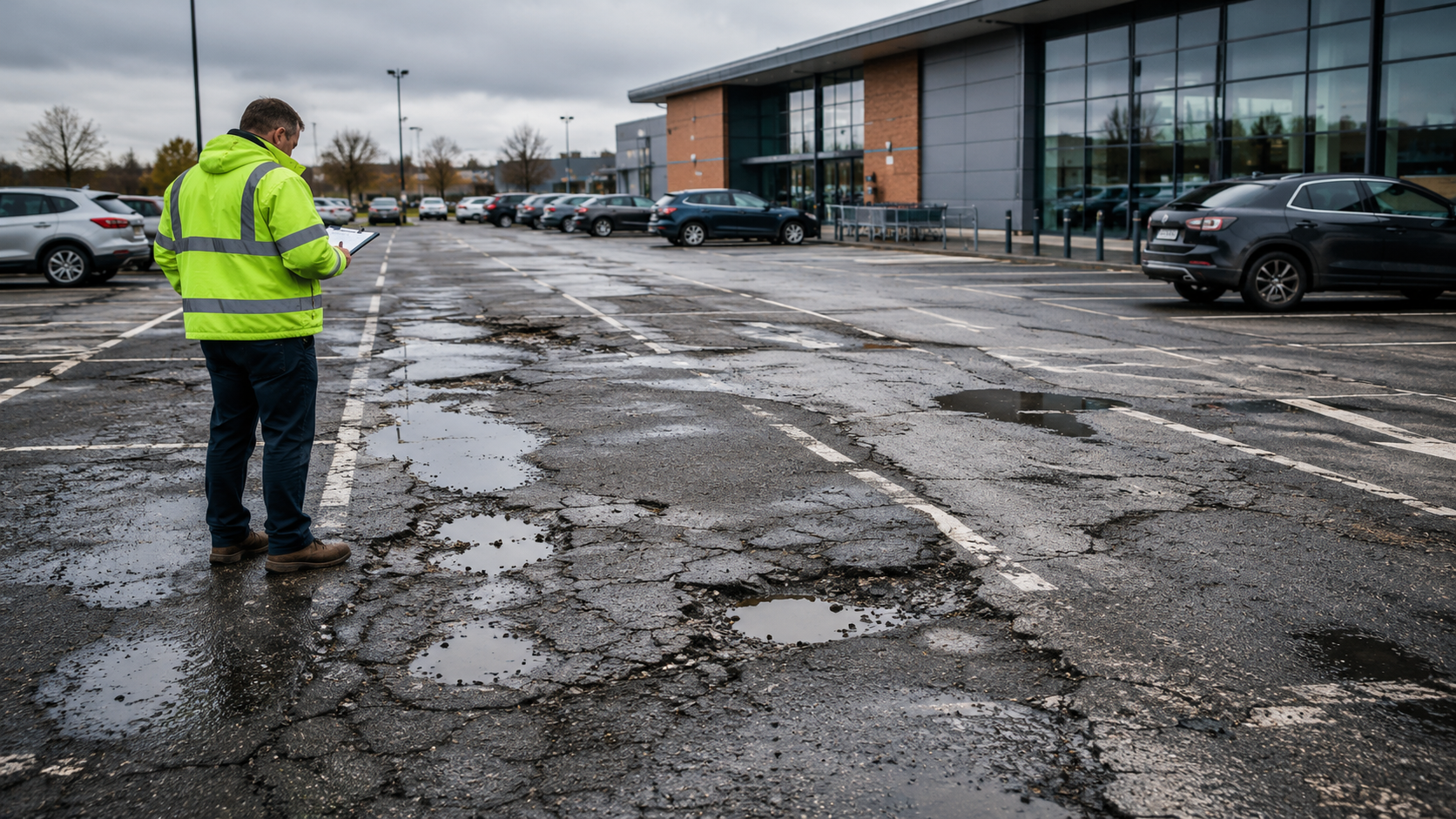
The cost of poor preparation rarely appears all at once. At first, the surface may look acceptable. Vehicles can park on it, pedestrians can walk across it, and the site may appear improved. Over time, small signs begin to show. Water collects in low areas, tyre marks become more visible, edges start to crumble, or isolated cracks appear across the surface.
These early defects can seem minor, but they often point to deeper problems. If the sub-base is weak, uneven, poorly compacted, or unsuitable for the expected traffic, the surface above will be placed under stress every day. Commercial car parks are not static spaces. They are exposed to repeated vehicle loads, turning movements, braking forces, delivery vehicles, weather changes, and constant pedestrian use.
The financial issue is that surface failure usually becomes more expensive the longer it is left. A small depression can hold water. Water can then weaken the surrounding material. In colder conditions, freeze and thaw cycles can make defects worse. A small repair can become a larger resurfacing project, and a preventable issue can become a disruption to business operations.
For commercial sites, the cost is not limited to the surfacing work itself. Poor surfacing can affect customer access, staff parking, delivery schedules, site safety, and the appearance of the business. In some cases, sections of the car park may need to be closed while repairs are completed, creating inconvenience and reducing available parking space.
Why the Sub-Base Is So Important
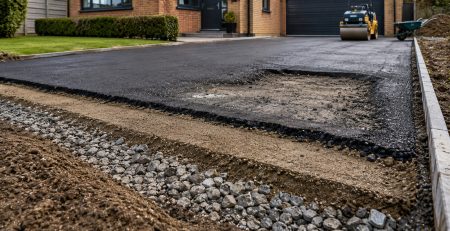
The sub-base is the structural layer beneath the visible surface. It spreads vehicle loads, supports the finished material, and helps the car park remain stable under everyday use. If this layer is neglected, the finished surface cannot perform properly, no matter how well the top layer is installed.
A strong sub-base must be appropriate for the site conditions and expected use. A small private parking area will not face the same pressures as a busy retail car park, industrial yard, office development, or commercial premises with regular delivery vehicles. The depth, compaction, and material specification need to match the level of traffic and the type of vehicles using the site.
When a contractor simply resurfaces over a weak existing base without proper assessment, the new surface may inherit the same failures as the old one. Cracks can reflect through, soft spots can return, and drainage issues can remain unchanged. This is one of the reasons why a cheap quotation can become expensive later. The initial saving may come from skipping the work that determines long-term performance.
Professional tarmac installation should include a clear understanding of what lies beneath the surface. The visible finish is important, but the strength and stability of the foundation are what allow the car park to cope with daily commercial use.
Drainage Is Often the Difference Between Success and Failure
Drainage is one of the most common causes of premature car park surface failure. Water should move away from the surface efficiently and safely. When water remains on the surface or finds its way into weak areas, the risk of damage increases significantly.
Standing water can form when levels are poorly planned, falls are inadequate, drainage channels are missing, or existing drainage is blocked or unsuitable. In a commercial car park, this can create practical and safety issues. Customers may have to step through puddles, vehicles may splash water across walkways, and the surface may remain wet for long periods after rain.
Water also affects the structure of the surface. If it enters cracks, joints, or weak edges, it can gradually weaken the layers below. Once the supporting structure becomes compromised, the surface may begin to move, crack, or break apart. This is especially important in the UK, where frequent rainfall and seasonal temperature changes place extra pressure on external paved areas.
Good commercial car park surfacing should always consider how water will behave across the whole site. This includes the direction of falls, the position of drains, the condition of existing drainage systems, and the impact of surrounding buildings, kerbs, entrances, and landscaped areas. Drainage is not an optional detail. It is part of the long-term durability of the car park.
The Problem With Resurfacing Over Existing Defects
One of the most tempting shortcuts in commercial car park surfacing is to cover existing defects with a new layer. This can appear cost-effective because it reduces excavation, preparation, and disposal work. In some cases, overlaying an existing surface may be suitable, but only when the underlying structure is stable, sound, and properly assessed.
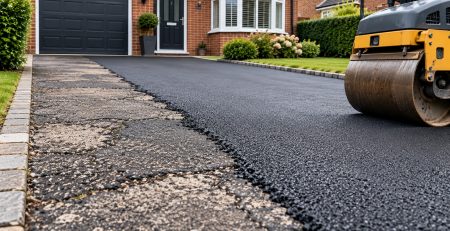
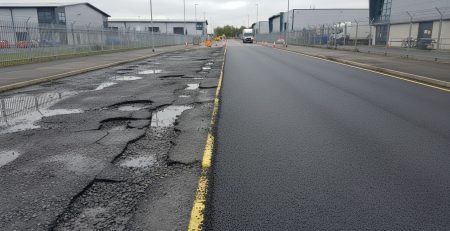
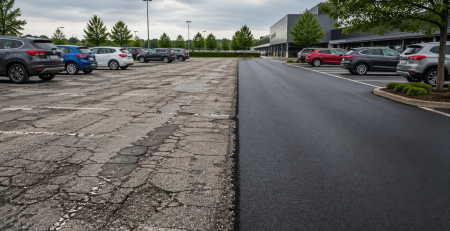
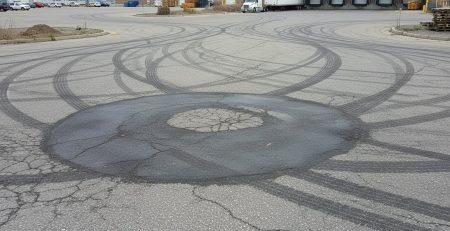
The problem arises when resurfacing is used to hide defects rather than solve them. Cracks, potholes, soft areas, poor falls, and drainage problems rarely disappear because a new layer has been added. Instead, the same weaknesses can work their way back through the surface.
For example, if the existing car park has areas that move under load, a new surface may crack in the same places. If water already collects near an entrance, the new surface may still hold water unless the levels are corrected. If potholes have formed because the base has failed, filling or covering them without treating the cause will usually provide only a temporary improvement.
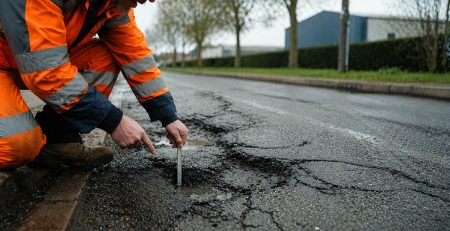
This is why site assessment is essential. A professional contractor will consider whether isolated pothole repairs are enough, whether resurfacing is appropriate, or whether deeper reconstruction is needed in certain areas. The right solution depends on the actual condition of the car park, not simply the appearance of the surface.
Heavy Use Requires the Right Surfacing Method
Commercial car parks vary widely in how they are used. Some serve small offices with light vehicle movement. Others support supermarkets, schools, healthcare premises, warehouses, industrial units, apartment blocks, or public-facing business sites. The surfacing method must reflect the level and type of use.
High-turning areas, entrance points, loading bays, access roads, and delivery zones experience different stresses from standard parking bays. Vehicles turning at low speed can place significant pressure on the surface. Heavy vans, refuse vehicles, and delivery lorries can accelerate wear if the surfacing specification is not suitable.
Machine-laid surfacing can be valuable for larger commercial areas because it helps achieve a consistent depth, even finish, and efficient installation across broad spaces. Consistency is particularly important in car parks, where uneven areas can affect drainage, vehicle movement, and long-term performance. For larger sites, machine lay tarmac can provide a practical approach where the layout and access allow.
Choosing the right surfacing method is not only about speed. It is about achieving a finish that can cope with the real demands of the site. The wrong approach may look acceptable at first but fail under repeated commercial use.
Safety and Liability Considerations
A poorly surfaced car park can create avoidable safety risks. Uneven surfaces, potholes, loose material, poor drainage, and unclear pedestrian routes can all increase the likelihood of slips, trips, vehicle damage, or access problems. For commercial property owners and site managers, these issues should not be ignored.
Visitors and staff expect a car park to be reasonably safe and easy to use. When defects are left unresolved, they can affect both pedestrians and drivers. A pothole may damage tyres or suspension. Standing water may conceal surface defects. Loose edges may become trip hazards. Poor levels may cause awkward movement for people using mobility aids, pushchairs, or delivery equipment.
Surfacing quality also affects how a site functions during busy periods. A well-planned car park supports clear traffic flow, safer pedestrian movement, and better use of space. Poor surfacing can create confusion, congestion, and unnecessary maintenance issues.
Although surfacing is often viewed as a practical construction decision, it also forms part of responsible site management. Investing in proper preparation and installation helps reduce future risks and supports a safer environment for everyone using the premises.
Why the Cheapest Quote Can Become the Most Expensive Option
It is natural for businesses to compare costs before approving surfacing work. Budgets matter, and commercial property maintenance often has to be planned carefully. However, the cheapest quote is not always the best value, especially if it leaves out important preparation, drainage, materials, or installation standards.
A lower price may reflect a narrower scope of work. It may not include proper excavation, sub-base correction, drainage improvements, waste removal, edge restraint, or suitable material depth. These omissions can reduce the upfront cost but increase the likelihood of early failure.
The better question is not simply how much the car park surfacing will cost, but what is included in the work and how long the result is expected to perform. A properly specified project should explain the preparation involved, the materials being used, the method of installation, and any issues identified during the site assessment.
The most expensive mistake is paying for a surface that has to be repaired or replaced too soon. A car park that fails after a short period can cost more than doing the work properly in the first place, especially when business disruption and repeated maintenance are included.
Signs That a Commercial Car Park Needs More Than a Surface Layer
Some car parks only need targeted repairs or resurfacing. Others need more detailed preparation before a new surface is installed. The challenge is knowing the difference.
Visible potholes, widespread cracking, repeated puddling, sinking areas, loose edges, and surface movement can suggest deeper issues. If defects return soon after repairs, the underlying structure may be the real problem. If water collects in the same places after rainfall, the levels or drainage may need attention. If areas near entrances or turning points deteriorate faster than the rest of the car park, the surface may not be strong enough for the traffic it receives.
Age can also be a factor, but it should not be considered in isolation. A relatively new car park can fail early if it was poorly installed, while an older surface may remain serviceable if it was built properly and maintained well. The condition of the base, drainage, edges, joints, and surface course all need to be considered together.
A professional site inspection helps determine whether the car park requires repairs, resurfacing, partial reconstruction, or a full replacement. Making the right decision at this stage can prevent unnecessary spending and avoid repeating the same problems.
Planning Commercial Car Park Surfacing Properly
Good planning starts with understanding how the car park is used. This includes vehicle types, traffic frequency, pedestrian routes, delivery requirements, access restrictions, drainage points, and the condition of the existing surface. The surfacing design should support the way the site operates every day.
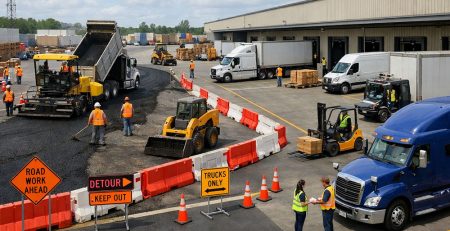
For commercial premises, timing also matters. Surfacing work may need to be planned around business hours, customer access, staff parking, deliveries, or phased closures. A well-organised contractor can help minimise disruption while still carrying out the preparation needed for a durable result.
Materials should be selected for the site rather than chosen only on appearance. Tarmac and asphalt surfaces are widely used because they offer durability, practicality, and a professional finish when installed correctly. However, the performance of the finished car park depends on specification, preparation, compaction, drainage, and workmanship.
Businesses looking for reliable commercial car park surfacing should focus on long-term value, not just the initial finish. The right approach protects the investment, reduces maintenance pressure, and supports a safer, more professional site.
Long-Term Maintenance Still Matters
Even a well-installed commercial car park needs maintenance. Regular checks allow small issues to be addressed before they become larger defects. This is especially important after periods of heavy rain, freezing weather, or increased site traffic.
Maintenance does not mean constant repair. It means paying attention to how the surface is performing. Drainage channels should remain clear, surface damage should be dealt with promptly, and any signs of movement or cracking should be investigated. Line markings, kerbs, edges, and access points should also be reviewed as part of wider site upkeep.
A well-maintained surface will usually provide better long-term value than one that is ignored until major defects appear. For commercial sites, this approach helps reduce disruption and keeps the car park looking professional for customers, staff, and visitors.
The Mistake to Avoid
The most expensive mistake in commercial car park surfacing is treating the visible surface as the whole project. A car park is a layered structure, and every layer matters. The surface finish may be what people see, but preparation, drainage, sub-base strength, material choice, and installation quality determine how long it lasts.
For property owners and site managers, the best results come from addressing the cause of existing problems rather than covering them. A properly assessed and professionally installed car park can improve safety, appearance, access, and long-term performance. A poorly prepared surface can create repeated costs and disruption.
Commercial car park surfacing should be viewed as an investment in the function of the site. When the work is planned correctly, the result is not only a better-looking car park but a stronger, safer, and more reliable surface for everyday use.