How to Permanently Get Rid of Weeds in a Gravel Driveway: For Real This Time
Weeds invading your gravel driveway can be frustrating, unsightly, and stubborn. Despite regular removal attempts, they keep coming back, turning your well-maintained driveway into a patchy mess.
If you live in East Hertfordshire or the surrounding counties, you’ll want a solution that truly works. The secret to permanently banishing weeds from gravel driveways isn’t just quick fixes; it requires a strategic approach combining groundwork, the right materials, and ongoing care.
Whether you are handling gravel driveway repair, maintenance, or even making a gravel driveway from scratch, understanding these methods saves both time and money. In this article, we’ll explore proven steps and professional tips to get rid of weeds for good.
Tip: Removing weeds early helps keep your gravel driveway tidy and reduces ongoing maintenance. Get A Free Quote for expert driveway maintenance and repair services.
Steps to Permanently Get Rid of Weeds in a Gravel Driveway in the UK
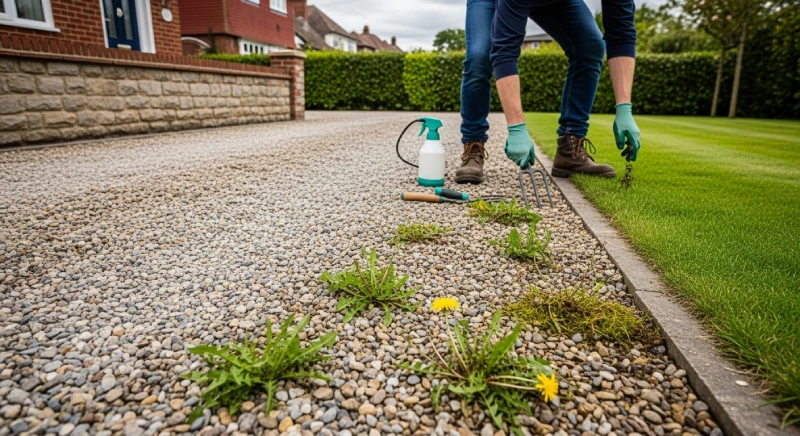
Permanently removing weeds from a gravel driveway in the UK requires more than pulling them by hand. From clearing gravel to installing a strong membrane, these steps ensure long-lasting, weed-free results.
Step 1: Clear Everything and Do It Properly
Start by removing all gravel carefully to expose the soil beneath. This step is essential as weeds can take root deep under the gravel where the seeds or roots have settled.
Use a garden fork or spade to lift the gravel, then clear out visible weeds, roots, and any organic debris to prevent regrowth. This is your chance to do a thorough clean-up before laying the foundation.
If you live in Hertfordshire or Essex and want expert help, working with a local, experienced driveway company ensures the proper clearing and preparation—avoiding problems later on.
Step 2: Kill Regrowth at the Root Level
Treat remaining weeds and roots with a systemic herbicide, such as a glyphosate-based product. These penetrate deep and kill roots, stopping weeds from growing back.
An eco-friendly alternative is applying hot water or a vinegar-and-soap solution, but these may require repeated treatments to be effective. Rock salt can dehydrate roots but may affect soil health if overused.
Ensure safety and wear protective gear during herbicide application, and keep children and pets away from treated areas. Properly killing weeds here sets the stage for lasting weed control.
Step 3: Fix the Foundation
Lay a heavy-duty geotextile membrane over the cleared soil. This thick, woven weed barrier allows water through but prevents weed roots from penetrating the gravel surface.
Many gravel driveway issues stem from weak or failed weed membranes, especially if they were thin or torn during previous installations. Investing in a robust membrane now means fewer headaches later.
Ensure overlaps of the membrane are at least 10 cm to prevent gaps where weeds might grow through. Pin the membrane securely to avoid shifting over time.
Step 4: Upgrade Your Gravel the Smart Way
Replace the gravel with a depth of 5–6 cm or more. Thicker gravel prevents sunlight from reaching underlying soil, limiting seed germination.
Consider using high-quality aggregate and applying a gravel binder to lock the stones in place. This decreases gaps where soil and seeds may settle, reducing opportunities for weed growth.
Local driveway experts in Hertfordshire and Bedfordshire often recommend resin bonded gravel or exposed aggregate concrete for enhanced durability and weed resistance. Though more costly, these options can reduce maintenance needs significantly.
Step 5: Lock It In With Edging and Borders
Finish your gravel driveway with strong edging to prevent gravel spill and to act as a physical barrier against weed encroachment from surrounding soil or grass. Edging options include metal, stone, or timber. Choose one that complements your driveway’s style while providing stability.
Properly securing edges in Hertfordshire, Essex, or Cambridgeshire landscapes stops weeds from creeping in and assists with gravel containment, preserving your driveway’s neat appearance.
Real Reason Weeds Love Your Gravel Driveway
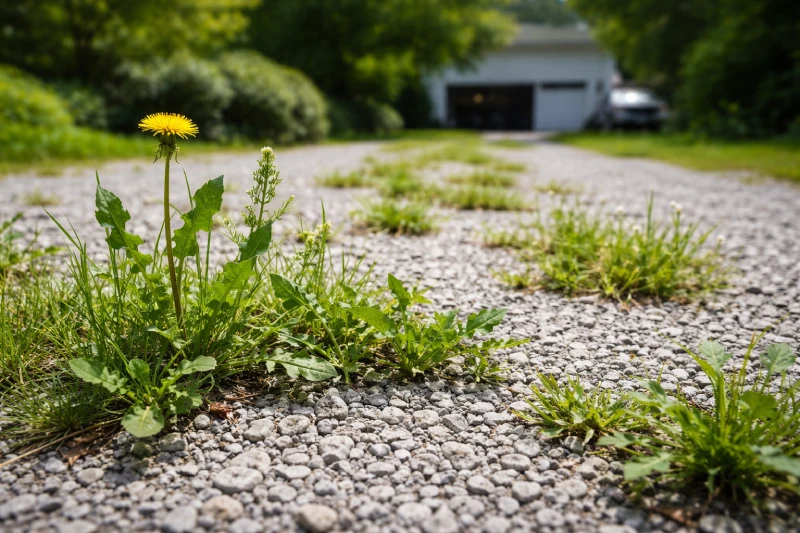
Weeds love gravel driveways because seeds settle in gaps, dust turns into soil, moisture gets trapped, and weak membranes fail.
Gravel Traps Wind-Blown Seeds
Gravel surfaces easily catch seeds carried by wind and birds. Without preventative measures, these seeds settle in cracks and take root. Understanding this natural seed dispersal helps explain why weed problems often return quickly after superficial cleaning.
Using a geotextile membrane and deep gravel limits the seeds’ chance to germinate in your driveway.
Dust Turns Into Soil Over Time
Gravel driveways accumulate dust and organic matter over months and years. This debris gradually forms a thin layer of soil between or under stones.
It only takes a few centimeters of soil for weeds to start growing, especially when combined with moisture. Regular maintenance to remove dust and top up gravel is vital to prevent this soil build-up and discourage weed growth.
Moisture Gets Locked Below the Surface
Rainwater can stay trapped beneath gravel layers, especially if drainage is poor, creating a moist environment ideal for weeds. Proper driveway installation in Hertfordshire and surrounding counties includes ensuring slope and drainage to avoid water pooling.
This moisture problem supports seed germination and root growth, reinforcing the need for an impermeable membrane and consistent upkeep.
Weak or Failed Weed Membranes
Many gravel driveways fail to remain weed-free because their weed membranes were thin, poorly installed, or damaged. Over time, membranes can tear or shift, allowing weeds root access from underneath.
Investing upfront in reputable materials and correct installation methods guarantees longer-lasting weed prevention.
How to Keep Your Gravel Driveway Weed-Free for Years?
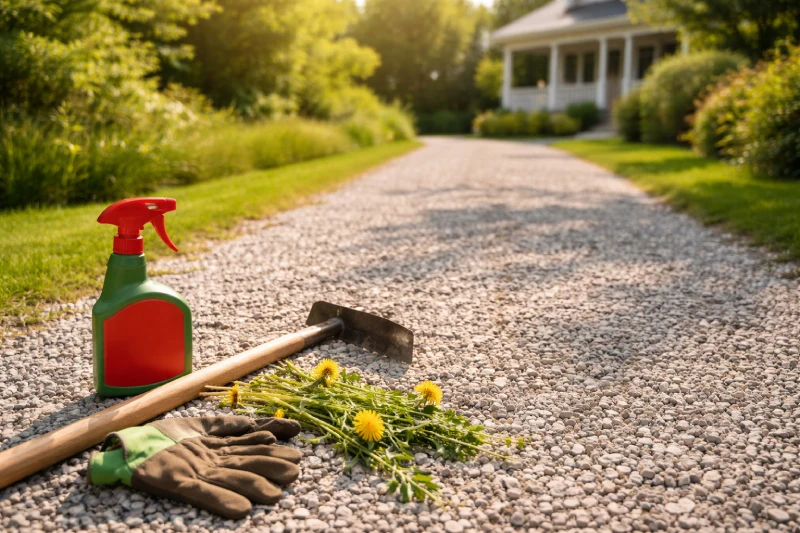
Keeping your gravel driveway weed-free requires seasonal checks, preventative treatments, and proper maintenance.
Do a Quick Seasonal Check
Inspect your driveway every season to spot early weed growth. Catching weeds while they are young makes removal easier and less invasive.
This regular habit helps residents in Hertfordshire, Essex, or Oxfordshire maintain cleanliness and prevent larger infestations. Simple tools like a rake and garden hand trowel are sufficient for preliminary checks.
Reapply Weed Control Before Growth Starts
Apply systemic herbicides or eco-friendly alternatives before weed seeds germinate, typically early spring or autumn. This preventative chemical barrier helps keep stubborn weeds from establishing deep roots.
Consult local regulations and professionals to choose safe, effective products suitable for areas like Bedfordshire or Cambridgeshire.
Keep the Surface Clean and Dry
Remove fallen leaves, mud, and other organic debris promptly to prevent soil formation and moisture retention on the gravel.
Regular raking also breaks up compacted areas and disrupts weed seeds before they take hold. Cleaning your driveway helps retain the gravel’s protective qualities and preserves its appearance.
Top Up Gravel the Right Way
Maintain a minimum gravel depth of 5–6 cm by topping up thin spots as needed. Using the same quality aggregate helps create an even surface that resists weed growth and looks professionally finished.
Experienced driveway companies in Hertfordshire and Essex can assist in sourcing proper materials for topping up and repairing.
Maintain Strong Edges and Borders
Check your driveway edging regularly for gaps, damage, or loose sections. Strong borders act as a physical barrier, stopping weeds from creeping in sideways from surrounding soil or plant beds. Repair or replace edging promptly to maintain the integrity and aesthetics of your gravel driveway.
Why It’s Best to Hire a Local Expert to Remove Weeds from Your Gravel Driveway in the UK?
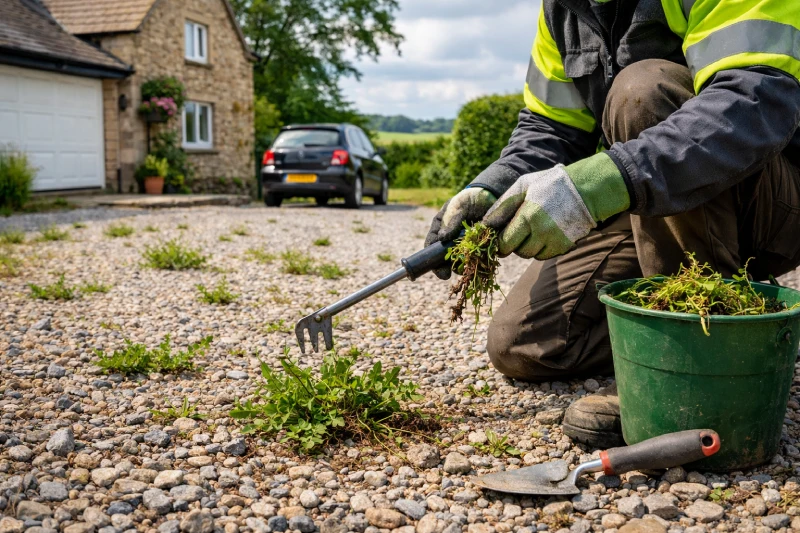
Weeds in gravel driveways aren’t just unsightly; they’re stubborn. A local expert brings hands-on UK experience, knows which weed control methods survive our weather, and can tailor solutions for your specific driveway type.
Here’s why going local pays off:
- UK-Specific Knowledge: They understand seasonal growth patterns, typical weeds, and the impact of British rain and frost.
- Proper Materials & Techniques: From high-quality membranes to the right gravel depth, local specialists know what lasts.
- Time & Cost Efficiency: DIY attempts often lead to repeated work and wasted products. Experts get it right the first time.
- Long-Term Guarantees: Many local services offer follow-up maintenance or warranties, giving peace of mind that weeds won’t return.
Choosing a local pro isn’t just about convenience; it’s about ensuring permanent results without repeated effort.
Our UK Office Location
Total Surfacing Solutions Ltd is based in Warehams Lane Hertford, Hertfordshire, enabling us to deliver high-quality driveway and surfacing services across the local area. Our location supports quick turnaround times for quotes and site visits.
- Office Address: Cooks Yard, Unit 1 Warehams Lane Hertford SG14 1LA United Kingdom
- Call Us: +44 1920 486310
We work with residential and commercial clients on driveway installations, repairs, and renovation projects. To speak with our team or arrange a visit, simply get in touch during our office hours.
Office Hours:
- Monday–Friday: 09:00–17:00
- Saturday: 09:00–15:00
- Sunday: Closed
FAQs
What is the best way to get rid of weeds on tarmac surfacing?
The best way to get rid of weeds on tarmac surfacing is combining power washing with sealing. This removes surface growth and blocks cracks, preventing weeds from returning while keeping the driveway smooth and protected.
Does sealing a driveway help get rid of weeds permanently?
After sealing driveway surfaces, weed growth is greatly reduced because gaps are sealed off. While sealing doesn’t eliminate weeds forever, it significantly slows regrowth and makes long-term driveway maintenance easier and more cost-effective.
Can power washing a driveway help remove weeds?
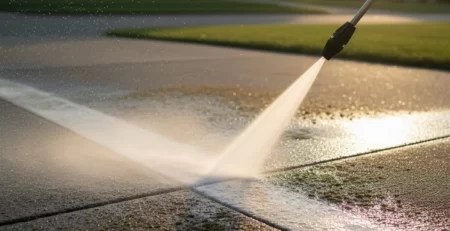
Power washing a driveway helps get rid of weeds by removing visible growth and debris. However, sealing afterward is essential to stop weeds from reappearing through cracks, especially on older tarmac or asphalt surfaces.
Do heated driveways help get rid of weeds and ice?
Heated driveways help get rid of weeds by discouraging growth in cracks while also removing ice in winter. Although a heated driveway cost is higher, reduced weed control and winter maintenance can offset expenses over time.
The Last Word on Keeping Your Gravel Driveway Weed-Free
Getting rid of weeds in your gravel driveway isn’t just about temporary fixes; it’s about creating a foundation that doesn’t give them room to grow.
By clearing thoroughly, killing weeds at the root, installing a durable membrane, upgrading your gravel thoughtfully, and maintaining strong edges, you build a lasting shield against weeds. Routine maintenance seals the deal.
Whether your property is in St Albans, Watford, Luton, or Oxford, partnering with a local, experienced driveway company that offers quality workmanship and straightforward service helps make your driveway a source of pride, not frustration.