Smart Motorways in the UK: How They Work and Why They’re Controversial
Smart motorways UK drivers encounter are designed to increase capacity using digital traffic management systems rather than physically widening the carriageway. Instead of constructing entirely new lanes, these roads use overhead gantries, electronic signage and speed regulation technology to improve traffic flow within the existing road boundary.
The principle behind smart motorway design is similar to modern infrastructure upgrades carried out by experienced commercial surfacing contractors, where performance improvements are achieved through engineering efficiency rather than simple expansion. In both cases, the focus is on maximising usability while maintaining safety standards.
Although smart motorways aim to reduce congestion and improve journey reliability, they have also become one of the most debated changes to the UK road network.
The Different Types of Smart Motorways
Smart motorways UK operate in three primary formats.
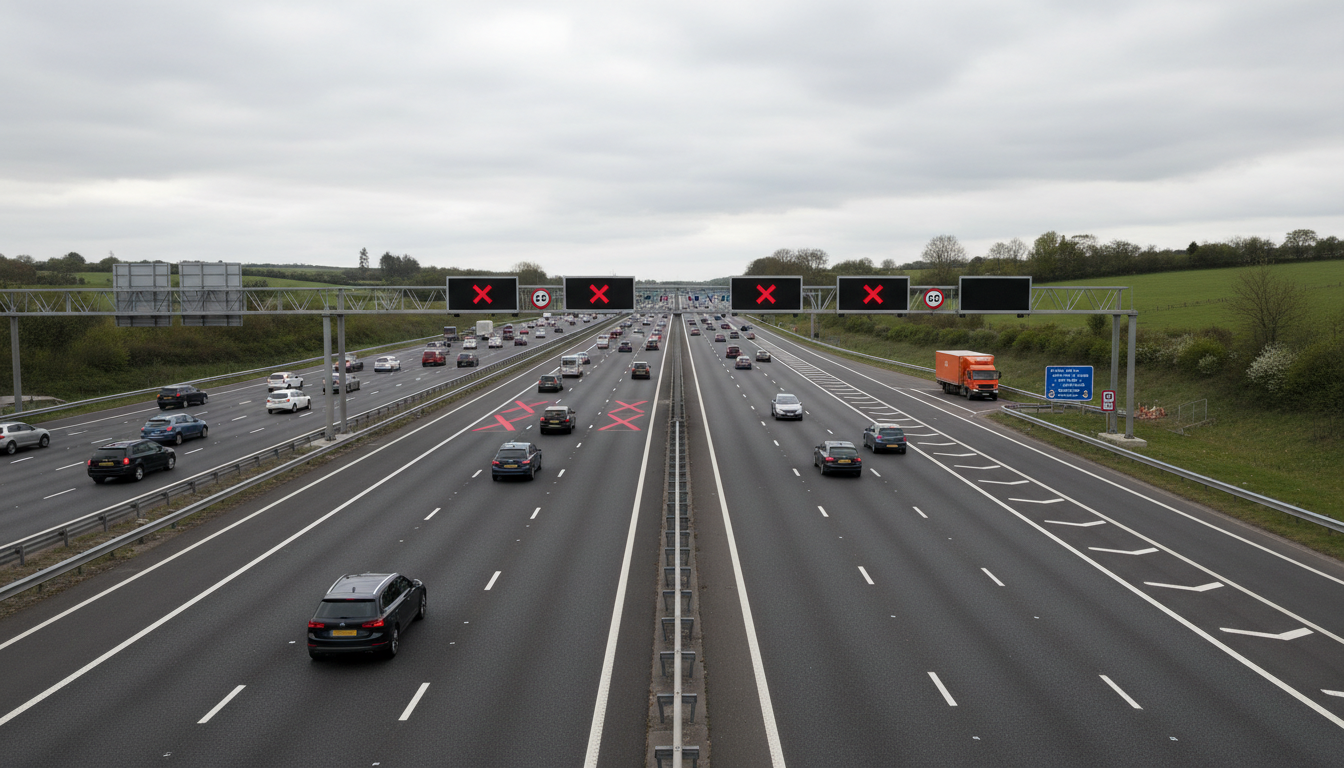
Controlled motorways retain a permanent hard shoulder but introduce variable speed limits displayed above each lane. These speed limits adjust depending on traffic levels, incidents or weather conditions, helping to smooth traffic flow and reduce sudden braking.
Dynamic hard shoulder schemes allow the hard shoulder to open as a live lane during peak traffic periods. When in operation, overhead signage clearly indicates the lane is available for use. Outside busy periods, it returns to emergency-only access.
All-lane running permanently converts the hard shoulder into a standard running lane. Instead of a continuous refuge space, emergency refuge areas are positioned at intervals along the carriageway.
It is this third format that has generated the most controversy.
How Smart Motorways Manage Traffic
Smart motorways UK rely heavily on monitoring and automation. Sensors embedded in the carriageway collect real-time traffic data, while cameras allow operators to oversee conditions continuously.
When congestion begins to build, speed limits are gradually reduced. Although this may appear restrictive, consistent speeds often improve overall journey times by preventing stop-start traffic waves.
This principle of controlled flow mirrors how professional highway surfacing projects are planned, where surface quality and structure are designed to support long-term performance under continuous use.
Variable Speed Limits
Variable speed limits are legally enforceable and displayed above each lane. Drivers must adhere to the posted limit, even if it changes over short distances.
By maintaining consistent vehicle speeds, traffic remains more stable, reducing the likelihood of minor collisions caused by sudden braking.
Lane Control and Red X Signals
A red X displayed above a lane indicates it is closed due to an obstruction or incident ahead. Ignoring this signal is an offence and may result in penalty points.
Lane control is particularly important on all-lane running sections, where there is no permanent hard shoulder to separate broken-down vehicles from live traffic.
Emergency Refuge Areas
On all-lane running smart motorways UK, emergency refuge areas replace the traditional hard shoulder. These are positioned at intervals and provide a place for vehicles experiencing difficulties to stop safely.
Each refuge area typically includes a direct communication system to traffic control. However, concerns have been raised about the spacing between these areas and whether drivers can always reach them quickly enough in an emergency.
Why Smart Motorways Were Introduced
The primary reason for introducing smart motorways UK was to address congestion without the financial and environmental costs of full motorway widening.
Traditional widening projects involve major excavation, land acquisition and prolonged disruption. In contrast, smart motorway upgrades can be delivered within the existing carriageway footprint.
This approach reflects a broader infrastructure strategy seen in modern tarmac installation road surfacing services, where structural improvements are delivered efficiently while minimising unnecessary disruption.
In theory, smart motorways increase traffic capacity while maintaining safety through technology and enforcement.
The Safety Debate
Despite their intended efficiency benefits, smart motorways UK have faced public and political scrutiny.
The removal of the permanent hard shoulder in all-lane running sections has raised concerns about stranded vehicles being left in live traffic lanes. If a vehicle breaks down unexpectedly, it may remain exposed until traffic control systems detect the obstruction and close the affected lane.
Although stopped vehicle detection systems have been introduced in many locations, critics argue that response times and driver awareness remain critical factors.
From a road engineering perspective, safety depends not only on design but also on maintenance and rapid response. Similar considerations apply in surface durability, where proactive pothole repairs can prevent minor defects from becoming significant hazards.
Are Smart Motorways Effective?
The effectiveness of smart motorways UK varies depending on design type and traffic conditions. Controlled motorway sections using variable speed limits have generally demonstrated improvements in traffic flow and journey time consistency.
However, public confidence remains mixed, particularly regarding all-lane running schemes.
Any infrastructure system must balance efficiency with perceived and actual safety. Ongoing evaluations continue to assess performance, incident data and technological improvements.
The Future of Smart Motorways
Future development of smart motorways UK is likely to focus on upgrading existing sections rather than expanding new ones. Enhancements to detection technology, clearer signage and improved driver education are expected to remain priorities.
For property owners and commercial site managers observing these national infrastructure trends, the key lesson is that planning, technology and maintenance must work together. Whether managing a motorway or a private access road, performance depends on thoughtful design and professional execution.
Businesses seeking tailored solutions for commercial or residential access routes can explore specialist expertise through domestic contractors or experienced commercial teams who understand long-term durability requirements.
Smart motorways represent a significant shift in how road networks are managed. Their long-term success will ultimately depend on whether technological control systems can consistently deliver both efficiency and safety.