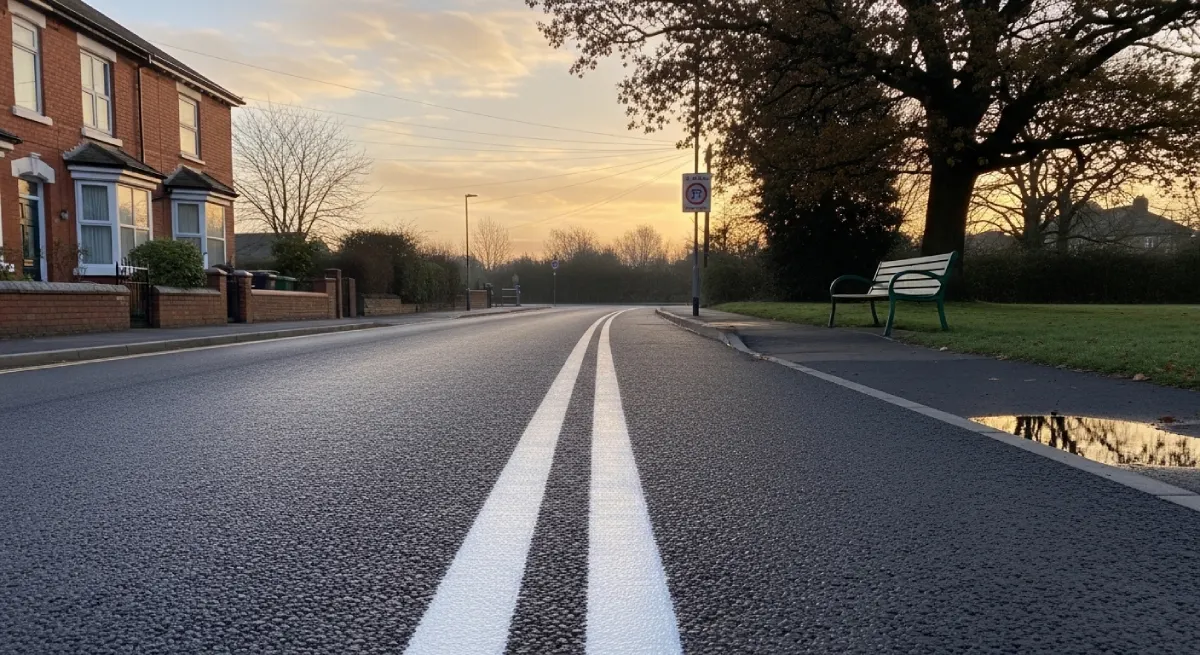
Line Marking Regulations in the UK | Importance of Safety, Consistency, and Legal Compliance
Line marking plays a critical role in maintaining order, safety, and compliance across UK roads, car parks, and commercial spaces. Without clear markings, confusion increases, leading to accidents, traffic violations, and operational inefficiencies.
In the UK, strict regulations govern how lines should be applied, maintained, and interpreted. However, many property owners and businesses overlook these requirements, risking legal penalties and safety hazards.
Understanding line marking regulations is essential whether you manage a commercial site, car park, or roadway. With the right knowledge and professional support from road surfacing contractors Hertford, you can ensure compliance, improve safety, and enhance the overall appearance of your surface.
Tip: Compliant line markings improve safety, visibility, and traffic flow for both public and private spaces. Get A Free Quote for professional marking services.
Legal Framework Behind UK Line Markings

Understanding the legal structure behind UK line markings ensures compliance, safety, and consistency. These regulations are enforced nationwide and must be followed by contractors, businesses, and property owners alike to avoid penalties and ensure proper road usage.
Overview of TSRGD 2016 and its authority
The Traffic Signs Regulations and General Directions (TSRGD) 2016 is the primary legislation governing road markings in the UK. It defines how markings should appear, where they should be placed, and what they represent.
This regulation ensures uniformity across the country, so drivers instantly recognise markings regardless of location. It applies to both public highways and many private spaces open to public use.
Failure to follow TSRGD standards can lead to markings being deemed invalid. This can create legal issues, particularly in disputes involving parking enforcement or accidents.
Role of local councils and traffic authorities
Local councils and traffic authorities are responsible for implementing and enforcing these regulations. They oversee road layouts, approve marking designs, and ensure ongoing compliance.
They also conduct inspections and may require updates if markings fade or become non-compliant. This ensures that all markings remain visible and effective. Working with professionals who understand local requirements ensures smoother approvals and avoids unnecessary delays.
Legal consequences of non-compliance
Non-compliant line markings can result in fines, liability issues, and enforcement challenges. For example, incorrect parking markings may invalidate penalties issued to drivers.
In commercial environments, poor markings can lead to workplace accidents, increasing legal exposure. Businesses must ensure markings meet both legal and safety standards. Hiring experienced resin surfacing contractors or marking specialists helps eliminate compliance risks and ensures long-term reliability.
Key Types of Road Markings and Their Meanings
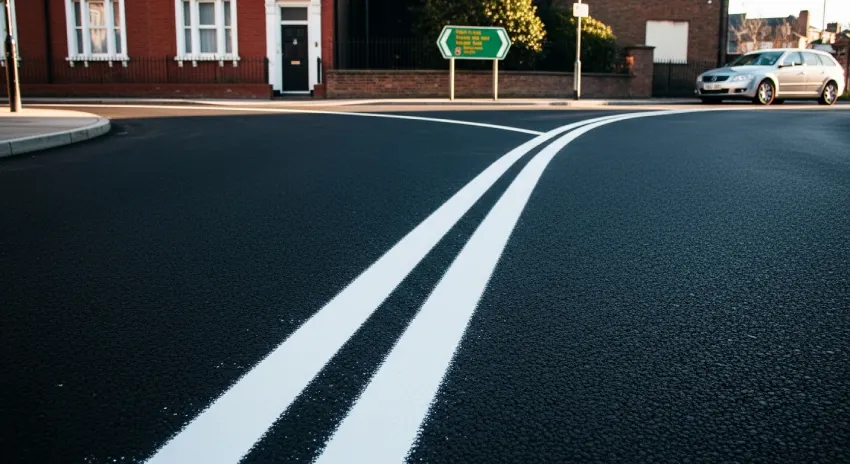
Road markings communicate essential instructions to drivers and pedestrians. Each type has a specific legal meaning, and understanding them is crucial for safety, traffic flow, and compliance with UK regulations.
Yellow Line Regulations
Yellow lines are primarily used to control waiting and parking. Double yellow lines mean no waiting at any time, regardless of day or hour. Single yellow lines indicate restricted waiting times, which must be checked against nearby signage.
These restrictions vary depending on location. Correct application and visibility are essential, as unclear markings can lead to confusion and disputes.
White Line Markings
White lines are used to manage traffic flow and lane discipline. Broken white lines indicate lane separation and can be crossed when safe.
Solid white lines, however, impose restrictions and should not be crossed except in specific circumstances. They are often used in hazardous areas. They also define edges, junctions, and pedestrian crossings, making them vital for road safety.
Yellow Kerb Markings
Yellow kerb markings regulate loading and unloading. Double kerb lines indicate no loading or unloading at any time.
Single kerb lines signal time-restricted loading, similar to single yellow road lines. These must be supported by signage. These markings are particularly important in busy urban and commercial zones.
White Letters and Symbols
White symbols and letters provide additional instructions, such as speed limits, directional arrows, and warnings. They help reinforce road rules and guide drivers effectively, especially in complex traffic areas. Clear, durable markings ensure these instructions remain visible and enforceable over time.
Colour Coding in UK Line Marking
Colour coding ensures immediate recognition of rules and restrictions. Consistent use of colours across the UK helps drivers respond quickly and safely, reducing confusion and improving traffic management efficiency.
- White: Lane markings, instructions, and general regulation
- Yellow: Waiting, parking, and loading restrictions
- Red: No stopping zones (red routes)
- Blue: Disabled parking and accessibility areas
White markings are the most common and are used for guiding traffic flow. They provide clarity on lane positions and general driving rules. Yellow markings are critical for controlling parking and waiting. Their strict application helps maintain traffic movement in congested areas.
Blue markings highlight accessibility provisions, ensuring compliance with equality standards. Red routes are used in high-traffic areas to prevent stopping entirely.
Reflectivity and Visibility Standards
Visibility is essential for effective line marking, especially at night or in poor weather conditions. UK regulations require markings to be reflectorised to ensure they remain visible at all times.
Reflective properties are achieved using glass beads embedded within thermoplastic materials. These beads reflect headlights, making markings visible in darkness.
Thermoplastic is the preferred material due to its durability and superior visibility. It lasts longer than traditional paint and maintains its reflective properties over time.
Regular maintenance is essential to ensure markings remain effective. Faded or worn markings reduce visibility and increase safety risks. Professional installation ensures proper thickness, reflectivity, and durability, delivering long-term performance.
Workplace and Car Park Line Marking Regulations
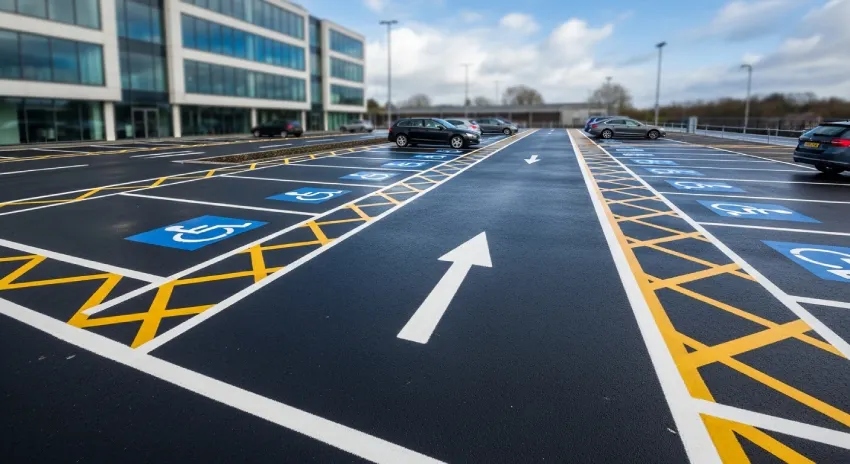
Line marking is equally important in private and commercial spaces. Clear markings improve safety, organisation, and efficiency while ensuring compliance with workplace regulations.
Health and Safety Executive (HSE) Requirements
The HSE requires clear separation of pedestrians and vehicles in workplaces. This includes designated walkways and forklift routes.
Proper marking reduces the risk of accidents and improves operational flow. It is a key requirement in warehouses and industrial environments. Businesses must regularly review and update markings to maintain compliance.
Accessibility Compliance
Accessible parking bays must be clearly marked and easy to identify. These are often highlighted using blue or white markings. Proper spacing and positioning are essential to ensure usability for disabled individuals. Failure to comply with accessibility standards can lead to legal consequences and reputational damage.
Loading Bays and Operational Zones
Loading bays and operational zones must be clearly defined to ensure efficient movement of goods. Clear markings help prevent congestion and reduce the risk of accidents during loading and unloading. These zones are particularly important in logistics, retail, and industrial settings.
Trusted Line Marking & Surfacing Experts in Hertfordshire
Choosing the right contractor ensures compliance, durability, and a professional finish. At Total Surfacing Solutions, we combine expertise, quality materials, and industry knowledge to deliver outstanding results across all projects.
With over two decades of experience since 1999, we understand the complexities of UK regulations. Our team ensures every project meets TSRGD and HSE standards. We specialise in delivering long-lasting surfaces using high-quality thermoplastic materials.
Our work is designed to withstand heavy use and harsh conditions. We also provide tailored solutions, including custom resin driveways and integrated marking systems. This ensures a seamless finish across all surfaces.
As trusted resin bound surfacing contractors, we focus on both functionality and visual appeal, delivering results that enhance safety and property value.
Serving Hertfordshire and Surrounding Areas
We proudly provide professional surfacing and line marking services across Hertfordshire and nearby regions. Our local expertise ensures fast response times and reliable project delivery for both residential and commercial clients.
Our coverage includes:
- Hertfordshire
- London
- Essex
- Bedfordshire
- Surrounding areas
Based at Cooks Yard, Unit 1, Warehams Lane, Hertford SG14 1LA, we are ideally positioned to serve local clients efficiently. We offer free, friendly advice and no-obligation quotes to help you plan your project with confidence.
📞 Call: +44 1920 486310
📧 Email: quotes@totalsurfacing.co.uk
🕒 Mon–Fri: 8:30am–5:00pm
Find us here: https://maps.app.goo.gl/uQi995pLaK6AYG4W7
FAQs
1. What is resin surfacing and why is it popular?
Resin surfacing is a durable, permeable solution ideal for driveways and commercial spaces. It offers a smooth finish and low maintenance, making it a popular choice for modern developments.
2. Why should I hire professionals for line marking?
Professional line marking ensures compliance with UK regulations, improves safety, and guarantees long-lasting results. Experts use the right materials and techniques for durability.
3. How often should line markings be repainted?
Markings should be refreshed when they become faded or unclear. High-traffic areas may require more frequent maintenance to ensure visibility and compliance.
4. What are parking bay marking requirements?
Parking bays must follow specific dimensions and visibility standards. Accessible bays must also meet strict compliance guidelines for usability.
Keeping Your Surfaces Safe, Clear, and Compliant
Line marking regulations in the UK are essential for maintaining safety, organisation, and legal compliance. From public roads to standard car park bay dimensions in the UK, every marking plays a vital role in guiding behaviour and preventing accidents.
By understanding TSRGD requirements, colour coding, and visibility standards, property owners can ensure their spaces remain safe and efficient. Partnering with experienced professionals ensures your markings are not only compliant but also durable and visually effective.Whether you need road markings, car park layouts, or support from expert resin bound surfacing contractors, investing in quality solutions guarantees long-term performance and peace of mind.