How Heavy Vehicles Damage Your Surface Over Time
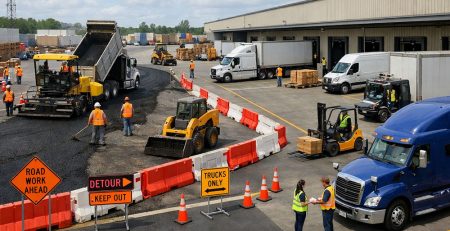
Heavy vehicles are an essential part of modern infrastructure, supporting logistics, construction, and daily commercial operations. However, their repeated use on road surfaces can significantly accelerate wear and deterioration over time. For property owners and site managers, particularly those responsible for commercial yards, industrial estates, or access roads, understanding how these vehicles affect surfaces is critical for long-term performance and cost control.
Unlike light vehicles, heavy goods vehicles apply far greater pressure to the surface and underlying layers. This pressure is not simply a matter of weight but also how that weight is distributed across axles and tyres. Over time, even a well-constructed surface can begin to show signs of stress if it is not designed or maintained to withstand such loads.
The Science Behind Surface Wear
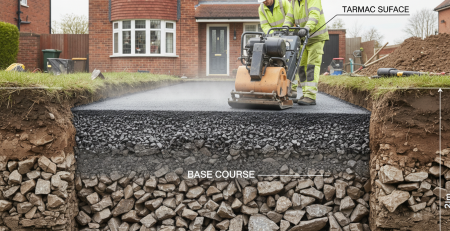
Road surfaces are engineered to distribute loads evenly across a sub-base, base, and wearing course. When heavy vehicles travel across a surface, the force exerted penetrates through these layers. If the structure beneath is not sufficiently robust, the stress concentrates in specific areas, leading to gradual deformation.
Load Repetition and Fatigue
The key issue is not just the weight of a single vehicle but the cumulative effect of repeated loading. Every pass of a heavy vehicle creates microscopic strain within the material. Over time, this repeated stress leads to fatigue, which manifests as cracking and surface failure.
In high-traffic commercial environments, such as those serviced by commercial surfacing contractors, this fatigue can develop far more quickly than in residential settings. Without appropriate design considerations, surfaces can begin to fail within a relatively short period.
Point Loading and Tyre Pressure
Heavy vehicles often exert concentrated loads through relatively small tyre contact areas. This creates high-pressure points on the surface, particularly during slow movements, turning, or stationary loading. These stress points are common causes of early surface deformation.
Common Types of Damage Caused by Heavy Vehicles
Understanding the visible signs of damage helps property managers identify issues early and take corrective action before they escalate.
Rutting
Rutting appears as long, shallow depressions along the wheel paths of vehicles. It occurs when the surface and underlying layers compress under repeated loads. This is especially common in areas with frequent heavy traffic, such as loading bays and access roads.
Rutting not only affects appearance but also creates safety concerns, as it can lead to water pooling and reduced traction.
Cracking
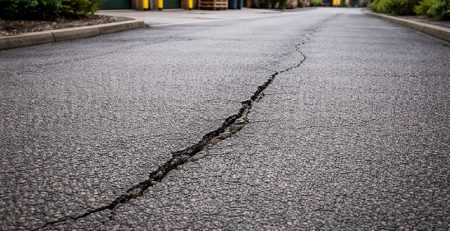
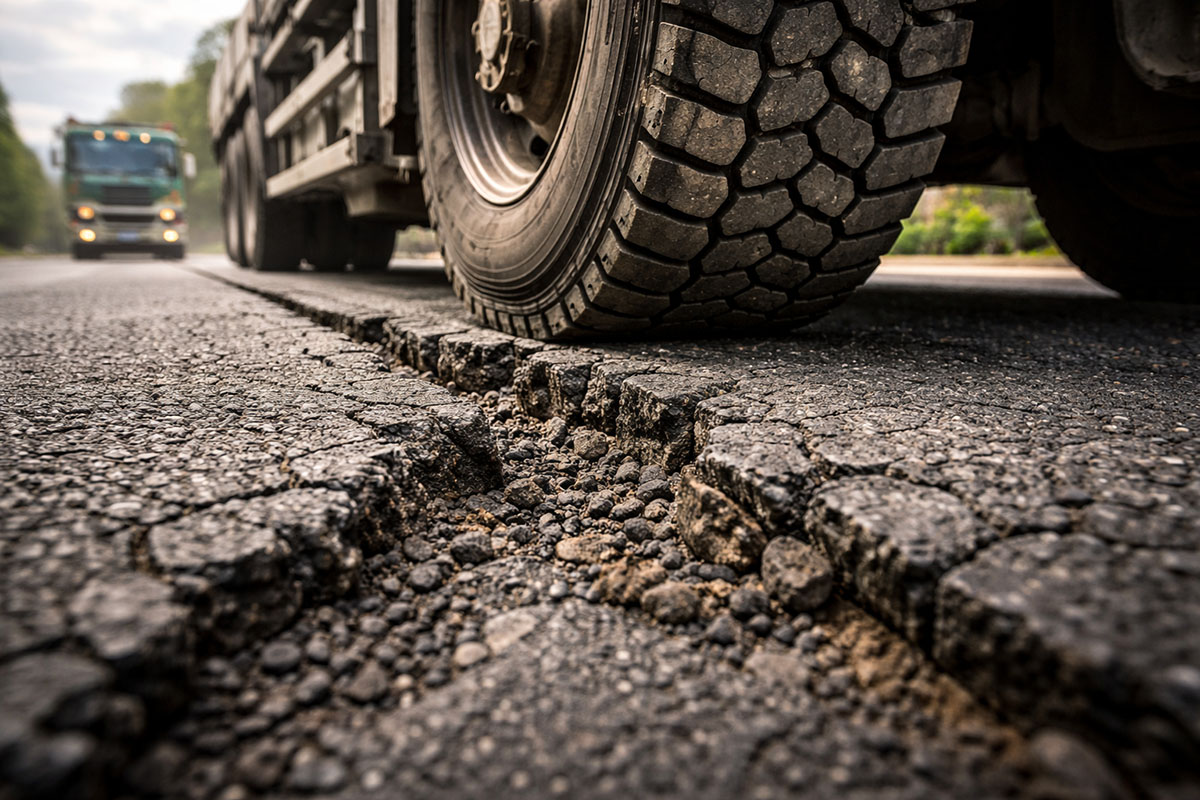
Cracks develop when the surface material can no longer withstand repeated stress. These may begin as fine lines but can quickly expand into more serious structural issues. Once cracks form, water can penetrate the surface, weakening the sub-base and accelerating deterioration.
Professional tarmac installation plays a crucial role in minimising this risk by ensuring correct material selection and compaction.
Potholes
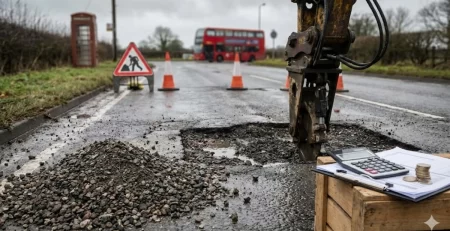
Potholes are one of the most recognisable forms of surface failure. They typically form when water enters cracks, weakens the underlying layers, and is then exacerbated by repeated heavy loads. Over time, sections of the surface break away, creating hazardous voids.
Addressing potholes promptly through services such as pothole repairs is essential to prevent further structural damage.
Surface Deformation at Turning Points
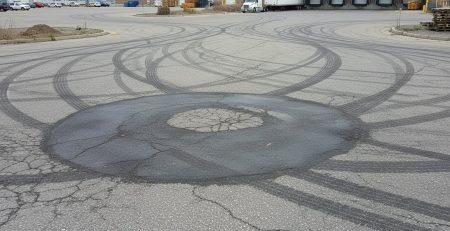
Heavy vehicles place additional strain on surfaces when turning or manoeuvring. The twisting force applied by tyres can cause surface layers to shift or deform, particularly if the material is not designed for such stress.
This type of damage is often seen in tight corners, entrances, and junctions within commercial sites.
The Role of Surface Design in Preventing Damage
Not all surfaces are equally vulnerable to heavy vehicle damage. The durability of a surface depends heavily on its initial design and construction.
Sub-Base Strength
The sub-base is the foundation of any road surface. If it is not properly prepared or compacted, the entire structure above it is compromised. A strong sub-base distributes loads effectively and reduces the risk of deformation.
Material Selection
Choosing the right materials is essential for surfaces exposed to heavy traffic. High-quality asphalt or tarmac mixes designed for heavy-duty use provide greater resistance to stress and wear.
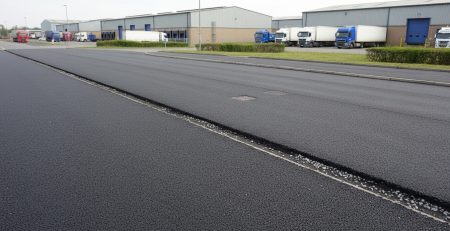
Machine-laid surfaces, such as those provided through machine lay tarmac, offer improved consistency and compaction, which enhances durability under heavy loads.
Thickness and Layering
Thicker surface layers and properly engineered layering systems provide better load distribution. This is particularly important for industrial sites where heavy vehicles operate continuously.
Environmental Factors That Accelerate Damage
While heavy vehicles are a primary cause of surface wear, environmental conditions can significantly worsen the impact.
Water Ingress
Water is one of the most damaging elements for road surfaces. Once it penetrates through cracks, it weakens the underlying structure. Heavy vehicles then exacerbate the issue by forcing water deeper into the layers, accelerating failure.
Temperature Changes
In the UK climate, fluctuating temperatures cause materials to expand and contract. When combined with heavy loads, this movement increases the likelihood of cracking and surface fatigue.
Poor Drainage
Inadequate drainage leads to standing water, which weakens the surface over time. Effective drainage design is essential for maintaining surface integrity, particularly in areas with frequent heavy traffic.
Long-Term Cost Implications
Ignoring the impact of heavy vehicles can lead to significant long-term costs. What begins as minor surface wear can quickly develop into major structural issues requiring extensive repairs or full resurfacing.
Regular maintenance and early intervention are far more cost-effective than large-scale reconstruction. Investing in high-quality installation and ongoing care helps extend the lifespan of the surface and reduces disruption to operations.
For examples of how proper planning and execution deliver durable results, reviewing completed projects on case studies can provide valuable insight.
Preventative Measures for Property Owners
Managing the impact of heavy vehicles requires a proactive approach. While it is not always possible to reduce traffic, steps can be taken to minimise damage.
Designing for Intended Use
Surfaces should always be designed with their intended traffic in mind. Industrial and commercial areas require more robust construction than standard residential roads.
Regular Inspections
Routine inspections help identify early signs of wear, such as minor cracks or surface deformation. Addressing these issues early prevents more extensive damage.
Timely Repairs
Small repairs carried out promptly can prevent larger structural failures. Maintenance should be viewed as an ongoing process rather than a reactive measure.
Professional Installation
Working with experienced contractors ensures that surfaces are built to withstand heavy use. Choosing specialists in highway surfacing or commercial applications provides confidence in long-term performance.
Why Heavy Traffic Requires Specialist Surfacing Solutions
Heavy traffic environments demand a different approach to surfacing compared to standard roads or driveways. The combination of weight, frequency, and movement patterns creates unique challenges that must be addressed during both design and installation.
Specialist contractors understand these demands and implement solutions that account for load distribution, material resilience, and environmental factors. This ensures that surfaces remain functional, safe, and cost-effective over time.
Conclusion
Heavy vehicles inevitably place significant strain on road surfaces, leading to gradual wear and eventual failure if not properly managed. From rutting and cracking to potholes and structural deformation, the impact is both visible and costly.
However, with the right approach to design, material selection, and maintenance, these effects can be minimised. Investing in professional surfacing solutions and ongoing care ensures that surfaces remain durable, safe, and fit for purpose, even under the demands of heavy traffic.
Understanding these factors allows property owners and site managers to make informed decisions, protecting their investment and maintaining operational efficiency over the long term.