Why Proper Road Edge Support Prevents Surface Collapse
Road edge support is a critical yet often overlooked component of any surfacing project. While much attention is given to the visible surface layer, the structural integrity of a road depends heavily on what happens at its edges. Without adequate support, even a well-laid surface can begin to deteriorate prematurely.
In simple terms, road edge support refers to the reinforcement provided along the sides of a road or paved area to maintain its shape and strength under load. This support ensures that the surface layers, including the base and sub-base, remain contained and stable over time.
For UK property owners and site managers, understanding this concept is essential. Whether managing a commercial yard, access road, or private estate, insufficient edge support can lead to costly repairs and safety concerns.
Why Road Edges Are Vulnerable to Failure
The edges of a road are naturally the weakest points in any surfacing structure. Unlike the centre of the road, which benefits from evenly distributed loads, the edges are exposed to lateral stress and environmental factors that can accelerate wear.
When vehicles pass close to the edge, especially heavy goods vehicles, the pressure can cause the surface to shift outward. Over time, this movement weakens the bond between layers, leading to cracking and eventual collapse.
Water ingress is another major factor. Without proper edge restraint, water can penetrate the sides of the road, eroding the sub-base and reducing load-bearing capacity. This is particularly problematic in the UK climate, where frequent rainfall can quickly exploit structural weaknesses.
The Role of Edge Support in Preventing Surface Collapse
Proper road edge support acts as a containment system, holding the entire structure together. It prevents lateral movement, maintains compaction, and protects against environmental damage.
When edges are adequately supported, the load from vehicles is distributed more evenly across the surface. This reduces stress concentrations and helps preserve the integrity of the material. As a result, the road remains stable and performs as intended over a longer period.
Professional installation methods, such as those used in tarmac installation, ensure that edge support is integrated into the overall design rather than treated as an afterthought.
Common Causes of Edge Failure
Understanding what leads to edge failure helps highlight the importance of proper support. One of the most common issues is inadequate compaction during installation. If the edges are not compacted correctly, they will lack the strength needed to withstand traffic loads.
Another frequent problem is poor sub-base preparation. The sub-base forms the foundation of the road, and if it is not properly extended and stabilised at the edges, the surface above will be vulnerable to collapse.
In some cases, roads are constructed without any form of edge restraint. This might occur in older installations or where cost-cutting measures have been applied. Over time, these roads are far more likely to suffer from edge deterioration and structural failure.
Types of Road Edge Support Systems
There are several methods used to provide effective edge support, each suited to different types of projects and site conditions. The choice of system depends on factors such as traffic levels, soil conditions, and the intended lifespan of the surface.
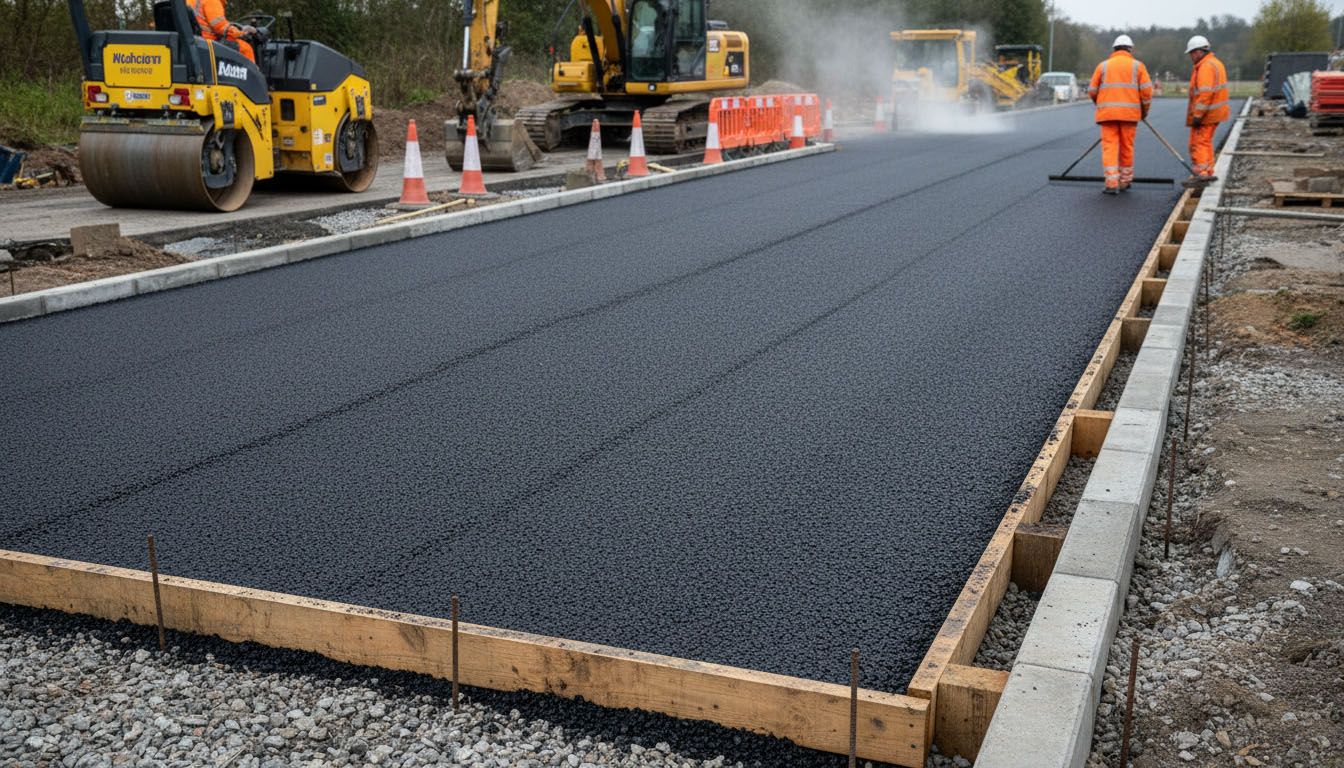
One common approach is the use of kerbs or concrete edging. These provide a solid barrier that prevents lateral movement and protects the edges from damage. They are particularly effective in urban environments and commercial settings.
Another method involves extending the sub-base beyond the edge of the surface. This creates a wider foundation that supports the edges and reduces the risk of collapse. This technique is often used in rural or less formal road settings.
In high-performance applications, reinforced edge systems may be used. These can include geotextiles or stabilisation grids that enhance the strength of the sub-base and improve load distribution.
The Impact of Traffic on Road Edges
Traffic plays a significant role in the performance of road edges. Repeated loading, especially from heavy vehicles, can cause gradual deformation if the edges are not properly supported.
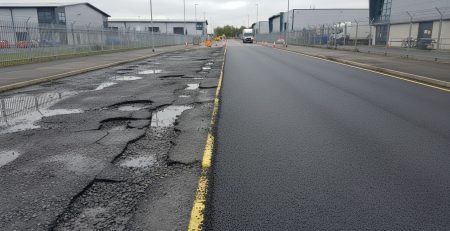
In commercial environments, where delivery vehicles and machinery are common, the risk is even greater. Without adequate edge support, the surface can begin to break away, leading to potholes and uneven surfaces.
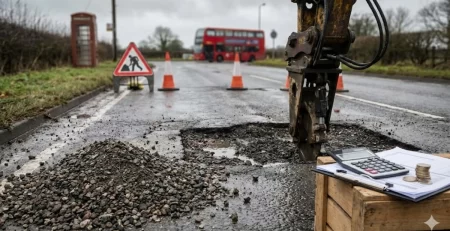
Regular maintenance, including timely pothole repairs, can address early signs of damage. However, prevention through proper edge support is always more effective and cost-efficient.
Environmental Factors Affecting Edge Stability
The UK climate presents unique challenges for road surfacing. Rainfall, temperature fluctuations, and freeze-thaw cycles all contribute to edge deterioration.
Water is particularly damaging when it infiltrates unsupported edges. It weakens the sub-base and can lead to voids forming beneath the surface. During colder months, trapped water can freeze and expand, causing further damage.
Proper drainage design works hand in hand with edge support to mitigate these risks. By ensuring that water is directed away from the edges, the likelihood of structural failure is significantly reduced.
Signs That Road Edge Support Is Failing
Recognising early warning signs of edge failure can help prevent more serious issues. One of the first indicators is cracking along the edges of the road. These cracks may appear minor but can quickly develop into larger problems.
Another sign is the presence of crumbling or broken edges. This often occurs when the surface begins to separate from the underlying layers. In more advanced cases, sections of the road may collapse entirely, creating safety hazards.
Uneven surfaces near the edges can also indicate underlying instability. These areas may feel soft underfoot or show visible depressions where the structure has weakened.
The Importance of Professional Installation
Achieving effective road edge support requires expertise and careful planning. Professional contractors understand the importance of integrating edge support into every stage of the surfacing process.
From initial site preparation to final compaction, each step must be carried out with precision. This includes ensuring that the sub-base is properly extended, the materials are suitable for the site conditions, and the edges are adequately restrained.
Working with experienced commercial surfacing contractors ensures that these standards are met. This not only improves the durability of the road but also enhances safety and long-term performance.
Long-Term Benefits of Proper Edge Support
Investing in proper road edge support delivers significant long-term benefits. One of the most important is increased lifespan. Roads with strong edge support are less prone to damage and require fewer repairs over time.
There is also a clear cost advantage. While proper installation may involve a higher initial investment, it reduces the need for ongoing maintenance and costly resurfacing.
From a safety perspective, well-supported edges help maintain a consistent surface, reducing the risk of accidents. This is particularly important in high-traffic areas and commercial environments.
In addition, properly constructed edges contribute to the overall appearance of the site. Clean, well-defined edges create a professional finish that reflects positively on the property.
Integrating Edge Support Into Future Projects
For property owners planning new surfacing works, edge support should be a key consideration from the outset. It is not an optional feature but a fundamental part of a durable and reliable road structure.
Early planning allows for the selection of appropriate materials and techniques. It also ensures that edge support is fully integrated into the design, rather than added as an afterthought.
Consulting with specialists and reviewing previous case studies can provide valuable insights into what works best for different types of projects.
Conclusion
Road edge support plays a vital role in preventing surface collapse and ensuring long-term performance. By reinforcing the weakest parts of the structure, it protects against traffic loads, environmental damage, and structural failure.
For UK property owners and site managers, prioritising edge support is essential. It not only enhances durability and safety but also reduces long-term costs and maintenance requirements.
Understanding its importance and working with experienced professionals ensures that surfacing projects are built to last, delivering reliable performance for years to come.