Why Bus Routes Deteriorate Faster Than Other Roads
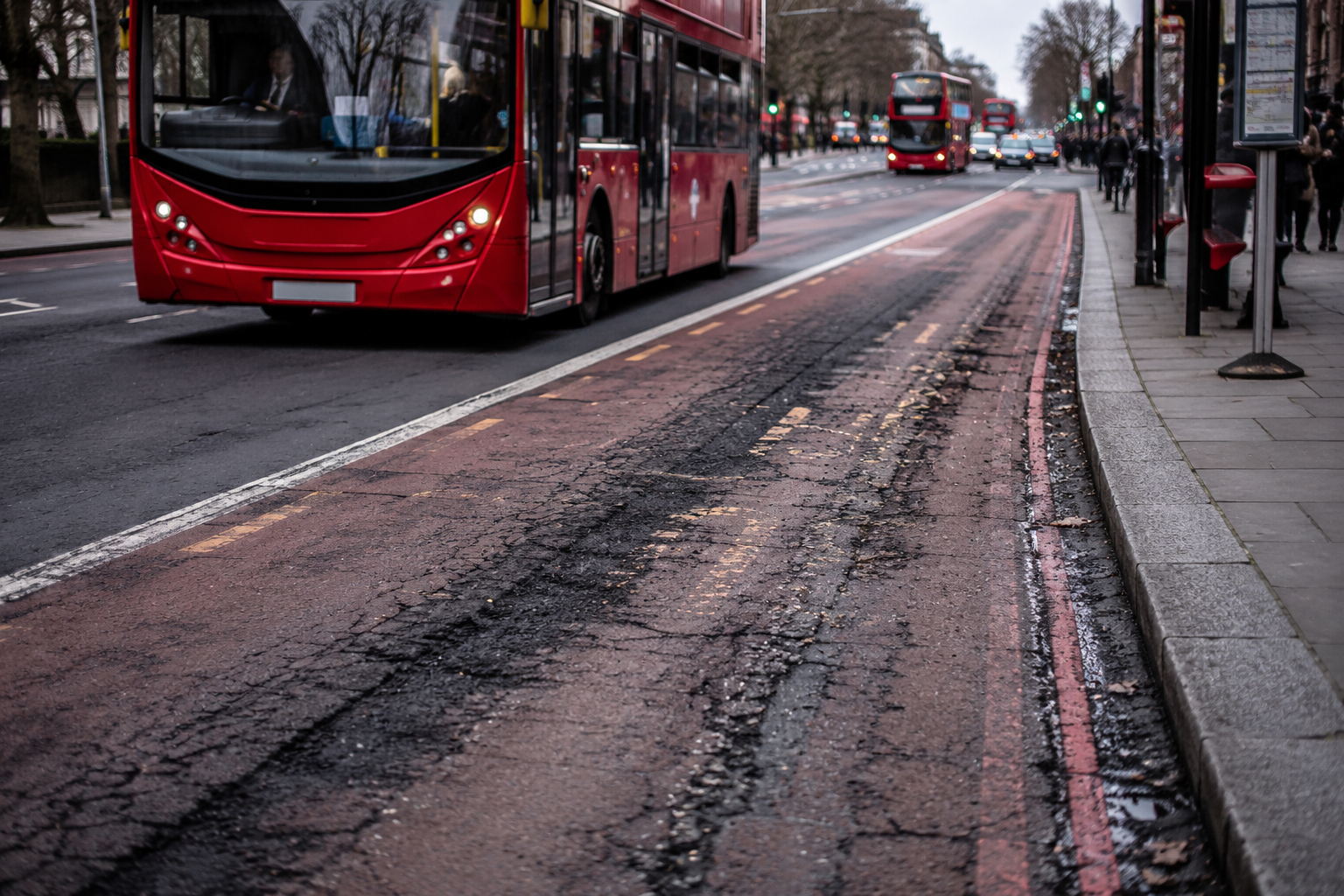
Road surfaces are designed to withstand daily traffic, weather conditions, and environmental pressures. However, not all roads experience the same level of wear. Across the UK, bus routes often show signs of deterioration much earlier than neighbouring residential streets or lightly used access roads. Cracking, rutting, potholes, and surface deformation frequently appear along bus corridors, creating maintenance challenges for local authorities and private road operators.
The primary reason for accelerated bus route road deterioration is the unique combination of vehicle weight, traffic frequency, braking forces, and operational patterns. Unlike general traffic routes where vehicle loads vary significantly, bus routes are subjected to repetitive heavy loading in the same locations every day.
Understanding why this happens is important for councils, developers, transport operators, and property managers responsible for maintaining roads and access networks.
The Impact of Repetitive Heavy Vehicle Loads
One of the most significant causes of bus route road deterioration is the repeated passage of heavy vehicles over identical wheel paths.
A fully loaded bus can weigh many times more than a typical passenger car. While road surfaces are engineered to handle traffic loads, the cumulative effect of hundreds of bus journeys each week places exceptional stress on the pavement structure.
The issue is not simply the total weight of the vehicle but the repeated concentration of that weight in the same areas. Buses generally follow fixed routes and occupy consistent positions within a lane. As a result, wheel loading becomes concentrated, leading to gradual weakening of the road surface and underlying layers.
Over time, this repeated stress causes deformation within the pavement structure, particularly if the road was not originally designed to accommodate sustained heavy traffic volumes.
Why Bus Stops Create Additional Surface Stress
Frequent Braking and Acceleration
Bus stops are among the most vulnerable locations on any transport route.
Every time a bus approaches a stop, significant braking forces are transferred through the tyres into the road surface. Once passengers have boarded or disembarked, acceleration places further stress on the pavement.
These opposing forces can gradually destabilise the surface layer, particularly when combined with heavy vehicle loads. The result is often visible rutting, shoving, cracking, or depressions directly adjacent to bus stops.
Unlike standard roads where vehicles maintain relatively constant speeds, bus routes experience these braking and acceleration cycles repeatedly throughout the day.
Static Loading Effects
When buses stop, their weight remains concentrated on the same section of road for an extended period. This static loading can contribute to pavement fatigue, especially during warmer weather when asphalt materials become more flexible.
Road sections exposed to constant stopping and standing loads often require enhanced pavement designs and more durable surfacing materials to withstand long-term use.
The Role of Traffic Frequency
Many roads carry heavy vehicles occasionally, but bus routes experience consistent loading patterns every day.
A residential road may only see a few delivery vehicles during a typical week. In contrast, a busy bus corridor could accommodate dozens or even hundreds of bus movements each day.
This high traffic frequency accelerates the ageing process of road materials. Even when the surface appears structurally sound, microscopic damage accumulates over time. Eventually, this damage manifests as cracking, potholes, or surface deformation.
Professional highway surfacing solutions are often designed specifically to account for these higher traffic volumes and repetitive loading conditions.
Pavement Fatigue and Structural Failure
How Fatigue Develops
Road surfaces behave similarly to many engineered materials. Repeated loading causes gradual fatigue, even when individual loads remain within design limits.
Each passing bus creates a small amount of strain within the pavement structure. Initially, this strain is harmless. However, after thousands of load cycles, tiny cracks begin to develop beneath the surface.
These cracks expand over time and eventually reach the surface, where they become visible as alligator cracking, longitudinal cracks, or potholes.
Sub-Base Weaknesses
The visible road surface is only one component of a much larger pavement system. Beneath the asphalt or tarmac lie structural layers designed to distribute vehicle loads.
If the sub-base is poorly constructed, weakened by moisture, or not designed for heavy traffic, deterioration accelerates significantly. Surface repairs alone may temporarily address visible defects, but the underlying structural issues will often remain.
This is why comprehensive tarmac installation projects focus on both surface layers and foundation strength.
Drainage Problems on Bus Routes
Water is one of the most destructive forces affecting road infrastructure.
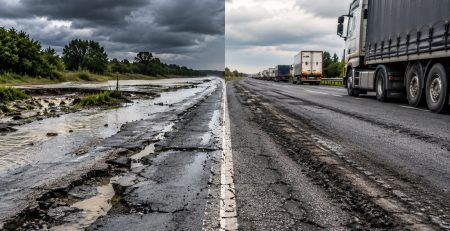
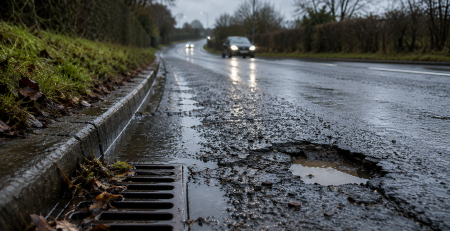
Bus routes frequently experience drainage challenges because of the constant loading and surface deformation caused by heavy vehicles. As wheel paths begin to rut, water can collect in depressions rather than flowing efficiently toward drainage systems.
Standing water increases the likelihood of surface deterioration through several mechanisms. Moisture can penetrate cracks, weaken underlying layers, and reduce the load-bearing capacity of the pavement structure.
During colder months, freeze-thaw cycles further accelerate damage. Water trapped within cracks expands when frozen, widening defects and increasing the risk of pothole formation.
Proper drainage design is therefore essential for maintaining road longevity on heavily trafficked bus corridors.
The Influence of Road Design
Roads Not Originally Built for Modern Traffic
Many roads currently serving bus routes were constructed decades ago under very different traffic conditions.
Vehicle weights have increased, traffic volumes have grown, and public transport usage patterns have evolved considerably. Some older roads simply were not designed to accommodate the modern demands placed upon them.
As a result, structural deficiencies can become apparent much sooner on bus routes than on roads carrying lighter traffic.
Junctions and Turning Areas
Bus routes often include roundabouts, tight turns, junctions, and terminal areas where vehicles exert additional horizontal forces on the pavement.
Turning movements create shear stress that can cause surface layers to shift, deform, or crack. These effects are particularly noticeable where buses frequently manoeuvre within confined spaces.
Road designers must therefore account for both vertical loading and horizontal forces when planning surfacing solutions for public transport networks.
Material Selection Matters
Not all surfacing materials perform equally under heavy vehicle traffic.
Roads carrying buses require materials capable of resisting deformation, fatigue, and environmental damage over extended periods. Inadequate material selection can result in premature failures, even when construction standards are otherwise high.
Modern surfacing systems often utilise specialist asphalt mixes designed specifically for high-stress environments. These materials provide enhanced resistance to rutting and surface wear while maintaining flexibility to accommodate thermal movement.
Using appropriate materials during construction can significantly extend pavement lifespan and reduce long-term maintenance costs.
Why Maintenance Is More Important on Bus Routes
Early Intervention Prevents Larger Failures
Minor defects can quickly become major structural problems on heavily trafficked roads.
A small crack that might remain stable on a residential street can rapidly deteriorate under repeated bus loading. Water infiltration, heavy traffic, and environmental exposure combine to accelerate the damage process.
Routine inspections and timely repairs help prevent defects from expanding and reduce the likelihood of costly reconstruction works.
Planned Maintenance Extends Service Life
A proactive maintenance strategy is typically far more cost-effective than reactive repairs.
Regular resurfacing, crack sealing, drainage maintenance, and targeted structural improvements can significantly extend the operational life of bus routes. Many successful transport authorities implement planned maintenance schedules based on pavement condition assessments rather than waiting for visible failures to occur.
When deterioration is identified early, targeted interventions can restore performance without requiring full reconstruction.
For larger transport networks and commercial sites, working with experienced commercial surfacing contractors helps ensure maintenance programmes are aligned with actual traffic demands.
Engineering Solutions for High-Traffic Bus Corridors
Modern road engineering provides several methods for improving the durability of bus routes.
Enhanced pavement designs can incorporate thicker asphalt layers, reinforced base materials, and improved drainage systems. In areas where buses stop frequently, specialist high-strength surfacing materials may be used to resist deformation.
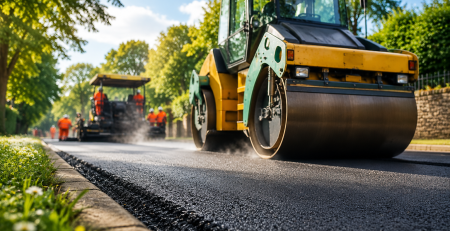
Advanced construction techniques such as machine lay tarmac can also improve consistency, compaction quality, and long-term performance.
Where deterioration has already occurred, timely pothole repairs and structural rehabilitation works help restore safety while preventing further pavement failure.
The most successful projects combine durable materials, strong foundations, effective drainage, and ongoing maintenance planning.
Conclusion
Bus route road deterioration occurs faster than on most other roads because of a unique combination of heavy vehicle loads, repeated traffic patterns, frequent braking and acceleration, concentrated wheel paths, and demanding operational conditions. These factors create stresses that ordinary residential streets rarely experience.
The challenge is further compounded by drainage issues, ageing infrastructure, and the cumulative effects of pavement fatigue. While deterioration is inevitable over time, appropriate road design, high-quality surfacing materials, robust construction practices, and proactive maintenance can significantly extend pavement lifespan.
For councils, transport operators, developers, and property managers, understanding the causes of bus route road deterioration is the first step towards creating safer, more durable, and more cost-effective road networks.