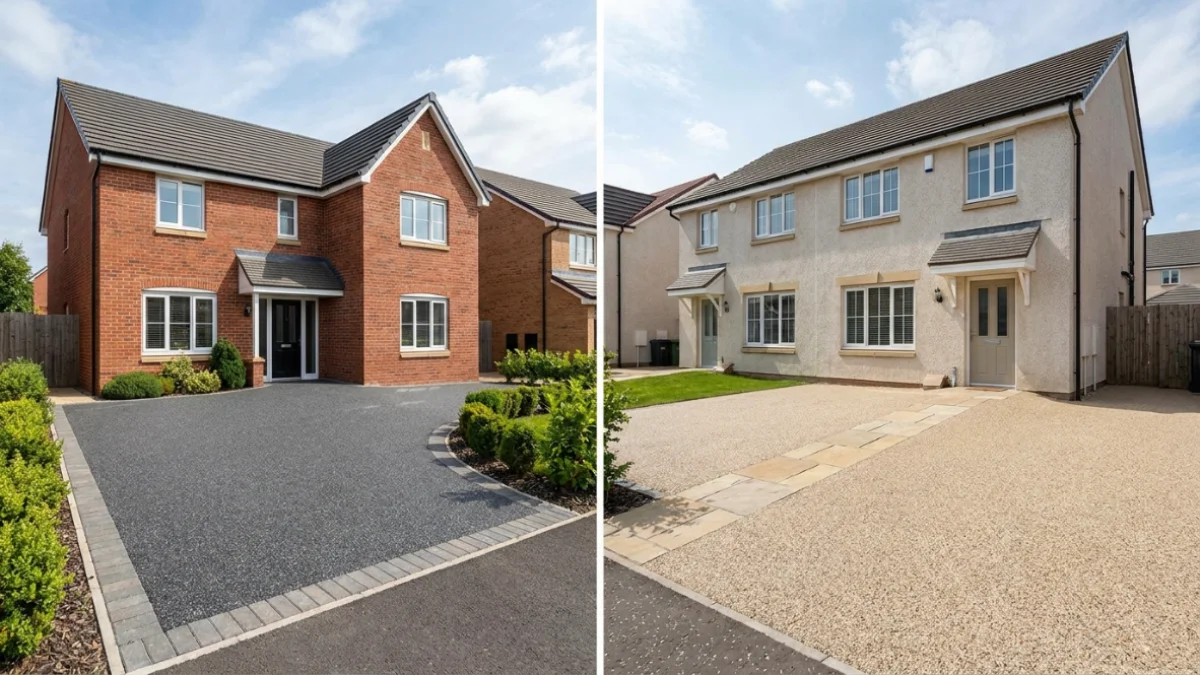
Best Resin Driveways for Detached & Semi-Detached Houses
Detached and semi-detached houses need driveways that look sharp, manage daily parking, drain correctly, and suit the property’s frontage. The serious step is to compare resin types, installation methods, maintenance realities, and architectural contrasts before choosing colour or cost. The experienced solution is a professionally installed resin-bound driveway with the right base, UV-stable resin, practical aggregate colour, and a finish designed around the house, vehicles, and long-term upkeep.
Best Resin Driveways for Detached & Semi-Detached Houses: Smart Fit
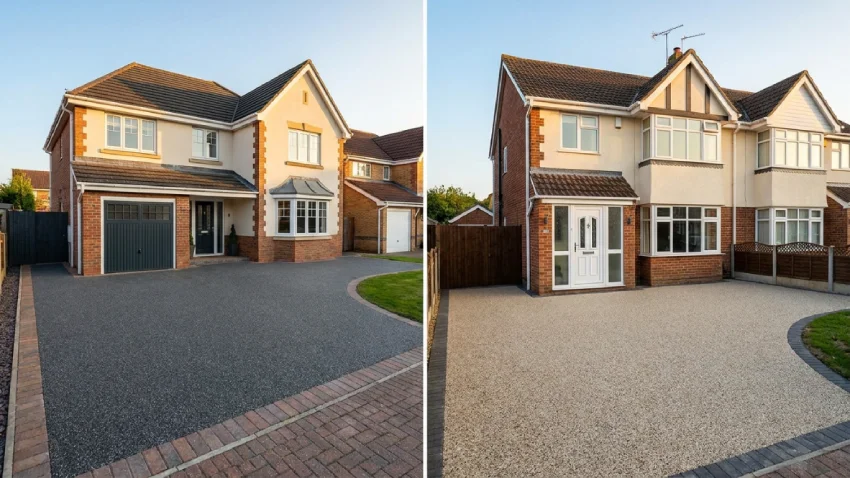
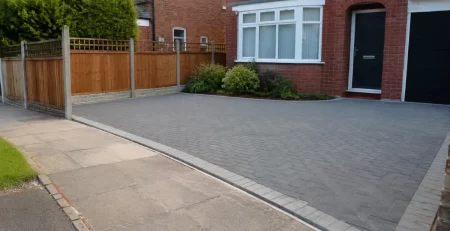
Best Resin Driveways for Detached & Semi-Detached Houses should be chosen around real parking habits, property shape, house style, drainage, and maintenance. A good surface must work every day, not only look good in photos.
Detached houses usually have wider frontages, larger driveways, garage access, and more turning space. That means the surface must handle heavier use, larger vehicles, and wider visual exposure from the road.
Semi-detached houses often have tighter boundaries, shared edges, narrower access, and closer neighbour drainage concerns. The driveway design needs cleaner edge control and a colour that does not clash with the adjoining frontage.
A good resin driveway plan should check:
- Current surface condition
- Sub-base strength
- Drainage direction
- Resin type
- Installation method
- Vehicle weight
- Turning stress
- Colour contrast
- Cleaning routine
- Long-term maintenance
A specialist such as Total Surfacing Solutions can assess whether your drive needs a full installation or a safe overlay. Resin is a surface system, not a cover-up for weak ground.
For homeowners comparing resin driveways with tarmac, block paving, gravel, or concrete, the real advantage is a smooth, modern, permeable finish when installed correctly.
| House Type | Key Risk | Resin Design Focus |
| Detached house | Larger surface exposure | Strong base and balanced colour |
| Semi-detached house | Shared edge and runoff | Clean borders and drainage |
| Garage-front home | Tyre turning marks | Durable mid-tone aggregate |
| Family home | Daily parking load | UV-stable resin and good base |
| Modern frontage | Visual contrast | Grey, charcoal, or mixed stone |
The best resin driveway is the one that suits the house frontage, vehicle habits, and ground conditions together.
Resin Types, Installation Methods: Choose Correctly
Resin types and installation methods decide drainage, durability, texture, cost, and lifespan. Homeowners should understand the difference before accepting a quote because similar wording can hide very different systems.
A resin-bound driveway is made by mixing aggregate and resin together before trowelling it onto a prepared base. It creates a smooth, seamless, usually permeable surface when the full base is designed correctly.
A resin-bonded driveway is different. Resin is spread over a base, and loose aggregate is scattered onto it. It is more textured, can shed stone sooner, and is often less suitable for premium domestic driveways.
A quick comparison:
| Feature | Resin Bound | Resin Bonded |
| Method | Aggregate mixed with resin | Aggregate is scattered onto resin |
| Finish | Smooth and seamless | Rougher gravel-like texture |
| Drainage | Usually permeable | Often not permeable |
| Appearance | Modern and premium | More rustic |
| Domestic drive use | Usually preferred | More limited |
For most detached and semi-detached houses, resin bound surfacing is the better choice because it gives a cleaner finish, stronger visual appeal, and better drainage potential.
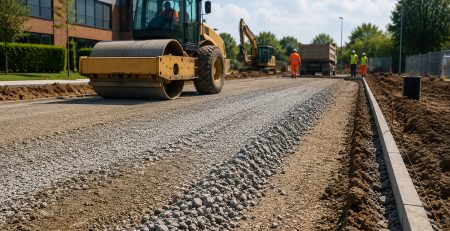
Installation method matters just as much as the resin type. Resin should be laid on a stable tarmac or concrete base, not loose gravel, soil, unstable block paving, or cracked surfaces.
Homeowners researching Resin Driveways should also consider whether the existing surface is suitable for overlay. New build and older properties can both hide settlement, weak repairs, or drainage defects.
A proper installer should explain the base, resin ratio, aggregate choice, weather limits, curing time, and edge detail before work starts.
Architectural Contrasts: Match the House
Architectural contrasts make resin driveways feel designed rather than simply installed. The right colour should work with brick, render, roof tiles, windows, doors, borders, landscaping, and driveway size.
Modern homes often suit silver-grey, graphite, charcoal, and mixed granite-style blends. These colours pair well with white render, black frames, anthracite doors, and clean landscaping.
Traditional and rural homes often look better with beige, cappuccino, bronze, golden quartz, or natural stone blends. These soften the frontage and connect better with red brick, buff brick, stone walls, and planting.
For stronger visual decisions, compare:
| House Style | Better Colour Direction |
| Red brick detached | Golden quartz, bronze, warm beige |
| White render | Silver, graphite, cool grey |
| Grey brick | Charcoal, granite, mixed grey |
| Traditional semi | Cappuccino or natural stone |
| Bold modern home | Dark border with mid-tone centre |
Current UK colour trends continue to favour grey, beige, brown, charcoal, natural stone, and warmer statement blends. Recent colour-trend sources point to grey and natural tones as especially popular, with black, red, and warm blends also gaining attention in modern kerb appeal choices.
For deeper colour planning, Best Resin Driveway Colours can help match aggregate blends with brickwork, render, doors, and window frames.
Avoid pure pale blends if your driveway has a tight turning circle. Stationary wheel movement can leave black tyre marks faster on very light colours.
Maintenance Realities: Know Daily Use
Maintenance realities matter because resin is low-maintenance, not no-maintenance. Detached and semi-detached homes still need regular sweeping, gentle washing, stain control, and drainage checks.
A resin-bound driveway can resist weeds better than gravel or block paving when installed properly. But seeds, leaves, moss, and dirt can still sit on the surface and create organic staining if ignored.
Daily use affects cleaning. A driveway used by SUVs, delivery vans, children’s bikes, bins, and frequent turning will need more attention than a lightly used single-car drive.
Practical maintenance includes:
- Sweep leaves and grit
- Clean oil quickly
- Wash tyre marks early
- Keep drainage edges clear
- Avoid aggressive pressure washing
- Use plastic snow tools
- Check edges yearly
- Remove surface weeds early
For proper care advice, clean driveway guidance helps homeowners avoid damaging the surface during washing.
A practical care table:
| Maintenance Issue | What Causes It | Better Action |
| Tyre marks | Tight turning | Clean early |
| Moss or algae | Shade and debris | Sweep and wash |
| Oil stain | Vehicle leak | Treat quickly |
| Loose edges | Weak restraint | Inspect early |
| Surface dirt | Daily use | Gentle wash |
The best resin driveway colour also considers maintenance. Mid-tone greys, natural stone blends, and mixed aggregates usually hide dust and tyre marks better than very pale single tones.
Sub-Base and Drainage: Stop Early Failure
Sub-base and drainage work decide whether the surface lasts or fails early. Resin is only the visible layer, so the base must carry weight, control movement, and manage water.
A strong resin driveway usually needs a stable tarmac or concrete base. If the existing driveway is cracked, loose, sinking, or badly patched, resin may reflect those defects later.
Drainage also matters. Resin-bound surfaces can be permeable, but only when the full system allows water to move through. A permeable top layer over the wrong base may still trap water.
UK front-driveway planning rules focus on surface water. Permeable surfacing or drainage to a lawn or border normally avoids planning permission, while traditional impermeable surfacing over 5m² may need permission when runoff is not managed.
A proper build should check:
- Existing base stability
- Cracks and settlement
- Permeability
- Falls and water direction
- Damp-proof course level
- Edging restraint
- Access covers
- Vehicle weight
| Base Condition | Resin Risk | Best Action |
| Sound tarmac | Good overlay option | Clean and prepare |
| Cracked concrete | Reflective cracking | Repair or remove |
| Loose gravel | Movement | Full base needed |
| Block paving | Joint movement | Avoid direct overlay |
| Poor drainage | Water damage | Redesign drainage |
Good groundwork is not the glamorous part, but it protects the whole investment.
Cost and Quote Checks: Avoid Weak Specs
Cost and quote checks help homeowners avoid weak specifications hidden behind attractive prices. Resin driveway prices vary because every base, edge, drainage route, and access detail changes the real job.
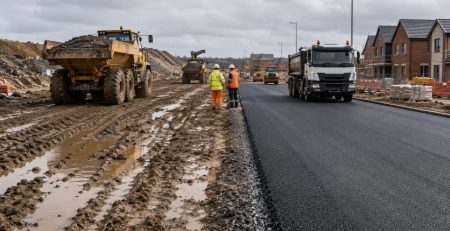
An overlay costs less when the existing base is sound. A full installation costs more because it may include excavation, sub-base construction, edging, drainage, tarmac binder, waste removal, and resin finishing.
Current UK sources show broad resin driveway cost ranges. Some guides place average resin-bound costs around £60–£95 per m², while other estimator-led sources put resin-bound closer to £120 per m². Jobs with heavy groundwork or complex drainage can rise beyond those ranges.
A strong quote should include:
- Area size
- Overlay or full dig-out
- Base preparation
- Sub-base depth
- Resin type
- Aggregate blend
- Edging
- Drainage
- Access covers
- Curing time
- Warranty terms
Homeowners should be careful with quotes that only show a m² price. A cheap quote can become expensive if it skips the base, uses non-UV resin, ignores drainage, or leaves weak edges.
A quote comparison table:
| Quote Item | Weak Quote | Strong Quote |
| Base | Vague | Layer detail included |
| Resin | Not specified | UV-stable stated |
| Drainage | Not mentioned | Route explained |
| Edges | Optional | Included clearly |
| Covers | Ignored | Recessed or detailed |
The right price is the one that matches the technical work required, not the lowest number.
Area Coverage for Best Resin Driveways
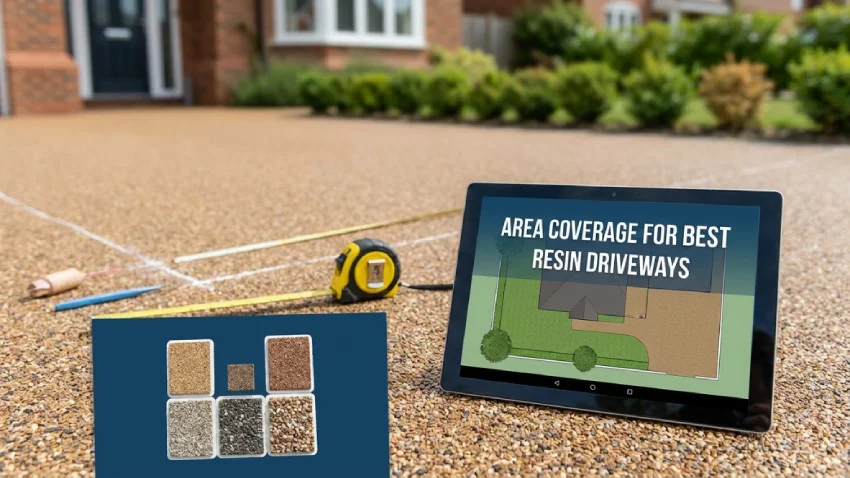
Best Resin Driveways for Detached & Semi-Detached Houses need local planning, surface, and design awareness. Bedfordshire, Cambridgeshire, Essex, Hertfordshire, and Oxford homes each need a slightly different approach.
Grey Resin Bound In Bedfordshire
Bedfordshire homes often include detached houses, semi-detached family homes, new estates, and compact front parking. Resin works well when the design supports daily parking, neat borders, and safe drainage.
For resin bound driveways bedfordshire, the first step is checking the current surface. A stable tarmac or concrete base may be suitable, but cracked, loose, or moving ground needs deeper preparation.
Homeowners also search for resin coated driveways when comparing options. The key is to confirm whether the installer means resin bound or resin bonded because the installation method affects drainage, finish, and lifespan.
Bedfordshire properties with red brick often suit warm beige, golden quartz, or natural stone blends. Modern homes with black frames or grey brick often suit silver, charcoal, or mixed grey surfaces.
Grey Resin Bound In Cambridgeshire
Cambridgeshire driveways often need careful drainage planning, especially on flatter plots or larger frontages. A resin-bound surface can work well when the sub-base and water route are planned properly.
For resin bound driveways cambridgeshire, the survey should check falls, base condition, access covers, edge restraint, and soil drainage. A smooth resin finish alone does not guarantee SuDS-friendly performance.
Homeowners comparing resin bound surfaces should ask about the base layers, not just the stone blend. Detached homes need stronger load support, while semi-detached houses need careful control near boundaries.
Cambridgeshire homes with rural or village styling often suit natural stone, beige, and warmer aggregate blends. More contemporary estates may suit silver or graphite finishes.
Grey Resin Bound In Essex
Essex homes often place strong value on frontage presentation, parking space, and clean kerb appeal. Resin can provide a premium finish, but the surface must still handle everyday traffic.
For resin bound driveways essex, vehicle movement should be discussed early. Short driveways, family cars, SUVs, and tight turning areas may need stronger edging and mid-tone aggregate blends.
Homeowners looking for resin bound driveways installers should ask technical questions before choosing by photos. Good installers should explain base preparation, UV resin, drainage, edge detail, and curing conditions.
Essex detached homes can often carry darker contrast designs well. Semi-detached homes may benefit from softer mixed tones that work with neighbouring frontages.
Grey Resin Bound In Hertfordshire
Hertfordshire properties often suit grey, silver, and granite-style resin finishes, especially where homes have black frames, white render, or modern landscaping. The finish still needs solid technical support.
A grey resin bound surface can look sharp, but the installer should discuss tyre marks, UV-stable resin, and shade. Pale grey may need more cleaning in short-turning areas.
If the existing drive or access route has damage, pothole repairs in hertfordshire may be needed before resin is considered. Covering unstable defects with resin can lead to cracking or dips later.
For Hertfordshire semi-detached homes, boundary edges and drainage direction need careful attention. For detached homes, larger surface areas need proportionate colour and border planning.
Grey Resin Bound In Oxford
Oxford homes often need a careful balance between traditional frontage and modern driveway performance. Resin can work well when the colour, edging, drainage, and finish stay sensitive to the property’s style.
Homeowners comparing resin coated driveways should confirm the exact system before booking. Resin-bound and resin-bonded surfaces look similar in wording but perform differently.
Traditional Oxford homes often suit natural stone, warm beige, bronze, and soft mixed aggregates. Modern homes may suit silver-grey, charcoal, or darker borders with a mid-tone centre.
Semi-detached Oxford properties should avoid overly loud colours where the frontage connects closely to a neighbour. Detached homes can carry stronger architectural contrasts when edging and landscaping support the design.
Final Selection Checklist: Decide Confidently
A final checklist helps you choose the best resin driveway without being distracted by colour samples alone. The strongest decision combines design, base quality, drainage, and maintenance planning.
Before agreeing to work, compare the resin system, sub-base, finish details, warranty, and maintenance expectations. A reliable contractor should explain the installation method clearly and put key details in writing.
Use this checklist:
- Choose resin-bound for the most premium driveways
- Check the existing base
- Confirm drainage and SuDS approach
- Use UV-stable resin
- Match the colour to the house
- Avoid very pale blends on tight turning areas
- Specify solid edging
- Ask about access covers
- Confirm curing and weather limits
- Plan maintenance from day one
A professional contractor such as Total Surfacing Solutions can help connect surface choice, technical installation, and long-term care into one clear plan.
The best driveway choice is simple when you break it down. Pick the system that suits the house, protects drainage, handles daily vehicles, and gives you a finish you can maintain confidently.
Frequently Asked Questions: Best Resin Driveways
1. What resin type is best for a detached house?
Resin-bound is usually best because it gives a smooth finish, strong kerb appeal, and good permeability when installed over the right base. Larger detached driveways also benefit from its clean visual flow.
2. Is resin suitable for semi-detached homes?
Yes. Resin can work very well for semi-detached homes when edges, shared boundaries, drainage direction, and colour choice are planned carefully. Mid-tone blends often suit connected frontages best.
3. Which resin driveway colour hides marks best?
Mid-tone grey, silver, beige, and mixed natural blends usually hide dust and tyre marks better than very pale colours. Tight turning areas should avoid pure white or cream aggregates.
4. Do resin driveways need much maintenance?
They need light but regular care. Sweep debris, wash gently, clear drainage points, treat oil quickly, and avoid aggressive pressure washing. Resin is low-maintenance, not maintenance-free.
5. Can resin be installed over an old driveway?
Sometimes. It can be overlaid only if the existing tarmac or concrete is stable, clean, sound, and suitable. Cracked, sinking, loose, or poorly drained surfaces need repair or full preparation first.