Hertfordshire Car Park Surfacing for Businesses
Cracks, standing water, and repeated potholes can make a business car park difficult to use, but covering those defects without finding their cause often creates another short repair cycle. Serious planning starts by measuring vehicle loads, checking the supporting layers, and tracing every drainage route. The experienced solution is to divide the site by traffic stress, rebuild failed areas to the correct depth, and control every installation stage.
Surfacing Tip: Plan every layer around drainage and daily traffic. Explore Hertfordshire car park surfacing .
Hertfordshire Car Park Surfacing for Businesses
Effective Hertfordshire car park surfacing for businesses connects site investigation, traffic loading, drainage, and controlled installation. The selected contractor should explain the complete pavement system rather than focusing only on the visible finish.
Searches may present names such as Total Surfacing Solutions, Hale Paving & Landscaping, and Herts Paving & Resin. Their appearance in search results does not establish which proposal is technically suitable for a particular business site.
A useful comparison should examine:
- Proposed excavation depth
- Existing pavement condition
- Formation and sub-base treatment
- Predicted vehicle loading
- Asphalt or surface specification
- Drainage adjustments
- Joint and edge construction
- Pedestrian management
- Installation phasing
- Completion inspections
| Site evidence | What it may indicate | Required decision |
| Repeated potholes | Failure extends below the old patches | Investigate and rebuild to stable material |
| Standing water | Poor falls, settlement, or blocked drainage | Survey levels and confirm a discharge route |
| Wheel-path rutting | Inadequate strength or unstable material | Reassess loading and pavement construction |
| Crumbling edges | Weak support or vehicle overrun | Reconstruct and restrain the margins |
| Faded markings | Heavy wear or weak substrate | Repair the surface before remarking |
| Sunken covers | Local support or level failure | Reset covers within reconstructed material |
| Shiny surface | Binder movement or reduced texture | Inspect grip and determine the cause |
| Cracks above repairs | Movement remains underneath | Repair the affected structural depth |
The central principle is simple. A surface course cannot compensate for a weak formation, an unsuitable base, or a failed drainage system.
Step 1: Map Traffic Before Material Choice
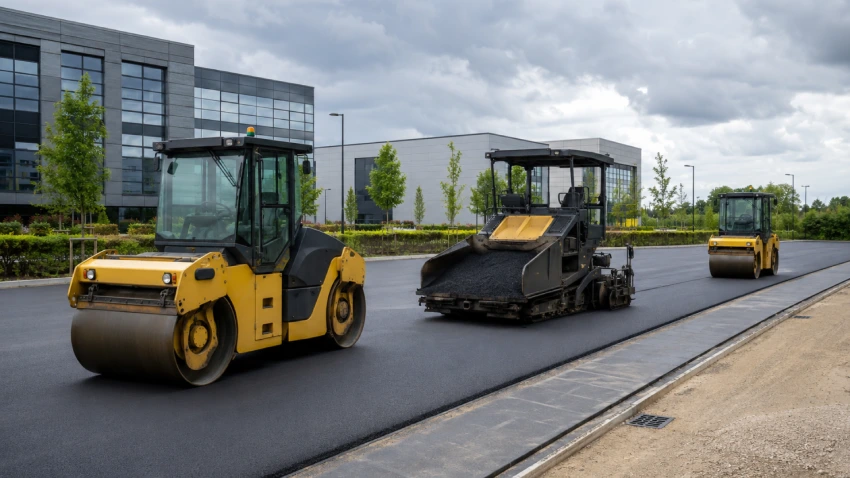
Car park size does not describe the loads placed upon it. A small delivery yard can experience greater pavement stress than a large office car park used mainly by passenger vehicles.
Record Every Vehicle Group
The first survey should separate ordinary cars from commercial and specialist vehicles. Their weights, turning patterns and stopping positions determine where concentrated pavement strength is required.
Record the expected use by:
- Customer cars
- Employee vehicles
- Delivery vans
- HGVs
- Forklifts
- Waste collection vehicles
- Emergency vehicles
- Maintenance equipment
Daily vehicle numbers are only one part of the calculation. Slow turning, braking and stationary loading can create greater local stress than vehicles moving steadily through a circulation lane.
Mark High-Stress Movement Zones
Entrances, delivery routes and loading areas should be shown separately on the site plan. This prevents the whole car park receiving one specification based mainly on visual consistency.
Important locations include:
- Entrance and exit connections
- Tight turning corners
- Loading and unloading bays
- Waste collection points
- Security gates
- Speed-control locations
- Frequently occupied parking rows
- Transitions into industrial yards
Businesses with mixed commercial traffic can use this guide to industrial yard surfacing planning when separating car parking from heavier operational zones.
Step 2: Let Existing Damage Guide the Work
Existing defects provide evidence about movement, water and loading. Their pattern should be recorded before removal because the visible damage may reveal how deeply the failure extends.
Separate Surface Wear From Base Failure
Loss of colour or minor texture change may remain close to the surface. Depressions, interconnected cracking and recurring potholes are more likely to require investigation of supporting layers.
Examine:
- Crack position and direction
- Previous patch boundaries
- Wheel-path settlement
- Drain and cover movement
- Edge breakdown
- Loose aggregate
- Water staining
- Vegetation in joints
The distinction controls whether the site needs isolated repairs, partial reconstruction or full resurfacing. A thin overlay may improve appearance while allowing deeper movement to continue.
Trace Repeated Potholes to Their Source
A pothole that returns in the same position should not receive the same shallow repair repeatedly. Loose material must be removed until the repair reaches sound construction.
Possible underlying causes include:
- Water entering an open joint
- Weak material below the patch
- Inadequate compaction
- Movement around a utility trench
- An unstable pavement edge
- Loading beyond the original design
- Poor bonding between courses
Recurring interconnected cracks may also indicate deeper pavement fatigue. Further explanation is available in this guide to asphalt fatigue cracking causes.
Step 3: Match the Surface to Site Stress
Material selection should follow the survey findings. Asphalt, concrete, resin-bound surfacing and block paving each require suitable supporting construction and should not be chosen by appearance alone.
Use Asphalt as a Complete Pavement System
Asphalt can serve car parks carrying varied traffic when the mixture and structural layers match the expected loading. Its performance depends on far more than the final black surface.
The specification should define:
- Surface-course mixture
- Required texture
- Binder-course material
- Asphalt base where required
- Individual layer thickness
- Bond treatment
- Joint details
- Compaction controls
For delivery routes and heavily used entrances, compare the proposed mixture with these heavy-duty road material characteristics.
Reserve Concrete for Suitable Load Zones
Concrete may be considered where concentrated stationary loads or repeated heavy vehicle movements demand a rigid construction. Loading areas often need different detailing from ordinary parking bays.
The design must address:
- Ground support
- Slab thickness
- Reinforcement where specified
- Joint position
- Surface texture
- Drainage falls
- Connections to asphalt
- Curing and reopening time
Concrete should not be introduced as an isolated strong patch without considering movement at its boundaries. Poor transitions can create level differences or weak joints beside surrounding asphalt.
Limit Resin to Technically Suitable Areas
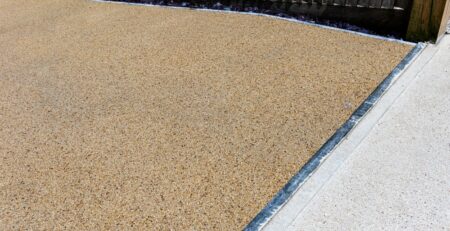
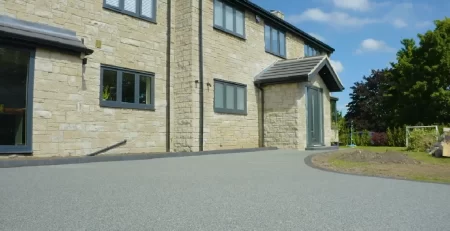
Resin-bound surfacing can form a smooth and visually defined finish when installed over a stable, compatible base. Permeability and loading requirements must be considered as part of the complete construction.
It may suit selected:
- Entrance areas
- Visitor parking sections
- Pedestrian approaches
- Defined light-vehicle zones
- Landscape-adjacent spaces
It should not automatically be specified for frequent HGV or forklift movement. Vehicle loading, turning, base condition, resin specification and edge restraint must all be assessed first.
Use Block Paving With Strong Restraint
Block paving can define selected bays or entrance areas, but its performance depends on the bedding course, jointing and edge restraint beneath the visible blocks.
Repeated turning can disturb poorly restrained paving. Oil contamination, settlement and joint-material loss also require planned inspection.
Step 4: Build Strength Below the Finish
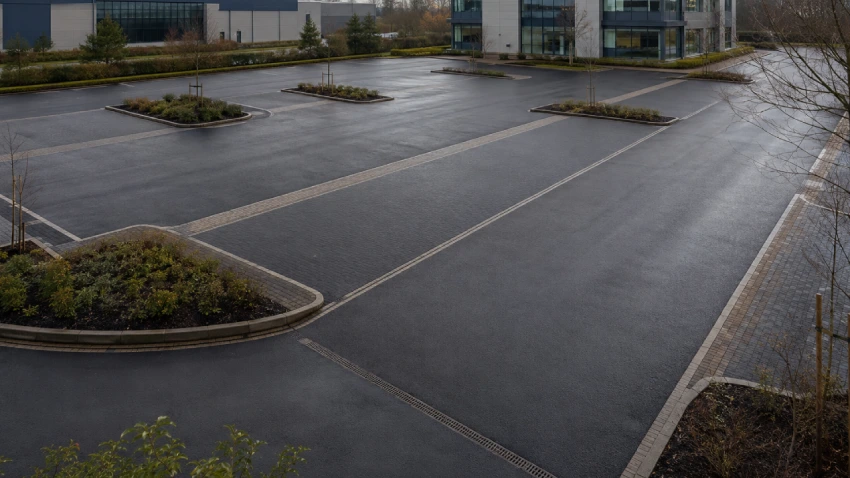
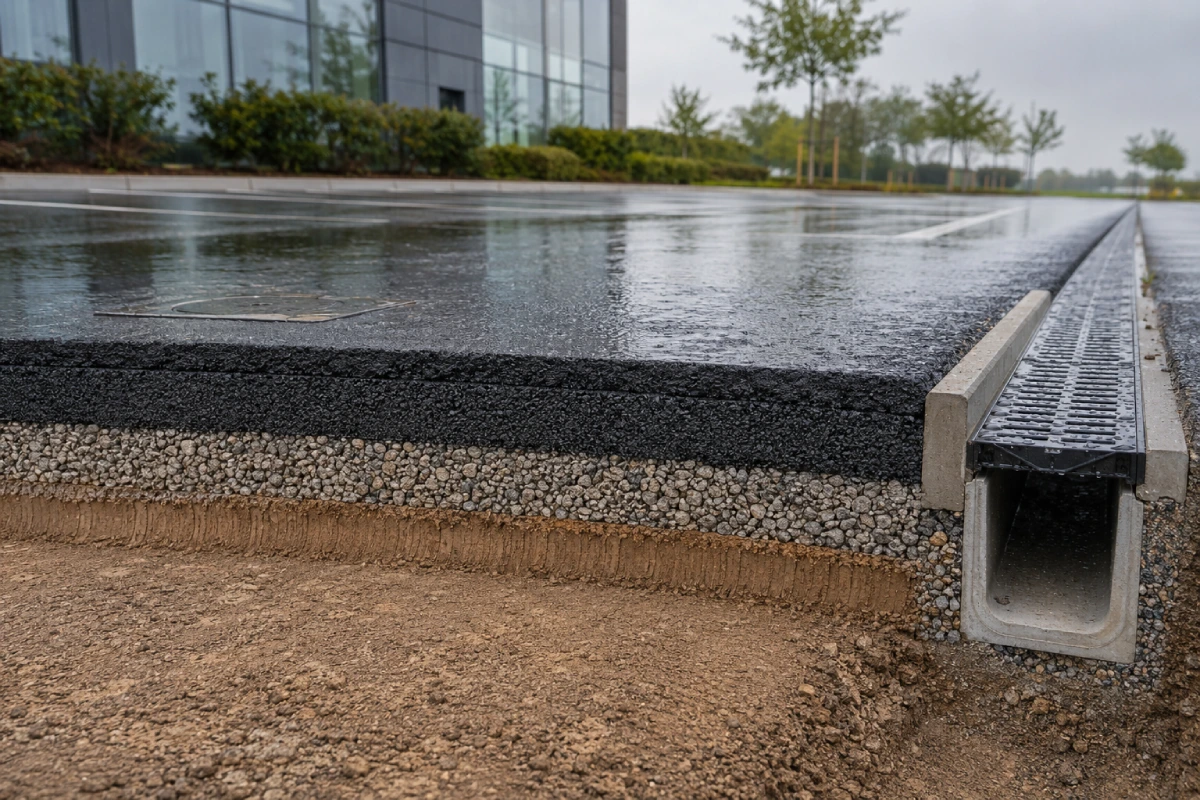
The upper surface receives direct traffic, but the lower pavement structure distributes that loading into the ground. Weakness at any supporting level can become visible as cracking, rutting or settlement.
Confirm the Formation Is Stable
The formation is the prepared ground supporting the pavement. Soft soil, uncontrolled fill and saturated areas should be identified before granular or asphalt layers conceal them.
Preparation may require:
- Removing unsuitable material
- Correcting excavation levels
- Improving weak ground
- Protecting exposed formation from rain
- Compacting replacement material
- Confirming support before proceeding
A stable formation gives the sub-base a consistent platform. Without it, the pavement may settle differently across individual parking bays and traffic lanes.
Place the Sub-Base in Controlled Layers
Sub-base material should be placed in manageable layers so compaction reaches the required depth. One thick loose placement can leave movement hidden below an apparently firm upper surface.
Check each layer for:
- Material consistency
- Correct thickness
- Moisture condition
- Compaction
- Surface levels
- Edge support
- Soft areas
- Drainage falls
A practical explanation of this stage appears in the base course preparation overview.
Give Every Asphalt Course One Role
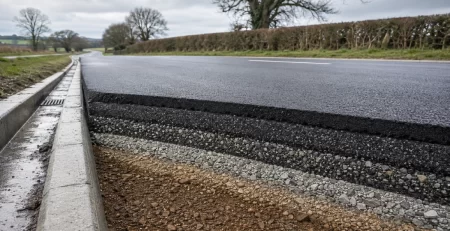
The base, binder and surface courses should work as one bonded system. Each layer carries a different part of the structural and operational demand.
| Pavement element | Primary role |
| Formation | Supports the complete construction |
| Sub-base | Distributes loading and provides stability |
| Asphalt base | Supplies major structural strength |
| Binder course | Transfers surface stress into the base |
| Surface course | Provides texture and traffic resistance |
| Bond treatment | Connects separate asphalt courses |
Readers needing more structural detail can review road base and binder course roles and the complete road surface layer structure.
Step 5: Stop Water Reaching the Pavement
Water should have a continuous route from every part of the car park to a suitable outlet. Channels without effective discharge points only relocate standing water.
Build Falls Into the Lower Construction
Crossfalls and longitudinal falls should begin within the prepared levels. Trying to correct major drainage errors only within the surface course can create inconsistent thickness and weak low points.
The drainage review should identify:
- Existing gullies
- Channel positions
- Drainage-cover levels
- Outlet condition
- Building entrances
- Landscape boundaries
- Adjacent ground levels
- Known ponding areas
Drain covers must meet the final surface without creating a raised obstacle or local depression. Their supporting construction should also resist settlement from passing vehicles.
Protect Joints and Exposed Edges
Water frequently enters through open seams, cracks and unsupported margins. Once trapped, it can weaken unbound layers and enlarge pavement movement.
Edge protection may require:
- Kerbs
- Strong retaining details
- Reconstructed margins
- Sealed interfaces
- Controlled transitions
- Drainage beside planting
- Protection from vehicle overrun
Inspect the completed site during or after rainfall. Dry-weather appearance cannot confirm whether the drainage profile works.
Treat Parking Deck Leakage Separately
A multi-storey car park is not simply an elevated asphalt parking area. Its reinforced concrete deck may require structural assessment, joint repair, drainage correction and a compatible protective system.
Warning signs include:
- Persistent water leakage
- Rust staining
- Concrete spalling
- Failed joints
- Wet soffits
- Exposed reinforcement
- Repeated deck cracking
These signs require suitable investigation. A cosmetic coating should not be used to conceal potential deterioration within structural concrete.
Step 6: Design Safety Into the Surface
A firm surface still needs clear organisation. Parking bays, pedestrian routes and loading areas should guide people and vehicles without creating unnecessary crossing or reversing conflicts.
Create Continuous Pedestrian Routes
Pedestrian routes should connect parking areas to building entrances without disappearing at loading bays or forcing people into vehicle circulation lanes.
Safe planning should consider:
- Clearly defined walkways
- Suitable crossing points
- Dropped kerbs
- Accessible approaches
- Visibility at corners
- Barriers where needed
- Lighting
- Non-slippery finishes
Routes should be easy to understand in wet conditions and lower light. Surface markings must remain visible against the pavement.
Position Markings After Surface Repairs
Line marking should follow structural and surface preparation. Painting over cracking, contamination or loose aggregate creates poor adhesion and does not remove the original defect.
Markings may identify:
- Parking bays
- Accessible spaces
- Pedestrian crossings
- Direction arrows
- Loading areas
- Keep-clear zones
- Restricted sections
- Fire access routes
The layout should reflect actual traffic movement. A visually neat marking plan can still cause conflicts when it directs pedestrians through turning or loading zones.
Step 7: Control Every Installation Stage
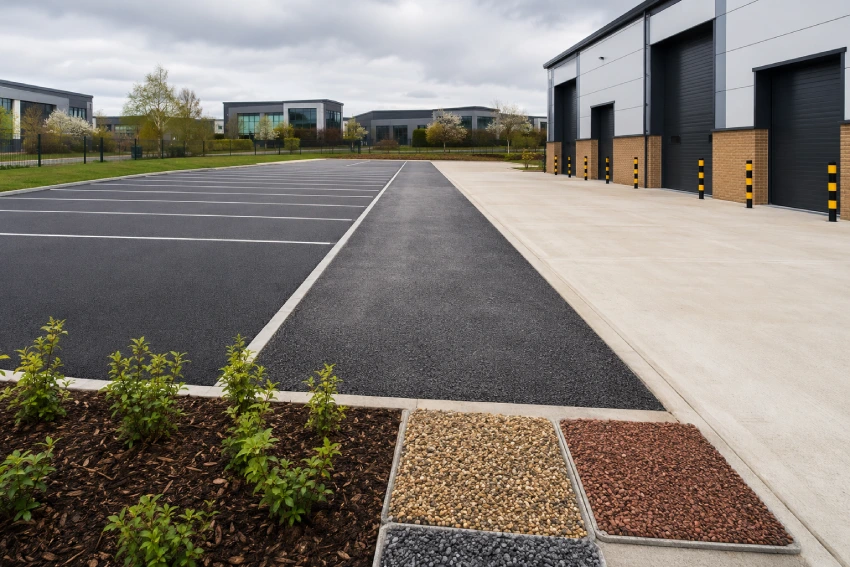
Preparation, delivery, laying and compaction determine whether the selected material performs as designed. Strong materials can still fail early when installed under unsuitable conditions.
Prepare the Receiving Surface
Before new asphalt is laid, failed material should be removed and the receiving construction cleaned. Dust, standing water and loose aggregate can weaken the bond between courses.
Preparation includes:
- Cutting repairs to stable edges
- Removing loose or contaminated material
- Rebuilding failed supporting layers
- Cleaning the receiving surface
- Adjusting drainage and utility covers
- Applying the specified bond treatment
- Checking levels before laying
These controls form part of the wider high-quality road surface basics.
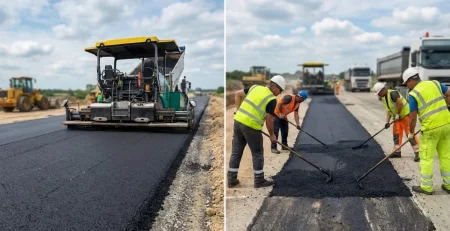
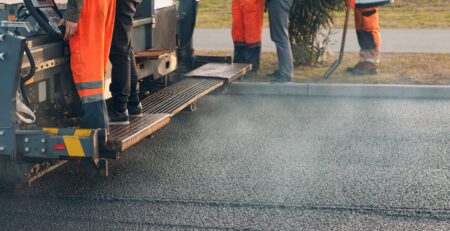
Keep Asphalt Laying Consistent
Material delivery should support steady machine movement. Long interruptions can allow material to cool and contribute to visible or structural variation.
The installation team should control:
- Delivery temperature
- Weather conditions
- Paver speed
- Material feed
- Screed settings
- Layer depth
- Edge position
- Joint sequence
Coarse patches, torn material and inconsistent texture may indicate segregation or unsuitable laying conditions. These areas should be examined before acceptance.
Compact Within the Working Window
Rolling should begin while the material remains workable and follow a planned sequence. Random passes cannot confirm uniform pavement density.
Particular attention is required around:
- Joints
- Kerbs
- Drain covers
- Narrow bays
- Transitions
- Repaired areas
- Paving-run ends
Under-compaction can leave excessive voids and increase vulnerability to water. Unsuitable rolling can also produce movement, marks or inconsistent levels.
Step 8: Keep Business Access Working
Commercial surfacing often takes place around active operations. A phased programme should protect people while preserving essential access to entrances, loading zones and emergency routes.
Divide the Site by Operational Priority
The work plan should separate construction zones from active parking. Temporary circulation must remain clear and should not send vehicles through freshly completed areas.
Before work begins, identify:
- Emergency access
- Delivery times
- Customer peak periods
- Staff arrival patterns
- Accessible entrances
- Waste collection
- Tenant requirements
- Alternative parking capacity
Large sites may be completed in stages. Each stage must connect correctly to the next without creating weak joints or drainage interruptions.
Protect Newly Completed Sections
Fresh materials need suitable cooling, curing or setting time before traffic returns. Early access may mark, deform or contaminate the surface.
Temporary controls should prevent:
- Stationary steering
- Heavy-vehicle turning
- Unplanned parking
- Delivery access
- Pedestrian entry into active work
- Tracking contaminants onto the surface
The reopening sequence should be agreed upon before construction, so operational pressure does not override material requirements.
Step 9: Verify Quality Before Reopening
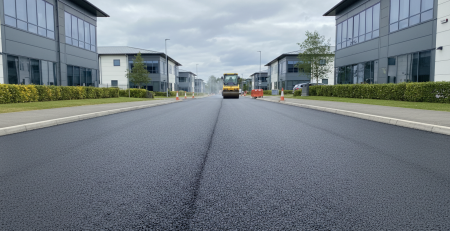
A dark and uniform appearance does not confirm layer depth, density or drainage performance. Completion checks should compare the work with the agreed construction and site plan.
Use a Measurable Completion Checklist
| Inspection item | Defect to identify |
| Surface regularity | Bumps, depressions and uneven profiles |
| Drainage | Ponding and interrupted water paths |
| Texture | Smooth, torn or segregated areas |
| Joints | Open seams and level differences |
| Edges | Weak or unsupported margins |
| Covers | Raised, sunken or unstable frames |
| Markings | Misaligned or unclear movement controls |
| Accessibility | Abrupt levels or obstructed routes |
| Cleanliness | Loose material and contamination |
| Repairs | Movement or weak patch boundaries |
Records may include material details, delivery information, layer depths, weather conditions and photographs of hidden construction. These records support later maintenance decisions.
Step 10: Maintain Risk Before Damage Spreads
Maintenance should follow loading and drainage risk rather than a single inspection interval for every area. Entrances, delivery routes, and water-collection points usually need closer observation.
Inspect After Severe Weather
Heavy rain can reveal ponding, blocked channels, and saturated edges. Hot conditions can reveal binder movement or deformation in heavily loaded asphalt.
Check for:
- New standing water
- Open cracks
- Loose material
- Edge breakdown
- Surface movement
- Faded markings
- Blocked drainage
- Joint separation
Repeated defects should trigger an investigation. Applying the same repair without addressing the cause only restarts the failure cycle.
A structured schedule can follow the business park road maintenance planning.
Commercial Car Park Surfacing Area Coverage
Our commercial car park surfacing services are available across Bedfordshire, Essex, Hertfordshire, and Oxford. Each area presents different traffic levels, weather exposure, property layouts, drainage requirements, and maintenance challenges. We adapt the surfacing approach to local conditions to create safer, more durable, and easier-to-maintain commercial parking areas.
Commercial Car Park Surfacing in Bedfordshire
Bedfordshire contains business parks, warehouses, retail premises, offices, and mixed commercial developments that require dependable parking surfaces. Regular rain, seasonal temperature changes, surface dust, and repeated vehicle movements can contribute to cracking, loose aggregates, potholes, and drainage problems. Our commercial car park surfacing in Bedfordshire is planned around local property layouts, traffic demand, customer expectations, and long-term maintenance needs.
Commercial Car Park Surfacing in Essex
Essex has a diverse mix of coastal businesses, retail centres, industrial estates, offices, hospitality venues, and tourism-related properties. Rainfall, summer heat, dust, heavy traffic, and salt-laden coastal air can gradually affect exposed parking surfaces. Professionally installed commercial car park surfacing in Essex helps businesses manage seasonal visitor demand, drainage pressures, surface wear, and customer expectations for safe, clearly organised parking facilities.
Commercial Car Park Surfacing in Hertfordshire
Hertfordshire includes busy commuter towns, corporate offices, retail parks, schools, healthcare premises, warehouses, and high-value commercial properties. Frequent vehicle use, rainwater, temperature changes, restricted site access, and customer expectations can place considerable pressure on parking areas. Our commercial car park surfacing in Hertfordshire supports durable access, effective drainage, organised traffic movement, and a professional appearance across different commercial property types.
Commercial Car Park Surfacing in Oxford
Oxford combines historic streets, educational facilities, offices, retail premises, hotels, healthcare sites, and modern business developments. Limited access, compact property layouts, tourism traffic, rainfall, seasonal demand, and environmental considerations can make car park construction and maintenance more challenging. Our commercial car park surfacing in Oxford is designed to suit local site structures while supporting drainage, surface durability, accessibility, and consistent daily use.
Resin Bound Driveways in Cambridgeshire
Cambridgeshire ground conditions vary between individual sites. A permeable surface still requires a compatible and stable base that allows water to move safely.
Explore local preparation and surface options for resin bound driveways in Cambridgeshire.
Frequently Asked Questions
These questions address closely related search concerns without repeating the main article sections.
How long should car park markings dry?
Drying time depends on the marking material, surface temperature, weather and application thickness. The completed area should remain protected until the applied system has developed sufficient resistance to vehicles and pedestrians.
The installer should confirm reopening time for the particular material. Allowing traffic onto wet markings can cause tracking, smearing and reduced definition.
Can asphalt be laid next to existing concrete?
Yes, but the transition requires careful detailing because asphalt and concrete respond differently to loading and temperature. The interface should have stable support and an appropriate joint arrangement.
Poor transitions can open, collect water or develop a level difference. The design should account for expected movement on both sides.
Why is grass growing through car park asphalt?
Vegetation often enters through open cracks, failed joints or thin, broken edges. Removing the visible growth does not close the route through the pavement.
The affected area should be inspected for water entry and underlying movement. Repairs should reach stable material and restore the joint or edge.
Do old car park markings need removal?
Removal may be necessary when old markings conflict with the new layout or remain visible enough to confuse users. The appropriate method depends on the surface and marking material.
The removal process should avoid unnecessary pavement damage. The finished layout must remain clear in both dry and wet conditions.
Should car parks be inspected after resurfacing?
Yes. Early inspections can identify drainage problems, opening joints, edge movement or marking wear before these defects spread.
The first heavy rainfall provides a useful drainage check. High-stress routes should also be reviewed after regular operations resume.
Build Around Traffic, Water, and Access
Hertfordshire business car parks perform reliably when traffic loading, pavement structure, drainage, and installation quality are treated as connected decisions. The visible surface should be the final result of that process.
Investigate recurring damage, strengthen high-stress zones and verify the completed work before reopening. This approach protects daily access without relying on repeated shallow repairs.