What Are Those Black Lines Running Across UK Roads?
If you regularly drive on UK roads, you may have noticed dark black lines running across or along the carriageway. Some are straight, others follow irregular cracks, and many appear slightly raised or shinier than the surrounding road surface. They can be particularly noticeable after rain or when sunlight catches the road at a certain angle.
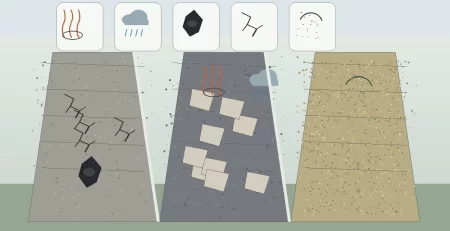
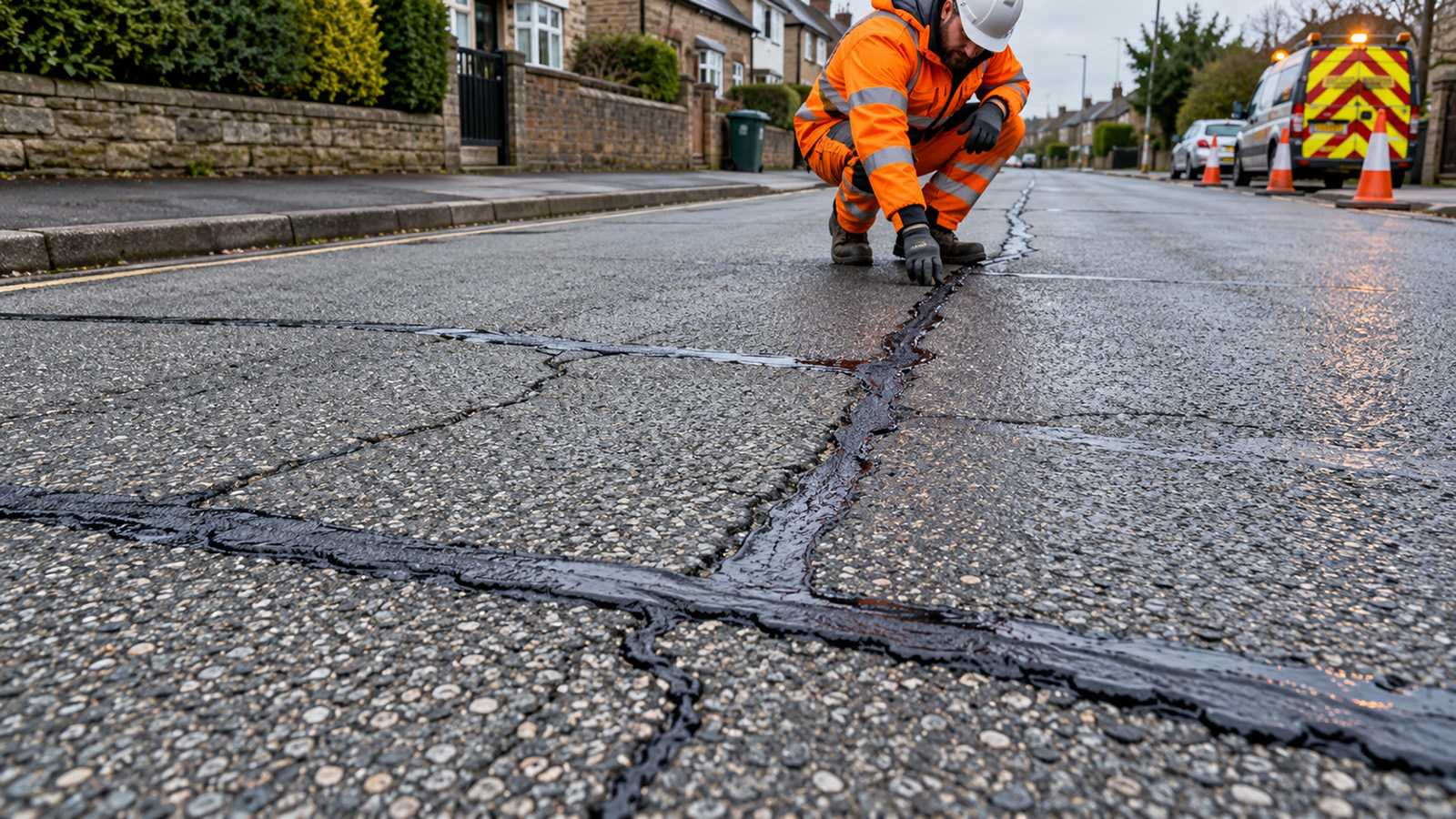
These black lines are usually not road markings or temporary construction marks. In most cases, they are evidence of crack sealing or joint sealing, a preventative maintenance technique used to stop water entering cracks in asphalt and tarmac surfaces.
Although the repair itself can look relatively simple, those narrow lines have an important job. They help protect the layers underneath the road, slow further deterioration and potentially prevent a small defect from developing into a much more expensive repair.
Why Do Black Lines Appear on UK Roads?
Road surfaces are exposed to considerable stress throughout their working life. Every passing car, van, lorry and bus places a load on the surface. At the same time, the road has to cope with rain, temperature changes, standing water and movement within the underlying construction.
Eventually, small cracks can begin to form.
Once a crack has appeared, simply leaving it untreated can allow the problem to become progressively worse. Water can penetrate through the opening and reach the layers beneath the visible surface. Repeated traffic loading can then contribute to movement and deterioration around the damaged area.
This is why cracks are often treated before they become substantial failures.
The black material that drivers see is generally a specialised bituminous sealing compound applied to the crack or joint. Its purpose is to close the opening and reduce the amount of water entering the road structure.
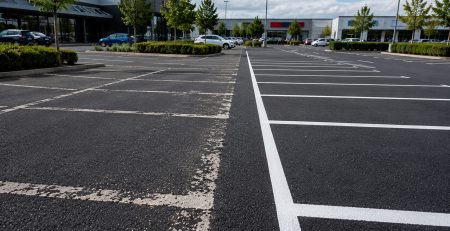
For property owners and site managers, the same principle applies to private roads, commercial access routes and car parks. Early attention to surface defects can form an important part of sensible long-term maintenance.
What Is Road Crack Sealing?
Crack sealing is a maintenance treatment rather than complete resurfacing. Instead of removing and replacing a large section of road, the existing crack is prepared and filled or sealed with a suitable material.
The finished repair frequently appears much darker than the existing road because the sealing material is newer and has not experienced the same weathering as the surrounding surface.
On older roads, this contrast can be particularly obvious. A grey, weathered asphalt surface may have several strong black lines following cracks across the carriageway.
The objective is not simply cosmetic. The important part of the repair is creating an effective seal that helps prevent moisture from travelling into the pavement construction.
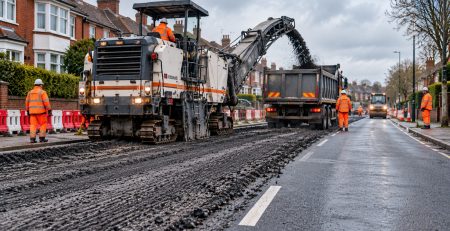
Professional highway surfacing work therefore involves looking beyond the appearance of the upper surface and considering how the entire road construction is performing.
Why Does Water Matter So Much?
Water is one of the most significant factors affecting the long-term condition of road surfaces.
A properly constructed road is designed to manage rainfall and direct water away from vulnerable areas. Problems can arise when cracks, damaged edges or inadequate drainage allow water to penetrate places where it should not be.
Once water reaches the layers underneath the surface, the supporting structure can become compromised. Traffic repeatedly travelling over the weakened area can accelerate deterioration.
During colder weather, moisture within cracks can also be affected by temperature changes. Expansion and contraction contribute to movement within existing defects, potentially allowing cracks to become wider over time.
This helps explain why a relatively narrow crack deserves attention. The visible opening might be small, but the potential consequences extend beneath the surface.
Sealing the crack provides a barrier against water ingress and can therefore help preserve the road for longer.
Are the Black Lines a Sign That the Road Is Failing?
Not necessarily.
Seeing sealed cracks does indicate that the surface has experienced some movement or deterioration, but the presence of the repair itself may actually show that preventative maintenance has taken place.
There is an important distinction between a road containing a few properly treated cracks and a road suffering from widespread structural failure.
A limited number of stable cracks may be suitable for sealing. If the surface is extensively cracked, breaking apart, deforming or developing repeated potholes, a small localised treatment may no longer address the underlying problem.
In these circumstances, a professional assessment can determine whether targeted repairs remain appropriate or whether more extensive tarmac installation and road surfacing should be considered.
The condition of the underlying construction matters just as much as the appearance of the surface.
Why Do Some Black Lines Run Straight Across the Road?
Not every dark line represents a random crack.
Roads are constructed and repaired in sections, which means joints can exist between different areas of surfacing material. These joints may require sealing to help prevent moisture penetration.
A relatively straight black line across a road may therefore correspond with a construction joint or a previous repair rather than an uncontrolled crack.
Other lines can follow irregular routes because they are tracking cracks that developed naturally within the surface.
The shape, position and surrounding condition of the road all provide clues about what has happened.
For a site manager assessing a private access road or commercial yard, the important question is not simply whether a black line exists. It is whether the joint or crack remains properly sealed and whether there are signs of deterioration developing around it.
What Causes Road Surfaces to Crack?
There is rarely one universal cause.
Road surfaces experience continuous traffic loading, and heavier vehicles can place particularly significant demands on the construction. Commercial access roads, industrial estates, loading areas and busy car parks can therefore face very different stresses from lightly used residential surfaces.
Age also matters. Asphalt and tarmac do not remain unchanged indefinitely. Exposure to weather and traffic gradually affects their characteristics.
Movement in the underlying layers can contribute to cracking as well. If the base is inadequately constructed, has weakened through water ingress or experiences localised movement, defects may eventually become visible at surface level.
Previous repairs can also influence how cracks develop. The edges of repaired sections and construction joints are potential locations for future movement if they are not correctly designed and installed.
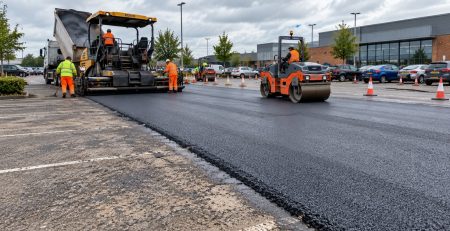
This is one reason proper preparation is so important when undertaking machine-laid tarmac. A durable finished surface depends on the condition and preparation of everything beneath it.
What Happens If Road Cracks Are Ignored?
A crack creates an opening in what should ideally be a continuous protective surface.
If water repeatedly enters that opening, deterioration can spread. Traffic passing over the affected area applies additional stress, particularly where the supporting layers have begun to weaken.
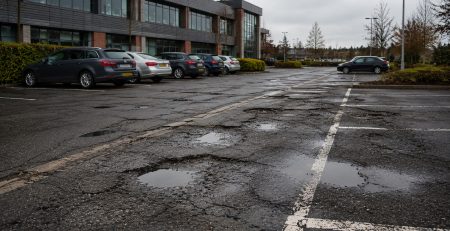
The edges of the crack may start to break away. The opening can become wider, surrounding material can loosen and eventually a more substantial defect may develop.
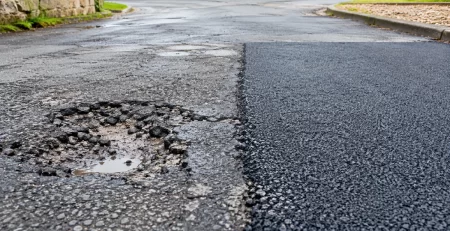
In some situations, this process contributes to pothole formation.
At that stage, sealing the original narrow crack may no longer be sufficient. Damaged material may need to be removed and a more substantial repair completed. Professional pothole repairs are intended to restore failed areas rather than simply cover the visible opening.
Early maintenance therefore has practical value. Treating an appropriate defect while it remains relatively minor can be far less disruptive than waiting until the surrounding surface has deteriorated significantly.
Crack Sealing Versus Pothole Repair
Although both are road maintenance techniques, they address different stages of deterioration.
Crack sealing is primarily preventative. The existing road remains substantially intact, and the treatment is designed to restrict water penetration and slow further damage.
A pothole represents a more developed failure where road material has already been lost. Repairing it generally requires more intervention because the defective area must be restored rather than merely sealed.
This distinction is useful for commercial property managers. Regular inspections can identify changes before they become serious enough to interfere with vehicles, pedestrians or day-to-day operations.
A narrow crack may initially seem insignificant in a large yard or car park. However, its condition over the following months can provide useful information about the performance of the wider surface.
When Is Crack Sealing Not Enough?
Crack sealing has limitations.
If cracking is widespread across a large area, repeatedly returns after repair or is accompanied by depressions, movement and extensive surface breakdown, there may be a deeper problem.
Applying additional sealant cannot compensate for a failed base or badly deteriorated surfacing.
In these situations, the correct approach may involve removing damaged material, correcting problems beneath the surface and installing new surfacing. For heavily trafficked premises, experienced commercial surfacing contractors can assess traffic demands, existing construction and the intended use of the area before determining an appropriate repair strategy.
The aim should be to address the cause of deterioration rather than repeatedly treating its visible symptoms.
Why Road Maintenance Should Be Planned Rather Than Reactive
Road maintenance is often most effective when defects are identified before they become disruptive.
Waiting for a pothole to become large enough to affect vehicles means the surface has already undergone substantial deterioration. Earlier inspections may reveal cracking, failed joints, drainage issues or localised surface damage before the problem reaches that stage.
This is particularly important on commercial premises where road condition can influence vehicle movements, deliveries, customer access and pedestrian safety.
Maintenance planning also allows repairs to be coordinated with operational requirements. Rather than responding unexpectedly to serious failures, site managers can assess areas of concern and determine which sections require attention first.
Examples of completed road surfacing projects can also help property owners understand the difference between local repairs and more extensive resurfacing work.
Should Black Lines on a Private Road Be Inspected?
If black sealed lines already exist on a private road, access route or car park, they are worth including in routine surface inspections.
A sound seal should continue to protect the opening beneath it. Over time, however, traffic and weather can affect previously repaired areas.
The key is to look at the condition around the repair. New cracking adjacent to an old seal, loose material, depressions or repeated water accumulation can indicate that further investigation is needed.
A professional surfacing contractor can assess whether the existing repair remains serviceable and whether deterioration is confined to the surface or extends into the supporting construction.
For domestic access roads and larger private surfaces, experienced domestic surfacing contractors can similarly determine whether isolated maintenance or more substantial resurfacing is appropriate.
What Those Black Lines Actually Tell You
The black lines running across UK roads are a useful reminder that road maintenance is not limited to filling potholes and replacing entire surfaces.
Much of effective road maintenance involves intervening earlier.
A crack may only be a few millimetres wide, but sealing it can help prevent water entering the road construction and reduce the risk of more extensive deterioration. That is why dark sealing lines are commonly visible on roads that have undergone preventative maintenance.
They also demonstrate an important principle for anyone responsible for a private road, commercial access route, car park or yard: surface condition should be monitored before defects become major failures.
Where cracking remains localised and the road structure is otherwise sound, an appropriate repair can help prolong its useful life. Where cracking is extensive or accompanied by deeper deterioration, a more comprehensive surfacing solution may be required.
Understanding the difference allows property owners and site managers to make better maintenance decisions and address problems at an appropriate stage rather than waiting for visible failure to become severe.