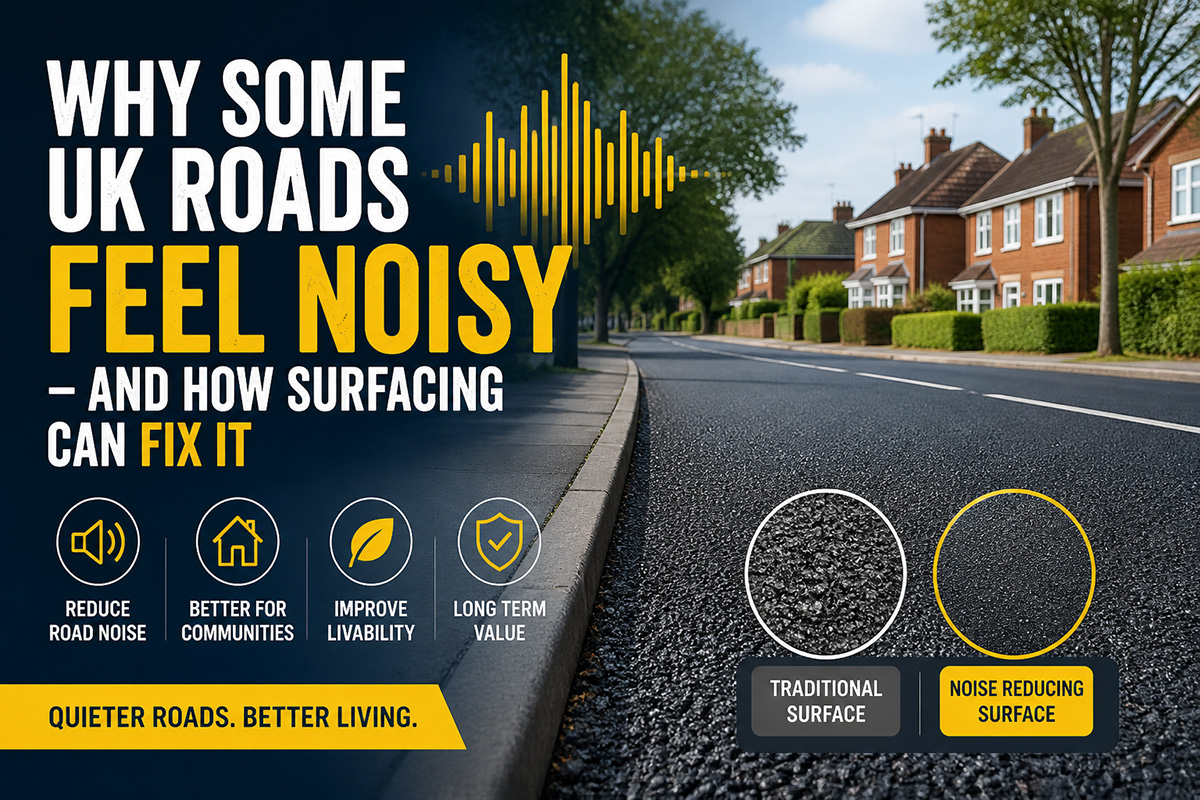
Why Some UK Roads Feel Noisy – And How Surfacing Can Fix It
Road noise is a common concern across the UK, particularly in residential areas, business parks, and along frequently used access roads. Many property owners and site managers notice that some roads seem significantly louder than others, even when traffic levels appear similar. This difference is rarely accidental. In most cases, it comes down to the type, condition, and quality of the road surfacing.
Noise generated by vehicles is influenced by the interaction between tyres and the road surface. When tyres roll across a surface, they create vibrations and air displacement, which results in sound. The rougher or more uneven the surface, the more pronounced this effect becomes. Over time, wear and tear, poor installation, or unsuitable materials can all contribute to increased noise levels.
Understanding these underlying causes is essential for identifying practical solutions. In many cases, professional surfacing improvements can significantly reduce noise while also enhancing safety and durability.
The Role of Surface Texture in Road Noise
Coarse vs Smooth Surfaces
The texture of a road plays a major role in how much noise it generates. Coarse surfaces, which often feature larger aggregate stones, tend to produce more vibration as tyres pass over them. This leads to higher noise levels, particularly at speed.
Smooth surfaces, on the other hand, allow tyres to roll more evenly. This reduces vibration and creates a quieter driving experience. Modern surfacing techniques are designed to strike a balance between durability and smoothness, ensuring that roads remain safe while minimising noise.
Worn and Degraded Surfaces
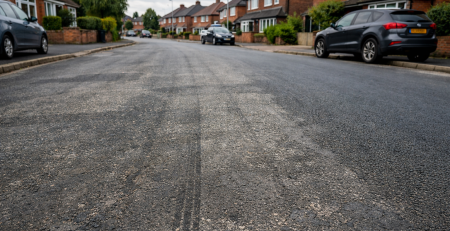
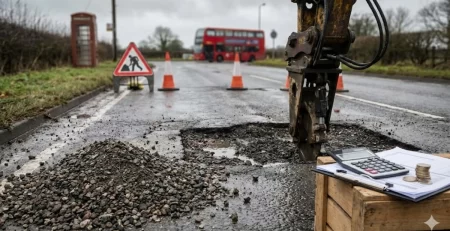
Even a well-installed surface can become noisy over time. As roads age, the binder that holds the aggregate together can wear away, exposing rougher textures beneath. Cracks, potholes, and patch repairs further disrupt the surface, increasing noise levels.
Regular maintenance is essential to prevent this type of degradation. Addressing early signs of wear through services such as pothole repairs can help maintain a smoother and quieter surface over time.
How Traffic Type Affects Noise Levels
Heavy Vehicles and Load Pressure
The type of traffic using a road significantly impacts noise generation. Heavy goods vehicles, delivery lorries, and buses exert more pressure on the surface, amplifying sound as tyres compress and release against the road.
In commercial environments, where heavy traffic is common, selecting the right surfacing solution becomes particularly important. Surfaces must be durable enough to withstand load stress while still maintaining a relatively smooth finish.
Speed and Driving Behaviour
Higher speeds generally result in increased road noise. As vehicles travel faster, the interaction between tyres and the surface becomes more intense, producing more sound. Sudden braking, acceleration, and turning can also contribute to noise, especially on poorly surfaced roads.
A well-designed surface helps reduce these effects by providing consistent grip and even texture, allowing vehicles to move more smoothly.
The Impact of Poor Installation
Inconsistent Surface Levels
One of the most overlooked causes of noisy roads is poor installation. If a surface is not laid evenly, it can create subtle ridges, dips, or inconsistencies that amplify tyre noise.
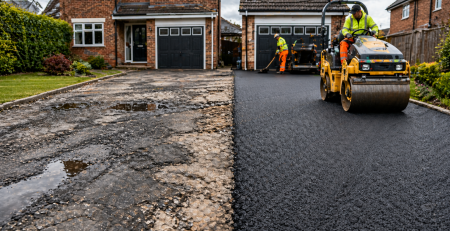
Professional installation methods, such as machine-laid tarmac, are specifically designed to eliminate these inconsistencies. By ensuring a uniform finish, these techniques help reduce both noise and long-term maintenance issues.
Incorrect Material Selection
Using the wrong materials for a specific application can also lead to increased noise. For example, a surface designed for light residential use may not perform well under heavy commercial traffic, leading to rapid wear and a rougher texture.
Working with experienced contractors ensures that the correct materials are selected based on traffic levels, environmental conditions, and long-term performance requirements.
Environmental Factors That Increase Road Noise
Weather and Temperature Changes
The UK climate plays a significant role in road performance. Frequent rain, temperature fluctuations, and freeze-thaw cycles can all affect surface integrity. Water penetration can weaken the structure of a road, leading to cracks and surface deterioration.
As the surface degrades, it becomes rougher and more uneven, which increases noise levels. Proper drainage and high-quality surfacing materials are essential for minimising these effects.
Water Accumulation and Drainage Issues
Standing water on a road surface can also contribute to noise. When vehicles pass through water, they create additional sound through splashing and spray. Poor drainage systems often lead to persistent wet areas, particularly in low-lying sections of roads or car parks.
Incorporating effective drainage into surfacing design helps maintain a dry, smooth surface, reducing both noise and the risk of damage.
How Modern Surfacing Reduces Noise
Advanced Tarmac Solutions
Modern tarmac has evolved significantly, offering improved noise-reducing properties compared to older materials. Carefully selected aggregates and binders create a smoother surface that minimises vibration without compromising strength.
Professional tarmac installation ensures that these materials are applied correctly, delivering consistent results across the entire surface.
Precision Installation Techniques
The method used to lay a surface is just as important as the material itself. Precision techniques ensure that the surface is compacted evenly, eliminating air gaps and irregularities that could lead to noise.
This level of accuracy is particularly important for commercial sites, where consistent performance is required across large areas.
Benefits of Quieter Road Surfaces
Improved Comfort for Users
Reducing road noise has a direct impact on user comfort. Drivers experience a smoother, quieter journey, while pedestrians and nearby residents benefit from a less intrusive environment.
This is especially valuable in residential developments, schools, and public spaces where noise can affect quality of life.
Enhanced Professional Appearance
A well-surfaced road not only performs better but also looks more professional. Smooth, even surfaces create a positive impression for visitors, clients, and tenants.
For businesses, investing in high-quality surfacing can support a more polished and well-maintained image.
Long-Term Cost Efficiency
Quieter surfaces are often a sign of better construction and materials. By reducing wear and tear, these surfaces typically require less frequent repairs, leading to lower long-term maintenance costs.
Working with experienced commercial surfacing contractors helps ensure that projects are completed to a high standard, delivering lasting value.
When to Consider Resurfacing
Signs of Excessive Noise
If a road has become noticeably louder over time, it is often a sign that the surface is deteriorating. Increased vibration, visible wear, and uneven texture all indicate that resurfacing may be required.
Ignoring these signs can lead to further damage, making repairs more complex and costly.
Planning for Upgrades
Resurfacing provides an opportunity to upgrade both the performance and acoustic properties of a road. By selecting modern materials and installation methods, property owners can significantly improve the overall quality of their surfaces.
Exploring previous projects through case studies can provide valuable insight into what can be achieved with professional surfacing solutions.
Choosing the Right Surfacing Approach
Tailored Solutions for Different Environments
Every site has unique requirements. Residential roads, commercial yards, and public access routes all demand different approaches to surfacing. Factors such as traffic type, usage frequency, and environmental exposure must all be considered.
A tailored approach ensures that the chosen solution delivers the best balance between noise reduction, durability, and cost-effectiveness.
Working with Experienced Professionals
Achieving a quiet, durable road surface requires expertise at every stage, from planning and material selection to installation and finishing. Experienced contractors understand how to minimise noise while maintaining structural integrity.
Engaging specialists ensures that the final result meets both functional and aesthetic expectations.
Conclusion
Road noise is not simply an unavoidable aspect of modern infrastructure. In many cases, it is a direct result of surface condition, material choice, and installation quality. By understanding these factors, property owners and site managers can take practical steps to reduce noise and improve overall performance.
Modern surfacing solutions offer a clear path forward, combining durability with smoother, quieter finishes. Whether addressing existing issues or planning new developments, investing in high-quality surfacing delivers long-term benefits for both users and the surrounding environment.