Can Oil Stains Be Removed Without Replacing Blocks?
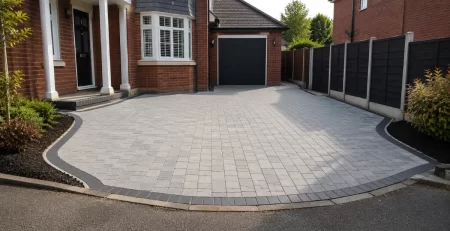
Oil stains are one of the most frustrating problems for property owners. A leaking car, commercial vehicle or piece of machinery can leave unsightly black patches on block paving that detract from the appearance of an otherwise well-maintained driveway, courtyard or parking area. Fortunately, replacing the affected blocks is not always the only solution. In many cases, professional cleaning techniques can significantly reduce or even remove oil stains, restoring the appearance of the paving without the expense of replacement.
Understanding how oil interacts with block paving is the key to determining whether cleaning will be successful. The age of the stain, the type of paving and how deeply the oil has penetrated the surface all influence the final result.
Why Oil Stains Penetrate Block Paving
Unlike solid concrete slabs or resin-bound surfaces, block paving is naturally porous. Tiny openings within each block allow moisture and other liquids to penetrate beneath the surface. When engine oil is spilled, it initially sits on the surface before gradually soaking into these pores.
Fresh spills are much easier to deal with because the oil has not yet travelled deep into the paving. Once absorbed, however, the oil bonds with dirt and dust, creating the dark staining commonly seen on older driveways.
The longer an oil stain is left untreated, the more difficult it becomes to remove completely.
Why Prompt Action Matters
Quick action gives the best chance of preventing permanent staining. Absorbent materials such as cat litter or specialist oil granules can soak up excess oil before it penetrates the paving. Once the excess has been removed, applying a suitable degreasing cleaner helps break down any remaining residue.
Simply rinsing the spill with water is rarely effective. Water does not dissolve oil and often spreads the contamination across neighbouring blocks, increasing the affected area.
Even if immediate cleaning does not completely remove the stain, reducing the amount of oil absorbed into the paving can make later professional treatment much more successful.
How Professional Cleaning Removes Oil Stains
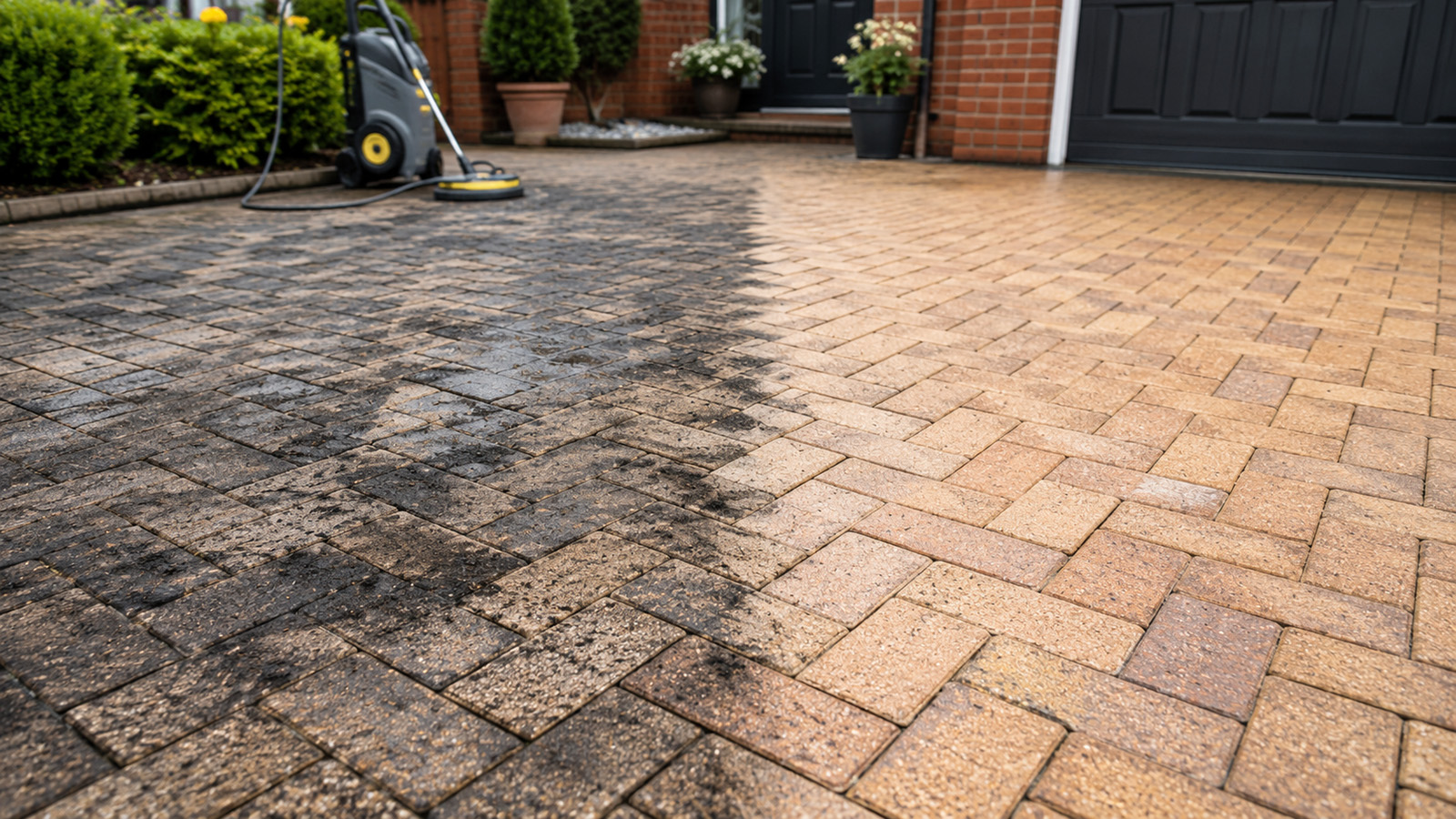
Professional contractors use specialist degreasers that are specifically formulated to break down hydrocarbons trapped within porous paving materials. These products penetrate the surface, lifting the oil so it can be safely removed without causing unnecessary damage to the blocks.
Once the cleaning solution has had sufficient time to work, controlled pressure washing is often used to remove the dissolved contamination. Unlike domestic pressure washers, professional equipment is operated at suitable pressures that clean the paving while protecting both the blocks and the jointing sand.
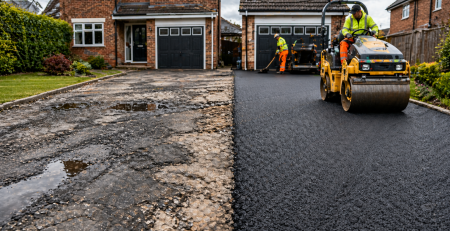
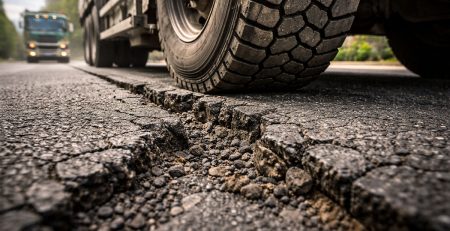
If the surrounding paving or access roads are also showing signs of wear, professional tarmac installation services may be considered as part of a wider surface improvement project.
Can Pressure Washing Alone Remove Oil Stains?
Pressure washing is excellent for removing moss, algae, dirt and general surface grime, but it rarely removes established oil stains on its own.
Oil that has soaked beneath the surface remains trapped within the pores of the paving, meaning the stain often reappears once the blocks dry. Excessively high pressure can also damage the surface texture of the paving and wash away the kiln-dried sand that locks the blocks together.
For this reason, professional contractors nearly always combine specialist cleaning chemicals with carefully controlled pressure washing to achieve the best possible results.
When Replacement Becomes Necessary
Although many oil stains can be dramatically improved, there are situations where replacing individual blocks provides the most practical solution.
Older stains that have remained untreated for many years may have penetrated too deeply to be removed completely. In these cases, selective replacement allows damaged blocks to be lifted and replaced without disturbing the surrounding paving.
Replacement may also be appropriate where repeated oil contamination has weakened the surface or where the paving has become uneven due to ground movement.
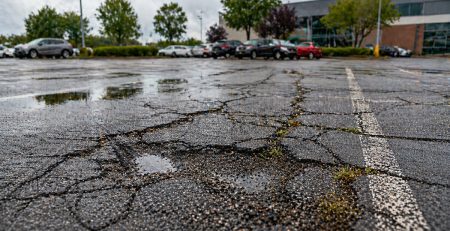
If larger commercial areas have deteriorated beyond isolated staining, experienced commercial surfacing contractors can assess whether localised repairs or more extensive resurfacing would provide the best long-term outcome.
Preventing Future Oil Stains
Preventative maintenance is considerably easier than removing established stains. Keeping vehicles well maintained reduces the likelihood of leaks, while cleaning spills as soon as they occur prevents oil from penetrating the paving.
Many property owners also choose to have block paving professionally sealed. A high-quality sealant reduces the surface’s absorbency, making future spills much easier to remove before permanent staining occurs.
Routine cleaning also prevents dirt from accumulating within the surface, helping paved areas maintain a cleaner and more attractive appearance throughout the year.
Setting Realistic Expectations
Every oil stain is different. Fresh contamination often responds extremely well to professional cleaning, while older stains may fade considerably rather than disappear altogether.
Several factors influence the outcome, including the age of the stain, the type of oil involved, the quality of the paving and whether previous cleaning attempts have altered the surface.
An experienced contractor will normally inspect the paving before recommending the most suitable treatment, helping property owners understand what level of improvement can realistically be achieved.
You can view examples of completed surfacing and restoration projects by exploring our case studies, which demonstrate how professional maintenance improves the appearance and longevity of external surfaces.
Why Professional Assessment Is Worthwhile
While many DIY products claim to remove oil stains instantly, they often struggle with older or deeply absorbed contamination. Some harsh chemicals can even damage block paving or affect surrounding planting if used incorrectly.
Professional assessment helps determine whether cleaning, selective block replacement or more extensive repairs offer the most cost-effective solution. This avoids unnecessary expense while ensuring the paving continues to perform well for years to come.
If you are unsure which option is most appropriate for your driveway, commercial premises or paved access road, contact our team for expert advice and a tailored recommendation.
Conclusion
Oil stains on block paving do not automatically mean the affected blocks need replacing. In many cases, prompt action combined with professional cleaning techniques can significantly reduce or remove staining, restoring the appearance of the paved surface without extensive repair work.
Where stains have penetrated too deeply, selective replacement of individual blocks often provides a practical and cost-effective alternative to replacing the entire paved area. Regular maintenance, prompt cleaning of spills and protective sealing all help preserve the appearance and lifespan of block paving, ensuring it continues to provide an attractive and durable surface for years to come.