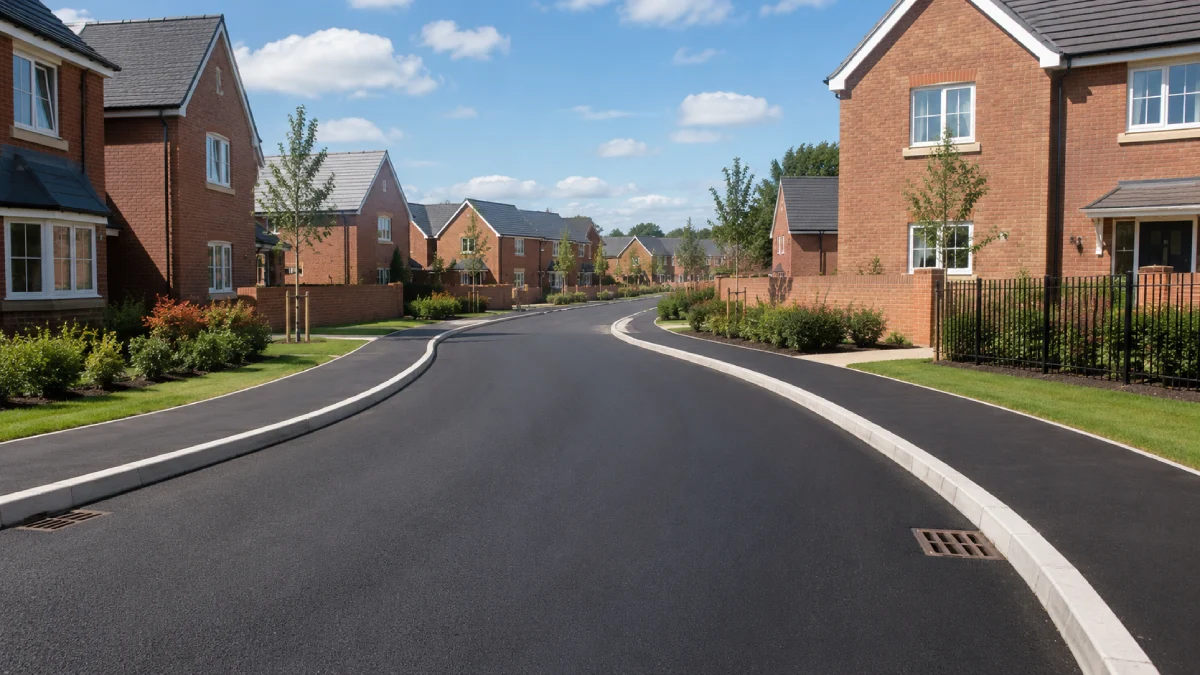
Estate Road Surfacing for Private Developments UK
Estate roads on private developments often fail when surface appearance is chosen before road status, drainage, traffic load, and foundation strength. A clean finish can hide weak sub-base, poor edge restraint, utility settlement, or unclear maintenance responsibility. The serious action is to decide adoption status first, design for real estate traffic, plan drainage early, and choose materials by road zone. This guide explains the practical decisions behind estate road surfacing for private developments UK so projects are safer, stronger, and easier to maintain.
Planning stronger private access roads? Explore our estate road surfacing support to keep your development surface durable, practical, and ready for long-term use.
Estate Road Surfacing for Private Developments UK
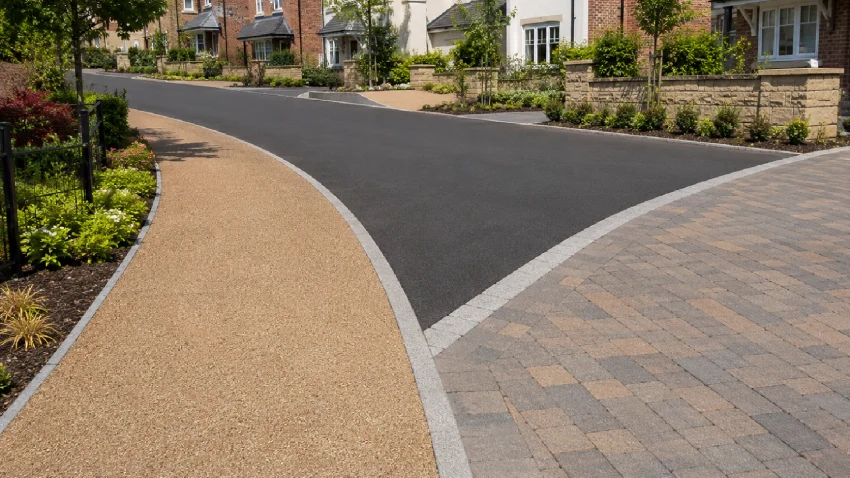
Estate road surfacing for private developments UK is about more than laying a smooth black surface. It covers Top Surfacing Materials, Structural & Regulatory Considerations, and Finding and Vetting Contractors.
A private estate road must support residents, visitors, delivery vehicles, refuse lorries, emergency access, parking movement, pedestrians, and future maintenance.
That makes it different from a simple domestic driveway.
The strongest surfacing decision depends on:
- Adopted or private road status
- Section 38 expectations
- Sub-base strength
- Drainage and SuDS planning
- Real vehicle load
- Pedestrian safety
- Kerb and edge support
- Utility cover levels
- Long-term maintenance responsibility
The visible surface is only one part of the system.
If the foundation is weak, the drainage is poor, or the road is used too early by construction traffic, early failure becomes likely.
Main decision path
| Decision Point | Why It Matters |
| Road status | Controls specification and future maintenance |
| Surface material | Must match the road zone and traffic load |
| Drainage design | Protects the base from water damage |
| Sub-base strength | Prevents rutting, cracking, and settlement |
| Contractor quality | Decides preparation, compaction, and finish |
| Maintenance plan | Protects residents from sudden repair disputes |
A good estate road should be safe, readable, durable, and realistic to maintain.
That only happens when the surface is planned as part of the full road structure.
Road Status Comes Before Surfacing
The first real decision is not asphalt, resin, or block paving. It is whether the road will be offered for adoption or remain private.
If the road is intended for adoption, it must usually follow local highway authority requirements.
This can affect road width, drainage, construction layers, turning heads, footways, inspections, and final approval.
If the road remains private, maintenance responsibility does not normally sit with the council.
It may sit with a developer, management company, landowner, or residents through estate charges.
What must be confirmed early
Before surfacing starts, confirm:
- Is the road planned for adoption?
- Is a Section 38 route being followed?
- Who owns the road after completion?
- Who funds future repairs?
- Who cleans the drainage system?
- Who handles potholes and surface failure?
- Who manages resident complaints?
- What will be shown in buyer documents?
Unclear road status can create serious problems later.
Buyers may believe the road will be maintained publicly, while the legal setup says it is private.
A road can be well surfaced and still become a dispute if responsibility is not clear.
Surface Materials by Estate Road Zone
Top Surfacing Materials should be selected by road zone, not by appearance alone. Main access roads, turning heads, shared areas, and parking courts carry different pressure.
Asphalt is often the practical choice for main estate roads because it handles regular traffic and can be resurfaced later. Where surface finish and private access appearance matter together, resin bound driveways in Bedfordshire can support readers comparing suitable local options.
Block paving can suit shared courtyards and slower zones.
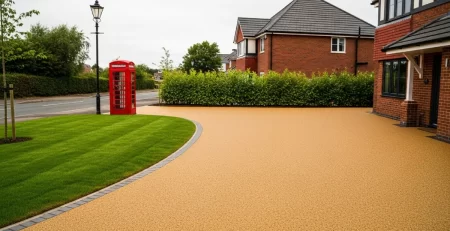
Resin-bound surfacing can work well for selected entrances, paths, driveways, decorative areas, and lighter shared surfaces.
It should be specified carefully where heavy vehicle turning is expected.
Material selection table
| Estate Zone | Suitable Surface | Main Reason |
| Main access road | Asphalt or SMA-style surface | Handles repeated vehicle movement |
| Turning heads | Strong asphalt or block paving | Resists tyre scrubbing |
| Parking courts | Dense asphalt or block paving | Supports parked vehicle loads |
| Shared courtyards | Block paving or selected resin areas | Improves visual control |
| Estate entrances | Resin-bound or block paving | Adds appearance and definition |
| Drainage-led areas | Permeable systems where suitable | Supports water management |
The surface should match the stress.
A quiet decorative entrance does not need the same design as a refuse lorry turning head.
For Oxford projects with shared access or estate entrance details, see resin bound driveways in Oxford.
Structure Beneath the Finished Road
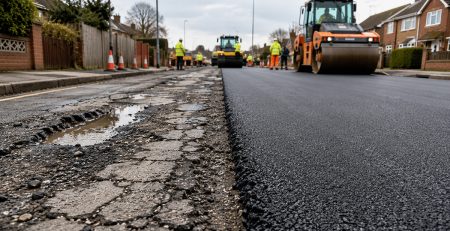
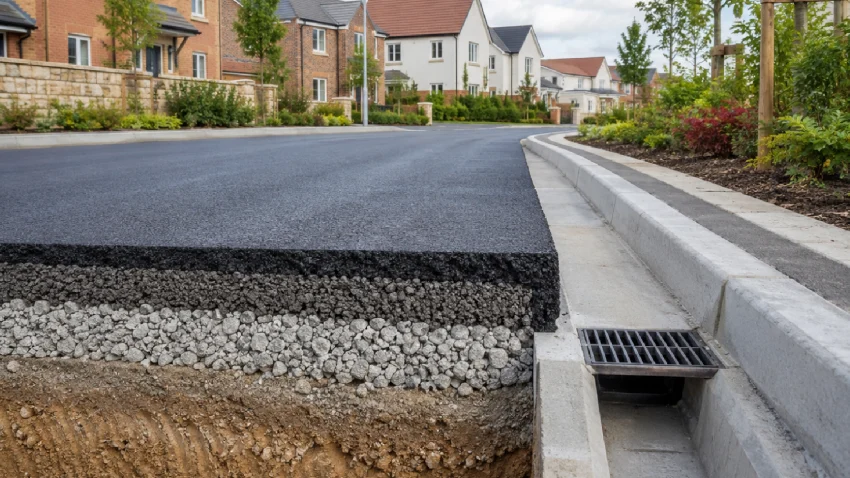
Most early estate road failure begins below the surface. A neat top layer cannot protect a weak formation, poor sub-base, or badly compacted layer.
The road build-up should match ground conditions and real vehicle use.
That includes delivery vans, refuse vehicles, emergency vehicles, and occasional maintenance access.
A private estate road should not be built like a light-use driveway.
The load is repeated, shared, and long term.
Road build-up table
| Layer | Purpose | Failure If Poor |
| Formation | Prepared ground level | Soft spots and sinking |
| Sub-base | Spreads vehicle load | Rutting and cracking |
| Base course | Main structural layer | Fatigue under traffic |
| Binder course | Supports surface course | Movement and unevenness |
| Surface course | Final wearing layer | Fretting and potholes |
A strong sub-base protects the road from movement.
If the lower layers flex, the surface cracks above them.
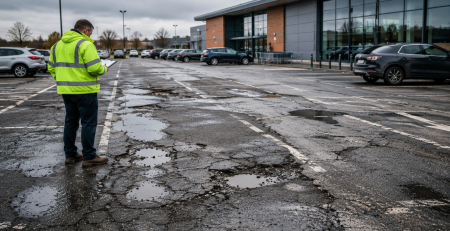
Common early failure signs include:
- Long rutting in wheel paths
- Cracking near kerbs
- Settlement over utility trenches
- Dips around covers
- Potholes near turning areas
- Loose material on bends
- Uneven parking court access
For deeper context, use road surface foundation basics as a supporting internal guide.
Drainage and SuDS Before Surfacing
Drainage should be designed before the surface is chosen. Water is one of the most common reasons estate roads crack, sink, and fail early.
Surface water must move away from the road safely.
That can involve falls, cambers, gullies, channels, soakaways, permeable surfaces, or SuDS features.
Poor drainage can weaken the sub-base.
It can also leave standing water near kerbs, trenches, covers, entrances, and pedestrian routes.
Drainage planning checks
Check these before surfacing:
- Road falls and surface levels
- Kerbside water flow
- Gully positions
- Low spots after rainfall
- Driveway threshold levels
- Public road runoff control
- Soakaway suitability
- SuDS maintenance access
- Water near service covers
- Ponding on footways
A road that holds water is not ready.
It is storing the next defect.
Water risk graph
| Drainage Condition | Future Road Risk |
| Clear falls and working gullies | Low |
| Minor ponding near kerbs | Medium |
| Water over covers or trenches | High |
| Repeated standing water | High |
| Saturated foundation layers | Severe |
Permeable surfacing can help where the full drainage system supports it.
It should not be treated as a shortcut for poor road levels. For related water movement planning, see the permeable resin surface guide.
Entrance Roads and Turning Pressure
Estate roads do not wear evenly. Entrances, turning heads, refuse routes, and delivery areas carry more stress than quiet internal lanes.
The entrance road handles every vehicle.
It carries residents, visitors, deliveries, estate maintenance, and service traffic. For heavier surface behaviour, yard surfacing condition factors is a useful related read.
Turning heads are different.
They face slow tyre scrubbing, heavy steering pressure, reversing, and repeated vehicle movement.
High-stress road zones
| Zone | Main Pressure | Surface Response |
| Main entrance | Constant movement | Strong build-up and durable surface |
| Turning head | Tyre scrub | Shear-resistant finish |
| Refuse route | Heavy repeated load | Stronger foundation and edges |
| Delivery route | Braking and turning | Durable binder and surface |
| Parking court | Static load | Dense surface and drainage |
| Driveway tie-in | Frequent turning | Reinforced edge support |
If the road is designed only around cars, it can fail under real estate use.
Refuse vehicles, couriers, and emergency vehicles must be considered.
For Cambridgeshire surface planning and local finish options, use resin bound driveways in Cambridgeshire.
Construction Traffic and Final Timing
Final surfacing should not be laid too early. New estate roads can be damaged before handover if heavy construction traffic uses the finished surface.
The binder course is often better used as a temporary running layer during the build phase.
The final wearing course should wait until heavy plant and major utility work are complete.
This protects the finish from rutting, stains, scuffs, trench cuts, and turning damage.
Final surfacing timing table
| Timing Choice | Likely Result |
| Final surface laid too early | Damage before residents move in |
| Heavy plant uses finished surface | Rutting and edge failure |
| Utilities cut through new surface | Patch marks and settlement |
| Binder used during build phase | Better protection of final finish |
| Final surface after site works | Cleaner handover condition |
The final surface should be laid when the road is ready to be finished, not just when the schedule feels tight.
For Essex developments with driveway and surfacing decisions, see resin bound driveways in Essex.
Kerbs, Edges and Footway Tie-Ins
Kerbs and edges hold the road together. Weak restraint allows the asphalt edge to move, crack, open gaps, and let water into the structure.
Kerbs guide water and protect the edge of the road.
They also define the footway, driveway entrance, and road boundary.
Where footways, private drives, and estate roads meet, the levels must be clean and safe.
Small level changes can become trip risks or water traps.
Edge quality checklist
- Kerbs properly bedded
- Kerb backing secure
- Road edge compacted tightly
- No open gaps at gutter line
- Footway tie-ins level
- Driveway aprons supported
- Dropped kerbs aligned
- Drainage channel clean
- No soft verge overrun
- No early edge cracking
A failing edge can spread quickly.
Once water enters the side of the road, the sub-base can soften and the surface can break away.
For local estate and driveway surfacing context, use resin bound driveways in Hertfordshire.
Shared Access and Pedestrian Safety
Private estate roads are shared spaces. Residents, children, visitors, cyclists, delivery drivers, refuse teams, and maintenance crews may all use the same layout.
The road surface should help people understand movement.
Clear edges, safe routes, surface contrast, visibility, and footpath levels all matter.
Shared access is not automatically safe.
It needs readable design and careful surface planning.
Shared access safety checks
- Keep walking routes even
- Separate pedestrians where possible
- Use clear crossing points
- Avoid hidden level changes
- Protect footways from vehicle overrun
- Keep visibility open on bends
- Use contrast in slow zones
- Avoid loose stone on key paths
- Keep drainage away from walking routes
- Check lighting around shared routes
A surface should guide behaviour without confusion.
Drivers should understand where to slow, turn, park, and give space.
Pedestrians should understand where to walk and cross.
This is especially important in private estates with children, older residents, and visitors.
Utilities, Covers and Settlement Risk
Utility trenches are one of the most common weak points in new estate roads. Poor reinstatement can show months after the road looks complete.
Water, gas, electricity, broadband, drainage runs, manholes, and inspection covers all interrupt the road structure.
If backfill or compaction is poor, the surface can sink.
Settlement near covers is more than a visual issue.
It can create water traps, cracks, trip risks, and potholes.
Utility risk table
| Location | Common Sign | Likely Issue |
| Trench crossing | Long dip | Weak backfill |
| Manhole cover | Sunken frame | Poor reinstatement |
| Drain cover | Water pooling | Level problem |
| Patch joint | Open seam | Water entry |
| Service strip | Cracking | Movement under load |
The best time to fix utility risk is before the final surface is laid.
All covers should be set correctly and checked with the surrounding surface levels.
For surface preparation detail, see resin surface preparation method.
Handover Checks Before Completion
A private estate road should not be accepted just because it looks finished. Handover checks should confirm structure, drainage, access, edges, covers, and maintenance documents.
The inspection should include a dry weather and wet weather view where possible.
Some defects only appear after rain.
The goal is to catch weak points before residents inherit them.
Handover checklist
| Check | What to Confirm |
| Surface levels | No dips, ridges, or uneven areas |
| Drainage | No ponding after rainfall |
| Kerbs | Stable and aligned |
| Footways | Safe and even |
| Covers | Level with surface |
| Trenches | No sinking or cracks |
| Edges | No early breakup |
| Markings | Clear road layout |
| Documents | Road status and maintenance clear |
| Repairs | Snags completed before handover |
Do not ignore small defects.
Small defects often become the first maintenance complaint.
For cracking and surface fatigue, see the asphalt fatigue damage guide.
Finding and Vetting Contractors
Finding and Vetting Contractors should focus on capability, evidence, specification, and private development experience. A low surface price can become expensive if the road fails early.
A suitable contractor should understand road build-up, drainage, access planning, kerb support, utility covers, resident safety, and phased surfacing.
The quote should explain more than the surface finish.
It should explain preparation, depth, compaction, drainage, programme, and handover checks.
Contractor vetting checklist
Ask for:
- Estate road project examples
- Clear written specification
- Layer build-up details
- Drainage awareness
- Kerb and edge method
- Utility cover handling
- Compaction process
- Access phasing plan
- Site traffic management
- Surface material advice
- Defect repair approach
- Maintenance guidance
Avoid vague quotes that only describe the top layer.
Estate roads need specification, not guesswork.
For Bedfordshire projects, a second contextual link to resin bound driveways in Bedfordshire fits naturally during contractor evaluation.
For broader surfacing guidance, Total Surfacing Solutions can support readers looking at wider project planning.
Estate Road Surfacing for Private Developments UK Area Coverage
Estate road surfacing for private developments UK changes by site layout, road status, drainage pressure, traffic type, and local surface expectations. These area notes help readers move from general guidance to local surfacing information.
Estate Road Surfacing in Bedfordshire
Bedfordshire private developments may include shared access roads, new-build estate routes, parking courts, and entrance surfaces. The focus should be sub-base strength, drainage control, and clear long-term responsibility.
For local surface finish planning, explore road surfacing company in Bedfordshire and related guidance on resin bound driveways in Bedfordshire.
Estate Road Surfacing in Oxford
Oxford estate roads may need careful surfacing where appearance, pedestrian access, drainage, and compact layouts sit close together. Shared areas should avoid confusing drivers, visitors, and pedestrians.
For local surface planning, see custom resin driveways in oxford. The surface should support the estate character without weakening structure.
Estate Road Surfacing in Cambridgeshire
Cambridgeshire developments can include private lanes, rural edge roads, shared parking courts, and new residential access routes. Drainage and foundation checks should be completed before surface finishes are selected.
For local material options, see coloured resin driveways in Cambridgeshire. The right material depends on traffic pressure and water control.
Estate Road Surfacing in Essex
Essex private developments often need durable surfacing for daily vehicle use, visitor movement, and long-term private maintenance. Entrances and turning heads should be treated as high-stress zones.
For area-specific surface planning, see road surfacing contractors in Essex. Good preparation helps reduce patching and resurfacing pressure later.
Estate Road Surfacing in Hertfordshire
Hertfordshire estate roads can involve private management arrangements, shared access layouts, and mixed residential traffic. A strong surfacing plan should address adoption, drainage, edge support, and real vehicle load.
For local surfacing context, see road surfacing in Hertfordshire. The best results come from planning the road as a full system.
Private Road Maintenance Planning
If an estate road stays private, maintenance must be planned from day one. Without a clear process, small defects can become disputes and unexpected bills.
A maintenance plan should include drainage checks, surface inspections, pothole repair, crack treatment, marking refresh, edge repair, and resurfacing planning.
Private roads need records.
Photos, dates, defect locations, and repair notes help protect decisions later.
Maintenance planning table
| Task | Purpose |
| Drain cleaning | Prevent ponding |
| Surface inspection | Catch early movement |
| Crack treatment | Reduce water entry |
| Pothole repair | Stop local spread |
| Edge repair | Protect kerb line |
| Marking refresh | Improve road clarity |
| Resurfacing review | Plan major works early |
The road should be inspected before winter, after heavy rainfall, and when repeated defects appear.
For resin areas, use resin driveway maintenance routine.
For block paved areas, use sealed driveway paver care.
Estate Road Surfacing for Private Developments UK: Resin Driveways Area Coverage
Resin driveways can support private developments and residential properties where surface appearance, drainage, access, and long-term maintenance all matter. Weather, rainfall, humidity, frost, dust, vehicle use, local property type, estate layout, and seasonal maintenance pressure can all affect how well a driveway surface performs over time.
Resin Driveways in Bedfordshire
Bedfordshire properties often include family homes, village driveways, private estate entrances, and suburban residential access routes that deal with regular rainfall, winter frost, and daily vehicle movement. Older gravel, concrete, or paving can become uneven, stained, or harder to maintain when drainage and base strength are not planned properly. For homeowners who want a cleaner finish with better kerb appeal and easier long-term maintenance, resin driveways in Bedfordshire can be a practical local upgrade.
Resin Driveways in Cambridgeshire
Cambridgeshire driveways often need careful planning because flat ground, rainwater movement, seasonal dampness, surface dust, and rural property layouts can affect surface performance. New-build estates, larger homes, and private access areas may need a driveway that looks neat while supporting drainage and everyday use. For properties where old gravel, concrete, or paving no longer performs well, resin driveways in Cambridgeshire can help improve appearance, stability, and usability.
Resin Driveways in Essex
Essex homes may face rain, summer heat, coastal air in some areas, tyre marks, surface dust, and strong kerb appeal expectations from commuter homes, family properties, rental homes, and coastal residences. Salt air, moisture, and frequent vehicle use can make older surfaces look faded, stained, or harder to keep clean. For homeowners who want a more durable and attractive surface, resin driveways in Essex can offer a cleaner local driveway option.
Resin Driveways in Hertfordshire
Hertfordshire driveways are often expected to look smart, clean, and suitable for high-value commuter homes, private residential streets, and well-kept family properties. Rain, frost, shaded entrances, moss growth, regular parking, and vehicle pressure can make old concrete, tarmac, block paving, or gravel look tired over time. For homeowners who want a decorative finish that supports kerb appeal while reducing maintenance pressure, resin driveways in Hertfordshire can be a reliable upgrade.
Resin Driveways in Oxford
Oxford properties include period homes, townhouses, modern driveways, student rentals, private residential access areas, and visitor-heavy homes where first impressions matter. Rain, frost, humidity, shaded entrances, moss, and regular foot or vehicle traffic can make older surfaces slippery, stained, or uneven. For homeowners who want a finish that suits local property character while improving drainage, safety, and everyday maintenance, resin driveways in Oxford can be a dependable choice.
Final Surface Decision Points
The final surfacing decision should be based on status, structure, drainage, traffic, shared access, contractor quality, and future maintenance. Appearance should support the road plan, not lead it.
Before approving works, check:
- Road status is confirmed
- Adoption route is understood
- Sub-base is suitable
- Drainage is designed
- Surface material matches the zone
- Refuse route is considered
- Turning heads are strengthened
- Kerbs and edges are supported
- Utilities are correctly reinstated
- Final surfacing timing is sensible
- Handover inspection is planned
- Maintenance responsibility is recorded
A private estate road should be safe to use, clear to understand, and realistic to maintain.
For related planning context, estate road development guide can support readers who want a wider development-focused guide.
FAQs
What makes estate road surfacing different?
Estate road surfacing must handle shared access, refuse vehicles, delivery traffic, drainage, pedestrian movement, utility covers, and long-term maintenance. It is more complex than a single driveway surface.
Is resin-bound surfacing suitable for estate roads?
Resin-bound surfacing can suit selected areas such as entrances, paths, shared spaces, and driveways. Heavy turning areas and main vehicle routes need careful specification before resin is chosen.
Why do new estate roads fail early?
Early failure often comes from weak sub-base, poor compaction, standing water, construction traffic damage, thin asphalt layers, weak edges, or settlement around utility trenches.
Who maintains a private estate road?
Maintenance usually sits with the developer, landowner, management company, or residents, depending on the legal setup. Responsibility should be confirmed before properties are sold.
When is resurfacing better than patching?
Resurfacing is usually better when potholes return, cracks connect, trench settlement spreads, drainage fails, or the surface has widespread loose material and poor ride quality.