Eco Friendly Road Surfacing Options In The UK
Eco Friendly Road Surfacing Options In The Uk are not just about swapping one material for another. A road surface can look sustainable on installation day but lose that advantage if it fails early, clogs, needs frequent resurfacing, or cannot handle the traffic using it. The practical challenge is choosing a surface that reduces waste, production energy, runoff, and virgin-material demand without weakening durability or safety. The strongest approach is to compare whole-life performance, not marketing claims, then match the surfacing system to the site, loading, drainage, and maintenance plan. The supplied UK surfacing research supports that whole-life framing.
Eco-Friendly Road Surfacing Options In The Uk Compared

Eco Friendly Road Surfacing Options In The Uk should be judged by the problem they solve. Warm mix asphalt targets production energy, reclaimed asphalt reduces virgin aggregate use, cold recycling keeps old road material in the pavement system, and permeable systems manage water at source.
| Eco-friendly option | Main sustainability role | Best-fit use case | Watch point |
| Warm mix asphalt | Lower production temperature and energy demand | Roads needing asphalt performance with reduced manufacturing impact | Whole-life durability still matters |
| Reclaimed asphalt | Reduces virgin aggregate and road waste | Base, binder, and selected surface-course mixes | Mix design and specification control |
| Cold recycling | Reuses existing pavement with less haulage | Reconstruction or strengthening schemes | Not suitable for every traffic condition |
| Permeable paving | Manages runoff and standing water | Driveways, car parks, low-traffic roads, pedestrian areas | Needs drainage design and cleaning |
| Biogenic binders | Reduces dependence on fossil-derived binder components | Trialled or specified low-carbon asphalt systems | Developing technology |
| Electric or hybrid plant | Reduces direct site emissions | Larger surfacing schemes with suitable equipment access | Only one part of total carbon |
The most credible answer is usually a combined specification, not a single miracle material. A lower-carbon surface works best when the design also considers road surface construction layers, drainage, future maintenance, and the expected traffic load.
Warm Mix Asphalt For Lower Production Energy
Warm mix asphalt is one of the strongest established Eco Friendly Road Surfacing Options In The Uk because it reduces the temperature needed during production. National Highways research cited in the supplied data says warm mix asphalt can be manufactured at temperatures up to 40°C lower than traditional asphalt, which can reduce production energy.
That does not mean warm mix asphalt automatically cuts total project carbon by one universal percentage. The better wording is that warm mix asphalt can contribute to lower construction carbon while still using familiar asphalt production and paving methods.
Warm mix asphalt is especially useful where the project still needs asphalt-like performance. It can also give contractors longer working windows and quicker cooling, but those operational gains still need to be considered alongside compaction, weather, traffic management, and the chosen mix.
Where noise is part of the brief, surfacing choice should also account for texture and tyre interaction. A reader comparing acoustic performance may find low-noise road surfacing materials helpful before choosing a final asphalt or permeable specification.
Reclaimed Asphalt And Circular Road Surfacing
Reclaimed asphalt is one of the clearest Eco Friendly Road Surfacing Options In The Uk because it keeps existing pavement material in use. Old asphalt planings can be processed and returned into new road layers, reducing the need for virgin aggregate and lowering the waste leaving site.
The supplied research notes that the A64 low-carbon trial used about 37% reclaimed asphalt planings in lower layers and 20% in the surface course. That matters because it shows recycled content can be part of a serious road resurfacing strategy when the mix design and specification are controlled.
Reclaimed asphalt is not just a sustainability label. It has to be engineered into the pavement structure, with the right binder, grading, layer depth, and quality control. That is why the relationship between base course and binder course differences is central to any recycled asphalt decision.
Cold Recycling And Reused Pavement Layers
Cold recycling is another high-value option for eco-friendly road surfacing because it can reuse existing road material with less heating and less transport. Instead of removing material, hauling it away, importing replacement aggregate, and producing entirely new layers, suitable pavement material can be processed and rebound.
The supplied research highlights a National Highways A47 project that used a structural pavement layer containing more than 90% recycled material. It also notes that the recycling plant was positioned close to the project, reducing the need for long-distance haulage.
Cold recycling is not automatically right for every road. Heavier traffic, poor existing pavement condition, drainage problems, or unsuitable material can change the answer. The proper approach is to test the existing construction and check whether the recycled layer can meet the required strength and lifespan.
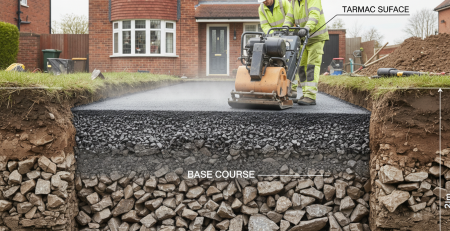
This is where preparation becomes part of sustainability. If the lower layers are weak, poorly compacted, or badly drained, even a low-carbon surface can fail early. The base course preparation process can be as important as the surface material itself.
Permeable Surfacing And SuDS Drainage
Permeable systems are important Eco Friendly Road Surfacing Options In The Uk, but they solve a different environmental problem from warm mix asphalt or recycled asphalt. Their main role is surface-water management, allowing rainfall to pass through the surface and into a designed drainage structure where conditions are suitable.
Permeable paving, porous asphalt, permeable concrete, and resin-bound systems can all support drainage aims when they are correctly designed. Government SuDS standards in the supplied research emphasise source-based runoff management and long-term maintenance planning.
Permeable surfacing should not be recommended everywhere. It is typically better suited to driveways, car parks, pedestrian spaces, and lower-traffic areas unless additional structural checks show it can support heavier vehicles. For commercial layouts, the design should consider turning areas, braking zones, fall, sub-base depth, and cleaning access.
For private and commercial sites, resin surfacing for car park layouts may be relevant where permeability, appearance, pedestrian use, and parking movement all need to be balanced.
Resin Bound Surfaces As A Permeable Option
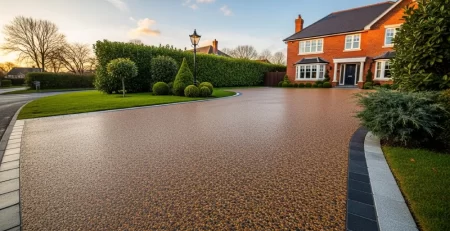
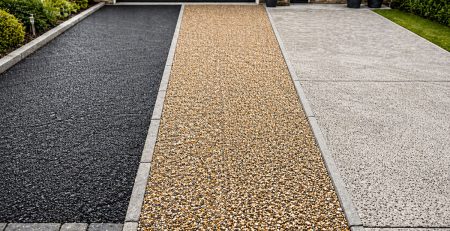
Resin bound surfacing can be part of the eco-friendly road surfacing conversation when the priority is permeability, appearance, and controlled water movement. A correctly installed resin bound surface can allow water to drain through the surface layer, supporting SuDS goals where the base and ground conditions are suitable.
The key distinction is between a decorative permeable surface and a structurally suitable pavement. Resin bound surfacing may work well for driveways, footpaths, access areas, and some parking environments, but heavy road loading needs careful assessment.
Resin bound surfaces also need honest maintenance expectations. Dirt, sediment, leaves, and poor surrounding drainage can affect performance over time. A reader weighing this option should understand resin driveway trade-offs before assuming it is the right surface for every project.
UK weather also affects resin bound surfacing decisions. Rainfall, freeze-thaw exposure, UV, and installation conditions all matter, so UK resin driveway weather resistance should be reviewed alongside permeability and appearance.
Biogenic Binders And Emerging Low-Carbon Materials
Biogenic binders are promising Eco Friendly Road Surfacing Options In The Uk, but they should be described carefully. The supplied research identifies bio-binders as emerging low-carbon technologies, and notes that they were used as part of the A64 low-carbon road trial.
The safer claim is that bio-based binder technology could reduce reliance on conventional fossil-derived binder components. The risky claim would be that it is already a universal replacement for standard asphalt binder across all road types.
The same caution applies to recycled plastic additives, crumb rubber, graphene, bio-rejuvenators, and other emerging materials. These may be useful in specific applications, but performance depends on the mix, structure, climate, loading, and long-term monitoring.
A sustainable road should not rely on novelty alone. It should prove that the material performs over time, resists deformation, manages water, and can be maintained without frequent replacement.
Heavy Traffic Changes The Eco-Friendly Answer
Eco Friendly Road Surfacing Options In The Uk must be matched to the actual load. A residential driveway, private estate road, car park, commercial yard, bus route, and motorway do not all need the same surface.
The supplied research included a private-estate concern where normal traffic was light but occasional heavy utility vehicles used the route. That is exactly the kind of condition that can break a weak sustainability decision. A surface may be attractive, quieter, and permeable, yet still fail if it is not designed for wheel loads and turning stresses.
This is why durability belongs inside sustainability. Readers comparing specifications should assess road surfacing materials for heavy use before choosing a greener surface on carbon claims alone.
For business sites, commercial resin and asphalt differences can clarify where permeability, loading, repairability, and surface finish point toward different materials.
Maintenance And Whole-Life Carbon
The strongest Eco Friendly Road Surfacing Options In The Uk are the ones that reduce environmental impact over the full life of the surface. A road with lower installation carbon can lose credibility if it needs resurfacing much more often than a conventional alternative.
Whole-life carbon includes material extraction, production, transport, installation, maintenance, repair, replacement, and end-of-life handling. It also includes the practical reality of traffic management, plant use, and future interventions.
| Whole-life factor | Why it matters | Practical question |
| Durability | Fewer renewal cycles can reduce total impact | How long should the surface last under this traffic? |
| Recycled content | Reduces virgin material demand | Can reclaimed asphalt be safely used in the mix? |
| Production temperature | Affects energy demand | Is warm mix asphalt suitable? |
| Drainage | Reduces runoff and standing water | Does the site need permeable surfacing? |
| Maintenance | Protects performance over time | Who will clean, inspect, and repair the surface? |
| Structural design | Prevents premature failure | Are base layers and loading properly specified? |
Maintenance is especially important for permeable systems. Sediment can reduce infiltration, so inspection and cleaning need to be part of the design from the start. For resin surfaces, resin driveway lifespan maintenance is directly connected to sustainability because a longer-lasting surface usually means fewer replacement cycles.
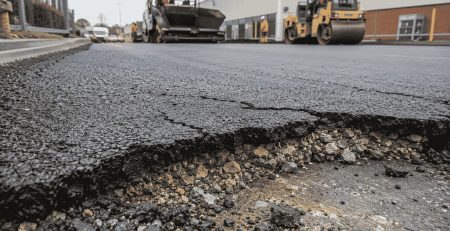
Problems such as raveling, pooling, cracking, and blocked permeability are not just cosmetic. Understanding resin bound driveway problem causes helps prevent early failure and wasted material.
Tarmac, Machine Laying, And Practical Installation
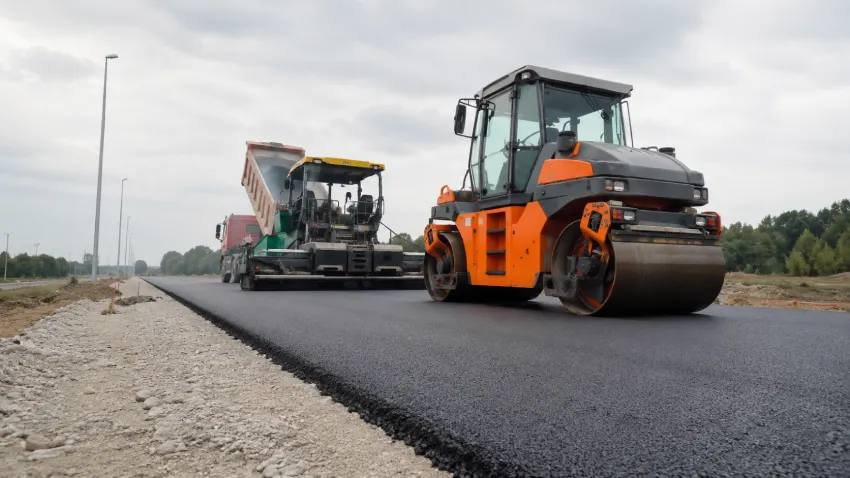
Tarmac remains relevant within Eco Friendly Road Surfacing Options In The Uk because many lower-carbon approaches still use asphalt technology. Warm mix asphalt, reclaimed asphalt, and cold recycling can all sit within a wider asphalt-based specification.
The sustainability result depends partly on installation quality. Poor compaction, weak edges, bad drainage, rushed preparation, or unsuitable weather can shorten surface life and increase future carbon through repair and replacement.
For domestic and commercial projects, residential and commercial tarmac differences can affect layer depth, traffic tolerance, and expected maintenance. Installation method matters too, which is why machine-laid and hand-laid tarmac differences should be considered before choosing purely on material type.
Where machine laying is possible, consistency and compaction can support durability. For long-term planning, machine-laid tarmac lifespan factors are part of the whole-life sustainability calculation.
Eco Friendly Road Surfacing Options In The Uk Area Coverage
Local surfacing decisions still need site-specific checks. The best eco-friendly option depends on drainage aims, base condition, traffic type, maintenance access, and whether the project is a driveway, parking area, private road, or commercial route.
Bedfordshire Resin Bound Driveways
For Bedfordshire projects, permeable resin surfacing should be considered where water movement, appearance, and surface finish are part of the brief. The key checks are whether the existing base can support the intended use, whether the surface connects to a suitable drainage structure, and whether routine cleaning can protect permeability over time.
Oxford Resin Bound Driveways
For Oxford sites, a porous resin driveway may be suitable where the project needs a neat surface with managed runoff. It should still be assessed as a pavement system, not only a surface finish, because sub-base preparation and expected vehicle use affect durability.
Cambridgeshire Resin Bound Driveways
For Cambridgeshire properties, a permeable driveway surface can support SuDS thinking when the surrounding ground, falls, and base construction are appropriate. The greener choice is the one that drains properly, resists local use demands, and avoids avoidable replacement.
Essex Resin Bound Driveways
For Essex projects, resin bound permeable paving can be reviewed where surface-water control and a clean finish are priorities. Suitability depends on the construction beneath the resin layer, the traffic using the surface, and whether maintenance access is realistic.
Hertfordshire Resin Bound Driveways
For Hertfordshire properties, SuDS compliant driveway surfacing should be specified around drainage performance, long-term upkeep, and pavement strength. A permeable finish is most useful when the full system is designed to handle rainfall and use, rather than treated as a decorative overlay only.
Choosing The Right Eco-Friendly Surface
Eco Friendly Road Surfacing Options In The Uk should be selected through a clear sequence. First, identify the main environmental problem: production energy, waste, virgin aggregate use, runoff, transport, or repeated resurfacing.
Second, check the traffic and structure. A low-traffic driveway may suit a permeable resin or block system, while a heavily used estate road may need asphalt, recycled layers, or a carefully engineered base.
Third, plan maintenance before installation. Permeable systems need inspection and sediment control, asphalt systems need correct reinstatement after utility works, and all surfaces need drainage that prevents early damage. Where erosion is already present, driveway erosion causes should be addressed before choosing a greener finish.
The most sustainable road surface is rarely the one with the most impressive single claim. It is the one that fits the site, lasts under real use, manages water properly, and reduces avoidable resurfacing.
Closing CTA
Eco Friendly Road Surfacing Options In The Uk work best when the surface, base, drainage, and maintenance plan are considered together. For private roads, driveways, and parking areas where permeability is a priority, resin bound surfacing may be worth assessing against asphalt, recycled layers, or other permeable systems. A practical survey can confirm whether porous resin surfacing for Bedfordshire projects fits the site conditions, rather than relying on a generic “green” label.
FAQs About Eco Friendly Road Surfacing Options In The Uk
What is the most eco-friendly road surfacing in the UK?
The most eco-friendly road surfacing in the UK depends on the site. Warm mix asphalt can reduce production temperature, reclaimed asphalt reduces virgin-material demand, cold recycling reuses existing pavement, and permeable systems help manage runoff. The best option is the one with the strongest whole-life result: suitable durability, correct drainage, realistic maintenance, and fewer unnecessary resurfacing cycles.
Does low-carbon road surfacing last as long as conventional asphalt?
Low-carbon road surfacing can perform well, but it should not be assumed to last as long without evidence. The supplied research notes that National Highways is testing low-carbon asphalt technologies under real traffic to understand durability before wider standards are expanded. That is the right approach because a lower-carbon surface loses value if it requires more frequent replacement.
Is warm mix asphalt more sustainable than hot mix asphalt?
Warm mix asphalt can be more sustainable than hot mix asphalt because it is produced at lower temperatures and can therefore require less production energy. The supplied research says National Highways reports production temperatures up to 40°C lower than traditional asphalt. However, sustainability still depends on the full project, including materials, transport, compaction, traffic management, durability, and maintenance.
Can old road asphalt be recycled into new surfacing?
Yes, old road asphalt can be recycled into new surfacing when the reclaimed material is suitable and the mix design allows it. Reclaimed asphalt planings can reduce virgin aggregate demand and keep old pavement material out of waste streams. The strongest results come when recycled content is engineered into the correct layer, rather than added as a vague sustainability claim.
Are permeable road surfaces suitable for UK rainfall?
Permeable road surfaces can be suitable for UK rainfall where the surface, sub-base, ground conditions, and drainage outlet are correctly designed. They are especially relevant for driveways, car parks, pedestrian areas, and low-traffic roads. They should not be treated as a universal fix, because traffic loading, soil conditions, slope, and maintenance arrangements all affect performance.
Does permeable paving clog over time?
Permeable paving can clog over time if sediment, dirt, leaves, or surrounding runoff enter the system and are not managed. That does not make permeable surfacing a poor option, but it does mean maintenance must be planned from the beginning. Inspection, brushing, suction cleaning, and sensible surrounding drainage can help protect infiltration capacity.
Is eco-friendly road surfacing more expensive?
Eco-friendly road surfacing may cost more, less, or about the same depending on the system, site, and specification. The better comparison is not initial price alone. A proper assessment should include installation cost, expected life, maintenance, replacement frequency, drainage value, waste reduction, recycled content, and whole-life carbon.
Which sustainable road surface works under heavy traffic?
Heavy traffic usually needs a structurally designed pavement rather than a surface chosen only for sustainability claims. Warm mix asphalt, reclaimed asphalt, cold recycled layers, and engineered asphalt systems may be more appropriate for higher-load routes than decorative permeable surfaces. The right sustainable road surface depends on wheel loads, turning stress, sub-base strength, drainage, and expected lifespan.