How to Fix Driveway Erosion Before It Gets Worse?
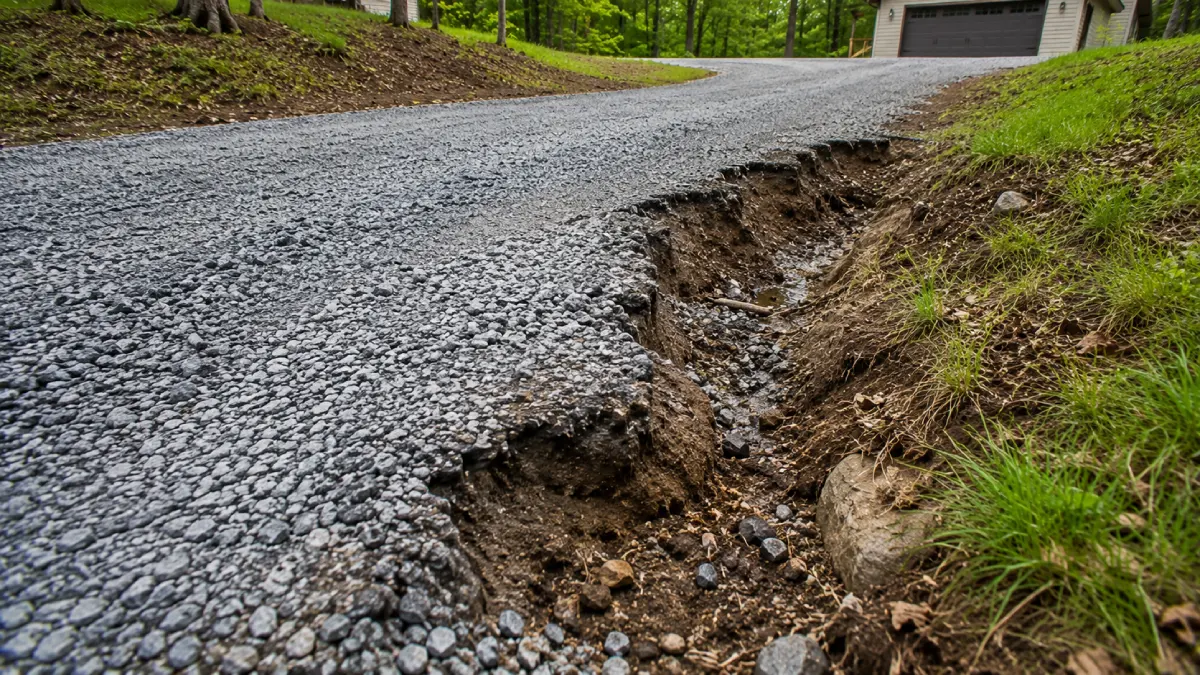
Driveway erosion usually starts small, then quickly turns into sinking edges, potholes, cracked surfaces, exposed roots, or washed-out gravel after heavy rain. The serious step is to control the water first because surface repairs alone rarely stop the problem from returning. The experienced solution is to redirect the Water, rebuild weak sub-base sections, repair the damaged surface properly, and strengthen the driveway edges before the next storm weakens the structure further.
Tip: Addressing erosion early can help prevent costly structural damage and extend your driveway’s lifespan. Get A Free Quote for professional repairs.
How to Fix Driveway Erosion Before It Gets Worse?
Driveway erosion is almost always linked to moving water, poor drainage, or weak support below the surface. This section explains why erosion spreads and why surface patches often fail.
How to Fix Driveway Erosion Before It Gets Worse? Start by identifying where the water is coming from, where it travels, and where the driveway structure has already weakened.
Erosion rarely begins at the visible hole alone. Water usually enters through weak edges, cracks, poor drainage, falls, blocked channels, or exposed soil near the driveway.
Common erosion causes include:
- Poor drainage
- Standing water
- Downpipes discharging near the driveway
- Weak gravel base
- Slope runoff
- Missing edging
- Surface cracks
- Culvert failure
- Soft subgrade soil
- Vehicle rutting
A professional contractor, such as Total Surfacing Solutions can inspect the driveway structure, drainage path, and surface condition to identify whether the erosion is local or connected to deeper sub-base failure.
| Erosion Cause | What Usually Happens |
| Water flowing downhill | Surface washout |
| Weak edges | Side collapse |
| Poor base compaction | Rutting and sinking |
| Cracked asphalt | Water entering below |
| Blocked drainage | Pooling and erosion |
| Loose gravel | Channels forming |
The visible damage is usually only the final stage. The real problem often sits below the surface.
Redirect the Water: Stop Washout
Redirecting the Water is the most important erosion repair step. This section explains trench drains, swales, crowns, downpipes, riprap, and runoff control.
Redirect the Water before repairing the surface. If water keeps flowing through the same weak area, the erosion will usually return after the next heavy rainfall.
A driveway should move water away safely instead of letting runoff cut through the centre or edges. Sloped driveways are especially vulnerable because fast-moving water gains force as it travels downhill.
Water-control solutions include:
- Channel drains
- Trench drains
- French drains
- Side swales
- Riprap stone
- Cross-fall shaping
- Crowned driveway profile
- Soakaways
- Extended downpipes
- Culvert systems
A crowned driveway sits slightly higher in the centre so rainwater drains toward the sides instead of running directly down the middle.
| Drainage Method | Best Purpose |
| Channel drain | Stops sheet-flow runoff |
| French drain | Collects underground water |
| Swale | Slows surface runoff |
| Riprap | Prevents washout |
| Soakaway | Stores excess rainwater |
| Crown profile | Pushes water outward |
For water-crossing entrances, driveway culvert can help explain how water should pass under the driveway without washing away the base.
For steep access routes, driveway on slope is also important because slopes accelerate erosion when drainage is poor.
Water management is the repair. The surface patch comes after.
Fix a Gravel or Dirt Driveway: Rebuild Correctly
Fix a Gravel or Dirt Driveway by rebuilding the shape, restoring the base, and compacting the gravel properly. This section explains crowns, grading, layering, and gravel sizes.
Fix a Gravel or Dirt Driveway by removing the damaged shape instead of simply pouring fresh gravel into washed-out ruts. Loose gravel placed over erosion channels usually disappears again quickly.
The driveway should be regraded so water leaves the surface rather than travelling through the wheel tracks.
A stronger gravel repair should include:
- Ripping up deep ruts
- Re-grading the surface
- Creating a centre crown
- Installing edge support
- Filling deep erosion with larger stone
- Topping with compactable gravel
- Compacting in layers
- Moistening before rolling
- Re-checking drainage direction
Deep erosion often needs coarse angular stone below and smaller compactable gravel above. Large stones help stabilise the weak area underneath the surface.
| Gravel Repair Step | Why It Matters |
| Re-grading | Restores water flow |
| Crown shaping | Pushes water away |
| Coarse base stone | Supports weak ground |
| Angular gravel | Locks together |
| Layer compaction | Stops future rutting |
| Edge control | Prevents spread |
For stone selection, driveway gravel size is useful because gravel size strongly affects drainage, traction, and erosion resistance.
For muddy entrances, muddy driveway fix can help explain when the ground itself is too soft for a simple top-up.
A gravel driveway repair should restore structure, not only appearance.
Fix an Asphalt or Concrete Driveway: Stabilise Fast
Fix an Asphalt or Concrete Driveway by repairing the voids underneath before patching the visible surface. This section explains edge collapse, slab voids, crack sealing, and sub-base rebuilds.
Fix an Asphalt or Concrete Driveway by focusing on the support underneath the surface. Water often washes out soil below the slab or asphalt edge before visible cracking appears.
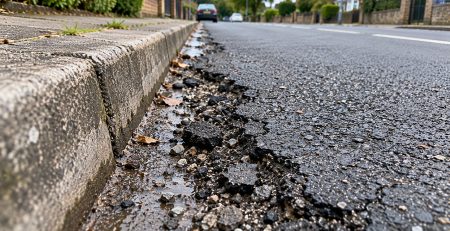
A driveway edge may crumble because the side support has disappeared underneath. Patching the top without rebuilding the support usually leads to another collapse.
Paved driveway repair may include:
- Cutting damaged edges
- Removing loose material
- Rebuilding the gravel base
- Compacting new sub-base
- Filling voids below slabs
- Cold-patch asphalt repair
- Concrete edge rebuilding
- Waterproof crack sealing
- Border stabilisation
- Drainage correction
If a concrete slab has a hollow space underneath but remains intact, foam injection or mudjacking may help restore support before cracking spreads.
| Surface Problem | Better Repair Direction |
| Crumbling asphalt edge | Rebuild support underneath |
| Hollow concrete slab | Void filling or mudjacking |
| Surface cracks | Waterproof sealing |
| Sunken driveway edge | Rebuild and compact the base |
| Water under the slab | Drainage correction |
For curing awareness after asphalt repairs, new asphalt parking time can help explain why early traffic can weaken fresh repairs.
A paved driveway only stays stable when the ground beneath it stays dry and compact.
Edge Protection and Drainage: Hold the Base
Edge Protection and Drainage stop the driveway from slowly breaking apart sideways. This section explains edging, retaining soil, turf stabilisation, and runoff barriers.
Many driveway failures start at the edge because water removes the soil supporting the driveway sides. Once the edge weakens, the surface begins cracking or collapsing outward.
The driveway edge should be protected and supported instead of left exposed.
Useful protection methods include:
- Concrete edging
- Block kerbs
- Timber edging
- Steel landscape edging
- Compact clay support
- Turf reinforcement
- Groundcover planting
- Riprap stone banks
- Drainage channels
- Retaining walls where needed
Plants with deeper roots can help stabilise the surrounding soil and reduce erosion beside the driveway.
| Edge Protection | Main Benefit |
| Concrete kerbs | Strong side support |
| Steel edging | Holds gravel in place |
| Turf roots | Soil reinforcement |
| Riprap stone | Slows water speed |
| Retaining wall | Supports steep banks |
| Clay backfill | Reduces washout |
For entrance and edge responsibility, driveway apron responsibility can help homeowners understand where private driveway repairs meet access or boundary issues.
The edge is part of the structure. When the edge fails, the driveway usually follows.
Erosion Warning Signs: Catch Early
Early erosion signs are easier and cheaper to repair. This section explains the warning patterns that appear before major driveway failure.
Driveway erosion rarely happens overnight. Most driveways show early warning signs before major collapse or washout begins.
Small channels, puddles, exposed stone, or sinking edges often appear first. These signs should be repaired early before water reaches the deeper sub-base.
Watch for:
- Ruts forming
- Standing water
- Gravel movement
- Exposed roots
- Surface cracks
- Loose driveway edges
- Water flowing across the drive
- Hollow spots
- Mud pumping upward
- Washed-out corners
A driveway that changes shape after heavy rain is usually already suffering from water movement underneath the surface.
| Early Warning Sign | What It Often Means |
| Water pooling | Poor drainage fall |
| Cracks near edges | Support erosion |
| Gravel channels | Water concentrating |
| Sunken sections | Weak base below |
| Mud pushing upward | Saturated sub-base |
| Loose edge stone | Side erosion |
For appearance and structural comparisons, resin driveway pros cons may help homeowners compare loose gravel systems with more stable resin-bound surfaces.
Early repairs usually cost far less than rebuilding a failed driveway section.
Area Coverage for Driveway Erosion Repair
Driveway erosion repair depends on rainfall, slope, drainage layout, soil stability, and surface type. These area sections explain how Bedfordshire, Cambridgeshire, Essex, Hertfordshire, and Oxford homeowners should approach erosion before it spreads.
Resin Driveway Alternatives In Bedfordshire
For resin bound driveways in Bedfordshire, driveway erosion usually starts when water reaches the sub-base through weak drainage or edge failure. Gravel, tarmac, and resin-bound driveways can all suffer if water remains trapped underneath.
Bedfordshire homeowners should focus on runoff control before resurfacing. A driveway that is patched without drainage improvement often develops the same erosion channels again after winter rain.
A resin-bound surface may help improve surface control and appearance, but the drainage below still needs proper design. The strongest driveway starts with stable ground and controlled water movement.
Resin Bound Driveway Repair In Cambridgeshire
For resin bound driveways in Cambridgeshire, flatter areas can still suffer erosion when standing water weakens the driveway base over time.
Cambridgeshire homeowners should check where rainwater sits after storms. Soft edges, shallow puddles, and gravel movement usually indicate poor drainage direction or blocked runoff paths.
A driveway repair should restore both shape and water flow. Resin-bound surfacing, channel drains, and reinforced edges may help create a cleaner and more stable frontage where water previously caused repeated washout.
Best Resin Driveway Finishes In Essex
For resin bound driveways in Essex, erosion often becomes visible first through kerb appeal problems such as scattered gravel, cracked edges, washed-out corners, or uneven surfaces.
A driveway can still look acceptable in dry weather while the base underneath slowly weakens. Essex homeowners should inspect the edges after heavy rainfall because side erosion often appears there first.
For long-term frontage value, driveway increase home value, which can help explain why a stable, well-drained driveway usually supports presentation better than repeated patch repairs.
Modern Resin Driveway In Hertfordshire
For resin bound driveways in Hertfordshire, slopes increase erosion pressure because runoff travels faster downhill.
A sloped driveway should have controlled drainage, strong edging, and stable surface material. Water travelling down wheel tracks can quickly cut into gravel or undermine asphalt edges.
Hertfordshire homeowners should pay attention to ruts forming near the centre or edges of the driveway. These usually show that water is concentrating in specific paths instead of draining safely away.
Modern Resin Driveway In Oxford
For resin bound driveways in Oxford, older entrances and mixed surface repairs can create hidden erosion weak points below the driveway.
Oxford properties may have patchwork concrete, gravel, or asphalt layers from earlier repairs. Water can enter between those layers and weaken the support underneath.
Homeowners should inspect older repairs carefully after storms. A driveway that feels hollow, unstable, or uneven may already have erosion below the visible surface.
Final Erosion Checklist: Protect the Driveway
A successful erosion repair controls water first, then restores the damaged structure underneath. This checklist helps prevent repeat washouts and weak surface repairs.
Before repairing driveway erosion, check:
- Where is the water coming from?
- Does the driveway slope correctly?
- Is the base already washed out?
- Are the edges collapsing?
- Will drainage redirect runoff safely?
- Does the driveway need a crown?
- Is the gravel size correct?
- Should the surface be rebuilt in layers?
- Is the repair stable enough for traffic?
- Will water return to the same spot again?
A contractor such as Total Surfacing Solutions can inspect the driveway structure, recommend drainage improvements, and advise whether repair or resurfacing is more practical.
| Final Check | Better Result |
| Drainage corrected | Less washout |
| Base compacted | Less settlement |
| Surface sealed | Less water entry |
| Edges reinforced | Less collapse |
| Crown installed | Better runoff control |
| Water redirected | Longer driveway life |
For layout planning and drainage spacing, the driveway width guide may also help when redesigning wider entrances or drainage zones.
A driveway erosion repair should stop the cause, rebuild the structure, and protect the edges together. That is what keeps the damage from returning.
Frequently Asked Questions
1. What causes driveway erosion the most?
Uncontrolled water runoff is usually the main cause. Poor drainage, weak edges, standing water, slopes, and cracked surfaces allow water to wash away the driveway base over time.
2. Can driveway erosion be fixed without replacing the driveway?
Yes, many erosion problems can be repaired if the water source is controlled early and the damaged base is rebuilt properly before the surface is patched.
3. How do you stop gravel from washing away?
Use angular gravel, strong edging, proper grading, drainage channels, and a slight crown so water leaves the driveway instead of flowing through the surface.
4. Why is my asphalt driveway edge crumbling?
Water may have washed away the soil or gravel supporting the edge underneath. The visible asphalt often breaks after the hidden support has already failed.
5. Does a sloped driveway erode faster?
Yes. Water moves faster downhill, which increases washout pressure. Sloped driveways need stronger drainage, edging, and runoff control to stay stable.