The Weakest Point of a Resin Driveway Might Be the Edges
A resin driveway can provide a smooth, attractive and hard-wearing surface for a residential property, but its long-term performance depends on much more than the appearance of the resin itself. One area that deserves particular attention is the perimeter. In many installations, the weakest point of a resin driveway might be the edges.
That does not mean resin is inherently weak around the perimeter. Correctly installed resin driveways can provide excellent durability and a high-quality finish. The issue is that the edge of any bound surface represents a transition between the driveway and another material, such as a lawn, flower bed, pavement, block border or adjoining paved area.
Without suitable restraint and preparation, this transition can become vulnerable to movement, impact and deterioration. Understanding why resin driveway edges matter can therefore help property owners recognise the difference between a surface that simply looks good when newly installed and one that has been constructed for lasting performance.
Why Resin Driveway Edges Matter
The main body of a resin-bound driveway benefits from support from the surrounding material. Towards the perimeter, however, that support naturally reduces. The outermost section needs a stable termination point capable of helping the finished surface maintain its shape and position.
A properly designed edge provides a defined boundary for the resin-bound material. It can also separate the driveway from softer surrounding ground and protect the perimeter from everyday disturbance.
This becomes particularly important where vehicles regularly drive close to the side of the driveway. Tyres can place considerable pressure on a relatively small area, especially when a vehicle turns while close to an edge. If the underlying construction or edge restraint is inadequate, repeated loading can contribute to deterioration.
For this reason, professional domestic surfacing contractors need to consider the complete driveway construction rather than treating the resin layer as an isolated decorative finish.
What Can Cause Resin Driveway Edges to Fail?
Problems at the perimeter are rarely caused by one factor alone. Edge deterioration can result from the relationship between the resin surface, its base, the surrounding ground and the way the driveway is used.
One important factor is insufficient support beneath or alongside the edge. A resin-bound system needs a suitable, stable base. If the supporting material near the perimeter moves, settles or breaks away, the resin above can become vulnerable.
Another issue is repeated vehicle loading. A driveway may appear perfectly adequate under normal foot traffic, but vehicles introduce significantly greater loads. Cars repeatedly travelling over an unsupported edge can accelerate deterioration.
Ground movement can also contribute. Soil beside a driveway can change condition over time, particularly where drainage is poor or the ground becomes saturated. If the material immediately beside the driveway settles away from the finished surface, the perimeter may gradually lose lateral support.
Good installation therefore depends on preparation below the visible surface as much as the resin finish that the homeowner sees.
The Importance of a Stable Base
A resin driveway is only as dependable as the construction beneath it. The finished resin-bound layer should not be expected to compensate for an unstable or unsuitable base.
Preparation should create a firm and consistent foundation capable of handling the expected use of the driveway. The requirements for a private driveway used by ordinary cars will naturally differ from those of a surface expected to accommodate heavier or more frequent traffic, but stability remains essential in both cases.
Particular care is needed around the perimeter because this is where poor preparation may become noticeable first. If the base is strong through the centre but becomes thinner, weaker or less compacted towards the outside, the finished driveway can inherit that weakness.
This principle applies across professional surfacing work. Whether contractors are carrying out resin installation or tarmac installation and road surfacing, correct preparation is fundamental to achieving a durable finished surface.
Why Edge Preparation Cannot Be an Afterthought
It can be tempting to think of edging as the finishing detail added once the main driveway construction has been planned. In practice, the edge should form part of the design from the beginning.
The installer needs to understand where the finished resin will terminate, what material it will meet and how that boundary will be supported. This allows the base, levels and edge restraint to work together.
Trying to resolve an unsuitable perimeter only when the resin is ready to be laid can create unnecessary compromises. A well-planned driveway should have clearly established boundaries before the final surfacing material is installed.
Edge Restraints Help Protect the Surface
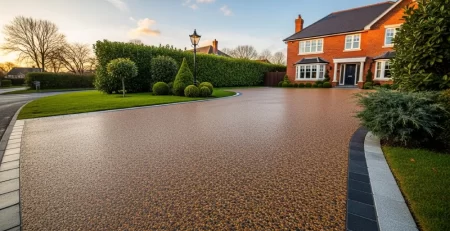
A suitable edge restraint gives the driveway a defined and stable perimeter. Depending on the design of the property, this may involve blocks, kerbs or another compatible edging system.
The purpose is not purely visual. Although a contrasting border can make a resin driveway look more defined, the constructional role of the edging is more important. It provides a firm termination point and helps protect the outer section of the surface.
The restraint itself also needs to be secure. A loose border cannot provide reliable support to the resin next to it. Proper installation therefore involves considering how the edging is bedded and supported, rather than simply positioning decorative blocks around the finished area.
A professionally installed border can combine appearance and function, giving the driveway a neat transition while helping to maintain the integrity of the perimeter.
Vehicle Movements Put Extra Pressure on Edges
The way a driveway is used has a direct effect on where stresses occur. On a wide driveway where vehicles remain comfortably within the surfaced area, the edges may experience relatively little direct loading. On narrower entrances and parking areas, tyres may regularly travel close to or directly over the perimeter.
Turning movements are particularly relevant. When a vehicle turns its steering wheels while moving slowly or while stationary, the tyres can place additional stress on the surface beneath them. If this happens repeatedly close to a poorly supported edge, deterioration can become more likely.
This is why the practical layout of the driveway matters. A driveway should not only look appropriate for the property but should also accommodate the way vehicles enter, leave, turn and park.
Professional resin driveway installation should take these everyday movements into account when considering the perimeter and overall construction.
Soft Landscaping Beside Resin Needs Careful Consideration
One common design is to run a resin driveway alongside grass, soil or planted areas. Visually, this can create an attractive contrast between the clean driveway surface and the softer landscaping. Structurally, however, the transition needs careful treatment.
Soil and grass do not provide the same consistent restraint as a properly constructed hard edge. Ground can settle, erode or become disturbed through gardening and general maintenance. Rainwater can also affect soil conditions alongside the driveway.
Where the resin surface meets soft landscaping, an appropriate edge detail can help maintain separation between the two areas.
Without this definition, soil can gradually move away from the perimeter or vegetation can begin to encroach. Over time, what started as a neat transition may become less stable and less visually consistent.
Drainage Can Affect the Perimeter
Water management is another important part of driveway construction. Surface water needs somewhere appropriate to go, and the levels of the driveway should be considered as part of the wider property drainage arrangement.
Poor drainage around an edge can affect the surrounding ground. Persistent saturation may soften adjacent soil, while uncontrolled runoff can gradually wash loose material away. If that material was contributing to support around an inadequately restrained perimeter, the problem can become more noticeable.
Drainage and edging should therefore be considered together during planning rather than treated as unrelated details.
The exact drainage requirements depend on the site, existing construction, levels and surrounding areas. This is one reason an assessment of the property is useful before work begins. The installer can consider where water currently travels and how the proposed surface will interact with the existing surroundings.
Existing Driveways Need Proper Assessment
Not every resin driveway is installed as part of an entirely new driveway construction. In some circumstances, an existing surface may form part of the proposed installation, provided that it is suitable.
The condition of that existing construction needs careful assessment. Cracks, movement, deterioration and unstable edges should not simply be hidden beneath a new decorative surface.
Covering a weakness does not necessarily remove it.
The perimeter is particularly important during this assessment. An existing driveway may appear generally sound through the central area while showing deterioration along the sides. If those weaknesses are ignored, they can compromise the quality of the new installation.
Experienced contractors should therefore assess what already exists before determining the appropriate preparation method. Examples of completed surfacing projects can also help property owners understand how professional preparation contributes to the finished result.
Early Signs of Edge Problems
Changes around resin driveway edges are worth investigating before they become more extensive. A small defect at the perimeter may initially seem cosmetic, but movement can allow the affected area to become progressively more vulnerable.
Property owners may notice a change in the line of the edge, small areas beginning to break away, separation between the resin and the adjoining border, or movement in the material surrounding the driveway.
The significance of these signs depends on their cause. Minor localised damage does not automatically mean that the entire driveway has failed. Equally, repeatedly repairing the visible surface without addressing instability beneath it may only provide a temporary improvement.
The sensible approach is to determine why the deterioration has occurred. If the underlying support remains stable, the solution may be relatively localised. If movement is occurring below or beside the surface, that underlying problem may need attention first.
Good Edging Starts With Good Driveway Design
The strongest resin driveway edges are generally the result of decisions made before the resin is mixed and laid.
A suitable design considers the existing ground, base construction, finished levels, drainage, vehicle movements, surrounding landscaping and the materials used to form the perimeter. Each element affects the others.
This is why choosing a surfacing system should involve more than selecting an aggregate colour from a sample. Appearance matters, particularly for a residential driveway, but the structural details determine how well that appearance is maintained.
A quality resin driveway should look deliberate at every boundary. Where it meets a pavement, garage threshold, wall, gate, lawn or another paved surface, the transition should have been considered as part of the installation.
Resin Driveway Edges Are Small Details With a Large Role
The edges may occupy only a small proportion of the total driveway area, but they can have a significant influence on long-term performance.
Stable preparation, appropriate edge restraint, sensible drainage and consideration of vehicle loading all help reduce unnecessary stress around the perimeter. These details are especially important where the driveway borders soft landscaping or where vehicles regularly travel close to its sides.
For property owners considering a new resin surface, the most useful questions are therefore not limited to colour, aggregate size and appearance. It is equally important to understand how the driveway will be prepared, how its perimeter will be constructed and how the finished surface will cope with everyday use.
A well-built resin driveway should function as a complete system, from the underlying base to the visible aggregate and right through to the outermost edge. When those details are addressed properly, the result is a driveway designed not only to create a clean first impression, but also to remain stable and serviceable over the longer term.
For advice about a proposed driveway or an existing surface, property owners can contact Total Surfacing Solutions to discuss the site and the appropriate surfacing approach.