Why New Housing Developments Need Different Road Surfacing Standards
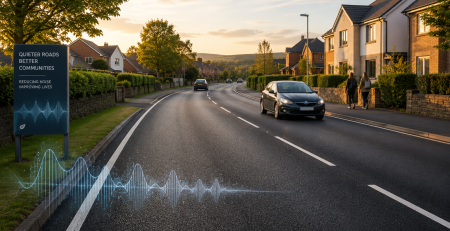
Housing development road surfacing differs significantly from traditional road construction projects. While many people assume that a road is simply a road regardless of its location, the reality is that residential developments present unique challenges that require careful planning, design, and installation. The roads within new housing estates must accommodate a variety of users while providing long-term durability, safety, and visual appeal.
Modern developments are designed around the needs of residents, visitors, service vehicles, emergency access requirements, and local authority standards. Unlike major highways or industrial routes, estate roads often combine vehicle traffic with pedestrian activity, cycling routes, parking areas, landscaped surroundings, and drainage infrastructure. These competing requirements mean that surfacing specifications must be adapted to suit the environment.
Effective housing development road surfacing is not simply about creating a smooth surface. It involves designing an infrastructure asset that will continue to perform for decades while supporting a growing residential community.
Why Residential Roads Face Different Traffic Patterns
One of the most important differences between residential developments and other road networks is the nature of traffic movement.
In commercial or industrial environments, roads are frequently subjected to concentrated loads from heavy vehicles operating on predictable routes. Housing developments experience a broader mix of traffic types. Family cars, delivery vans, refuse collection vehicles, utility contractors, school transport, and emergency services all use the same infrastructure.
Although overall traffic volumes may appear lower than on major roads, residential roads experience constant stopping, starting, turning, and parking movements. These actions place different stresses on the surface compared to continuous-flow traffic.
Areas near junctions, parking bays, and turning heads often experience increased surface wear due to vehicle manoeuvres. This makes the quality of installation particularly important. Professional tarmac installation helps ensure that residential roads can withstand these repeated stresses while maintaining a consistent finish.
The Importance of Long-Term Structural Design
Housing developments are built with a long-term perspective. Roads installed today may remain in service for several decades before major resurfacing becomes necessary.
For this reason, structural design plays a critical role in determining performance. Developers, engineers, and surfacing contractors must consider expected traffic loads, ground conditions, drainage requirements, and future maintenance responsibilities during the planning stage.
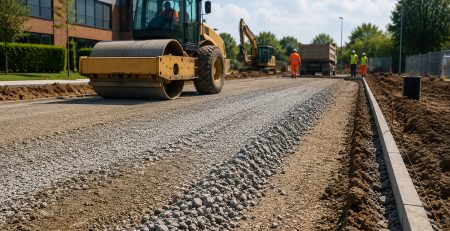
The road structure beneath the visible surface is often more important than the surface itself. Proper sub-base construction, compaction, and load distribution help prevent settlement, rutting, and cracking over time.
In new developments, construction traffic can also affect road performance. Heavy machinery, material deliveries, and ongoing building activities may place significant pressure on partially completed roads. Surfacing specifications must account for these temporary but substantial loading conditions.
Drainage Requirements in Residential Estates
Drainage is one of the most significant factors influencing road surfacing standards within housing developments.
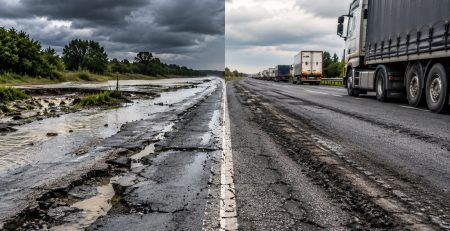
Poor drainage can shorten the lifespan of even the highest-quality surfacing materials. Water that penetrates the pavement structure can weaken underlying layers, accelerate deterioration, and increase the risk of surface defects.
Modern planning regulations often require sustainable drainage solutions that manage water runoff effectively while reducing pressure on public drainage networks. Residential developments may incorporate swales, attenuation systems, permeable areas, and carefully designed drainage channels to achieve compliance.
The road surface itself must work as part of this wider drainage strategy. Appropriate gradients, kerb detailing, and surface profiles ensure that water is directed safely away from properties and traffic routes.
When drainage is considered from the earliest stages of development, it becomes far easier to maintain road quality and minimise future maintenance costs.
Safety Considerations for Residential Communities
Road surfacing standards within housing developments must prioritise safety for all users.
Unlike commercial sites, residential estates are shared spaces where pedestrians, cyclists, children, and vehicles frequently interact. Surface quality therefore plays a direct role in reducing risks and supporting safe movement throughout the development.
Consistent surface levels help prevent trip hazards and improve accessibility. Clear road markings and well-defined vehicle routes support safe navigation. Properly constructed surfaces also contribute to effective braking performance and vehicle control during adverse weather conditions.
Developers increasingly recognise that road design affects the overall quality of life within a community. A well-constructed road network encourages safe movement, enhances visual appearance, and creates a more attractive environment for residents.
Aesthetic Expectations Are Higher
Another factor that distinguishes housing development road surfacing from many other projects is the importance of appearance.
Residential developments are often marketed on their overall presentation. Roads form a substantial part of the streetscape and contribute significantly to first impressions.
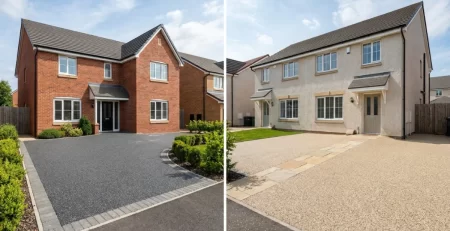
Buyers expect clean, professionally finished roads that complement surrounding landscaping, footpaths, driveways, and public spaces. Surface inconsistencies, patchwork repairs, or poor workmanship can negatively affect perceptions of quality throughout the development.
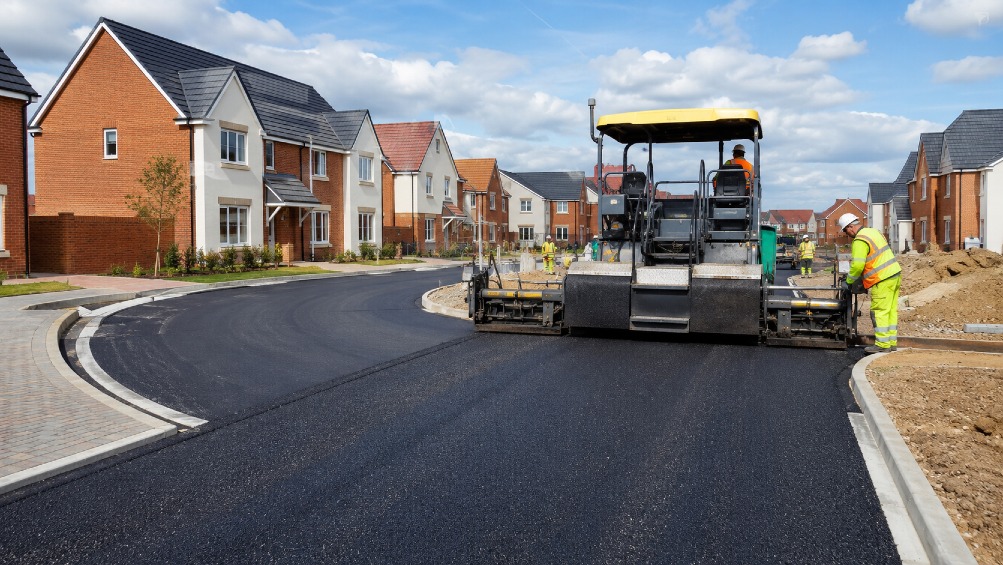
Achieving a uniform appearance often requires specialist installation techniques. Modern machine lay tarmac methods provide greater consistency in surface finish, helping developers achieve the professional appearance expected in contemporary residential schemes.
The visual quality of estate roads can also influence future property values and resident satisfaction, making surfacing standards an important consideration from both practical and commercial perspectives.
Compliance with Local Authority Requirements
Many housing developments eventually transfer road ownership and maintenance responsibility to local authorities or management companies. Before this can happen, roads must often meet specific adoption standards.
Local authority requirements can vary depending on location, road classification, and development size. These standards typically address construction methods, material specifications, drainage performance, safety features, and long-term durability.
Failure to meet adoption requirements can result in delays, additional costs, and remedial works. Developers therefore need surfacing solutions that satisfy both immediate construction objectives and long-term compliance expectations.
Experienced contractors understand how these standards influence project planning and can help ensure that road infrastructure meets the necessary requirements throughout the construction process.
Construction Phasing Creates Unique Challenges
Housing developments are rarely completed in a single stage. Instead, construction often progresses through multiple phases over several months or even years.
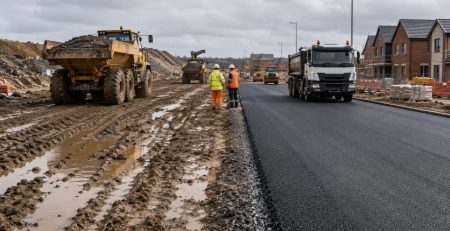
This phased approach creates challenges that are not commonly encountered on conventional road projects. Temporary roads may be required during construction, while permanent surfaces often need protection from ongoing site activity.
Developers must balance the need for early access with the long-term performance of the finished road network. In some cases, binder courses are installed initially, with final surfacing completed after the majority of heavy construction traffic has ended.
Careful planning helps prevent premature wear and ensures that completed roads maintain their intended performance standards. Working with experienced commercial surfacing contractors can help coordinate surfacing activities effectively within larger development programmes.
Sustainability and Environmental Considerations
Environmental considerations are becoming increasingly important in modern housing developments.
Planning authorities, developers, and residents all place greater emphasis on sustainability than in previous decades. As a result, road surfacing specifications frequently incorporate environmental objectives alongside traditional performance requirements.
Recycled materials, efficient construction processes, reduced waste generation, and long-lasting surface designs can all contribute to more sustainable developments. Selecting durable materials that require fewer repairs over their lifespan can significantly reduce environmental impact.
Surface design can also influence water management, heat retention, and overall site resilience. These factors are becoming increasingly relevant as developments adapt to changing environmental expectations and regulatory requirements.
Future-Proofing Residential Infrastructure
Housing developments are intended to serve communities for generations. Consequently, road surfacing standards must account for future demands as well as current requirements.
Vehicle ownership patterns continue to evolve, delivery traffic is increasing, and infrastructure requirements may change over time. Roads that are designed solely around present-day conditions may face performance challenges in the future.
Future-proofing involves creating robust pavement structures capable of adapting to changing usage patterns without requiring premature reconstruction. This approach supports lower maintenance costs, improved reliability, and better long-term value for developers, local authorities, and residents alike.
The ability to accommodate future growth is particularly important in larger developments where population increases may continue long after initial construction has been completed.
Why Professional Installation Matters
Even the most carefully designed specification can fail if installation standards are compromised.
Successful housing development road surfacing relies on accurate preparation, quality materials, effective compaction, and skilled workmanship throughout every stage of construction. Attention to detail during installation helps ensure that the finished road performs as intended and remains visually attractive for years to come.
Professional contractors understand the complexities involved in residential developments, including phased construction, drainage integration, regulatory compliance, and long-term performance requirements. Their expertise helps developers avoid costly defects while delivering infrastructure that supports safe and attractive communities.
As housing developments continue to expand across the UK, the importance of tailored surfacing standards will only increase. Roads within residential estates are expected to do far more than carry traffic. They must support community life, meet regulatory standards, enhance visual appeal, and provide dependable performance for decades. Achieving these outcomes requires surfacing solutions specifically designed around the unique demands of modern housing developments.