The Hidden Damage Caused by Poor Drainage on UK Roads
Poor drainage is one of the most common causes of premature road surface failure across the UK. While cracks, potholes and uneven patches are often blamed on traffic alone, water is frequently the underlying reason those problems develop in the first place. For property owners, commercial site managers, estate managers and facilities teams, drainage should never be treated as a secondary detail. It is a core part of road design, road surfacing and long-term maintenance.
The UK climate places constant pressure on road surfaces. Regular rainfall, fluctuating temperatures and repeated freeze-thaw cycles mean that any weakness in the surface or sub-base can quickly become worse. When water is allowed to sit on the surface, seep into joints or collect beneath the construction layers, it gradually weakens the structure of the road. The damage may not be visible straight away, but over time it can lead to potholes, cracking, surface deformation and costly repairs.
Good drainage protects the surface, the foundation and the usability of the road. Whether the route serves a commercial yard, private estate, housing development, car park, school, industrial premises or access road, effective drainage planning is essential for long-lasting performance.
Why Drainage Matters in UK Road Surfacing
Road surfacing is not just about the visible top layer. A durable surface relies on proper preparation, suitable materials, correct compaction and a stable foundation. Drainage supports all of these elements by controlling how water moves across and away from the road.
When drainage is poorly designed or neglected, water can remain on the surface for long periods. This creates immediate safety concerns, especially for pedestrians, cyclists and vehicles. Standing water can obscure surface defects, reduce tyre grip and increase the risk of skidding. In commercial settings, it can also affect delivery access, staff parking and customer movement around the site.
The more serious issue is what happens beneath the surface. Water that penetrates through cracks or weak joints can soften the sub-base. Once the supporting layers lose strength, the surface above begins to move under traffic loads. This movement often appears as depressions, cracking or broken edges. At that stage, the problem is no longer only cosmetic. It has become structural.
Professional road surfacing should always take drainage into account from the beginning of the project. The correct levels, falls and water discharge routes help prevent water from collecting where it can do the most damage.
The Hidden Structural Damage Caused by Trapped Water
One of the reasons poor drainage is so damaging is that much of the harm takes place out of sight. A road may look reasonably sound from above while water is weakening the layers underneath. By the time visible defects appear, the underlying damage may already be extensive.
When water enters the construction layers, it can disturb the compacted aggregate beneath the surface. This reduces load-bearing strength and allows the surface to flex. Roads are designed to distribute weight across a stable base, but once that stability is compromised, repeated traffic creates stress points. These stress points commonly develop into cracks, ruts and potholes.
In areas used by heavy vehicles, the damage can progress quickly. Loading bays, turning areas, industrial yards and commercial access roads are especially vulnerable because they experience concentrated pressure from lorries, vans and plant machinery. If water sits beneath these areas, the surface can deteriorate far faster than expected.
Drainage defects can also cause edge failure. Where water collects along kerbs, verges or road margins, the edges of the surface may begin to crumble. This is particularly common on private roads, rural access lanes and car parks where drainage channels are blocked, undersized or missing altogether.
How Poor Drainage Leads to Potholes
Potholes rarely appear without warning. They are usually the result of a gradual breakdown process involving water, traffic and surface weakness. Poor drainage accelerates each stage of that process.
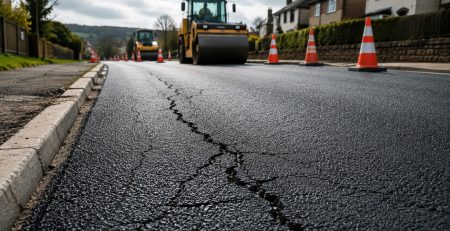
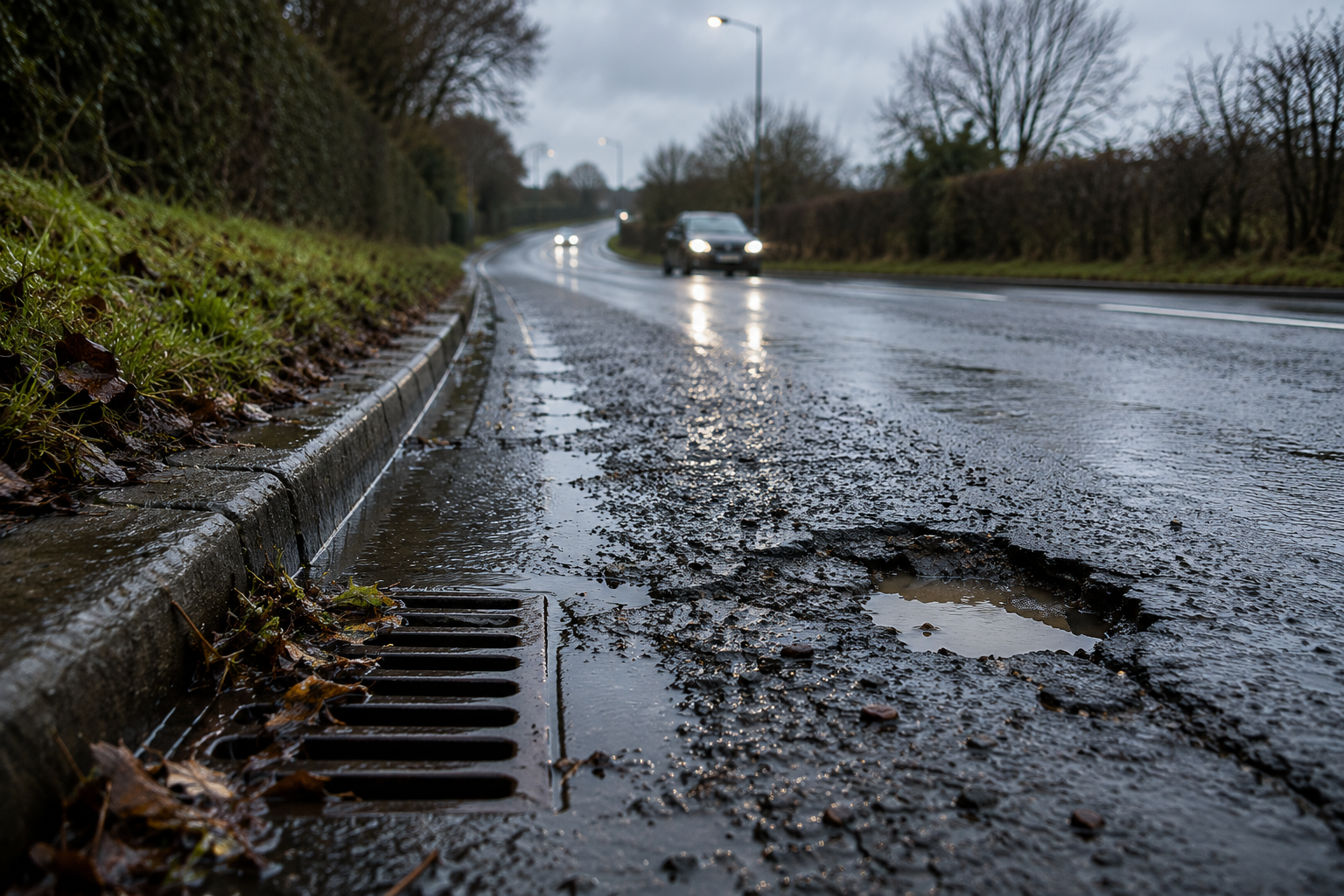
Small cracks allow water to enter the surface. Once inside, that water can expand during freezing conditions, forcing the crack to widen. Traffic then passes over the weakened area, loosening material and increasing the size of the defect. Over time, the surface breaks apart and a pothole forms.
In the UK, this cycle is particularly common during winter and early spring. Wet weather followed by cold nights creates ideal conditions for freeze-thaw damage. Even relatively small drainage problems can become significant during these periods.
Prompt pothole repairs can help restore safety and prevent further deterioration, but repairs are most effective when the underlying drainage issue is also addressed. Simply filling a pothole without correcting water movement may only provide a temporary solution.
Surface Water and Safety Risks
Standing water on a road or access surface is more than an inconvenience. It can create genuine safety risks for vehicles and pedestrians. On commercial sites, this can affect staff, visitors, customers, delivery drivers and contractors.
Water can hide uneven areas, potholes and loose material. Drivers may not see the true condition of the surface until they pass through the water. Pedestrians may step into deeper areas than expected, especially around car parks, pathways and building entrances. In colder weather, poorly drained areas are more likely to freeze, creating slippery patches that increase the risk of accidents.
For businesses and managed properties, these risks can also affect day-to-day operations. Delivery schedules may be disrupted if access routes become difficult to use. Parking areas may become unattractive or unsafe. In some cases, persistent water problems can damage the professional appearance of a site, particularly where customers or tenants use the road regularly.
High-quality commercial surfacing contractors understand that drainage is closely linked to safety, usability and long-term maintenance planning.
Drainage Problems in Car Parks and Access Roads
Car parks and access roads are especially prone to drainage-related damage because they often have complex traffic patterns. Vehicles turn, brake, park and manoeuvre in concentrated areas. This creates pressure on the surface, especially where water is already weakening the structure.
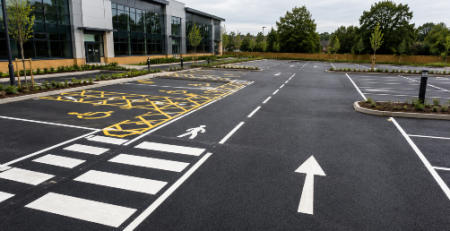
Poorly drained car parks may develop puddles near entrances, pedestrian routes, disabled bays, kerb lines and drainage channels. These areas can become a recurring maintenance concern if the surface levels do not encourage water to flow away properly.
Access roads can experience similar problems, particularly where there is a change in gradient or where surface water runs towards a low point. If drainage outlets are blocked or insufficient, water collects and begins to attack the surface. Over time, this can lead to cracks, potholes and subsidence.
For housing developments, commercial premises and private estates, proper drainage design helps maintain safe access all year round. It also reduces the likelihood of repeated patch repairs, which can become expensive and visually untidy when the root cause is not resolved.
Why Sub-Base Drainage Is Just as Important as Surface Drainage
Many people think of drainage only in terms of what happens on top of the road. While surface water control is essential, sub-base drainage is equally important. The sub-base forms the structural foundation of the road, and it must remain stable to support regular traffic.
If water becomes trapped within the sub-base, it can reduce compaction and weaken the material. This affects the entire road structure. Even a well-laid surface can fail if the base beneath it becomes saturated.
Good road construction considers both visible and hidden water movement. This includes the fall of the surface, the permeability of materials, the condition of surrounding ground and the route water will take once it leaves the road. Where needed, drainage channels, gullies or other systems may be included to direct water away from vulnerable areas.
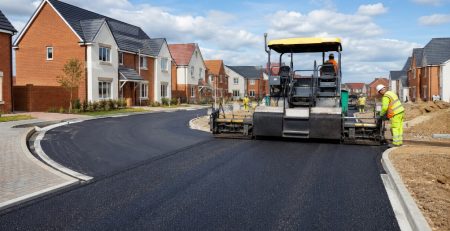
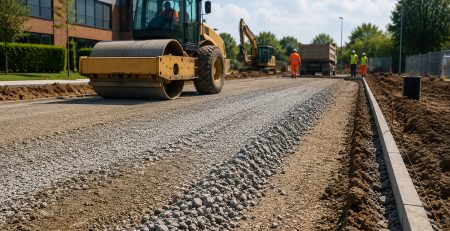
Professional machine-laid tarmac can provide a consistent finish and accurate levels, but it still depends on proper preparation and drainage planning beneath the surface.
Signs That Poor Drainage Is Damaging a Road
Drainage problems often reveal themselves through repeated surface defects. Puddles that remain long after rainfall are one of the clearest signs. Water should move away from the surface efficiently. If it does not, the road may have insufficient falls, blocked outlets or areas of settlement.
Cracking is another warning sign, especially where cracks appear around low points or near the edges of standing water. These cracks allow more water to enter, which increases the rate of deterioration.
Surface depressions can also indicate that the sub-base has weakened. If the road begins to dip in certain areas, water will naturally collect there, creating a cycle of further damage. Loose material, crumbling edges and recurring potholes are also common signs that drainage is contributing to surface failure.
Ignoring these early indicators can lead to more extensive repairs later. A small drainage correction may be far less disruptive than full resurfacing once the base has failed.
The Role of Professional Assessment
A professional assessment helps identify whether drainage is the main cause of surface damage or one of several contributing factors. This is important because different defects require different solutions. A cracked surface caused by age alone may need a different approach from one caused by trapped water beneath the construction layers.
During an assessment, contractors will consider surface falls, existing drainage points, traffic use, sub-base condition and surrounding ground levels. They may also look at how water behaves during or after rainfall. In some cases, the problem may be caused by blocked channels or poor maintenance. In others, the original surface may have been laid without sufficient attention to water flow.
For highways, access routes and larger sites, experienced highway surfacing knowledge is valuable because drainage, traffic loading and long-term durability must all be considered together.
Repairing Drainage-Related Road Damage
The right repair method depends on the severity of the damage. If the surface is still structurally sound, localised repairs and drainage improvements may be enough. This might involve correcting isolated low spots, clearing drainage channels or repairing cracks before water can penetrate further.
Where the sub-base has been weakened, deeper reconstruction may be required. This can involve removing failed material, restoring the foundation and resurfacing the affected area. Although this is more involved, it is often the only way to achieve a lasting result when water has caused structural damage.
For larger commercial or residential sites, resurfacing may provide an opportunity to redesign falls and improve water management across the whole area. This can be more effective than repeated patching, especially where drainage problems are widespread.
The key is to treat the cause rather than only the visible symptom. A new surface laid over unresolved drainage issues may fail sooner than expected.
Preventing Drainage Damage Through Proper Maintenance
Good drainage requires ongoing maintenance as well as good installation. Channels, gullies and outlets can become blocked by leaves, silt, litter and debris. Once blocked, they cannot move water away efficiently, even if the original design was sound.
Routine inspections are especially useful before and after winter. Clearing drainage systems, checking for standing water and repairing small cracks can help prevent larger problems. Site managers should also pay attention to areas where water repeatedly collects, as this often indicates a developing issue.
Maintenance planning is particularly important for commercial premises, schools, industrial sites and managed residential developments. These locations often have high daily use, meaning drainage failures can quickly affect safety and access.
A proactive approach helps extend the life of the road surface and reduces the risk of sudden repair costs.
Drainage and Long-Term Road Surfacing Value
Effective drainage protects the investment made in road surfacing. A well-installed surface should provide reliable service for many years, but its lifespan can be significantly shortened if water is not controlled.
For property owners and site managers, this means drainage should be considered part of the overall value of the project. The cheapest surfacing option is not always the most cost-effective if it fails early due to poor water management. A properly planned road surface, with suitable drainage and professional installation, is more likely to remain safe, stable and presentable over the long term.
This is especially important for sites where appearance and access matter. Business premises, private estates, education sites and residential developments all benefit from surfaces that drain properly and perform consistently throughout the year.
Why Drainage Should Be Planned Before Surfacing Begins
Drainage should never be left until the end of a road surfacing project. It needs to be considered during planning, preparation and installation. The levels of the existing ground, the intended use of the road, traffic loading and surrounding features all influence how water should be managed.
Once a surface has been laid, correcting drainage mistakes can be more disruptive and expensive. It may require cutting into the surface, adjusting levels or installing additional drainage systems. Planning ahead helps avoid these issues and supports a cleaner, more durable finish.
For new installations, resurfacing works or major repairs, early drainage planning allows the contractor to create a surface that performs properly from the start. It also gives property owners and managers greater confidence that the finished road will cope with normal UK weather conditions.
Conclusion
Poor drainage can cause serious hidden damage to UK roads. While the visible signs may start with puddles, cracks or small potholes, the real problem often lies beneath the surface. Water weakens the sub-base, reduces structural stability and accelerates surface failure under traffic.
For commercial sites, residential developments, private estates and access roads, drainage is essential to safety, durability and long-term value. Addressing water movement early helps prevent avoidable repairs and keeps roads usable throughout the year.
Effective road surfacing drainage UK solutions are not simply an add-on to a surfacing project. They are a fundamental part of creating a road surface that lasts.