Are Resin Bound Driveways Permeable?
Homeowners often choose resin bound driveways because they want a smart finish that can also manage rainwater. The serious check is whether the full system drains, not only whether the top layer looks porous. The experienced answer is clear: resin bound driveways are permeable when the aggregate, resin mix, base layer, site levels, drainage route, and maintenance are all handled correctly.
Planning a permeable driveway surface? Visit our service page for expert help with resin bound driveways designed around drainage, base condition, and long-term performance.
Are resin bound driveways permeable?
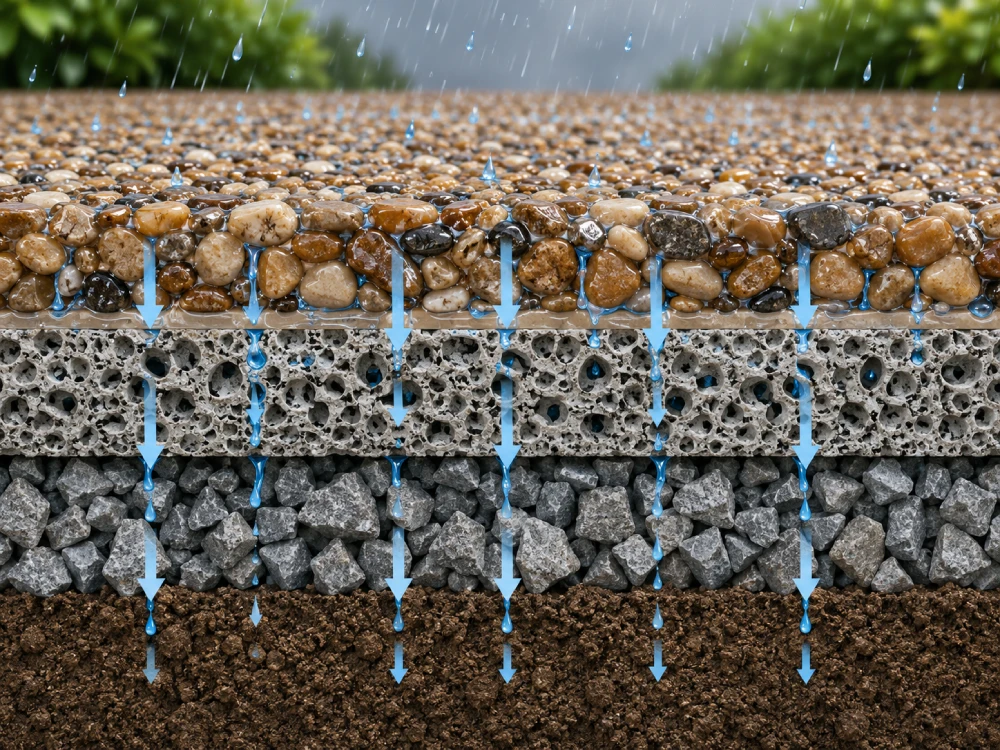
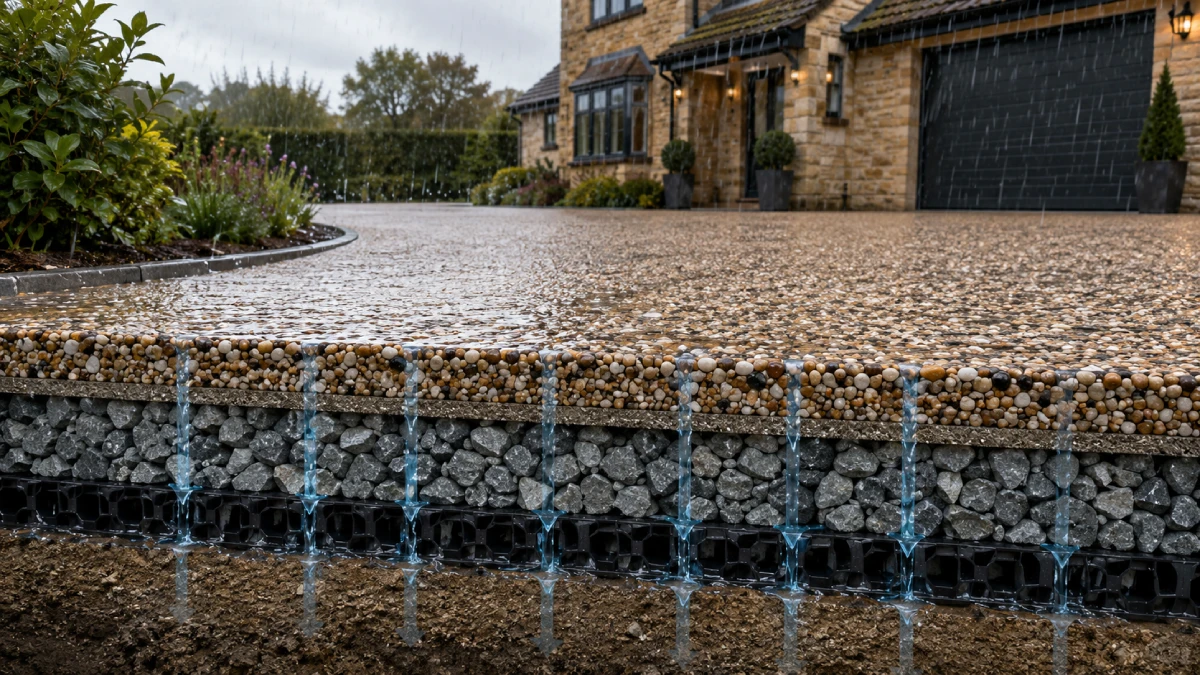
Yes, resin bound driveways are permeable when installed correctly. Water drains through tiny gaps between resin-coated stones and then moves into the prepared base below. The surface works best when the sub-base, edge details, slope, and drainage route all support water movement.
The key point is simple: the resin bound surface is not enough by itself. If the surface drains but the base below blocks water, puddles and soft spots can still appear. That is why every quote should explain the surface, base, and water route together.
| Permeability Factor | Why It Matters | What Can Go Wrong |
| Resin bound mix | Leaves small drainage voids | Too much resin can block pores |
| Aggregate grading | Controls water movement | Poor grading reduces drainage |
| Porous base | Lets water continue down | Concrete can block soakaway |
| Correct falls | Moves water away safely | Low spots collect water |
| Maintenance | Keeps pores clear | Moss and silt can clog surface |
| Installation quality | Protects long-term drainage | Bad prep causes puddles |
For driveway drainage, surface planning, and installation guidance, Total Surfacing Solutions can help check whether resin bound is suitable for the ground, slope, and water movement on your property. This matters because true permeability depends on more than the top finish. A good-looking surface can still fail if the base does not drain.
How the permeability works?
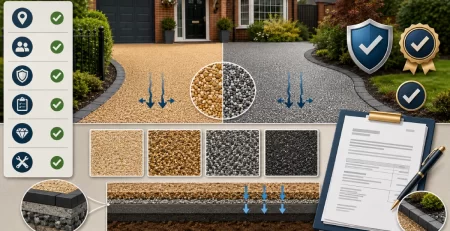
Resin bound permeability starts with the way the material is made. Natural aggregate is mixed with clear resin before being laid. The stones are coated, but small connected spaces remain between them.
Rainwater passes through those spaces instead of sitting on the surface. This is the main difference between a proper resin bound system and many non-permeable hard surfaces. When installed correctly, the top layer can help reduce standing water and surface runoff.
The water then needs somewhere to go. It may pass into an open-textured base, a permeable stone build-up, or a designed drainage route. If the layer underneath blocks the water, the surface cannot perform as intended.
A good system depends on:
- Correct aggregate size
- Correct resin-to-stone ratio
- Open surface voids
- Porous base structure
- Good compaction below
- No low spots
- Clear drainage route
- Clean surface pores
The base preparation is therefore part of the drainage system. For deeper installation planning, the resin driveway base planning guide is a useful next step. It helps explain why surface drainage and base design must work together.
Key benefits of a permeable surface
A permeable resin bound driveway can help manage rainwater more effectively. Instead of forcing every drop toward the road, the surface allows water to move down through the paving system. This can reduce puddles, runoff, and pressure on surface drains.
The benefit is strongest when the base is designed properly. A permeable surface over the wrong base may still hold water. That is why the full build-up is more important than the surface claim alone.
Permeability can also improve day-to-day use. Less standing water means fewer puddles near doors, garages, and walking routes. In cold weather, reduced pooling can also reduce icy patches caused by trapped water.
Main benefits include:
- Reduced surface water runoff
- Fewer puddles when built correctly
- Cleaner driveway appearance
- Better rainwater handling
- Less loose stone than gravel
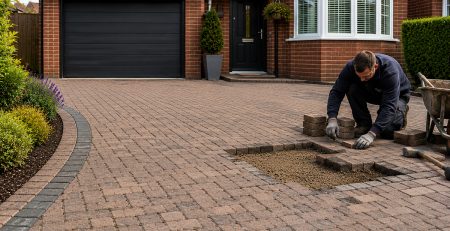
- Fewer open joints than block paving
- Smoother finish for daily use
- Potential SuDS-style drainage support
Permeability is not a cure for serious flooding. If the driveway slopes toward the house or has clay-heavy ground, extra drainage may still be needed. The base course strength factors can help show why the lower layers affect performance.
Resin bound vs. resin bonded
The Important Distinction: Resin Bound vs. Resin Bonded must be made early. These systems sound similar, but they do not manage water in the same way. Many wrong expectations start from this confusion.
Resin bound means aggregate and resin are mixed together before laying. This creates a smooth surface with tiny spaces between the coated stones. Those spaces allow water to pass through when the base below is suitable.
Resin bonded means resin is spread over a surface first, then loose aggregate is scattered onto it. It gives a textured look, but it is usually not permeable in the same way. It may need separate drainage if water cannot soak away.
| Feature | Resin Bound | Resin Bonded |
| Mix method | Stone and resin mixed first | Resin spread, stone scattered |
| Surface | Smooth and seamless | Rougher, textured finish |
| Permeability | Permeable when built correctly | Usually not porous in same way |
| Drainage value | Better for water movement | May need added drainage |
| Driveway use | Common for long-term finish | More cosmetic in many cases |
Before comparing quotes, confirm the system being offered. A lower price may not mean the same drainage performance. The resin driveway pricing factors overview can help connect cost with system type, base work, and long-term value.
The base decides real drainage
A resin bound surface can let water through, but the base decides what happens next. If the base is open and designed for drainage, water can continue moving. If the base is dense, cracked, blocked, or wrongly prepared, water can sit underneath or return to the surface.
Concrete is a common example. Resin bound can sometimes be installed over concrete, but concrete is not naturally permeable in the same way as an open base. Drainage must then be planned through falls, channels, or other routes.
Open-textured tarmac or a permeable stone base can support better drainage. Clay-heavy ground may still need extra thought. A site with poor levels, soft spots, or water running toward the house needs careful design before resin is laid.
Base checks should include:
- Current surface type
- Ground stability
- Existing drainage
- Slope direction
- Water collection points
- Soil type
- Base permeability
- Edge restraints
- Future service access
If the existing surface is tarmac or asphalt, old cracking can reveal base weakness. The asphalt fatigue prevention basics can help identify signs of structural movement. Resin should not be used to hide a failing foundation.
Why puddles still appear sometimes?
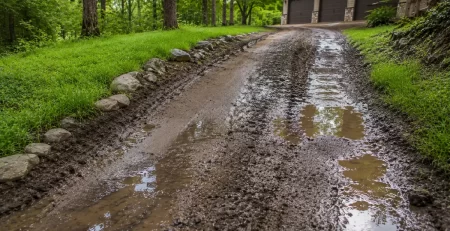
Puddles make homeowners doubt permeability claims. In many cases, puddles do not mean resin bound is always non-permeable. They often mean the surface, base, slope, or maintenance is not working correctly.
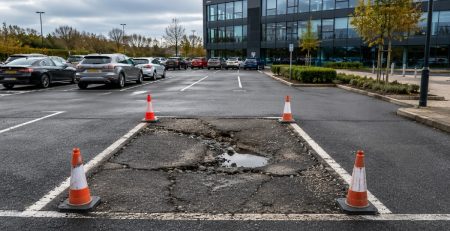
Low spots are a common reason. Even a permeable surface can hold water briefly if it was laid unevenly. If the sub-base has moved or sunk, small puddling areas can appear later.
Blocked pores are another reason. Dirt, moss, leaves, silt, and organic debris can reduce water movement over time. This is why maintenance is part of permeability, not just appearance.
Puddles may come from:
- Blocked surface pores
- Low areas in the resin
- Weak or sunken base
- Non-permeable base below
- Wrong drainage falls
- Heavy silt build-up
- Moss and algae
- Poor installation conditions
If water sits on the surface after normal rain, inspect the area closely. Check whether the water is blocked by debris, trapped in a dip, or failing to move below. A persistent puddle should be treated as a warning sign.
Wet-weather grip needs planning
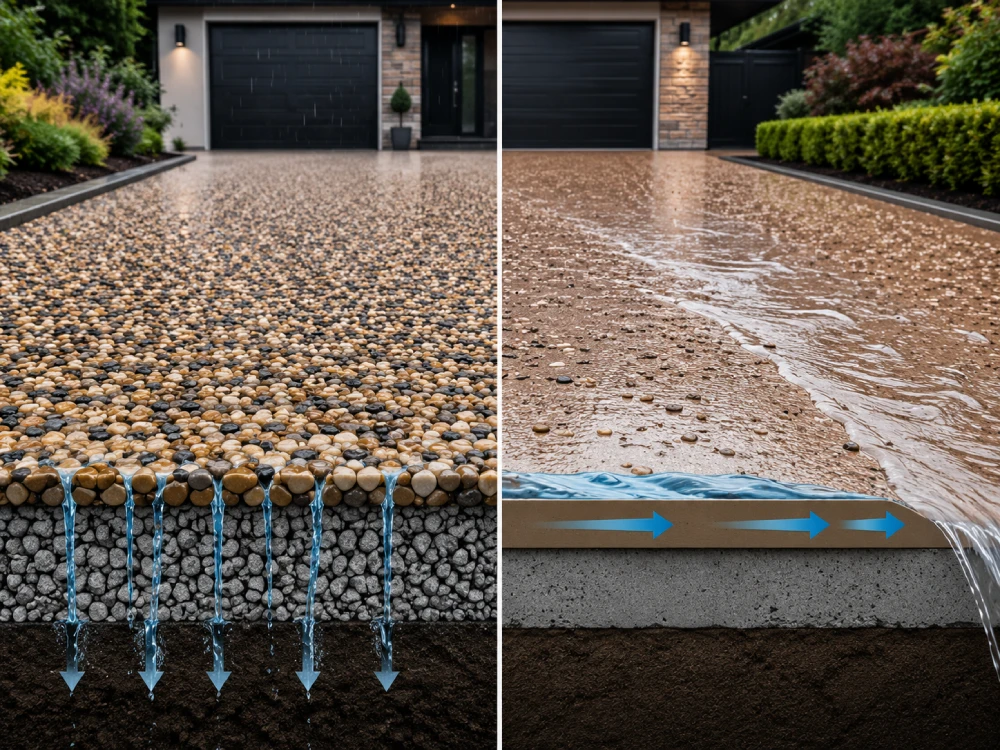
Permeability does not automatically mean slip resistance. A surface can drain water but still feel slippery if the texture, slope, grip finish, or maintenance is wrong. This is a real concern on sloped driveways.
Resin bound surfaces should be specified with suitable aggregate texture and grip. A driveway with a steep slope may need extra care during design. Wet leaves, moss, algae, snow, and dirt can make any hard surface more slippery.
This is why maintenance matters. A clean surface usually performs better than one covered in organic film. The right installation and aftercare reduce slip concerns.
Grip depends on:
- Aggregate texture
- Surface finish
- Topcoat choice
- Driveway slope
- Moss and algae control
- Snow and frost conditions
- Cleaning routine
- Foot traffic areas
If the site is sloped or shaded, mention grip before installation. A driveway should be designed for the way it will actually be used. The resin driveway comparison points can help homeowners ask better questions before choosing an installer.
Maintenance keeps pores open
Resin bound is low maintenance, not no maintenance. The surface voids can become blocked if leaves, soil, moss, algae, and silt are left to build up. Once pores are clogged, water cannot pass through as easily.
Regular sweeping is the simplest protection. Remove leaves and organic matter before they break down into the surface. Gentle washing helps remove fine dirt from the pores.
Avoid harsh cleaning that damages the resin. Do not use unsuitable chemicals or aggressive pressure in one fixed spot. Clean with a controlled method and rinse residue away fully.
Good maintenance includes:
- Sweep leaves and debris
- Remove moss early
- Wash gently when dirty
- Clear drainage edges
- Avoid blocked channels
- Treat oil quickly
- Control weeds at borders
- Inspect puddles after rain
The resin surface care routine is useful for keeping a resin driveway clear after installation. If nearby block paving is also present, the paver stain removal basics can help with a different surface type. Each material needs the right cleaning method.
Planning, SuDS, and runoff control
Permeable surfacing matters because rainwater should be managed on the property where possible. In many normal domestic situations, a permeable driveway surface can help avoid planning issues linked to front garden paving. The key point is where the water goes.
A resin bound driveway may support SuDS-style thinking when it lets water pass through and the base handles it correctly. If water runs onto the road or toward neighbouring property, drainage planning is still needed. Permeability should be designed, not assumed.
Some sites need extra checks. Conservation areas, listed buildings, unusual ground conditions, and large changes to levels may need local advice. A dropped kerb is also separate from the driveway surface itself.
For homeowners comparing surfaces, the driveway surface options guide can help place resin bound beside gravel, tarmac, concrete, and block paving. If the existing driveway is painted concrete, the driveway paint failure reasons may also explain why surface coatings do not solve drainage. Drainage has to be planned through the full build-up.
When resin bound makes sense?
Resin bound makes sense when the driveway needs a smooth finish, better rainwater control, fewer loose stones, and fewer open joints than block paving. It is especially useful when drainage can be designed properly from the start. It is not ideal when severe ground water problems are ignored.
A good resin bound project starts with the base. It should also consider slope, grip, borders, water movement, future ducting, and cleaning access. These details prevent the common problems people complain about later.
Homeowners looking for local resin options can review resin bound driveways in Bedfordshire, resin bound driveways in Oxford, and resin bound driveways in Cambridgeshire. These pages help connect general permeability planning with local driveway installation needs. Local ground, access, and drainage conditions can affect the final specification.
Other local planning options include resin bound driveways in Essex and resin bound driveways in Hertfordshire. For broader surface planning, Total Surfacing Solutions can help compare resin bound permeability with other driveway surfaces. This is useful when puddles, slope, weeds, and long-term maintenance are part of the decision.
Commercial and shared access areas need a stronger drainage view. Heavy vehicles, turning areas, and larger surface areas can change how water and load affect the structure. The industrial yard drainage factors, business park roadway upkeep, and private estate surfacing basics are more suitable for heavier-use planning.
Resin Bound Driveways Area Coverage
Resin bound driveways are important for properties that need a clean, durable, and low-maintenance surface across changing UK weather conditions. Rain, frost, humidity, heat, dust, drainage pressure, local property type, and seasonal maintenance challenges can all affect how well a driveway performs over time.
Resin Bound Driveways in Bedfordshire
Bedfordshire homes often deal with regular rainfall, winter frost, shaded damp areas, and daily vehicle movement from family properties, village homes, and suburban driveways. Older concrete, gravel, or block paving can become stained, uneven, slippery, or difficult to maintain through seasonal changes. For homeowners who want a smoother finish, better kerb appeal, and easier long-term maintenance, resin bound driveways in Bedfordshire can be a practical surface upgrade.
Resin Bound Driveways in Cambridgeshire
Cambridgeshire driveways often need to manage flat ground conditions, rainwater movement, seasonal dampness, surface dust, and drainage challenges around rural homes, new-build estates, and larger residential properties. When older driveway surfaces hold water or lose their clean finish, they can become slippery, stained, or harder to use every day. For properties that need a neat, stable, and weather-ready surface, resin bound driveways in Cambridgeshire can help improve appearance and everyday usability.
Resin Bound Driveways in Essex
Essex properties may face rain, summer heat, coastal air in some areas, tyre marks, surface dust, and strong kerb appeal expectations from commuter homes, family properties, rental homes, and coastal residences. Salt air, moisture, and frequent vehicle use can make older driveways look faded, stained, or untidy over time. For homeowners who want a cleaner, more decorative, and more durable driveway option, resin bound driveways in Essex can provide a strong local surface solution.
Resin Bound Driveways in Hertfordshire
Hertfordshire driveways are often expected to look smart, clean, and suitable for high-value commuter homes, family properties, and well-kept residential streets. Rain, frost, shaded entrances, moss growth, and regular parking can make old concrete, tarmac, block paving, or gravel look tired over time. For homeowners who want a decorative finish that supports kerb appeal while reducing maintenance pressure, resin bound driveways in Hertfordshire can be a reliable local driveway upgrade.
Resin Bound Driveways in Oxford
Oxford properties include period homes, townhouses, modern driveways, student rentals, and visitor-heavy residential areas where driveway appearance can strongly affect first impressions. Rain, frost, humidity, shaded entrances, and frequent foot or vehicle traffic can make older surfaces slippery, stained, or uneven. For homeowners who want a finish that suits local property character while supporting drainage, safety, and easier maintenance, resin bound driveways in Oxford can be a dependable choice.
FAQs
Why is my resin bound driveway holding water?
Water may be sitting because of blocked pores, low spots, a non-permeable base, or poor drainage falls. The surface may not be the only cause. Check the base, slope, and maintenance condition before deciding the resin itself has failed.
Can resin bound be laid over concrete?
It can be laid over some concrete bases, but concrete can block natural drainage. The design may need falls, channels, or another drainage route. A concrete base should be stable, clean, and suitable before resin is installed.
Does resin bound stop weeds completely?
Resin bound can reduce weed growth because it has fewer open joints than block paving. It does not guarantee zero weeds forever. Dirt, edges, moss, and airborne seeds still need routine cleaning.
Is resin bound safe on a sloped driveway?
It can work on some sloped driveways when grip, texture, drainage, and installation are properly specified. Slopes need extra care because wet conditions can increase slip risk. Mention slope concerns before choosing the finish.
Can resin bound pores get blocked?
Yes, pores can become blocked by dirt, leaves, moss, algae, and silt. Regular sweeping and gentle washing help keep water moving through the surface. Maintenance is important for long-term permeability.
Conclusion
Resin bound driveways are permeable when installed correctly, but the full system matters. The surface must have open voids, the base must accept water, and the drainage route must be planned properly. The most important checks are How the Permeability Works, the Key Benefits of a Permeable Surface, and the Important Distinction: Resin Bound vs. Resin Bonded.
A resin bound driveway should not be treated as a shortcut for every drainage problem. Puddles, slippery areas, sinking spots, and blocked pores usually point to installation, base, slope, or maintenance issues. For a clear drainage-focused surface decision, speak with Total Surfacing Solutions before choosing a system that may not suit the ground.