What Size Gravel Is Best for a Driveway?
Choosing the wrong gravel size can make a driveway sink, scatter, rut, or drag stones into tyre treads. The serious step is to separate the Base Layer (Foundation) from the Top Layer (Surface) because each layer needs a different stone size. The experienced solution is to use compacted angular stone below, smaller angular chippings above, strong edging, and clear drainage so the driveway stays firm under regular vehicle movement.
Tip: Selecting the right gravel size improves stability, drainage, and the overall appearance of your driveway. For expert driveway advice, Get A Free Quote.
What Size Gravel Is Best for a Driveway?
Driveway gravel size depends on layer position, vehicle weight, drainage, and surface stability. This section gives a clear answer before explaining the base stone, top chippings, depth, and installation rules.
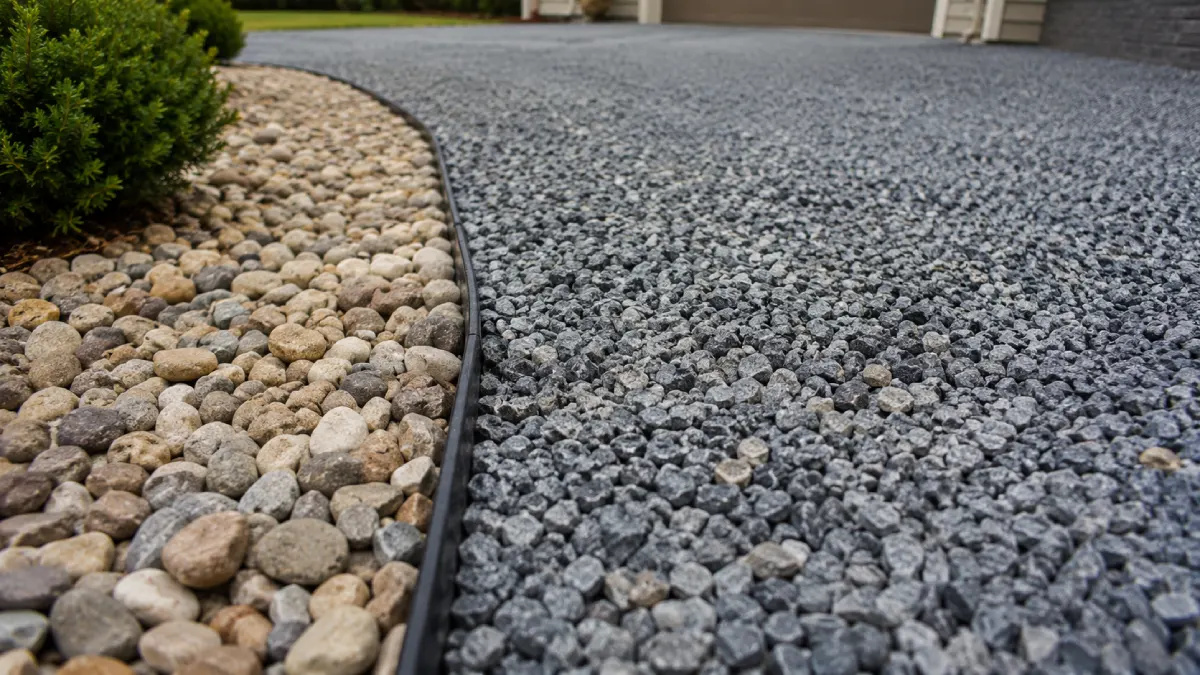
What Size Gravel Is Best for a Driveway? For the visible surface, 14–20mm angular gravel is usually the best choice. It is large enough to avoid sticking in tyres but small enough to feel stable under cars and foot traffic.
For the base layer, a larger compactable aggregate is needed. In the UK, a common option is MOT Type 1, which contains graded crushed stone and fines that compact into a firm foundation.
A professionally built driveway usually separates the driveway into:
- Compacted subgrade
- Geotextile membrane
- Base layer
- Middle drainage layer where needed
- Top gravel layer
- Edge restraint
- Drainage fall
A contractor such as Total Surfacing Solutions can assess whether gravel, resin-bound surfacing, or a more structured driveway surface is better for the site, especially where drainage, slope, or frequent vehicle use matters.
| Driveway Layer | Better Gravel Size | Main Purpose |
| Base layer | 20–40mm compactable aggregate | Foundation strength |
| Middle layer | Larger clean angular stone | Drainage and support |
| Top layer | 14–20mm angular chippings | Stable driving surface |
| Paths only | 10mm gravel | Light foot traffic |
The surface gravel should look neat, but the base gravel decides whether the driveway lasts.
The Base Layer: Strong Foundation
The Base Layer carries vehicle weight and stops the driveway from sinking into soft ground. This section explains MOT Type 1, crushed stone, compaction, membrane, and foundation depth.
The Base Layer (Foundation) should be built from compactable crushed stone, not decorative gravel. This layer needs to lock together tightly and spread vehicle weight across the ground.
MOT Type 1 is commonly used because it contains a mixture of larger stones and fine particles. When compacted, the fines fill the gaps and create a dense, strong base.
A strong base layer helps prevent:
- Rutting
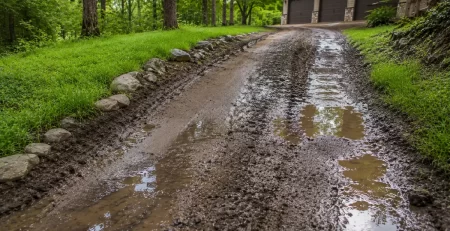
- Mud pumping
- Surface sinking
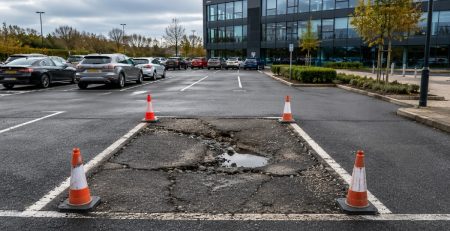
- Potholes
- Loose gravel movement
- Weed growth
- Water damage
- Tyre depressions
The base should be installed over compacted soil and often over a woven geotextile membrane. The membrane helps stop the stone from sinking into mud and prevents soil from mixing into the gravel layers.
| Base Feature | Why It Matters |
| Angular crushed stone | Locks together better |
| Fines in the mix | Helps compaction |
| Geotextile membrane | Separates soil and stone |
| Layer compaction | Removes air pockets |
| Correct depth | Supports vehicle load |
| Stable subgrade | Prevents sinking |
For driveway construction on angled sites, driveway on slope is worth reviewing. Slopes need stronger control because loose material moves downhill more easily.
The base layer should never be treated as filler. It is the structural part of a gravel driveway.
The Top Layer: Stable Surface
The Top Layer affects traction, appearance, comfort, and stone movement. This section explains why 14–20mm angular chippings usually work best for UK driveways.
The Top Layer (Surface) should normally use 14–20mm angular gravel. This size gives a practical balance between stability, drainage, comfort, and tyre performance.
Stones smaller than 10mm can lodge in tyres and scatter more easily. Rounded pea gravel can roll under wheels like small ball bearings and create ruts or unstable patches.
Better top-layer choices include:
- 20mm granite chippings
- 14mm angular gravel
- 20mm flint
- 20mm basalt
- Angular slate chippings
- Hard crushed stone
The top layer should not be too deep. A deep loose surface makes tyres sink and makes walking harder. Around 40–50mm is often more practical than a thick loose layer.
| Top Gravel Size | Best Use | Watch Point |
| 10mm | Paths and light areas | Can stick in tyres |
| 14mm | Smoother driveway finish | Needs an angular shape |
| 20mm | Strong driveway surface | More textured feel |
| 40mm+ | Base or drainage layers | Too rough for a top finish |
For appearance and long-term performance comparisons, resin driveway pros cons can help homeowners compare loose gravel with resin-bound aggregate systems.
A good top layer should settle firmly, drain well, and stay where it is placed.
Important Gravel Rules to Follow: Avoid Ruts
Important Gravel Rules to Follow: stop loose stone from becoming messy, unstable, or difficult to drive on. This section covers angular stone, depth, edging, compaction, and drainage.
Important Gravel Rules to Follow begin with one major rule: choose angular stone over rounded gravel. Angular gravel has edges that interlock, while rounded gravel shifts under tyres.
Avoid using very small stones for the main driving surface. Small gravel can be picked up by tyre treads and carried into roads, gardens, garages, and entrance mats.
Follow these rules:
- Use angular stone
- Avoid pea gravel for vehicle areas
- Keep the top layer shallow enough
- Compact the base layer properly
- Add a geotextile membrane
- Install solid edging
- Create a slight crown or fall
- Keep drainage clear
- Top up thin areas when needed
- Avoid soft chalky stone for heavy use
Hard stones such as granite, basalt, quartzite, and flint usually perform better than soft materials in high-use areas. Softer stone can crush into dust and lose its texture faster.
| Rule | What It Prevents |
| Angular gravel | Rutting and sliding |
| Correct depth | Tyre sinking |
| Edging | Gravel spread |
| Crown or fall | Standing water |
| Strong base | Potholes |
| Hard stone | Surface breakdown |
For water-related entrance damage, driveway erosion fix can help explain why loose or poorly drained gravel fails faster.
Gravel driveways fail when stone size, depth, and drainage are treated separately. They must work together.
Three-Layer Build: Driveway Formula
A long-lasting gravel driveway is usually built in layers, not dumped in one depth. This section explains the structural formula for base, core, and surface gravel.
A proper gravel driveway should have enough depth to carry vehicles and control water. Many stronger gravel driveways use a compacted depth of around 200–300mm, depending on soil, vehicle use, and site conditions.
The build-up often looks like this:
| Layer | Typical Depth | Material |
| Surface layer | 40–50mm | 14–20mm angular gravel |
| Core layer | 75–100mm | Larger clean angular stone |
| Base layer | 100–150mm | MOT Type 1 or crusher run |
| Separator | As needed | Woven geotextile membrane |
| Subgrade | Compacted | Firm soil base |
The base layer carries the weight. The middle layer can improve drainage and structure. The top layer gives the visible driving finish.
Construction steps:
- Excavate weak soil
- Compact the subgrade
- Install geotextile fabric
- Place compactable base aggregate
- Compact in layers
- Add a drainage layer if needed
- Add top gravel
- Install edging
- Shape crown or fall
- Check surface movement after use
For driveway size planning, the driveway width guide is useful. Wider or multi-car driveways need more aggregate and stronger edge control.
The three-layer approach is what separates a lasting gravel driveway from a loose parking area.
Drainage and Edging: Stop Movement
Drainage and edging keep gravel stable in daily use. This section explains crowns, cross-falls, borders, gravel grids, culverts, and surface water control.
Gravel drains better than many hard surfaces, but it still needs correct shape. A flat gravel driveway can develop potholes because standing water softens the base and lets traffic push stone aside.
A slight crown or cross-fall helps move water away from the centre. Edging keeps the gravel from spreading into lawns, borders, and paths.
Useful control features include:
- Timber edging
- Steel edging
- Concrete kerbs
- Block borders
- Gravel grids
- Crowned profile
- Cross-fall
- French drain
- Channel drain
- Culvert where needed
For entrances crossing roadside drainage, driveway culvert may be needed. Water must pass through or around the driveway without washing out the gravel base.
| Control Feature | Best Purpose |
| Edging | Stops gravel migration |
| Crown | Moves water to both sides |
| Cross-fall | Sends water to one side |
| Gravel grid | Reduces rutting |
| Culvert | Carries ditch water under drive |
| Geotextile | Stops soil mixing |
For apron entrance planning, driveway apron meaning can also help. The entry zone often experiences the heaviest gravel movement.
A gravel driveway should be shaped like a drainage system, not just a flat layer of stone.
Area Coverage for Driveway Gravel Size
Driveway gravel size depends on soil, drainage, vehicle use, surface finish, and local frontage style. These area sections explain how Bedfordshire, Cambridgeshire, Essex, Hertfordshire, and Oxford homeowners should choose gravel layers.
Resin Driveway Installation In Bedfordshire
For resin bound driveways in Bedfordshire, gravel driveway planning should start with the base layer. Many driveway issues begin when decorative gravel is placed directly over soil without enough compacted support.
A Bedfordshire driveway used by daily vehicles should usually have a strong compacted base, geotextile membrane, and angular surface gravel. The top layer should not be too deep because loose stone can shift under tyres.
Homeowners comparing gravel with resin-bound surfacing should consider maintenance, drainage, tyre movement, and kerb appeal. Resin may offer a cleaner bonded finish, while gravel offers lower-cost permeability when installed correctly.
Resin Bound Driveway Repair In Cambridgeshire
For resin bound driveways in Cambridgeshire, drainage should guide gravel size and layer depth. Flat or water-prone areas need careful base preparation so water does not sit beneath the surface.
Angular 14–20mm top gravel can drain well, but only when the base below also supports water movement. A compacted, poorly shaped driveway may still develop soft spots if water has nowhere to go.
Cambridgeshire homeowners should avoid rounded stones and shallow decorative layers. A proper base, edge control, and drainage fall are more important than colour choice.
Resin Bound Driveway In Essex
For resin bound driveways in Essex, homeowners often want a driveway surface that looks tidy from the road and remains practical under cars. Gravel can work well when stone size, colour, and edging are chosen carefully.
A 14mm gravel gives a smoother look, while 20mm gravel gives more texture and stability. Both should be angular, hard-wearing, and supported by a solid base.
For homeowners considering resale or frontage presentation, driveway increase home value may help. A neat, stable, well-drained driveway usually supports kerb appeal better than loose scattered gravel.
Resin Bound Driveway Repair In Hertfordshire
For resin bound driveways in Hertfordshire, gravel driveways on slopes need extra control. Loose stone can migrate downhill, rut under tyres, and wash into the road after heavy rain.
A sloped gravel driveway should use angular stone, a compacted base, strong edging, and drainage channels where needed. Gravel grids may also help hold the surface in place.
Homeowners dealing with slopes should review driveway on slope before choosing gravel. Resin-bound surfacing may be a cleaner alternative where loose aggregate movement becomes a concern.
Resin Driveway Finishes In Oxford
For resin bound driveways in Oxford, gravel can suit traditional frontages when the colour and size match the property style. However, appearance should not override performance.
Older homes may have narrow entrances, shared boundaries, and sensitive frontage details. That makes edging, apron design, and drainage particularly important.
Oxford homeowners should choose angular 14–20mm top gravel with a strong compacted foundation. If the driveway needs a lower-maintenance premium finish, resin-bound surfacing may deliver a cleaner look with better surface control.
Final Gravel Checklist: Choose Correctly
The best gravel driveway uses different stone sizes for different jobs. This checklist helps confirm the base, surface, drainage, edging, and maintenance are properly planned.
Before ordering gravel, check:
- Is the top gravel 14–20mm?
- Is the stone angular, not rounded?
- Is the base compactable MOT Type 1?
- Is geotextile membrane included?
- Is the surface layer shallow enough?
- Will water drain away?
- Does the driveway need a crown?
- Are edges restrained?
- Will cars turn without scattering gravel?
- Is gravel the right surface for the slope?
For homeowners comparing costs, driveway widening cost and paver driveway cost may help with wider surfacing decisions.
| Checklist Item | Best Choice |
| Top size | 14–20mm angular gravel |
| Base type | MOT Type 1 or crusher run |
| Stone shape | Crushed and angular |
| Depth | Built in layers |
| Drainage | Crown, fall, or drain |
| Edge control | Timber, steel, block, or kerb |
For muddy ground problems, muddy driveway fix can help identify whether gravel alone will solve the issue.
A gravel driveway should be specified like a structure. When each layer has the right stone size, the surface stays cleaner, stronger, and easier to maintain.
Frequently Asked Questions
1. Is 10mm gravel good for a driveway?
10mm gravel is usually better for paths than driveways. It can move more easily and may get stuck in tyre treads. For driveways, 14–20mm angular gravel is usually more practical.
2. Is 20mm gravel good for driveways?
Yes, 20mm angular gravel is a strong driveway surface choice. It drains well, resists tyre movement better than smaller stones, and gives a more textured finish.
3. What gravel should go under a driveway?
The base should use compactable crushed aggregate such as MOT Type 1 or crusher run. It should be compacted over firm ground and often separated from soil with a geotextile membrane.
4. Should driveway gravel be round or angular?
Angular gravel is better for driveways because the sharp edges lock together. Rounded gravel moves under tyres, creates ruts, and can feel unstable when driving or walking.
5. How deep should driveway gravel be?
A strong gravel driveway is often built in layers, with a total compacted depth around 200–300mm, depending on soil and use. The loose top layer should usually stay around 40–50mm.