The Secret Layers Beneath Every Strong Road
When most people think about a road, they picture the smooth black tarmac that vehicles travel across every day. In reality, the visible surface is only a small part of what makes a road durable and safe. Beneath every well-constructed road lies a carefully engineered system of layers, each designed to perform a specific function.
Whether it is a residential estate road, an industrial access route, a commercial car park or a public highway, the strength of the finished surface depends almost entirely on what lies beneath it. Even the highest-quality asphalt cannot compensate for poor foundations, inadequate drainage or incorrect ground preparation.
Understanding these hidden layers helps explain why professional road construction delivers better long-term value than simply resurfacing over existing problems.
Why Strong Foundations Are Essential
Every road experiences constant stress from vehicle weight, weather conditions and natural ground movement. Heavy goods vehicles, buses and agricultural machinery place enormous pressure on the surface, while changing temperatures cause materials to expand and contract throughout the year.
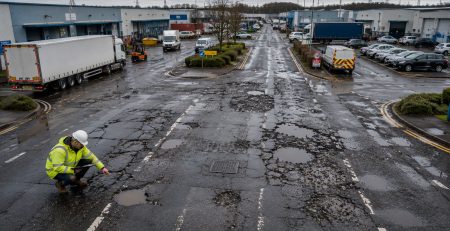
Without a stable foundation, these forces quickly lead to cracking, rutting and potholes. Water can penetrate damaged areas, weakening the underlying structure and accelerating deterioration.
This is why experienced contractors place so much emphasis on preparing the ground before any surface material is laid. Proper construction creates a road that distributes weight evenly while resisting movement for many years.
Professional tarmac installation always begins with the layers below the surface rather than the surface itself.
The Subgrade: The Natural Ground
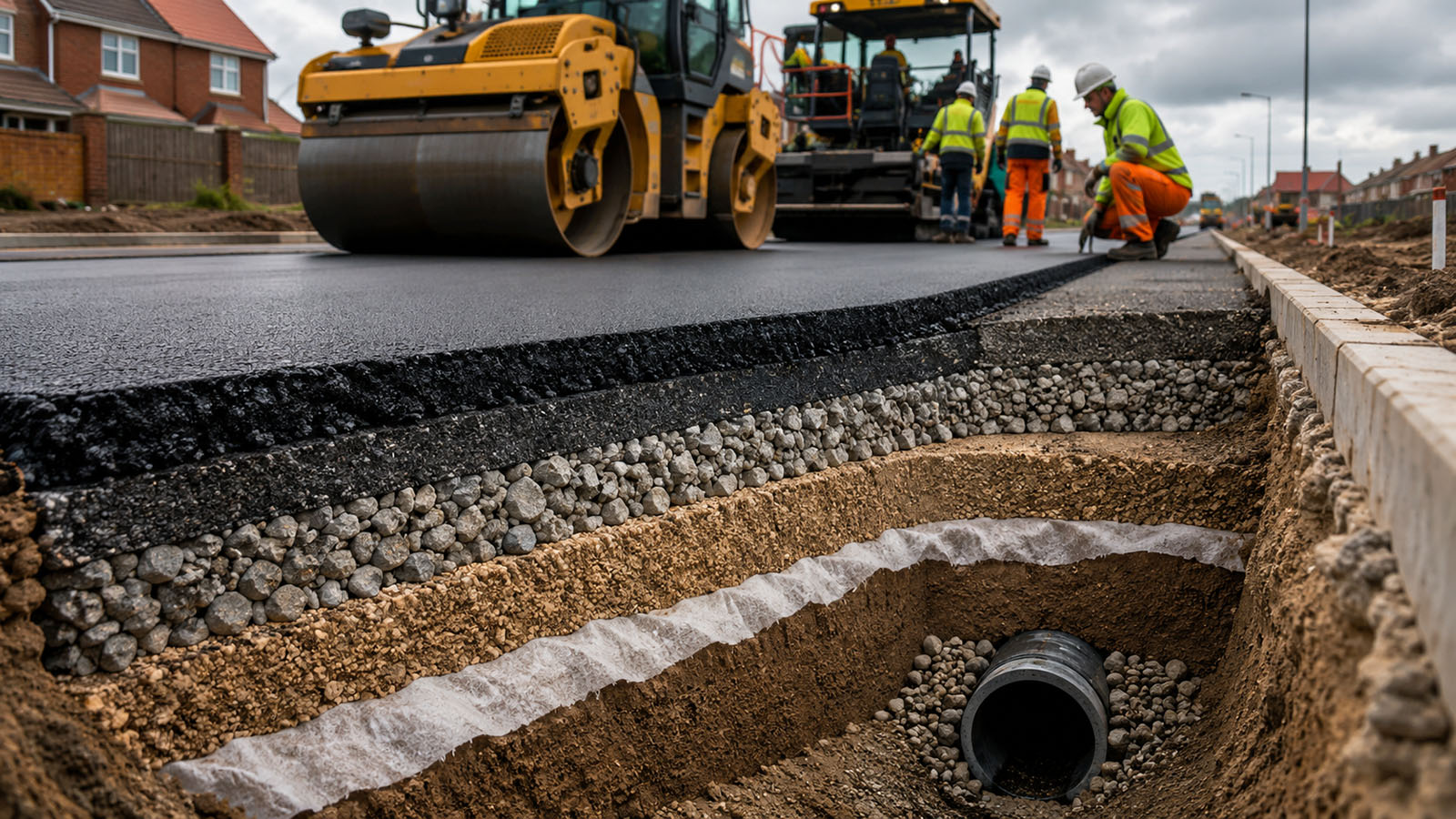
The first and most important layer is known as the subgrade. This is the existing soil on which the entire road will be built.
Before construction begins, contractors assess the ground to determine its strength, stability and drainage characteristics. Clay soils, sandy ground and made-up land all behave differently under load, meaning every project requires an approach suited to the site conditions.
If the natural ground is weak, additional stabilisation may be required before construction continues. This can involve excavation, replacement with stronger material or the use of geotextile membranes to improve stability.
Without a reliable subgrade, every layer above it becomes vulnerable to movement and premature failure.
The Sub-Base: The Hidden Strength
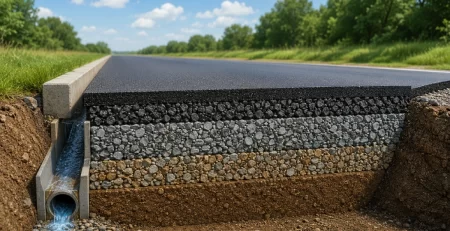
Above the subgrade sits the sub-base, which provides much of the road’s structural strength.
This layer is commonly formed using compacted crushed stone or other approved aggregates. The material is carefully spread and compacted to achieve a dense, stable platform capable of supporting the layers above.
The sub-base performs several important functions. It distributes vehicle loads across a wider area, reduces pressure on the natural ground and allows water to drain away efficiently. It also provides a stable working platform during construction.
The thickness of the sub-base depends on factors such as anticipated traffic volumes, vehicle weights and ground conditions. Roads serving industrial premises typically require much deeper construction than residential access roads because they experience significantly heavier loading.
The Base Course: Supporting Daily Traffic
The next layer is the base course, sometimes referred to as the binder course.
This layer provides additional structural support while creating a smooth platform for the final wearing course. It is usually made from asphalt containing larger aggregate than the surface layer, giving it excellent strength and durability.
Although hidden from view once construction is complete, the base course plays a vital role in preventing deformation under traffic. It helps absorb repeated loading while maintaining the overall shape of the road.
Proper compaction at this stage is essential. Any weak spots can eventually appear on the finished surface as depressions or cracking.
The Wearing Course: The Visible Surface
The wearing course is the layer everyone sees.
This final surface provides grip, ride quality, weather resistance and the finished appearance of the road. It is designed to withstand direct contact with vehicle tyres while resisting water penetration and daily wear.
Different materials can be selected depending on how the road will be used. Busy commercial premises may require highly durable asphalt mixes, while residential developments often prioritise a smooth, attractive finish.
Although this layer is relatively thin compared with the construction beneath it, its performance depends entirely on the quality of every underlying layer.
Drainage: The Hidden Feature That Protects Every Layer
Water is one of the greatest threats to any road structure. Even small amounts of standing water can gradually weaken foundations if drainage has not been properly designed.
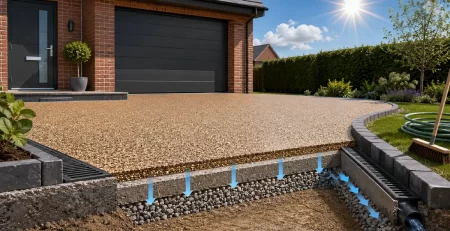
Modern road construction includes carefully planned drainage systems that move water away from both the surface and the structural layers below. Crossfalls, channels, gullies and underground drainage all work together to prevent moisture from accumulating.
Poor drainage often leads to potholes, frost damage and premature surface failure. Investing in effective drainage during construction is significantly more cost-effective than repairing water damage later.
Why Compaction Matters
Each construction layer must be compacted correctly before the next is added.
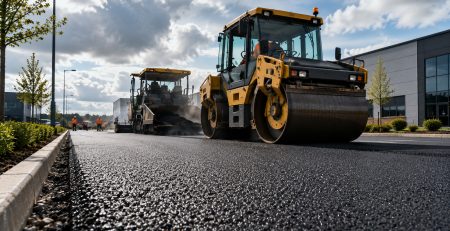
Compaction removes air voids, increases density and ensures the materials work together as a single structural system. Modern rollers apply carefully controlled pressure to achieve consistent results across the entire site.
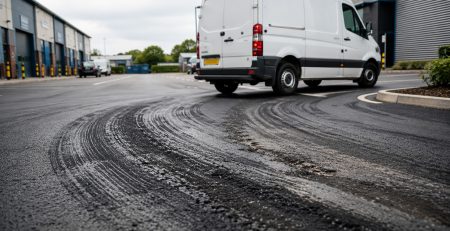
Insufficient compaction is one of the leading causes of early road failure. Areas that appear satisfactory immediately after construction can settle unevenly over time, creating cracks, depressions and weak points.
Experienced surfacing contractors continuously monitor compaction throughout construction to ensure every layer meets the required specification.
How Road Design Changes Depending on Its Purpose
Not every road is built in exactly the same way.
A residential cul-de-sac carrying mainly cars requires a different construction profile from an industrial estate used by articulated lorries throughout the day. Similarly, a school access road has different design considerations from a farm track or airport service road.
Engineers determine the appropriate layer thicknesses by considering expected traffic volumes, axle loads, drainage requirements and the underlying ground conditions.
This tailored approach ensures each road provides the necessary performance without unnecessary construction costs.
Businesses planning new developments often benefit from working with experienced commercial surfacing contractors who understand these engineering requirements.
Common Problems Caused by Poor Foundations
Many road defects originate well below the surface.
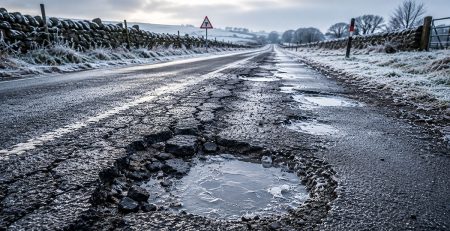
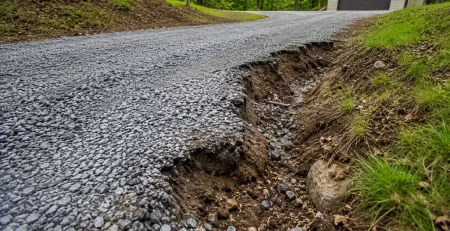
Cracks often develop because the lower layers have shifted or settled unevenly. Potholes usually form after water penetrates damaged areas and weakens the supporting structure. Rutting occurs when insufficient structural strength allows repeated traffic to compress the road over time.
Simply replacing the surface rarely solves these underlying issues. Unless the damaged foundation is repaired, the same defects are likely to return.
A proper assessment identifies whether resurfacing alone is appropriate or whether reconstruction of the lower layers is required.
Investing in Long-Term Performance
Strong roads are built from the ground up. Every layer, from the natural subgrade to the finished wearing course, contributes to the road’s ability to carry traffic safely and withstand years of use.
Although the hidden layers are never seen once construction is complete, they represent the most important part of the entire project. Careful design, quality materials, effective drainage and professional installation combine to create roads that remain safe, reliable and cost-effective for decades.
For property owners, developers and commercial site managers, investing in proper construction from the outset is often the most economical decision. A road built on solid foundations requires fewer repairs, performs more consistently and delivers better value throughout its service life.