Can Weeds Damage Block Paving?
Block paving is one of the most popular surfacing choices for driveways, patios and pathways throughout the UK thanks to its attractive appearance, durability and ease of maintenance. However, one issue that many property owners encounter is the appearance of weeds between the joints. While weeds can make even a well-maintained driveway look untidy, many people wonder whether they are actually causing damage to the paving itself.
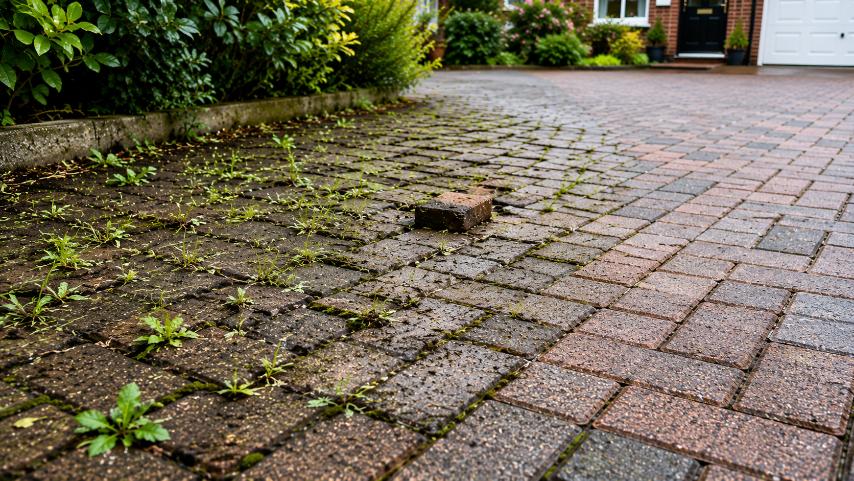
The good news is that weeds are rarely the direct cause of structural problems. In most cases, weeds do not grow up through solid foundations beneath the paving. Instead, they establish themselves in organic matter such as dirt, dust and debris that accumulates in the joints over time. Seeds carried by the wind settle into these small pockets, where moisture and sunlight provide ideal growing conditions.
Although weeds themselves are not usually responsible for serious structural damage, allowing them to spread unchecked can contribute to maintenance issues that eventually affect the appearance and longevity of the surface.
Can Weeds Actually Damage Block Paving?
In most situations, weeds do not physically break or lift properly installed block paving. The paving blocks are supported by a compacted sub-base and a layer of bedding sand, making it difficult for ordinary weeds to force the blocks apart.
However, heavy weed growth can gradually displace jointing sand as roots develop within the joints. Jointing sand plays an important role in keeping the blocks tightly interlocked. As this sand is lost, the paving becomes more vulnerable to movement under foot traffic or vehicle loads.
Large perennial weeds with thicker root systems may also widen existing gaps if they are left to mature over several growing seasons. While this is rarely the primary cause of movement, it can accelerate wear where the paving has already begun to deteriorate.
For this reason, weeds should be viewed as an early maintenance issue rather than ignored until more significant repairs become necessary.
Why Some Driveways Experience More Weed Growth Than Others
Not every block paved driveway develops the same level of weed growth. Several factors influence how quickly weeds appear.
Driveways located beneath trees or close to gardens often collect more leaves and organic debris. As this material breaks down, it creates a fertile growing medium between the paving blocks.
Shaded areas that remain damp for longer periods also encourage moss and weed growth. Poor drainage can further increase moisture levels, making conditions even more favourable for unwanted vegetation.
Older driveways that have lost some of their original jointing sand may also allow more dirt to collect in the joints, providing additional opportunities for weed seeds to become established.
Regular maintenance significantly reduces these risks and helps preserve the clean appearance of the paving.
The Importance of Jointing Sand
Jointing sand is an essential component of every block paving installation. Once the paving has been laid and compacted, kiln-dried sand is brushed into the joints to lock the blocks together.
Over time, weather, rainfall, pressure washing and everyday traffic gradually remove some of this sand. As the joints become less well filled, debris begins to accumulate and weed seeds find more places to germinate.
Replacing lost jointing sand is one of the simplest yet most effective ways of preventing weed growth while maintaining the structural stability of the paving.
If jointing sand is neglected for many years, the paving may eventually become more susceptible to movement, particularly in high-traffic areas.
The Best Ways to Remove Weeds
Removing weeds promptly prevents them from becoming established and keeps the paving looking well maintained.
Hand removal is often the most effective method for isolated weeds, particularly when the entire root system can be extracted. This reduces the likelihood of rapid regrowth.
Specialist weed treatments designed for hard surfaces can also be effective when used according to the manufacturer’s instructions. These products help eliminate persistent weeds without causing damage to the paving itself.
Pressure washing can remove surface dirt and many small weeds, although excessive pressure may also wash out valuable jointing sand. For this reason, any cleaning should be followed by reapplying fresh kiln-dried sand once the paving has completely dried.
Professional maintenance ensures the paving remains both attractive and structurally sound.
Preventing Future Weed Growth
Preventative maintenance is considerably easier than dealing with widespread weed infestations.
Regular sweeping removes leaves, soil and other organic material before weeds have an opportunity to establish themselves. Keeping the joints clean greatly reduces the available growing medium for airborne seeds.
Occasional washing also helps remove accumulated dirt, provided it is carried out carefully and followed by replacing any lost jointing sand.
Some property owners choose to have their block paving professionally sealed. Although sealants do not guarantee that weeds will never appear, they can reduce moisture penetration, make cleaning easier and help discourage weed growth by limiting the amount of debris that settles into the joints.
Routine inspections also allow small maintenance issues to be identified before they become more significant.
When Weed Growth May Indicate a Larger Problem
While weeds alone rarely damage block paving, persistent weed growth combined with uneven or sunken areas may indicate underlying problems.
Movement within the paving can create larger gaps between blocks, allowing more debris and moisture to collect. In these situations, simply removing the weeds will not solve the underlying issue.
A professional inspection can determine whether settlement, poor drainage or deterioration of the sub-base is contributing to recurring problems. Addressing these causes helps prevent repeated maintenance while extending the lifespan of the surface.
Where repairs are required, experienced domestic surfacing contractors can assess the condition of the paving and recommend the most appropriate solution.
TS.Solutions Internal Links.pdf
Looking After Your Investment
Block paving represents a significant investment for many homeowners and businesses. Fortunately, maintaining its appearance does not require extensive work.
Simple measures such as regular sweeping, prompt weed removal, replacing lost jointing sand and addressing minor issues early can keep the surface looking attractive for many years.
Where neighbouring surfacing areas also require attention, professional tarmac installation services can complement existing paving while providing durable solutions for access roads, car parks and larger commercial areas.
TS.Solutions Internal Links.pdf
Conclusion
Weeds are an unwelcome sight on any driveway or patio, but they are rarely the direct cause of block paving failure. In most cases, they grow within accumulated debris rather than forcing their way through the paving structure.
Nevertheless, allowing weeds to spread unchecked can contribute to the gradual loss of jointing sand, encourage moisture retention and detract from the overall appearance of the surface. Regular cleaning, replacing jointing sand and removing weeds as they appear remain the most effective ways of preserving both the appearance and performance of block paving.
With routine maintenance and prompt attention to small issues, block paving can continue to provide an attractive, durable and long-lasting surface for many years.