How to Clean a Resin Driveway?
A resin driveway can look clean for months, then suddenly show dull patches, moss, tyre marks, or oil stains. The serious mistake is using harsh chemicals or strong pressure before understanding how resin-bound surfaces react. The safest solution is simple: sweep first, wash gently, treat stains quickly, and pressure wash only with controlled settings.
If stains, moss, or drainage marks keep returning, the issue may not be cleaning alone. It may be linked to installation quality, water movement, or surface wear. For help with a safer clean resin driveway approach, Total Surfacing Solutions can guide you before harsh cleaning damages the finish.
Need a safer way to clean resin driveway surfaces? Get expert surface support from clean resin driveway specialists before stains, moss, or pressure washing damage the finish.
How to Clean Resin Driveway?
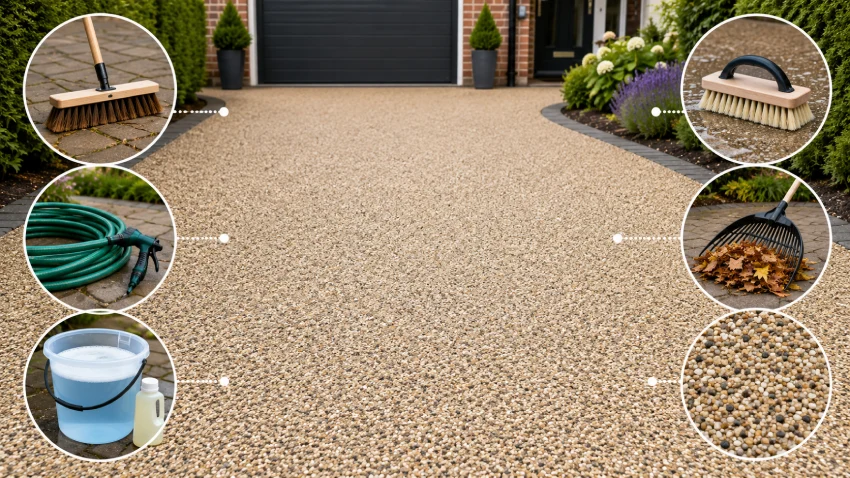
Resin driveways need a soft but structured cleaning method. The surface is strong, but the resin binder can suffer from aggressive cleaning. Use this section as the main cleaning map before choosing any product or tool.
A resin-bound driveway is not cleaned like plain concrete or block paving. It uses aggregate stones held together by resin, so the aim is to remove dirt without loosening the surface. For expert installation and surface support, visit Total Surfacing Solutions.
| Cleaning Issue | Best First Action | Safe Tool | Avoid |
| Loose dirt and leaves | Sweep thoroughly | Outdoor broom | Leaving wet debris |
| Moss and algae | Apply resin-safe biocide | Soft or stiff outdoor brush | Strong bleach |
| Oil and grease | Blot and absorb quickly | Baking soda or degreaser | Solvents |
| Tyre marks | Warm soapy wash | Brush and mild cleaner | Acid cleaners |
| Pressure washing | Use low controlled pressure | Flat fan nozzle | Turbo jet |
| Patchy cleaning | Clean full visible area | Even sweeping motion | Spot blasting |
Start With Routine Cleaning That Prevents Stains
Routine cleaning is the main difference between a fresh resin surface and a dull one. Most resin driveway problems begin with ignored leaves, mud, and traffic film. A simple schedule prevents bigger cleaning work later.
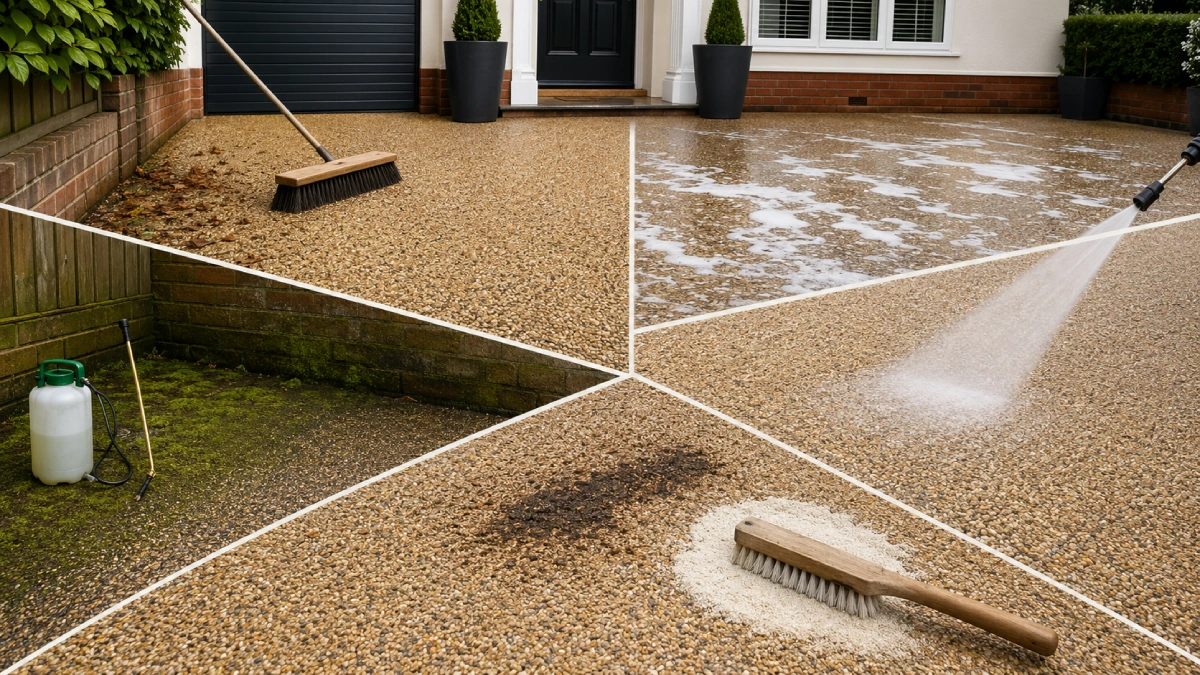
Start by sweeping the full driveway with a stiff outdoor broom. Remove leaves, twigs, soil, berries, and grit before water touches the surface. Wet debris can drag stains into the pores and encourage moss growth.
Use warm water with mild washing-up liquid for normal dirt. Spread it evenly across the surface and scrub lightly with a non-metal brush. Rinse fully with a garden hose so no slippery soap film remains.
Do not clean only the most visible dirty patch. That can leave one bright area beside older, duller resin. Clean the full driveway bay or the full visible section for an even finish.
A weekly sweep is enough for many homes. A monthly light wash is better for driveways under trees, near busy roads, or used by several cars. Seasonal deep cleaning works well before winter and after heavy leaf fall.
If your current resin surface is hard to maintain, it may be linked to installation, sub-base, or drainage quality. A proper resin driveway sub-base guide can help explain why some surfaces stay cleaner than others. Cleaning works best when the surface was built with the right base and drainage from the beginning.
Stop Moss and Algae Before It Turns Slippery
Moss and algae usually appear where moisture sits too long. Shaded corners, tree-covered driveways, and north-facing areas are common problem zones. Once the green layer becomes slippery, cleaning becomes a safety issue.
First, brush away loose moss and surface growth. Do this when the surface is dry enough for the moss to lift. Avoid metal scrapers because they can scratch or pull at the aggregate.
Apply a resin-safe moss and algae cleaner. Let it work for the recommended time on the product label. Then rinse gently with clean water and brush away dead residue.
Do not use strong bleach as your first choice. Some harsh mixes may fade, weaken, or stain resin-bound surfaces over time. A resin-safe biocide is a more controlled option for regular care.
If moss returns quickly, look at the cause, not only the symptom. Overhanging trees, blocked drainage, trapped leaves, and poor sunlight often feed the problem. Trim back shade where possible and keep edges clear after rain.
Permeability matters because blocked pores can make a resin driveway stay damp for longer. If you want to understand how drainage should work, read this permeable driveway surface concept. Good drainage makes moss control easier and helps the surface dry faster.
Remove Oil and Grease Before It Sinks In
Oil and grease stains need fast action. Resin surfaces can resist everyday dirt, but vehicle fluids should never be left sitting. The first few minutes matter more than heavy scrubbing later.
Blot the spill first with absorbent cloth or paper. Do not spread the oil across the driveway with water. Cover the mark with baking soda, cornstarch, sand, or cat litter to draw out the liquid.
Leave the absorbent material for at least thirty minutes. For heavier spills, leave it longer before sweeping it away. Then wash the remaining mark with mild detergent or a resin-safe degreaser.
Scrub gently with a brush and rinse properly. Repeat the process if a faint stain remains. Strong solvents, petrol-based cleaners, acetone, or paint thinners should not be used unless the product is clearly approved for resin surfaces.
Tyre marks are usually easier than oil stains. Hot tyres can leave marks after long drives, especially on lighter resin colours. Use warm soapy water first, then a resin-safe cleaner if the marks remain.
If stains keep returning after cleaning, the issue may be deeper than surface dirt. It may involve trapped contamination, surface wear, or poor drainage. In that case, a resin driveway evaluation guide can help homeowners decide whether cleaning, repair, or resurfacing is needed.
Pressure Wash Resin Without Surface Damage
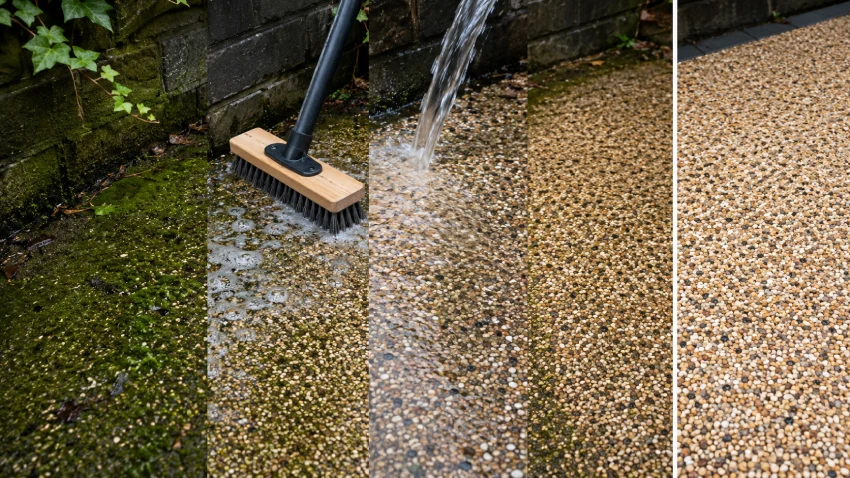
Pressure washing is useful, but it is also the easiest way to damage resin. The mistake is using the same force used on concrete. Resin needs controlled pressure, distance, and movement.
Use a flat fan nozzle, not a turbo nozzle. Keep the lance away from the surface and move in a steady sweeping motion. Do not hold the jet still over one mark.
Keep pressure low to moderate. Many resin maintenance guides advise staying below strong commercial pressure levels. For safe domestic cleaning, lower pressure is usually better than trying to blast dirt out.
Never pressure wash too close to edges, joints, cracks, drains, or loose areas. These points are more vulnerable than the centre of the driveway. Strong water can lift weak stones or widen small defects.
Clean the full driveway evenly. Spot pressure washing can create pale clean patches that stand out against the rest of the surface. If one section needs pressure washing, the surrounding visible area should usually be cleaned too.
Cold or moderate water is safer for most routine cleaning. Steam, extreme heat, and aggressive jet settings are unnecessary for normal resin driveway dirt. If pressure washing feels risky, call a surface professional through Total Surfacing Solutions.
Avoid These Cleaning Mistakes on Resin
Most resin driveway damage comes from impatient cleaning. The surface does not need extreme force to look fresh. It needs the right method applied at the right time.
Do not use wire brushes. Metal bristles can scratch the surface and disturb the stone finish. Use a stiff outdoor broom or non-metal brush instead.
Do not use acids, paint strippers, strong solvents, petrol, or acetone. These can react badly with the resin binder. They can also leave dull patches, stains, or weakened areas.
Do not blast one stain with a narrow pressure jet. This can create stripes, scars, and uneven cleaning marks. It can also dislodge aggregate if the surface is already worn.
Do not leave moss, algae, soap, or oil sitting after cleaning. Soap residue can become slippery, and oil can keep spreading beneath the surface. Rinse properly and let the driveway dry naturally.
Temporary paint or contractor markings should be handled carefully. If the marks are still needed for work, wait until the job is finished before removing them. For older coating questions on hard surfaces, this concrete driveway coating explanation gives helpful background.
Long-Term Care That Keeps Resin Looking Sharp
Long-term resin care is about prevention, not rescue work. A driveway that is swept often needs fewer chemicals and less pressure washing. Small habits protect both colour and permeability.
Keep leaves and berries off the surface. Wet organic matter can stain lighter aggregates and feed algae. This is especially important in autumn and after storms.
Avoid turning vehicle wheels while the car is stationary. Static wheel turning can stress the surface and leave marks. This matters more on hot days or after long journeys.
Use raised plant pots instead of placing heavy pots directly on resin. Trapped moisture beneath pots can create marks and discolouration. Use boards if heavy items must sit on the surface temporarily.
Check the driveway after winter and after heavy rain. Look for loose stones, slow drainage, dark algae patches, or oil marks near parked cars. Early cleaning is cheaper than later repair.
Use This Cleaning Schedule for Better Results
A clear schedule stops driveway care from becoming guesswork. Resin does not need daily washing, but it does need timely cleaning. Use frequency based on traffic, shade, trees, and stain risk.
| Timeframe | Cleaning Task | Why It Matters |
| Weekly | Sweep leaves, dirt, and debris | Stops moss and staining |
| Monthly | Hose and mild wash traffic areas | Removes film and dust |
| After spills | Blot and treat oil immediately | Prevents deep staining |
| Seasonally | Biocide check and full wash | Controls moss and algae |
| Yearly | Inspect drainage and surface wear | Finds early problems |
| Every few years | Consider professional refresh | Restores appearance |
A low-use driveway may only need light care. A shaded or tree-covered driveway needs more frequent sweeping. A multi-car household should treat oil, tyre marks, and dirt faster.
If you are still comparing surface options, check this driveway material selection factors resource before choosing purely on price. Cleaning needs should be part of the surface decision. A cheaper surface can cost more later if it stains or drains poorly.
For budget planning, this resin driveway planning guide can help connect maintenance with long-term value. Good resin installation should reduce heavy cleaning demand. Poor preparation often creates more maintenance problems later.
Related Resin and Driveway Guides
Some cleaning problems are connected to surface type, drainage, base strength, and traffic load. These related guides can support readers who need deeper context. Use them only where they match the reader’s next decision.
For paved areas, this paver cleaning process guide explains a different cleaning approach. Pavers often need joint care, while resin focuses more on surface pores and binder protection. This helps readers avoid mixing methods across surfaces.
For sealed paving, this driveway paver protection guide explains why sealing and resin care are not the same. Resin-bound surfaces should not be treated with random paving sealers. Use resin-specific advice for resin surfaces.
For commercial or heavy-use areas, cleaning may connect with load and traffic design. This guide on yard surface load planning is better for larger sites. It helps explain why domestic cleaning methods do not always suit commercial surfacing.
Base strength also affects long-term surface condition. This durable road base structure guide explains how lower layers support surface performance. For asphalt-related defects, this asphalt cracking risk factors guide covers a different surface problem.
How to Clean a Resin Driveway? Resin Driveways Area Coverage
Resin driveways are important for homeowners who want a clean, durable, and low-maintenance surface that can handle changing UK weather, daily vehicle use, and long-term kerb appeal expectations. Rain, frost, humidity, heat, dust, moss, oil stains, drainage pressure, and seasonal surface wear can all affect driveway performance, especially when older surfaces become harder to clean or maintain.
Resin Driveways in Bedfordshire
Bedfordshire properties often deal with regular rainfall, winter frost, shaded damp areas, and daily vehicle movement from family homes, village properties, and suburban driveways. Leaves, moss, tyre marks, and surface dirt can build up quickly when driveways are exposed to changing weather and repeated use. For homeowners who want a cleaner finish with easier maintenance and better kerb appeal, resin driveways in Bedfordshire can be a practical long-term surface option.
Resin Driveways in Cambridgeshire
Cambridgeshire driveways often need to manage flat ground conditions, rainwater movement, seasonal dampness, rural dust, and drainage challenges around village homes, new-build estates, and larger residential properties. When dirt, moss, or standing water keeps returning, the surface can become dull, slippery, or harder to maintain. For properties that need a stable, attractive, and easier-to-clean finish, resin driveways in Cambridgeshire can help improve both appearance and everyday usability.
Resin Driveways in Essex
Essex homes may face rain, summer heat, coastal air in some areas, tyre marks, surface dust, and strong kerb appeal expectations from commuter properties, family homes, rental homes, and coastal residences. Salt air, moisture, traffic film, and frequent vehicle use can make older driveways look faded, stained, or untidy over time. If the existing surface is becoming harder to clean or maintain, resin driveways in Essex can offer a cleaner and more durable upgrade.
Resin Driveways in Hertfordshire
Hertfordshire driveways are often expected to look smart, clean, and suitable for high-value commuter homes, family properties, and well-kept residential streets. Rain, frost, shaded entrances, moss growth, tyre marks, and regular parking can make old concrete, tarmac, block paving, or gravel look tired over time. For homeowners who want a decorative surface that supports kerb appeal while reducing cleaning pressure, resin driveways in Hertfordshire can be a strong local solution.
Resin Driveways in Oxford
Oxford properties include period homes, townhouses, modern driveways, student rentals, and visitor-heavy residential areas where driveway appearance can strongly affect first impressions. Rain, frost, humidity, shaded entrances, moss, oil marks, and frequent foot or vehicle traffic can make older surfaces slippery, stained, or uneven. For homeowners who want a finish that suits local property character while supporting safer cleaning and everyday maintenance, resin driveways in Oxford can be a reliable upgrade.
FAQs
Can I use washing-up liquid on resin?
Yes, mild washing-up liquid is suitable for routine cleaning when mixed with warm water. Use a soft or stiff outdoor brush depending on dirt level. Rinse fully so no slippery film remains.
Why does my resin driveway look patchy?
Patchiness often comes from spot cleaning, uneven pressure washing, trapped dirt, or older surface wear. Clean the full visible area instead of one small mark. If patches stay after drying, the surface may need professional assessment.
What removes green algae from resin?
A resin-safe biocide or algae remover is the best option. Brush loose growth first, apply the treatment, then rinse after the correct dwell time. Avoid strong bleach as a routine cleaning method.
Can pressure washing remove resin stones?
Yes, it can if the pressure is too high or the nozzle is too close. Use a flat fan nozzle and a sweeping motion. Avoid turbo jets, edges, cracks, and loose areas.
Should oil stains be washed away with water?
No, water can spread fresh oil across the surface. Blot first, then use an absorbent powder before washing. Finish with mild detergent or a resin-safe degreaser.
Conclusion
Cleaning a resin driveway is simple when the method stays controlled. Sweep first, wash with mild detergent, treat moss safely, remove oil quickly, and pressure wash with care. For installation, repair, or surface advice, contact Total Surfacing Solutions.