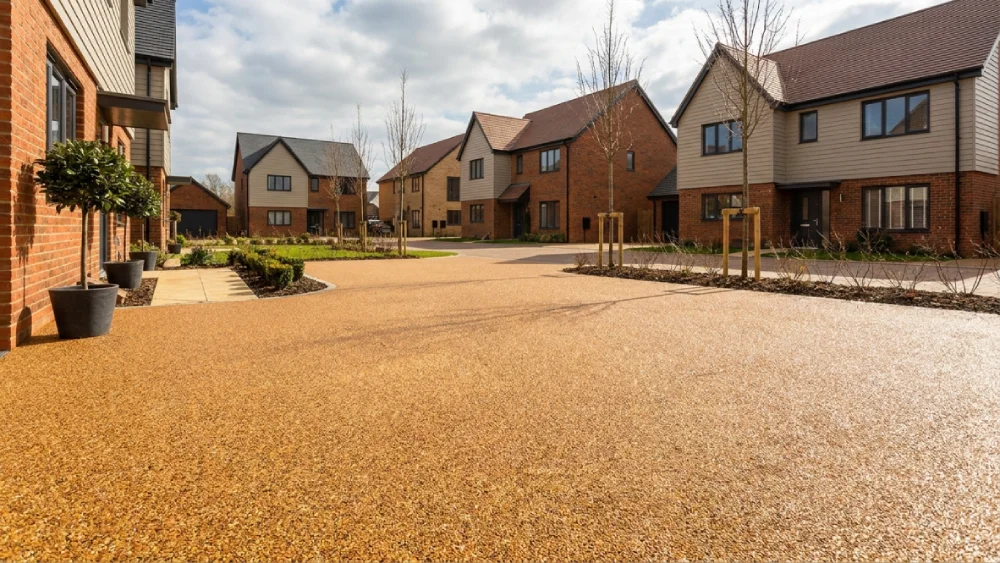
Resin Driveways for New Build Homes
New build driveways often look simple, but the ground below them can hide warranty risks, weak service trenches, poor drainage, and low-grade temporary surfacing. The serious step is to check the developer rules, drainage route, sub-base quality, DPC level, and access covers before any resin is installed. The experienced solution is a technically correct resin-bound system with a strong permeable base, clean edging, UV-stable resin, and installation timing that protects the finish.
Resin Driveways for New Build Homes
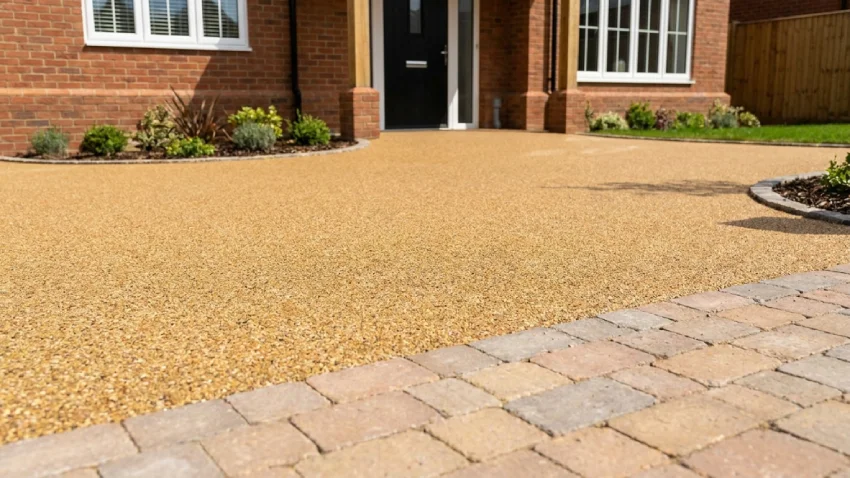
Resin Driveways for New Build Homes need more care than older driveway upgrades because the ground, services, drainage, and estate rules may still be settling. The right checks prevent cracks, damp issues, and disputes.
A resin driveway does not have the structural strength of the driveway. It is the wearing course, which means it depends heavily on the layers underneath. If the sub-base moves, the surface can crack, dip, or loosen.
New build homes often have service trenches for gas, water, electricity, drainage, and fibre broadband. If these trenches were poorly compacted, they can settle later and pull the resin surface down with them.
Before installation, check:
- Developer warranty terms
- Estate covenants
- Drainage direction
- Damp-proof course level
- Existing tarmac quality
- Service trench positions
- Manhole and access covers
- Vehicle weight and turning areas
A specialist such as Total Surfacing Solutions can help assess whether the existing driveway is suitable or whether full excavation and new base construction is safer.
For homeowners comparing Resin Driveways with block paving, concrete, gravel, or asphalt, the main advantage is the clean, modern look and permeability. The main risk is poor installation over the wrong base.
| New Build Risk | Why It Matters | Check Before Work |
| Service trench settlement | Causes cracks or dips | Locate services |
| Dense tarmac base | Traps water | Check permeability |
| DPC too close | Damp risk | Keep 150mm clearance |
| Estate rules | Legal issue | Check deeds |
| Cheap resin mix | Loose stones | Confirm resin ratio |
The strongest result comes from treating the driveway as a technical build, not a cosmetic surface.
Developer Warranties & Legal Pitfalls: Check First
Developer Warranties & Legal Pitfalls matter because changing external ground levels, drainage, or driveway appearance too early can create expensive disputes. New build owners should check paperwork before booking work.
Many new-build homes are covered by a structural warranty, often through NHBC or a similar provider. External ground and drainage changes can become sensitive if they redirect water toward the house.
If your resin driveway causes water to pool near brickwork, air bricks, thresholds, or the damp proof course, the developer may argue that the later driveway work caused the problem. That can weaken your position during warranty claims.
You should also check restrictive covenants. Some estates control the front exterior appearance for a set period. They may restrict driveway colours, materials, boundary changes, front gardens, dropped kerbs, or parking layouts.
Check these documents:
- Purchase contract
- Transfer deed
- Estate management rules
- NHBC or warranty booklet
- Planning conditions
- Developer handover pack
- Drainage drawings if available
- Service layout plans
Planning also matters. A permeable resin-bound system usually supports SuDS-style drainage, while impermeable driveway work may require consent if water cannot drain to a permeable area.
A correct resin bound surfacing specification can help reduce drainage risk because water can pass through the surface when the base is also permeable.
| Legal Check | What to Ask |
| Warranty | Will external ground changes affect cover? |
| Deeds | Are front driveway changes restricted? |
| Drainage | Where will rainwater go? |
| DPC | Will the finished level stay low enough? |
| Estate rules | Are colour or edging changes allowed? |
Do not rely on a verbal yes from a neighbour. Get the rules from your own documents and ask the developer or management company when the wording is unclear.
The Anatomy of a Perfect Resin Sub-Base: Build Right
The Anatomy of a Perfect Resin Sub-Base decides whether the surface drains, stays level, and survives vehicle use. A new build driveway should never be installed over weak, moving, or unknown ground.
A strong resin system usually follows a layered structure. The resin surface should sit over a stable, load-bearing, free-draining base. The exact design depends on soil, drainage, vehicle load, and existing ground.
A quality build-up may look like this:
| Layer | Typical Depth | Purpose |
| Resin-bound aggregate | 18mm to 20mm | Smooth decorative wearing course |
| Open-graded tarmac binder | 40mm to 50mm | Stable permeable binder layer |
| Type 3 granular sub-base | Around 150mm | Free-draining structural support |
| Geotextile membrane | As specified | Stops soil migration |
| Compacted subgrade | Site dependent | Foundation support |
Type 3 is often preferred for permeable driveway construction because it has reduced fines. Type 1 contains fine dust that can slow water movement. If drainage is the goal, the base must support permeability.
The biggest mistake is assuming resin can fix a poor base. If the developer laid thin, dense, impermeable tarmac, water may sit between the tarmac and resin. In winter, trapped water can freeze and loosen the surface.
A full-depth installation costs more than a quick overlay, but it protects the driveway from settlement, cracking, ponding, and premature failure.
Homeowners comparing driveway cost should look beyond the price per square metre. The real cost difference is often in excavation depth, sub-base design, tarmac binder, edging, drainage, and access cover work.
| Base Problem | Likely Failure |
| Loose stone under resin | Rutting and collapse |
| Dense tarmac with no drainage | Water trapping |
| Thin sub-base | Settlement cracks |
| Poor compaction | Dips and hollows |
| No membrane | Soil mixing and weeds |
A good installer will talk about the base before they talk about colour.
Technical Finishing Details: Avoid Weak Edges
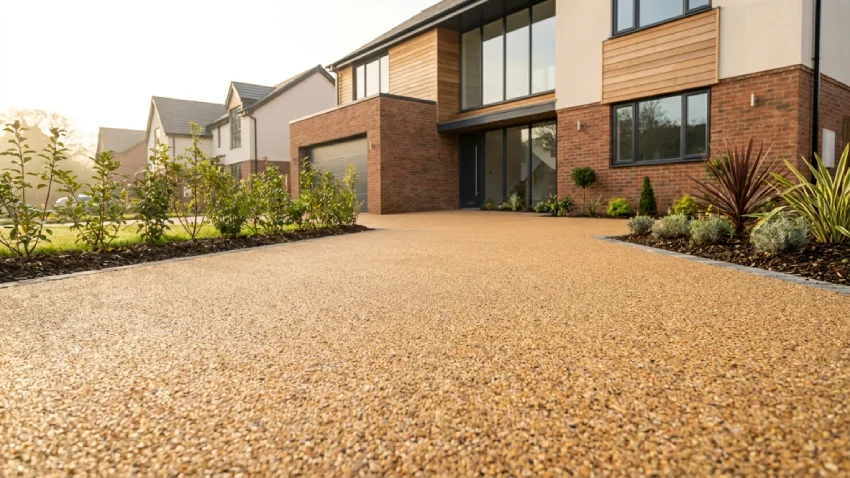
Technical Finishing Details make the difference between a driveway that looks fitted and one that looks added later. Edging, access covers, DPC levels, and thresholds must be planned before mixing resin.
Resin needs a solid edge to finish against. Without proper restraint, borders can fray, crack, or crumble under wheel movement. Block edging, concrete haunching, or heavy-duty aluminium edging may be used depending on the layout.
New builds often have multiple service covers. Standard metal covers can ruin the clean finish if left exposed. Recessed tray covers can be filled with the same resin mix, so the surface looks more integrated.
The damp proof course is critical. The finished driveway level should sit at least 150mm below the DPC unless a properly designed detail says otherwise. This helps reduce damp risk and protects your warranty position.
Technical items to specify:
- Block or aluminium edging
- Concrete-backed restraints
- Recessed tray covers
- DPC clearance
- Air brick clearance
- Correct falls
- No ponding near walls
- Clean threshold detail
- UV-stable resin
- Anti-slip texture where needed
If your home has a steep slope, a tight turning circle, or SUV parking, the surface design should account for wheel stress. Stationary wheel turning can mark light aggregates and stress weak edges.
For design planning, Modern Resin Driveway Designs can help homeowners visualise how colour, borders, curves, and house materials work together.
| Detail | Poor Finish | Better Finish |
| Edge | Loose, frayed border | Solid restraint |
| Covers | Visible metal lids | Recessed trays |
| DPC | Surface too high | 150mm clearance |
| Colour | Random match | House-led palette |
| Drainage | Water against the wall | Fall or permeable base |
The best resin driveway looks simple because the hard technical details were solved first.
Contractor Red Flags: Stop Costly Failures
Contractor Red Flags are easy to miss when a quote looks cheap. A weak resin installation may look good for a few weeks, then show loose stones, whitening, cracks, puddles, or dips.
The most serious warning is the “scrape and pour” approach. If someone removes only a shallow layer, throws down loose stone, and lays resin over it, the driveway is likely to fail quickly.
Ask the contractor direct questions. What base depth is included? Is the resin UV stable? What temperature will they stop laying at? What aggregate-to-resin ratio do they use? How will access covers be finished?
Watch for these red flags:
- No written specification
- No base-depth detail
- No drainage plan
- No DPC check
- No weather restrictions
- No mention of UV resin
- Cash-only pressure
- Same-day quote pressure
- No edge restraint
- No warranty clarity
Resin should not be laid in damp, wet, or unsuitable cold conditions. Moisture can react badly with resin and cause foaming, whitening, cloudiness, or bonding failure.
A quality mix also matters. Too little resin can cause stone shedding, known as ravelling. Cheap resin can also discolour, especially where non-UV material is used on visible front driveways.
Homeowners comparing the Best Resin Driveways should focus on technical installation, not only the final colour sample.
| Question to Ask | Good Sign |
| What base is included? | Clear layer depths |
| Is resin UV stable? | Yes, specified |
| What about drainage? | SuDS-aware answer |
| How are covers handled? | Recessed tray plan |
| What weather stops work? | Clear limits |
A serious contractor will not be offended by technical questions. They will expect them.
Colour and Daily Use: Choose Carefully
Colour and Daily Use matter because new build driveways often sit close to the front door, windows, garage, and pavement. The wrong aggregate can show tyre marks, fading, weeds, and stains faster.
Light aggregates look clean and modern, but they can show black tyre marks where cars turn tightly. This is common on short driveways where wheels turn while the vehicle is stationary.
Grey, silver, buff, and mixed natural tones often work well with modern brick, render, black windows, and anthracite garage doors. Strong contrast borders can make the driveway look planned rather than plain.
Use UV-stable resin for visible front driveways. Non-UV resin may yellow or alter the colour appearance over time. This is especially noticeable with pale grey, cream, or light stone blends.
For colour selection, Best Resin Driveway Colours can help match the surface with brickwork, rooflines, doors, and window frames.
| Home Feature | Colour Direction |
| Grey brick | Silver, graphite, cool grey |
| Red brick | Golden, bronze, warm natural |
| White render | Soft grey or mixed stone |
| Black frames | Charcoal border detail |
| Tight parking | Avoid very pale blends |
Daily use should guide the final choice. Think about tyre marks, bin access, delivery vans, drainage, shade, cleaning access, and future resale appeal.
Area Coverage for Resin Driveways for New Build Homes
Resin Driveways for New Build Homes need local knowledge because soil type, estate layouts, drainage rules, and driveway sizes can vary across counties. Each area needs careful sub-base and finishing decisions.
Resin Coated Driveways In Bedfordshire
Bedfordshire new build estates often include compact front plots, shared access points, service trenches, and short driveways near the house wall. These details make base preparation and drainage more important than the colour choice.
For resin bound driveways bedfordshire, the first check should be the existing base. If the developer tarmac is dense, thin, or already showing dips, an overlay may be risky. A proper survey should check falls, DPC height, access covers, kerb edges, and service runs.
Bedfordshire homeowners should also check estate covenants before changing the front appearance. A resin driveway can look modern and clean, but legal permission and drainage details must come first.
Resin Coated Driveways In Cambridgeshire
Cambridgeshire properties can include clay-influenced ground, flat driveway layouts, and new estates where surface water needs careful control. A resin driveway works best when the whole system is designed to drain, not only the top surface.
For resin bound driveways cambridgeshire, the sub-base must be specified properly. Type 3 granular stone, geotextile membrane, open-graded binder, and correct falls may all be needed depending on the site.
Homeowners should also ask how the installer will handle service covers and edge restraints. On modern estates, small finishing details can decide whether the driveway looks premium or patched in later.
Resin Coated Driveways In Essex
Essex new build homes often have tight parking arrangements, garage-front driveways, shared boundaries, and front elevations where kerb appeal matters. A resin finish can work very well, but only when it suits daily vehicle movement.
For resin bound driveways essex, tyre movement should be discussed early. Short driveways with frequent turning should avoid ultra-light aggregate blends because rubber marks may show quickly.
A professional survey should check driveway width, vehicle weight, boundary details, drainage route, and whether the current surface is suitable for overlay. Essex homes with SUVs, vans, or multiple cars need a stronger technical specification than a light-use decorative path.
Resin Coated Driveways In Hertfordshire
Hertfordshire new build driveways may look finished at handover but still hide weak compaction, trench settlement, or early surface defects. Resin should not be used to cover structural problems without fixing them.
Where existing access routes or driveway edges are damaged, pothole repairs in hertfordshire may be relevant before final surfacing decisions. Any unstable area under the resin can create cracking, dipping, or loose aggregate.
Hertfordshire homeowners should also check DPC clearance carefully. If the developer driveway already sits close to the house threshold, adding resin over the top could raise the finished level too high.
Resin Coated Driveways In Oxford
Oxford new build homes often place strong importance on appearance, planning sensitivity, and clean frontage design. A resin driveway can match modern developments well when colour, edging, drainage, and access covers are handled properly.
Homeowners in Oxford should check covenants, management company rules, and any planning conditions before changing the front driveway. This is especially important where estates control materials, parking layouts, front gardens, or boundary treatments.
A good Oxford resin driveway should look integrated with the property. That means colour should match the brick, render, roof, windows, and landscaping. Edges should be crisp, covers should be recessed, and drainage should move water safely away from the home.
Maintenance and Long-Term Value: Protect Finish
Maintenance and Long-Term Value depend on how the driveway is built and how it is cared for. Resin can last well, but poor cleaning, wrong base design, and weak edging shorten its life.
A resin driveway should be swept regularly and washed when dirt builds up. Oil, tyre marks, moss, and organic debris should be handled early before they become harder to remove.
For ongoing care, clean driveway advice helps homeowners understand washing, stain removal, and safe pressure cleaning. Aggressive cleaning can damage the finish if done incorrectly.
Homeowners also ask how long driveways last. The answer depends heavily on sub-base strength, resin quality, UV stability, drainage, traffic load, and maintenance.
A reliable contractor such as Total Surfacing Solutions can help plan both the installation and the long-term care expectations. This is useful when comparing quotes because the cheapest job may leave out key base and finishing details.
| Maintenance Task | Why It Helps |
| Sweep loose debris | Reduces organic staining |
| Wash tyre marks early | Prevents stubborn marks |
| Keep drains clear | Stops pooling |
| Avoid harsh chemicals | Protects resin |
| Check edges | Finds early movement |
| Clean oil quickly | Reduces staining risk |
If weeds appear, the issue may be seed growth on the surface or poor base preparation. A guide on weeds on driveway can help separate surface growth from structural failure.
For drainage confidence, permeable driveways guidance is useful. Resin-bound systems need a permeable base to perform properly.
Frequently Asked Questions: New Build Resin Driveways
1. Can I install resin on a new build driveway straight away?
You can, but it is safer to check developer warranty terms, estate covenants, DPC level, drainage, and service trench settlement first. Some new build bases need time, repair, or full replacement.
2. Can resin be laid over developer tarmac?
Only if the tarmac is stable, clean, suitable, and preferably open-graded for drainage. Dense, weak, cracked, or impermeable tarmac can trap water and cause resin failure later.
3. Do resin driveways need planning permission?
Permeable resin-bound driveways usually avoid planning issues when water drains naturally. If the surface is impermeable and over 5m², permission may be needed unless water drains to a permeable area.
4. What is the best base for a new build resin driveway?
A strong permeable base usually includes compacted subgrade, geotextile membrane, Type 3 granular sub-base, open-graded tarmac binder, and an 18mm to 20mm resin bound surface.
5. Why do resin driveways fail on new builds?
Common causes include poor trench compaction, thin sub-base, dense tarmac overlay, bad drainage, no edge restraint, low resin content, damp installation, and finished levels too close to the DPC.