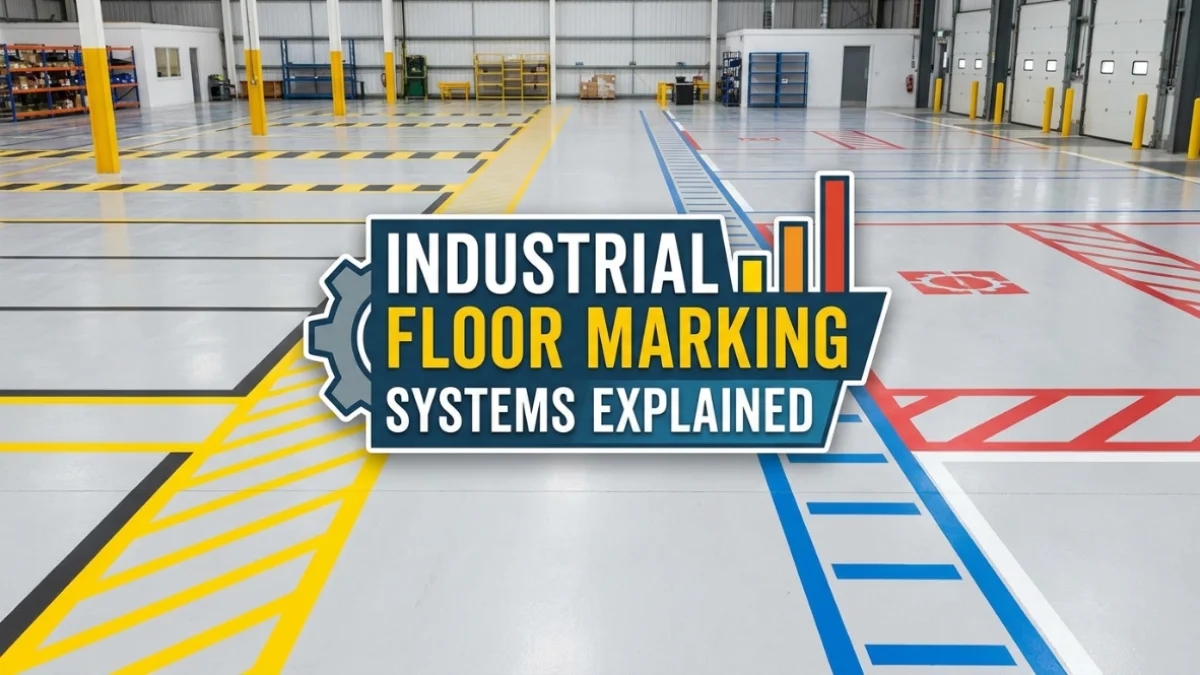
Industrial Floor Marking Systems Explained
Industrial sites become harder to manage when people, vehicles, equipment, storage, hazards, and restricted areas share the same space without clear visual control. The serious action is to build a marking system that gives workers quick instructions without slowing operations. The experienced solution is to combine Floor Marking Systems, practical color coding strategies, and strong Installation & Durability Factors so every route, zone, and hazard is easy to read.
Quick clue: a good floor marking system shows where to walk, drive, store, stop, load, avoid, and keep clear.
Industrial Floor Marking Systems Explained
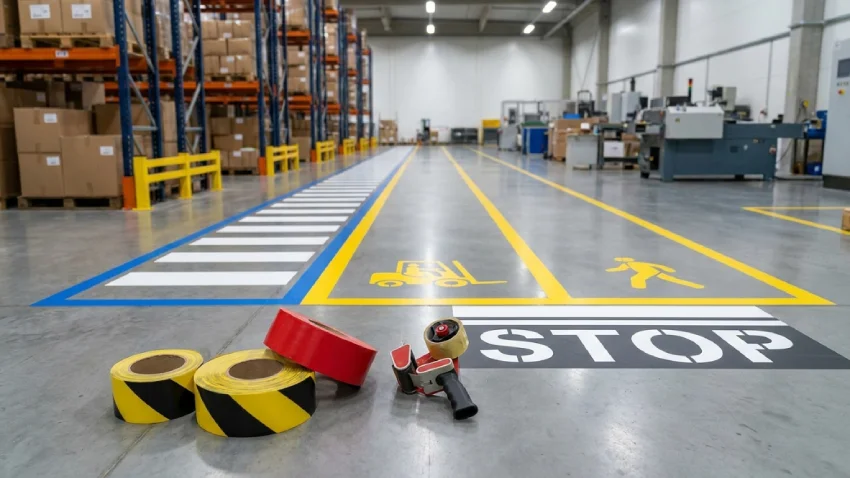
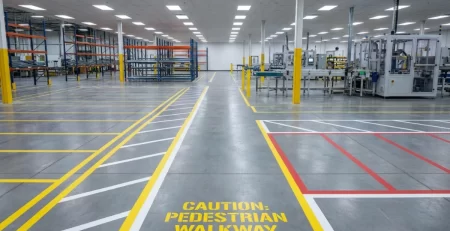
Industrial Floor Marking Systems Explained starts with understanding that floor markings are not just lines. They are a visual control system that helps workers, drivers, supervisors, visitors, and contractors move safely through busy sites.
In warehouses, factories, loading yards, workshops, and production areas, people make quick decisions every minute. They need to know where forklifts travel, where pedestrians walk, where stock belongs, and where danger begins. Clear markings reduce guesswork.
A strong industrial floor marking system can show:
- Pedestrian walkways
- Forklift lanes
- Storage bays
- Hazard zones
- Restricted areas
- Loading bays
- Fire exit keep-clear spaces
- Machine safety zones
- Crossing points
- Directional arrows
A contractor such as Total Surfacing Solutions can help create a marking plan around real site movement. The strongest systems are based on how people, vehicles, stock, and equipment move during normal working hours.
| Site Problem | Marking System Role | Operational Result |
| Mixed traffic | Separates people and vehicles | Fewer close calls |
| Poor storage control | Defines bays and limits | Cleaner workflow |
| Hidden danger points | Mark’s hazard zones | Faster awareness |
| Blocked access | Shows keep-clear areas | Safer response |
| Confusing routes | Adds arrows and lines | Less delay |
The goal is not to fill the floor with paint. The goal is to make the right action obvious before a mistake happens.
Floor Marking Systems: What They Include
Floor Marking Systems include lines, colours, symbols, arrows, letters, zones, and surface preparation. This section explains the main parts of a complete industrial marking layout.
A simple line can guide movement. A full system can control traffic, storage, safety, maintenance access, and emergency routes. That is why industrial markings should be planned as one connected layout, not as separate small jobs.
Key components may include:
- Aisle lines
- Walkway markings
- Forklift routes
- Pallet storage zones
- Loading bay boundaries
- Machine exclusion zones
- Emergency access markings
- Stop and give-way points
- No-parking zones
- Floor signs and arrows
Clear industrial floor marking helps teams make site rules visible. It also supports new-starter training because workers can understand the layout faster.
A good system should answer practical questions:
| Question | Marking Answer |
| Where should people walk? | Pedestrian routes |
| Where do forklifts move? | Vehicle lanes |
| Where should pallets sit? | Storage bays |
| Where is danger? | Hazard zones |
| What must be clear? | Keep-clear boxes |
Industrial markings should also match the site’s risk assessment. A low-traffic storage room does not need the same marking density as a busy loading bay with forklifts and pedestrians.
A good system feels natural to follow. If workers constantly ignore the markings, the layout may not match the real workflow.
Colour Coding Strategies: Faster Decisions
Colour coding strategies help workers understand floor instructions quickly. This section explains how consistent colours can support safety, workflow, storage control, and hazard recognition.
Colour is useful because people can understand it fast. A worker can recognise a restricted zone, walkway, storage area, or hazard boundary without stopping to read a sign every time. This matters in noisy or fast-moving industrial spaces.
The most effective colour systems are simple. Too many colours can confuse workers. A small, consistent palette is easier to train, remember, and maintain.
Common colour uses may include:
- Yellow: walkways, caution routes, traffic lanes
- Red: danger zones, fire equipment, restricted areas
- Green: safety routes, first aid, emergency access
- Blue: equipment zones or information areas
- White: general boundaries or storage bays
- Black/yellow: high-risk hazard boundaries
Clear hazard zone markings in industrial facilities are especially useful where risk changes quickly. Loading edges, machine areas, forklift crossings, battery charging zones, and maintenance zones should be obvious.
| Colour | Typical Use | Worker Message |
| Yellow | Routes and caution | Move carefully |
| Red | Danger or restriction | Do not enter |
| Green | Safety access | Safe route |
| White | Storage or boundary | Keep organised |
| Black/yellow | High-risk edge | Stay alert |
The colour system should be explained during training and applied consistently across the site. If yellow means a pedestrian walkway in one area, it should not mean waste storage in another.
Good colour coding makes the floor easier to read, even for visitors and temporary staff.
Installation & Durability Factors: Long-Life Lines
Installation & Durability Factors decide whether markings stay clear or fail quickly. This section explains the practical details that affect line life in industrial environments.
Industrial floors undergo constant wear. Forklifts turn, pallets scrape, tyres mark surfaces, spills happen, and cleaning machines pass over the same routes daily. Markings need the right preparation and material choice.
Durability depends on:
- Surface cleanliness
- Floor material
- Moisture level
- Oil or grease contamination
- Traffic volume
- Forklift turning points
- Cleaning method
- Paint or tape type
- Curing time
- Line thickness and finish
A dusty or oily floor will weaken adhesion. A cracked or uneven surface may break the line. A high-traffic forklift lane may need stronger material than a low-use storage boundary.
| Factor | Why It Matters | Best Practice |
| Dust | Reduces bonding | Clean before marking |
| Oil | Causes peeling | Degrease properly |
| Moisture | Weakens finish | Dry the surface |
| Forklift traffic | Wears lines fast | Use a durable coating |
| Curing time | Protects finish | Allow full set time |
A durable system starts before the line is applied. Surface preparation, layout measurement, material selection, and drying time all affect the final result.
For industrial sites, short-term, cheap markings can become expensive if they need constant repainting. A stronger installation usually gives better long-term value.
Traffic and Route Control: Safer Movement
Traffic and route control help people and vehicles move without confusion. This section explains how markings guide forklifts, pedestrians, delivery vehicles, and loading activity.
Industrial traffic becomes risky when people and vehicles share space without clear control. Markings help divide movement into predictable routes. They also reduce sudden crossings, blocked aisles, and unsafe shortcuts.
Useful traffic markings include:
- Forklift lanes
- Pedestrian walkways
- Crossing points
- Stop lines
- Directional arrows
- One-way routes
- Loading bay approach lines
- Vehicle parking bays
- No-walk zones
Clear forklift lane markings are important wherever powered vehicles operate near people. They show drivers where to move and show pedestrians where vehicle risk is highest.
Line marking can also help prevent warehouse accidents by separating routes, controlling crossings, and making high-risk zones visible.
| Traffic Area | Marking Needed | Purpose |
| Main aisle | Route lines | Control movement |
| Junction | Stop or give-way | Reduce collision risk |
| Pedestrian path | Walkway lines | Protect foot traffic |
| Loading bay | Boundary markings | Control vehicles |
| Blind corner | Warning zone | Slow movement |
Traffic markings should match real movement. If a route is too awkward, workers may ignore it. A practical layout is safer because it fits how the site actually operates.
Hazard and Storage Zones: Visual Boundaries
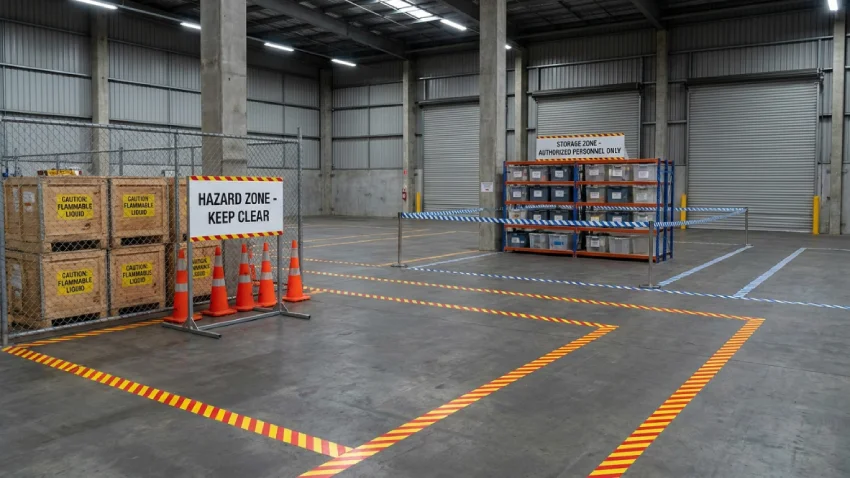
Hazard and storage zones need clear boundaries so workers know where materials belong and where danger begins. This section explains how visual zones reduce clutter and risk.
Poor storage control is a common cause of blocked routes, damaged stock, and unsafe movement. Marked bays make it obvious where pallets, bins, tools, waste, and equipment should go.
Hazard zones should be even clearer. These may include machine areas, chemical stores, charging points, loading edges, maintenance zones, or fire equipment access points.
Important zones to mark include:
- Raw material bays
- Finished goods areas
- Waste collection points
- Battery charging zones
- Machine exclusion zones
- Fire access zones
- Restricted areas
- Inspection areas
- Pallet stacking limits
Clear health & safety line marking supports this by making safe routes, restricted areas, and emergency access visible during every shift.
| Zone Type | Marking Purpose | Site Benefit |
| Storage bay | Controls placement | Less clutter |
| Machine zone | Keeps distance | Reduced contact risk |
| Fire access | Keeps clear | Faster response |
| Charging area | Controls entry | Lower exposure risk |
| Waste area | Separates materials | Cleaner workflow |
A marked zone is easier to manage. If materials are outside the line, supervisors can act quickly. That makes floor markings useful for daily control, not only safety audits.
Surface and Yard Support: Stronger Markings
Surface and yard support matters because markings only work when the base is clean, safe, and stable. This section connects internal line marking with external surfacing and repair needs.
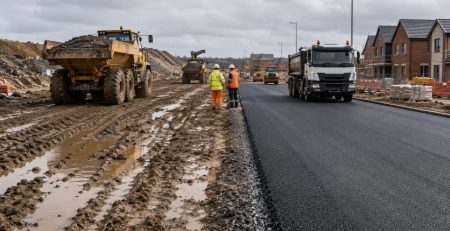
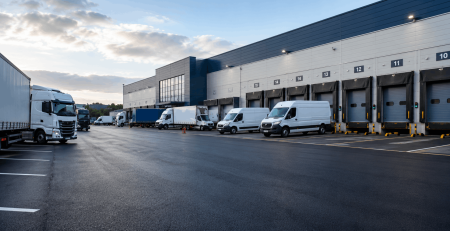
Industrial sites often include loading yards, service roads, forklift routes, delivery bays, and external storage areas. If those surfaces are cracked, potholed, or uneven, vehicle movement becomes harder and markings wear faster.
Where yards or access routes need improvement, tarmac installation services may support smoother vehicle movement. For larger commercial routes, machine lay tarmac services can create a stronger surface for repeated use.
Damaged routes should be repaired before marking if potholes affect movement. pothole repair services help reduce vehicle instability, water pooling, and trip risks.
Local sites may also need area-specific support. machine lay tarmac and pothole repairs in essex can support Essex operations, while machine lay tarmac in hertfordshire and pothole repairs in hertfordshire can support Hertfordshire industrial sites.
| Surface Issue | Marking Problem | Better Action |
| Potholes | Broken traffic flow | Repair before marking |
| Dusty surface | Poor adhesion | Clean thoroughly |
| Oil contamination | Peeling lines | Degrease |
| Cracked floor | Uneven marking | Repair first |
| Water pooling | Line wear and slip risk | Fix drainage |
A strong surface protects the marking investment. It also helps people and vehicles move with more confidence.
Inspection and Updates: Keep Systems Working
Inspection and updates keep industrial floor marking systems accurate after installation. This section explains how to maintain visibility, safety, and operational value over time.
Industrial layouts change. New racking arrives, machines move, traffic increases, storage needs change, and near-miss reports reveal weak points. Marking systems should change with the site.
Inspect markings for:
- Fading
- Peeling
- Blocked routes
- Dirty lines
- Outdated layouts
- Hidden hazard markings
- Unclear colour use
- Worn forklift routes
- Changed storage needs
A contractor such as Total Surfacing Solutions can help refresh systems when markings fade or operations change. This keeps the layout useful rather than decorative.
A simple inspection plan:
| Frequency | What to Check |
| Weekly | Blocked routes and storage zones |
| Monthly | Faded lines and dirty markings |
| Quarterly | Traffic flow and near misses |
| After layout changes | Route and zone updates |
| After resurfacing | Full marking review |
Markings should always reflect the current site. Old lines that no longer match the workflow can create confusion. Removing or replacing outdated markings is as important as adding new ones.
For long-term support, Total Surfacing Solutions can help connect surfacing quality, marking durability, and layout planning into one practical system.
Frequently Asked Questions: Industrial Floor Marking
1. What is an industrial floor marking system?
An industrial floor marking system uses lines, colours, arrows, zones, and symbols to guide movement, define storage areas, identify hazards, separate traffic, and keep emergency routes clear.
2. What colours are used for industrial floor markings?
Colours should be consistent across the site. Yellow is often used for walkways or caution routes, red for danger or restricted areas, green for safety access, and black-yellow for high-risk boundaries.
3. How long do industrial floor markings last?
The lifespan depends on surface preparation, traffic volume, forklift use, cleaning methods, material type, and curing time. High-traffic areas usually need inspection and refreshing sooner than low-use zones.
4. Should floor markings be painted or taped?
Paint is often preferred for long-term industrial use, while tape can suit temporary changes or fast layout updates. The right choice depends on traffic, surface condition, budget, and how often the layout changes.
5. When should industrial floor markings be updated?
Update markings when they fade, peel, become hidden, no longer match the layout, or after racking, machinery, traffic routes, loading areas, or safety rules change.