The Driveway as Part of Your Home Design
A driveway is often treated as a practical surface first and a design feature second, yet it has a major influence on how a property looks, feels, and functions. For many UK homes, the driveway is one of the first parts of the property people see from the road. It frames the entrance, guides movement, supports daily parking needs, and contributes to the overall character of the frontage.
Good driveway home design is not simply about choosing a surface that looks attractive. It involves considering how the driveway connects with the house, garden, boundary features, drainage, lighting, pedestrian access, and long-term maintenance. A well-planned driveway should feel like a natural part of the property rather than an afterthought added for convenience.
This is especially important where homeowners are improving kerb appeal, renovating an older property, or planning a new driveway as part of wider landscaping works. The right surface, layout, and finish can make the front of a home look more organised, more welcoming, and easier to use throughout the year.
Connecting the Driveway with the Style of the Property
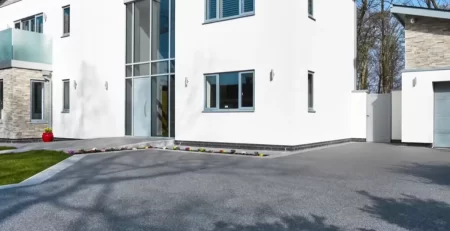
Every home has its own architectural character, and the driveway should support that character rather than compete with it. A modern detached home may suit a clean, uniform surface with sharp edges and a simple layout, while a period property may benefit from a softer finish that blends more naturally with brickwork, stone walls, planting, or traditional boundary details.
The colour and texture of the driveway are particularly important. Darker surfaces can create a neat, defined appearance and often work well with contemporary homes, rendered walls, and modern landscaping. Lighter or more textured finishes may soften the appearance of larger driveway areas, especially where the frontage includes lawns, hedges, or natural planting.
Surface choice also affects how large or small the driveway feels. A plain, uninterrupted surface can make a compact frontage appear cleaner and more spacious, while carefully defined borders can help break up larger areas so they do not look stark. Homeowners considering a more decorative finish may find that resin driveways offer a smooth, attractive option that can be tailored to suit different property styles.
Balancing Appearance with Everyday Use
A driveway must look right, but it must also work properly for daily life. The best driveway home design balances appearance with practical requirements such as parking space, turning room, pedestrian routes, bin access, delivery access, and visibility when entering or leaving the property.
For a single-car household, a simple driveway layout may be enough. For larger households, shared homes, or properties with visitors, the design may need to allow several vehicles to park without blocking each other in. In these situations, the driveway should be planned around realistic use rather than just the minimum available space.
Access to the front door also matters. A driveway that forces people to walk behind parked vehicles, cross uneven surfaces, or step through planting beds can quickly become inconvenient. A clear pedestrian route helps make the property feel more welcoming and safer, especially in wet or dark conditions.
The position of gates, dropped kerbs, garages, and side entrances should also be considered before choosing a final layout. Small design decisions at the planning stage can make a significant difference to how comfortable and practical the driveway feels once it is in daily use.
Choosing the Right Driveway Surface
The surface material plays a central role in the appearance and performance of the driveway. In the UK, driveways must cope with rain, frost, vehicle weight, temperature changes, and regular use. A surface that looks good on installation day should also be suitable for long-term use in local conditions.
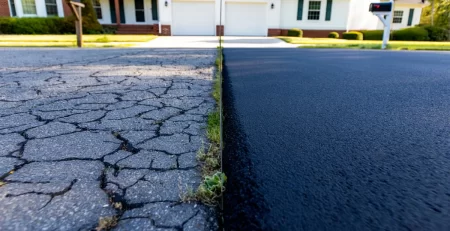
Tarmac remains a popular choice for many domestic driveways because it provides a smooth, strong, and practical finish. It is especially suitable where homeowners want a clean appearance, reliable vehicle access, and a surface that can handle regular traffic. Professional tarmac installation is important because the preparation, sub-base, levels, and compaction all affect how well the driveway performs over time.
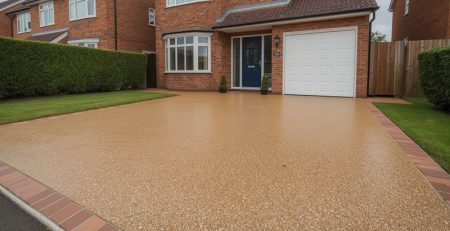
Resin-bound surfacing is often chosen where appearance is a priority. It can create a refined finish with natural aggregate tones, making it suitable for homes where the driveway forms a major part of the frontage. Block paving can also provide a decorative look, although it usually requires careful maintenance to manage movement, weeds, and jointing over time.
There is no single best surface for every property. The right choice depends on the size of the driveway, the style of the home, drainage needs, budget, expected traffic, and the level of maintenance the homeowner is comfortable with.
The Role of Edging, Borders, and Transitions
A driveway does not exist in isolation. It meets lawns, paths, flower beds, walls, kerbs, garages, and public footpaths. The way these transitions are handled has a strong effect on the final appearance.
Edging helps give the driveway definition. It can create a neat boundary between the surface and surrounding landscaping, reducing the risk of loose edges or an unfinished appearance. Borders can also introduce contrast, especially where the main driveway surface is simple and understated.
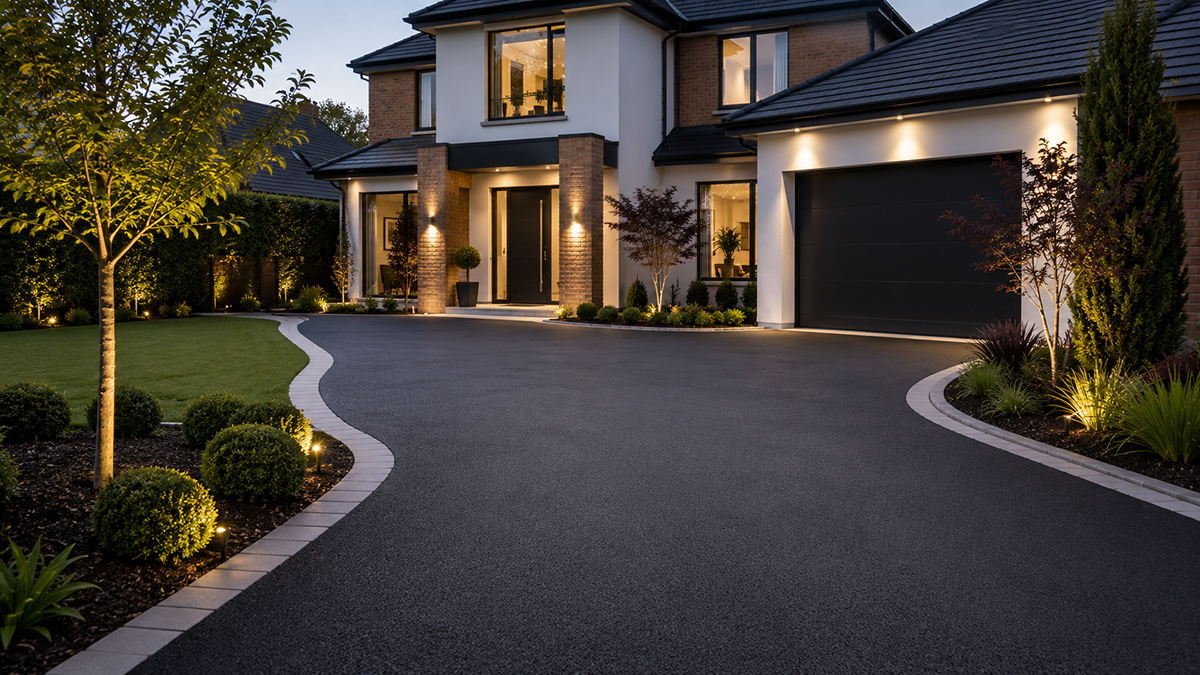
For example, a tarmac driveway can be softened with a block border, while a resin driveway can be framed with edging that complements the colour of the house or garden features. These details may seem minor, but they help the driveway feel designed rather than simply installed.
Transitions are also important for safety and usability. The level between the driveway and front path should be comfortable to walk across, and the entrance from the road should be smooth enough for vehicles to pass over without difficulty. Where a driveway meets a garage, the surface should be finished carefully so that water does not collect near doors or thresholds.
Drainage and Driveway Design
Drainage is one of the most important parts of driveway home design, particularly in the UK climate. A driveway that does not manage water properly can lead to puddles, staining, surface damage, slippery areas, and water flowing towards the house or neighbouring properties.
Good drainage begins with levels. The driveway should be designed so water falls away from the property and towards suitable drainage points. This may involve subtle gradients that are not immediately obvious to the eye but make a major difference during heavy rain.
Drainage channels, soakaway systems, permeable surfaces, and careful edge detailing may all play a role depending on the property. The right approach depends on the size of the driveway, local ground conditions, existing drainage, and whether the surface is being replaced or installed as part of a new layout.
A visually attractive driveway can still perform poorly if drainage has not been considered properly. This is why experienced domestic surfacing contractors look at both the surface finish and the underlying structure before recommending a design.
How Driveways Affect Kerb Appeal
Kerb appeal is about the impression a property makes from the outside. The driveway is a large visual element, so its condition and design have a direct effect on how the home is perceived. A cracked, uneven, stained, or poorly laid surface can make an otherwise well-maintained property look tired. A neat, well-designed driveway can make the whole frontage feel more cared for.
This matters for homeowners who take pride in their property, but it is also relevant when preparing a home for sale or rental. Buyers and tenants often form an early impression before stepping through the front door. A smart driveway suggests that the property has been looked after and that practical details have been considered.
Kerb appeal does not require an overly decorative design. In many cases, simple, clean surfacing with good edges, sensible levels, and tidy transitions is more effective than a complicated layout. The aim should be to create a driveway that complements the home and feels appropriate for the setting.
Driveway Design for Different Property Types
Different properties need different driveway solutions. A suburban family home may need a durable surface for several vehicles, pushchairs, bikes, and regular foot traffic. A rural home may need a driveway that handles longer access routes, changing ground conditions, and a more natural setting. A townhouse or compact urban property may need to make the most of limited frontage while still looking organised.
For larger homes or properties with long private drives, durability becomes especially important. The surface may need to cope with regular vehicles, delivery vans, maintenance access, and seasonal weather changes. In these cases, the driveway design should consider both the entrance area and the full access route, not just the space immediately in front of the house.
For smaller homes, the design challenge is often about maximising usable space without making the frontage feel dominated by hard surfacing. Planting, edging, and careful layout can help keep the front of the property balanced while still providing practical parking.
Maintenance as Part of the Design Decision
Maintenance should be considered before a driveway surface is chosen. Some materials require more regular cleaning, weed control, joint maintenance, or repair than others. A surface that looks attractive but is difficult to maintain may not be the best choice for a busy household.
Tarmac is valued for its straightforward maintenance and practical finish. Resin-bound surfaces can also remain attractive with routine care, especially when installed correctly and kept clear of debris. Block paving can look very effective, but the joints may need more attention over time.
The surrounding environment also affects maintenance. Driveways beneath trees may collect leaves, sap, and organic matter. North-facing driveways may stay damp for longer. Properties in rural areas may bring more mud and debris onto the surface. These factors should influence the design and material choice from the beginning.
When maintenance is considered early, the finished driveway is more likely to remain attractive and functional without creating unnecessary work for the homeowner.
Professional Installation and Long-Term Results
The quality of installation is just as important as the design itself. A driveway may look simple from the surface, but its long-term performance depends on excavation, sub-base preparation, compaction, drainage, edging, and the correct laying method for the chosen material.
Poor preparation can lead to settlement, cracking, water retention, and early surface failure. These issues often become visible months or years after installation, when repairs can be more disruptive and costly. Professional installation reduces these risks by ensuring that the driveway is built for the property, the expected use, and the local conditions.
For homeowners planning a new driveway or replacing an existing one, working with experienced contractors helps ensure that appearance and performance are considered together. Reviewing previous work through case studies can also help property owners understand the type of finish and workmanship they should expect.
Bringing the Driveway into the Wider Home Design
A well-designed driveway should feel connected to the rest of the property. It should support the architecture, improve access, manage water properly, and create a strong first impression without overwhelming the frontage.
This means thinking beyond the surface alone. The best results come from considering the driveway alongside garden layout, paths, lighting, walls, fencing, planting, garage access, and the way people move around the property. When these elements work together, the driveway becomes part of the home design rather than just a place to park.
For UK homeowners, this approach is particularly valuable because driveways need to perform in a wide range of weather conditions while still contributing to the look and value of the property. Good driveway home design combines practical planning with visual restraint, creating a surface that looks right, works well, and lasts.