What Is Stone Mastic Asphalt (SMA) and Where Is It Used?
Stone Mastic Asphalt, commonly abbreviated to SMA, is a durable asphalt surfacing material designed to cope with demanding traffic conditions while providing a strong, stable and consistent finished surface. It is widely associated with highways, heavily trafficked roads, commercial access routes and other areas where the surface needs to withstand regular vehicle movements.
For property owners, developers and commercial site managers, understanding the difference between surfacing materials can make it easier to specify a suitable solution for a project. SMA is particularly relevant where durability, resistance to deformation and dependable long-term performance are important.
What Is Stone Mastic Asphalt?
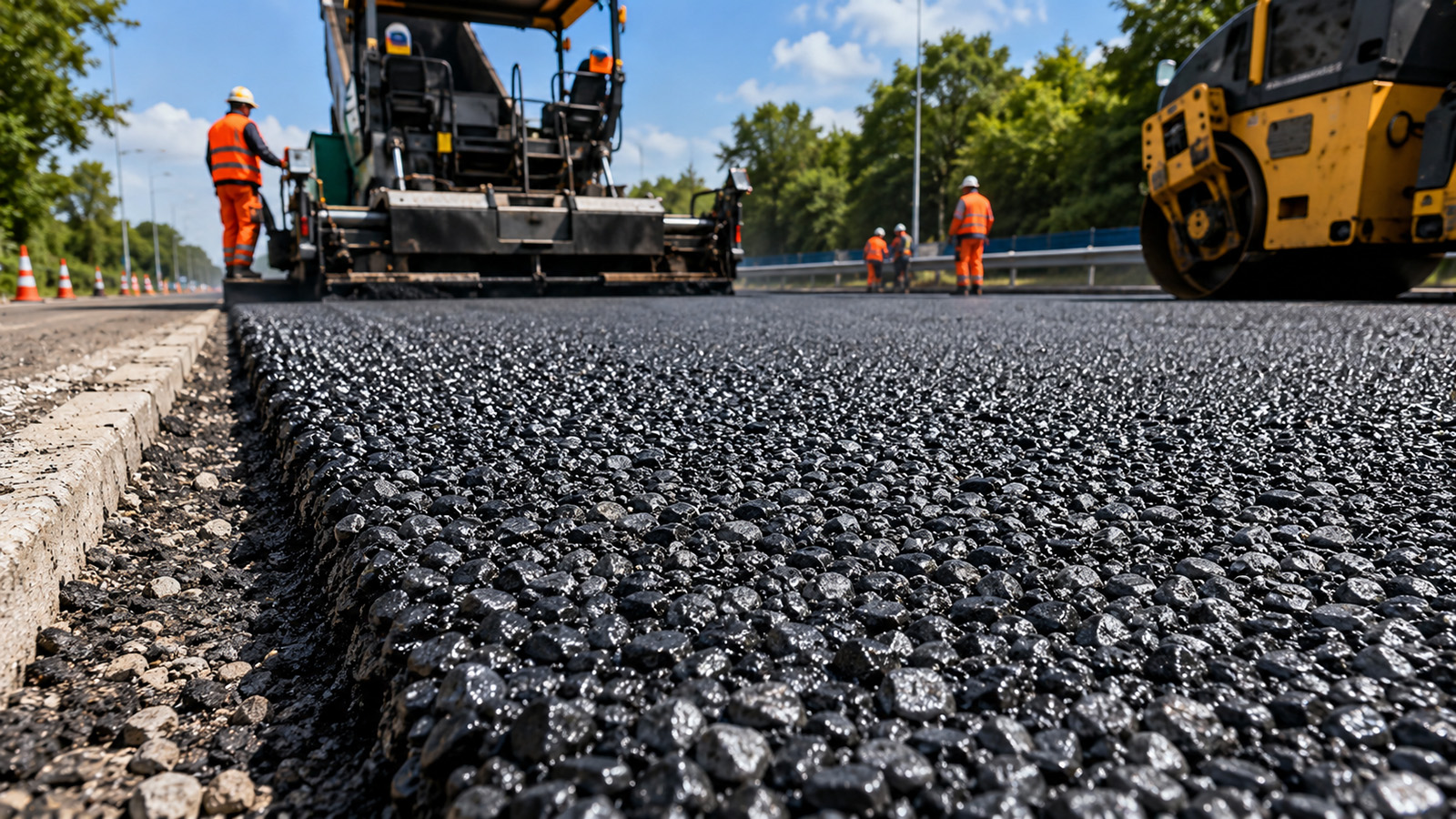
Stone Mastic Asphalt is a type of asphalt mixture with a structure that differs from many conventional asphalt materials. Rather than relying primarily on a continuous mixture of different aggregate sizes, SMA contains a high proportion of coarse aggregate that forms a strong, interlocking stone skeleton.
The spaces between these larger aggregate particles are filled with a rich asphalt mortar containing bitumen, fine aggregate and filler. This combination allows the coarse stone to provide structural stability while the mortar helps bind the material together and protect the finished surface.
The result is a dense and robust surfacing material capable of dealing with repeated loading. When correctly specified and installed, SMA can provide an effective surface for roads and access routes exposed to significant traffic.
Professional tarmac installation and road surfacing services are important because the performance of any asphalt material depends not only on the material selected but also on preparation, laying, compaction and the condition of the underlying structure.
How Does SMA Differ From Conventional Asphalt?
The main distinction is the way the aggregate within Stone Mastic Asphalt forms the structure of the material. SMA is designed around stone-on-stone contact between coarse aggregate particles.
This interlocking structure helps the finished material resist movement under loading. That can be particularly valuable on surfaces exposed to frequent traffic, heavy vehicles or repeated braking and turning forces.
The asphalt mortar surrounding the aggregate also plays an important role. It helps create a cohesive surface and contributes to the material’s durability. The precise mixture used will depend on the application and project specification rather than there being one universal SMA mixture suitable for every site.
This is why material selection should form part of the wider surfacing design. A contractor needs to consider expected traffic, the existing substrate, drainage, access restrictions and the intended use of the finished area before determining whether SMA is appropriate.
Why Is Stone Mastic Asphalt Used?
SMA is generally chosen where the demands placed on a surface justify a high-performance asphalt solution. Roads and commercial surfaces are exposed to more than simple downward vehicle loads. Braking, acceleration, steering and turning can all place stress on the surface.
On heavily used routes, these forces occur repeatedly. Over time, an unsuitable or poorly installed surface can begin to deform, crack or deteriorate.
Stone Mastic Asphalt is designed to provide a stable aggregate structure capable of resisting these demands. Its characteristics make it particularly useful for applications where maintaining surface integrity under traffic is a priority.
That does not mean SMA is automatically the correct choice for every road, car park or driveway. Good surfacing design is based on the requirements of the individual site rather than simply selecting the strongest available material.
Where Is Stone Mastic Asphalt Used?
Highways and Heavily Trafficked Roads
One of the most recognisable applications for SMA is highway surfacing. Major roads experience continuous vehicle movements and must accommodate everything from cars and vans to buses and heavy goods vehicles.
These environments require surfaces capable of coping with substantial and repeated loading. The stone-on-stone structure of SMA makes it suitable for demanding road applications where resistance to deformation is particularly important.
For projects involving larger road networks, professional highway surfacing also involves much more than selecting the surface course. Preparation, underlying layers, drainage, levels and compaction all influence how the completed road performs.
Commercial Access Roads
SMA can also be appropriate for commercial access roads, particularly where there is regular delivery traffic or movement by heavier vehicles.
Warehouses, distribution facilities, industrial estates and other commercial premises can place considerable demands on their access infrastructure. A road serving these environments may experience repeated HGV movements throughout the working day.
A properly designed surface needs to withstand these loads without premature deformation. Experienced commercial surfacing contractors can assess the expected traffic and site conditions before recommending an appropriate surfacing specification.
Industrial Sites and Service Areas
Industrial sites can be particularly demanding environments for asphalt. Vehicles may repeatedly follow the same routes, turn within restricted areas or brake near loading and unloading points.
These concentrated movements can create substantial stresses. SMA may therefore be considered for suitable areas where a robust asphalt surface is required.
The supporting construction remains crucial. A high-performance surface cannot compensate indefinitely for an inadequate foundation. If the layers beneath the asphalt move, settle or retain excessive water, problems can eventually appear at surface level regardless of the quality of the final material.
Car Parks With Significant Traffic
Not every car park requires Stone Mastic Asphalt, but it may be appropriate for larger or more heavily trafficked facilities.
Commercial car parks, transport facilities and busy public sites can experience substantial daily vehicle movements. Entrance and exit areas can be particularly demanding because vehicles repeatedly brake, accelerate and turn in similar locations.
The surfacing specification therefore needs to reflect actual use. A lightly used private parking area and a busy commercial car park may look similar when newly surfaced, but their structural requirements can be very different.
The Importance of the Base Beneath SMA
One of the most important principles in road surfacing is that the visible surface is only part of the construction.
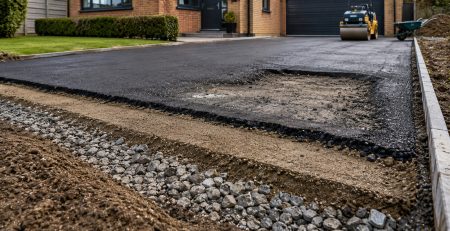
Before SMA is laid, the underlying structure must be capable of supporting the expected loads. The condition of the existing surface or formation needs to be assessed, weak areas addressed and suitable levels established.
If the foundation is unstable, the asphalt above can be affected by movement. Cracks, depressions and other defects can develop because the problem originates below the finished surface.
Site preparation should therefore be treated as an integral part of the project rather than simply the work that happens before surfacing begins.
Drainage and Water Management
Drainage is another important consideration when constructing asphalt roads and commercial surfaces. Water needs a controlled route away from trafficked areas.
Poorly managed water can collect in depressions, penetrate vulnerable areas and contribute to deterioration within the pavement structure. Standing water can also create inconvenience and potential safety concerns for site users.
Before laying SMA, contractors should therefore consider existing falls, drainage channels, gullies and surrounding ground levels. Where necessary, levels can be designed so that surface water is directed towards appropriate drainage points.
Effective water management helps protect not only the SMA surface but also the supporting layers beneath it.
Why Machine Laying Matters
The quality of SMA installation is fundamental to its performance. Asphalt needs to be placed at appropriate temperatures and compacted correctly while it remains workable.
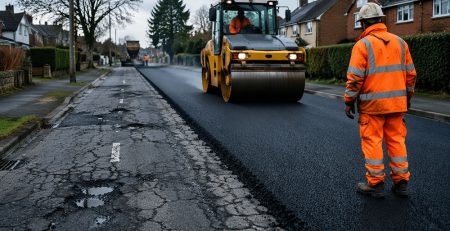
For larger roads and commercial areas, machine laying can help achieve consistent distribution of the material across the surface. Specialist paving equipment allows the asphalt to be placed efficiently while controlling levels and thickness.
Professional machine-laid tarmac is particularly relevant to larger areas where consistency across the completed surface is important.
Compaction follows the laying operation and is equally significant. Appropriate rolling helps consolidate the material and achieve the intended finished structure. Poor compaction can undermine the performance of an otherwise suitable asphalt specification.
Is SMA Suitable for Private Roads and Developments?
Stone Mastic Asphalt is not limited to public highways. Depending on the design requirements, it may also be considered for private estate roads, development access routes and other privately maintained infrastructure.
The deciding factor should be how the road will actually be used. A development that regularly receives service vehicles, delivery lorries or other substantial traffic may require a different pavement construction from a lightly trafficked residential driveway.
For domestic and private projects, professional surfacing contractors can assess the site and recommend materials according to traffic levels, existing conditions and the intended appearance.
Using SMA simply because it is associated with high-performance roads is not necessarily cost-effective. The entire construction should be proportionate to the requirements of the site.
Maintenance of Stone Mastic Asphalt Surfaces
Although SMA is designed for durability, no asphalt surface should be considered maintenance-free.
Regular inspection can identify localised defects before they develop into larger problems. Drainage systems should remain clear, vegetation at edges should be controlled and any damage should be investigated rather than ignored.
The cause of a defect matters as much as its appearance. Surface damage may sometimes be localised, while in other situations cracking or settlement can indicate a deeper structural issue.
Where isolated failures occur, timely pothole repairs can help prevent damaged areas from becoming progressively larger. The appropriate repair method should reflect the extent and underlying cause of the deterioration.
Choosing SMA for a Surfacing Project
Stone Mastic Asphalt is best considered as part of a complete pavement design rather than as a standalone product.
A contractor should consider the expected number and type of vehicle movements, the condition of the existing construction, drainage requirements, site levels and how the area will be used over the longer term. These factors determine both the appropriate asphalt material and the construction required beneath it.
For heavily trafficked roads, commercial access routes, industrial areas and suitable car parks, SMA can provide a strong and durable surfacing solution. Its coarse aggregate structure is specifically designed to provide stability under demanding traffic conditions.
The quality of the finished result, however, still depends on correct preparation and installation. Appropriate foundations, effective drainage, accurate machine laying and thorough compaction all contribute to the performance of the completed surface.
For site managers and property owners considering new road construction or resurfacing, Stone Mastic Asphalt is therefore worth considering where traffic demands require a robust asphalt solution. Reviewing comparable surfacing case studies can also help illustrate how professional surfacing methods are applied across different types of sites.