Why Do Some Roads Last 20 Years While Others Fail in Five?
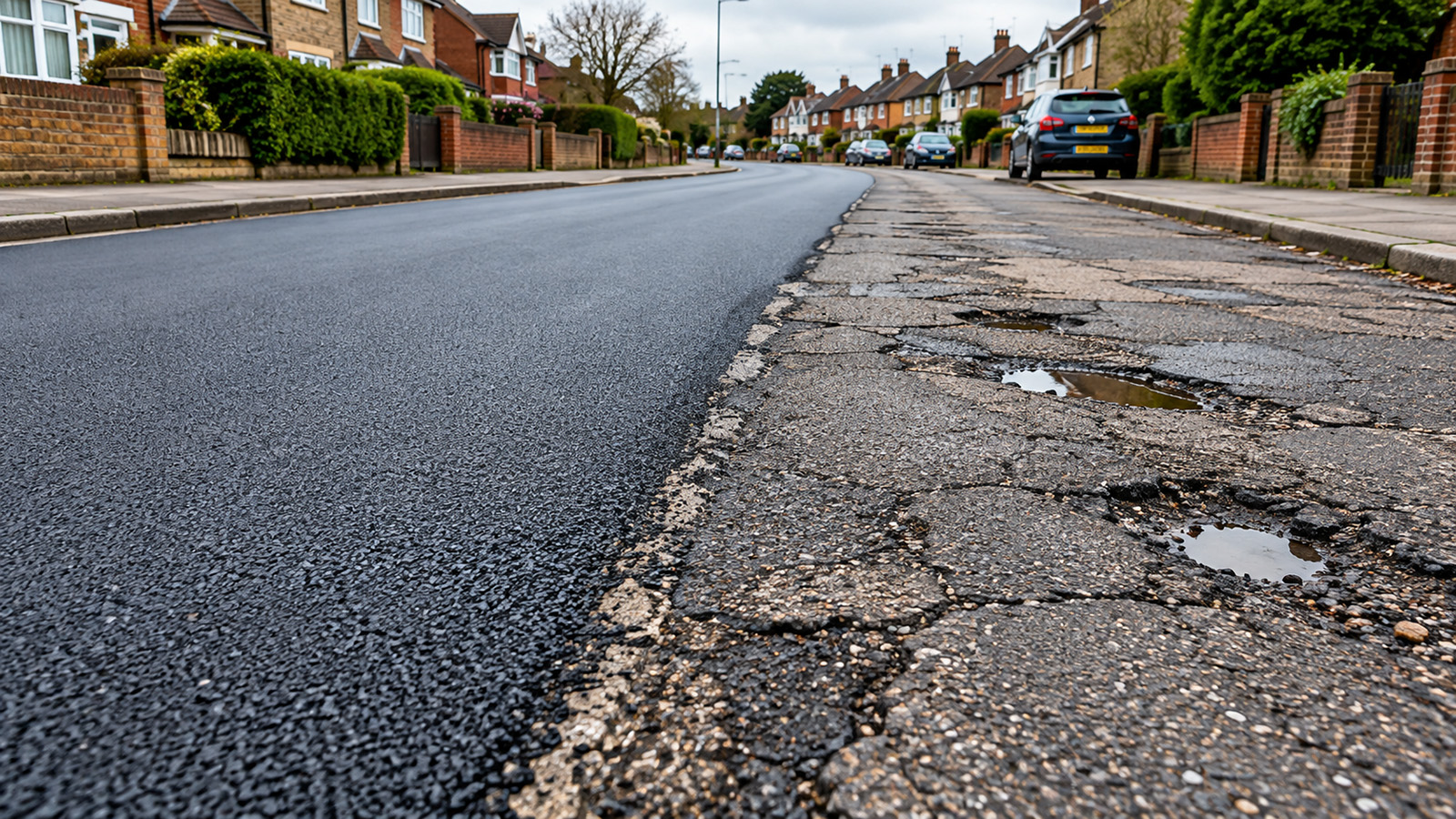
Two roads can be constructed using similar materials, experience comparable traffic levels and face the same British weather conditions, yet perform very differently over time.
One might remain structurally sound for 20 years or longer, requiring only occasional maintenance. Another could develop cracks, potholes and surface deformation within five years.
The difference rarely comes down to the visible tarmac alone.
Road longevity depends on what happens beneath the surface, how the road is designed, the quality of installation and how effectively it is maintained.
For commercial property owners, facilities managers and private road operators, understanding these factors is essential. Premature road failure can create significant repair costs, access restrictions and potential safety concerns.
A professionally designed and installed road surface represents a long-term investment. However, even high-quality materials can deteriorate prematurely when the underlying construction is unsuitable.
This article explains the main factors influencing road surfacing lifespan in the UK and why some surfaces provide decades of reliable service while others require major repairs much sooner.
1. The Foundation Determines How Long a Road Will Last
One of the most important differences between a long-lasting road and one that fails prematurely is the quality of its foundation.
Although drivers only see the finished surface, the structural layers beneath it carry much of the responsibility for supporting traffic loads.
A typical flexible road construction consists of several layers, each performing a specific function.
Understanding the Layers Beneath Road Surfacing
The subgrade is the natural ground beneath the road construction. Its condition and load-bearing capacity influence the overall structural design.
Above this, a sub-base provides additional support and helps distribute vehicle loads across the underlying ground.
Depending on the road specification, further asphalt layers may include a base course, binder course and surface course.
The surface course provides the finished running surface, while the lower structural layers help resist deformation under repeated traffic loading.
If any of these layers are poorly designed or inadequately constructed, the road may deteriorate regardless of the quality of the visible finish.
Why Poor Ground Preparation Causes Early Failure
Insufficient ground preparation is a common contributor to premature road deterioration.
If unsuitable material remains beneath the road, or the subgrade is not adequately assessed and prepared, the construction may experience uneven settlement.
This can result in depressions, cracking and surface deformation.
Weak areas can also allow water to accumulate within the pavement structure, increasing the risk of further damage.
Professional tarmac installation and road surfacing services should therefore begin with an assessment of the existing ground conditions and the intended use of the surface.
A road built on a weak foundation may look excellent immediately after installation but develop structural problems long before its expected service life.
2. Poor Drainage Can Reduce Road Lifespan Dramatically
Water is one of the most damaging influences on road construction.
In the UK, frequent rainfall, seasonal temperature changes and periods of prolonged wet weather place considerable demands on road drainage systems.
When water is managed effectively, a properly constructed road can maintain its structural integrity for many years.
When drainage is inadequate, deterioration can accelerate.
How Water Damages Road Foundations
Water entering the pavement structure can weaken certain foundation materials and reduce their ability to support traffic loads.
As vehicles repeatedly travel over weakened areas, movement within the construction can cause cracking and deformation.
Once cracks develop, additional water may enter the structure, creating a cycle of progressive deterioration.
Over time, this can lead to potholes, localised settlement and more extensive structural failure.
Why Surface Falls and Drainage Design Matter
Effective road drainage begins during the design stage.
The finished surface should have appropriate gradients that direct rainfall towards suitable drainage points.
Depending on the location, these may include gullies, channels, drainage systems or other approved arrangements.
Drainage design must also consider surrounding buildings, pedestrian areas, access points and the capacity of existing infrastructure.
For commercial premises, poorly positioned drainage can cause standing water around loading bays, entrances and vehicle manoeuvring areas.
These locations often experience concentrated traffic loading, making effective water management particularly important.
A road with properly designed drainage is generally better protected against water-related deterioration than one where rainfall regularly accumulates.
3. Traffic Loads Have a Major Impact on Road Durability
Not all roads experience the same loading conditions.
A private residential access road used mainly by passenger vehicles faces very different demands from an industrial estate road carrying delivery lorries and heavy goods vehicles.
The weight, frequency and movement of vehicles all influence pavement performance.
Heavy Vehicles Place Greater Stress on Road Construction
Heavy commercial vehicles exert substantially greater loads on road structures than ordinary cars.
Repeated heavy axle loading can contribute to fatigue cracking, rutting and deformation when the pavement is not designed to accommodate it.
The issue is particularly important around industrial premises, distribution centres and commercial access roads.
These locations may experience frequent deliveries, vehicle braking and slow-moving heavy traffic.
A road designed primarily for light vehicles may therefore deteriorate rapidly if its use changes to accommodate heavier traffic.
Turning Areas and Loading Bays Need Additional Consideration
Straight sections of road generally experience different stresses from areas where heavy vehicles turn, brake or remain stationary.
Loading bays, junctions and tight turning areas can experience concentrated forces that increase the risk of surface deformation.
For this reason, commercial surfacing contractors must consider how vehicles will use the completed surface rather than simply calculating the total area requiring surfacing.
The pavement design, material selection and construction thickness should reflect the expected operating conditions.
A road designed for its actual traffic demands is more likely to achieve its intended service life than one built to an unsuitable specification.
4. Material Quality Influences Long-Term Performance
The materials used during road construction have a direct influence on durability.
Asphalt mixtures are engineered to provide specific performance characteristics, including resistance to deformation, cracking and wear.
However, different mixtures are suitable for different applications.
Selecting an appropriate material requires consideration of traffic loading, site conditions, construction requirements and expected performance.
Why Asphalt Specification Matters
An asphalt mixture suitable for a lightly trafficked access road may not be appropriate for a heavily used commercial yard.
Different applications require different combinations of aggregate grading, binder properties and structural performance.
The selected mixture must also be compatible with the overall pavement design.
Using a high-quality surface course cannot compensate for inadequate structural support beneath it.
Similarly, increasing asphalt thickness without addressing weak foundations or drainage problems may fail to resolve the underlying cause of deterioration.
The Importance of Consistent Materials
Material consistency is another important consideration.
Asphalt must be produced, transported, laid and compacted under suitable conditions.
Problems with mixture quality, temperature control or handling can affect the finished pavement.
Professional contractors should follow the relevant project specification and appropriate quality-control procedures.
Correct material selection, combined with suitable installation methods, provides a stronger basis for long-term performance.
5. Installation Quality Can Make the Difference Between Five and 20 Years
Even when the correct materials and pavement design are specified, poor installation can significantly reduce road lifespan.
The construction process requires careful coordination, appropriate equipment and suitable site conditions.
Errors during installation may not be immediately visible.
In some cases, a newly completed road can appear smooth and professionally finished while containing weaknesses that only become apparent after repeated traffic loading.
Why Asphalt Compaction Is Essential
Compaction is one of the most important stages of asphalt installation.
During laying, asphalt contains air voids that must be reduced to the appropriate level through controlled rolling.
Insufficient compaction can leave the material more vulnerable to water penetration, movement and premature deterioration.
Excessive or inappropriate rolling can also create problems.
The objective is to achieve the required density and finished surface characteristics without damaging the asphalt mixture.
Compaction performance depends on factors including material temperature, layer thickness, equipment selection and rolling procedures.
The Benefits of Machine-Laid Surfacing
For suitable projects, mechanical paving equipment can help achieve consistent asphalt placement and surface levels.
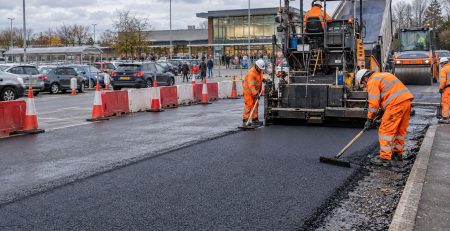
Professional machine-laid tarmac can provide improved control over material distribution, layer thickness and finished surface regularity.
Consistent installation supports effective compaction and helps reduce variations across the completed road.
However, machine laying does not eliminate the need for competent supervision, suitable preparation and appropriate quality checks.
The equipment must be matched to the project, and the construction process must follow the agreed specification.
6. British Weather Conditions Affect Road Performance
The UK climate creates particular challenges for road surfacing.
Frequent rainfall, temperature fluctuations and occasional freezing conditions can contribute to deterioration over time.
Although asphalt is designed to withstand normal environmental exposure, weather-related stresses can become more damaging when the pavement already contains weaknesses.
Freeze-Thaw Damage
During colder periods, water trapped within cracks or pavement layers may freeze.
As freezing and thawing cycles occur, existing weaknesses can become progressively worse.
Where moisture has weakened the underlying construction, repeated traffic loading may accelerate surface damage.
This is one reason why small cracks should not be ignored.
A relatively minor defect can become a more significant maintenance issue when water penetration continues over several seasons.
Summer Temperatures and Surface Deformation
High summer temperatures can also influence asphalt performance.
Asphalt becomes more susceptible to deformation as temperatures increase, particularly where heavy or slow-moving vehicles apply sustained loads.
The risk depends on the asphalt mixture, pavement design and operating conditions.
Commercial loading areas and heavily trafficked access routes may therefore require particular attention to material selection.
A correctly specified road surface should account for the expected range of UK weather conditions throughout its intended service life.
7. Maintenance Often Separates Long-Lasting Roads From Failing Ones
Road maintenance is sometimes treated as an expense that can be postponed until visible damage becomes severe.
However, delaying relatively minor repairs can allow deterioration to spread.
A road that receives appropriate inspections and timely maintenance is generally more likely to remain serviceable than one where defects are left untreated.
Small Cracks Can Develop Into Major Problems
Cracks may initially appear to be cosmetic defects.
However, they can provide a route for water to enter the pavement structure.
Once moisture reaches vulnerable underlying materials, repeated vehicle loading can increase movement and damage.
Depending on the cause and condition of the pavement, early intervention may involve crack sealing, localised repairs or other preventative treatments.
Not every crack requires the same solution.
The appropriate repair method depends on whether the defect is limited to the surface or indicates a deeper structural problem.
Why Potholes Should Be Repaired Promptly
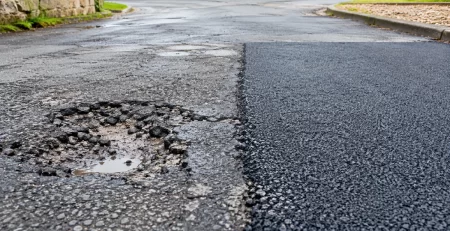
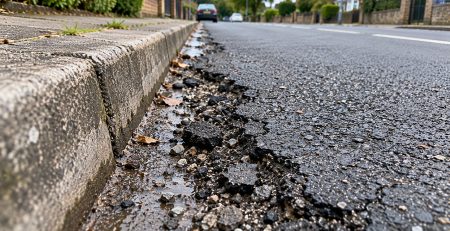
Potholes often develop where the pavement has already experienced cracking, water penetration or structural weakening.
As vehicles pass over the damaged area, loose material can be displaced and the defect may expand.
Prompt pothole repairs can help restore a safer running surface and reduce the likelihood of further localised deterioration.
However, recurring potholes may indicate problems beneath the visible surface.
Where underlying weaknesses remain, repeated surface patching may provide only a temporary solution.
Planned Maintenance Reduces Long-Term Disruption
For commercial sites, planned inspections can help identify defects before they interfere with normal operations.
Facilities managers should pay particular attention to areas exposed to heavy vehicle movements, standing water and repeated turning forces.
Maintenance records can also help identify recurring problems and support decisions about future repairs or resurfacing.
The objective is not to eliminate every minor surface defect immediately, but to manage deterioration before it becomes structurally significant.
8. Why Some Roads Fail Within Five Years
Premature road failure rarely results from a single issue.
More commonly, several weaknesses combine to accelerate deterioration.
For example, a road may be constructed over an inadequately prepared subgrade, experience poor drainage and subsequently carry heavier vehicles than originally anticipated.
Each factor increases the demands placed on the pavement.
As cracks and deformation develop, water can enter the construction and further weaken vulnerable areas.
Without appropriate maintenance, the deterioration process may accelerate.
Common Warning Signs of Premature Failure
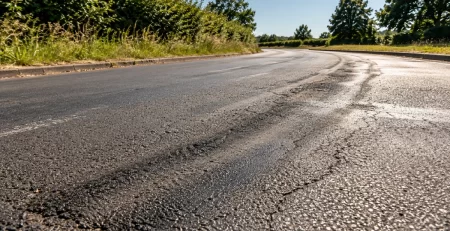
Early indicators include persistent standing water, recurring cracks, uneven settlement, rutting and repeated pothole formation.
Surface fretting, where aggregate particles begin to loosen, can also indicate deterioration.
These symptoms should be assessed in context.
A small isolated defect does not necessarily mean the entire road has failed.
However, widespread or recurring damage may suggest that the underlying pavement structure is no longer performing as intended.
A professional condition assessment can help establish whether localised repairs, resurfacing or more extensive reconstruction is appropriate.
9. Why Some Roads Continue Performing After 20 Years
Roads that remain serviceable for two decades often benefit from several favourable conditions.
They may have been constructed on suitable foundations, designed for their expected traffic loading and installed using appropriate materials and methods.
Effective drainage can help protect the structural layers from prolonged moisture exposure.
Regular maintenance may also prevent small defects from developing into larger failures.
Long Service Life Begins With Appropriate Design
The expected lifespan of a road should be considered during the planning stage.
Design decisions need to account for the intended use, anticipated vehicle loading, existing ground conditions and environmental exposure.
For example, a private estate road may require a different construction specification from a commercial access route.
Likewise, a heavily used industrial road may require more substantial structural support than a lightly trafficked residential road.
The most appropriate solution is not necessarily the thickest or most expensive construction.
It is the design that provides sufficient performance for the site’s actual requirements.
Quality Control Supports Long-Term Durability
Construction quality checks help confirm that the completed pavement meets the required specification.
Depending on the project, these may involve checking material properties, layer thickness, compaction, surface levels and drainage performance.
Quality control is particularly important where the road will experience significant commercial traffic.
For larger projects, reviewing completed road surfacing case studies can also help property owners understand how different site requirements have been addressed in practice.
A well-documented construction process provides greater confidence that the pavement has been installed as intended.
10. Is a 20-Year Road Surfacing Lifespan Realistic in the UK?
A service life of 20 years can be achievable for certain asphalt road constructions, but it should not be treated as a universal guarantee.
The actual road surfacing lifespan in the UK depends on the pavement structure, traffic conditions, drainage, environmental exposure and maintenance history.
It is also important to distinguish between the lifespan of the surface course and the lifespan of the overall road structure.
Surface Life and Structural Life Are Different
The upper asphalt layer may require renewal while the underlying pavement remains structurally sound.
In these circumstances, resurfacing can restore the running surface without requiring complete reconstruction.
By contrast, where the foundation or structural layers have deteriorated significantly, replacing only the surface course may not provide a lasting solution.
This distinction is important when planning maintenance budgets.
A road can remain in service for many years while receiving periodic surface treatments or resurfacing.
Therefore, a 20-year service life does not necessarily mean that no maintenance or repair work will be required during that period.
Why Lifespan Estimates Should Be Site-Specific
Road lifespan estimates should reflect actual site conditions rather than relying on a single industry-wide figure.
A lightly trafficked private road with effective drainage may perform differently from a heavily used commercial access road.
Similarly, two roads carrying comparable traffic may experience different deterioration rates because of variations in foundation strength or construction quality.
A realistic service-life assessment should consider the complete pavement structure and the conditions under which it operates.
11. When Should a Road Be Repaired, Resurfaced or Reconstructed?
Understanding the cause of deterioration is essential before selecting a repair strategy.
Different defects require different levels of intervention.
When Localised Repairs May Be Suitable
Localised repairs can be appropriate where damage is limited to relatively small areas and the surrounding pavement remains structurally sound.
Examples include isolated potholes, minor surface defects and limited areas of deterioration.
The repair should address the cause of the defect wherever practical.
Simply covering visible damage without investigating recurring problems may result in further deterioration.
When Resurfacing May Be Appropriate
Resurfacing may be suitable where the existing surface course has deteriorated but the underlying construction retains sufficient structural capacity.
The process can involve removing damaged asphalt and installing a replacement layer.
Before resurfacing, contractors should assess the condition of the existing pavement and identify any areas requiring deeper repairs.
Drainage levels, access points and existing structures must also be considered.
When Full Reconstruction May Be Necessary
More extensive reconstruction may be required where the pavement has experienced widespread structural failure.
Examples include significant settlement, extensive deformation or repeated failures caused by inadequate foundations.
In these situations, replacing the surface alone may not address the underlying problem.
A suitable reconstruction scheme may require excavation, foundation improvements, drainage modifications and installation of new structural layers.
Although reconstruction generally involves greater initial disruption and expenditure, it may be necessary to restore reliable long-term performance.
12. How Property Owners Can Improve Road Surfacing Lifespan
For property owners and commercial site managers, extending road lifespan begins with understanding how the surface is used.
A road should be assessed according to its traffic demands, existing condition and surrounding environment.
Before commissioning new surfacing works, it is important to establish whether the existing foundation is suitable and whether drainage improvements are required.
Material selection and construction thickness should reflect the intended vehicle loading.
Installation should be completed under appropriate conditions using suitable equipment and quality-control procedures.
Once the road is operational, regular inspections can help identify developing defects.
Areas exposed to heavy traffic, turning movements and standing water deserve particular attention.
Where damage occurs, the repair strategy should address the underlying cause rather than simply improving the surface appearance.
For larger sites, professional highway surfacing expertise can help inform decisions about pavement construction, resurfacing and long-term performance.
The most effective approach combines appropriate initial construction with ongoing maintenance.
13. The Long-Term Cost of Poor Road Surfacing
The lowest initial installation price does not always represent the lowest long-term cost.
A road constructed to an inadequate specification may require repeated repairs, early resurfacing or premature reconstruction.
These additional works can increase expenditure and disrupt access to commercial premises.
For businesses, road closures and restricted vehicle movements may also affect deliveries, staff access and daily operations.
Understanding Whole-Life Cost
Whole-life cost considers expenditure over the expected service period rather than focusing only on installation.
This includes initial construction, inspections, maintenance, repairs and eventual renewal.
A more substantial initial investment may be justified where it reduces the likelihood of expensive structural failures.
However, additional expenditure should always be supported by the site’s actual engineering requirements.
Over-specifying a lightly trafficked road can be unnecessarily costly, while under-specifying a heavily used access route can create substantial future liabilities.
The objective is to achieve a suitable balance between construction cost, expected performance and maintenance requirements.
14. What Ultimately Determines Whether a Road Lasts Five or 20 Years?
The difference between a road that deteriorates within five years and one that remains serviceable for 20 years is rarely visible immediately after construction.
Both surfaces may initially appear smooth, level and professionally finished.
Their long-term performance depends on factors that are often hidden beneath the asphalt.
Foundation strength, drainage effectiveness, traffic loading, material specification and installation quality all influence how the pavement responds to everyday use.
Maintenance then plays an important role in controlling deterioration throughout its service life.
For commercial property owners and site managers, the most useful starting point is a realistic assessment of the road’s condition and operational requirements.
Where a new road is being constructed, particular attention should be given to ground preparation, structural design and drainage.
Where an existing road is deteriorating, identifying the cause of damage is essential before deciding whether repairs, resurfacing or reconstruction will provide the most appropriate outcome.
Long-lasting road surfacing is not simply the result of laying good-quality asphalt. It depends on designing, constructing and maintaining the entire pavement as a complete system.
Understanding that principle helps property owners make better decisions, manage maintenance budgets and reduce the risk of avoidable road failures.