How To Prevent Tyre Marks On Driveways?
Tyre marks on a driveway usually appear where rubber, heat, turning pressure, surface softness, dirt, and poor aftercare meet. If you are asking How To Prevent Tyre Marks On Driveways?, the practical answer is to control how vehicles move on the surface, keep the driveway clean, allow new surfacing or sealers to cure properly, and choose materials that suit the way the property is used.
Total Surfacing Solutions helps homeowners, landlords, commercial sites, and car park owners across Hertford, Hertfordshire, Bedfordshire, Oxford, Cambridgeshire, and Essex reduce marking through correct installation, repair, maintenance planning, and low-maintenance surfacing.
Quick Check: If tyre marks keep returning or a new driveway is marking too quickly, Total Surfacing Solutions can inspect the surface, turning areas, curing issues, and driveway layout through driveway services in Hertford before permanent staining sets in.
How To Prevent Tyre Marks On Driveways? Start With The Cause
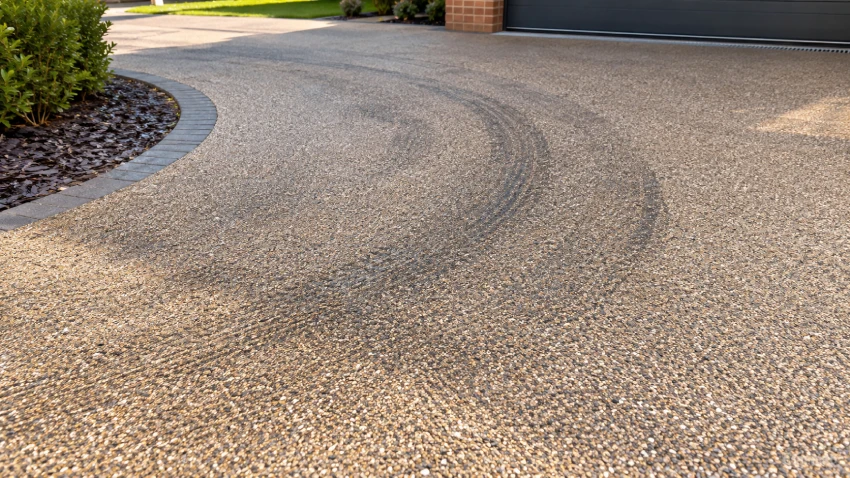
To prevent tyre marks on driveways, you need to understand whether the problem is rubber transfer, surface softening, trapped dirt, fresh sealer, new asphalt, resin aftercare, or repeated turning in one spot. Resin maintenance guidance commonly warns that tyre marks can happen on lighter-coloured surfaces and recommends cleaning with hot water, detergent, or specialist resin-safe products where needed.
The key is not just cleaning the tyre mark after it appears. Total Surfacing Solutions looks at driveway type, vehicle movement, installation quality, curing time, drainage, and surface maintenance so the same mark does not keep returning.
Tyre Mark Cause And Prevention Table
| Tyre mark cause | What it looks like | Prevention method |
| Dry steering | Crescent-shaped scuffs where wheels turn while stationary | Move slightly before turning the wheel |
| Hot tyres | Dark rubber marks after long drives or warm weather | Let tyres cool where practical and avoid tight turns |
| Fresh asphalt | Indents, scuffs, or dark turning marks | Avoid heavy steering until the surface has settled |
| Fresh sealer | Tyre pickup, streaking, or tacky marks | Follow curing guidance before parking |
| Light resin aggregate | More visible rubber transfer | Clean early and avoid stationary turning |
| Poorly maintained surface | Marks mixed with dirt, oil, or algae | Sweep, wash, repair, and seal where suitable |
| Commercial turning zones | Repeated black arcs and worn patches | Use suitable surfacing, markings, and traffic layout |
Why Tyre Marks Form On Driveways
Tyre marks form when tyres transfer rubber or pressure onto the driveway surface. The risk increases when tyres are warm, the surface is new, the vehicle turns sharply, or the same parking and turning area is used every day.
Dry steering is one of the biggest causes. Resin aftercare guidance advises drivers not to turn the steering wheel while stationary because it can increase the chance of surface marking or damage.
Total Surfacing Solutions considers tyre movement during driveway design. A short domestic driveway, a wide turning bay, a commercial entrance, and a car park all need different surfacing decisions if tyre marks are already a recurring problem.
Resin Bound Driveways And Tyre Mark Prevention
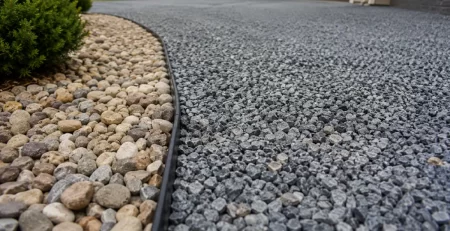
Resin bound driveways can be a strong option for a clean, low-maintenance driveway, but tyre marks can still appear on lighter colours or high-turning areas. The prevention method is simple: avoid stationary steering, clean marks early, use resin-safe cleaning methods, and make sure the surface was installed over a suitable base.
For homeowners comparing material choices, resin bound driveways in Hertfordshire can help create a smoother, more consistent driveway finish that is easier to maintain than loose, broken, or heavily stained surfacing.
Surface preparation matters because a poor base can affect appearance, drainage, and long-term durability. The resin foundation preparation framework explains why the layers below the visible finish are central to performance.
How To Clean Tyre Marks Before They Set
Cleaning tyre marks early usually gives the best result. Start with sweeping loose dirt, then wash with warm water and mild detergent. On resin bound surfaces, supplier guidance often recommends hot water, detergent, steam cleaning, or resin-safe products for tyre marks rather than harsh chemicals.
Do not attack every driveway with maximum pressure. Older tarmac, open asphalt, block paving joints, and resin surfaces can all be damaged by careless washing. The cleaning method should match the surface.
For resin surfaces, the resin surface wash sequence gives a useful reference for routine care. For block paving, the block paving cleaning routine is more relevant because the joints need attention as well as the block faces.
Pressure Washing Tyre Marks Without Surface Damage
Pressure washing can remove tyre marks from some driveways, but it can also expose weak surfaces, dislodge jointing sand, or make worn asphalt look patchy. The safest approach is to test a small area, use a controlled fan setting, keep the lance moving, and avoid cutting into the surface.
A washer attachment can change how water spreads across the driveway. The surface cleaner attachment guide helps explain why even pressure distribution matters when removing marks from larger areas.
The cleaning scope can also change if tyre marks are mixed with oil, sealer residue, algae, or dirt. The driveway washing cost variables are useful for understanding why a marked driveway may need more than a quick rinse.
New Asphalt And Tarmac Tyre Marks
New asphalt and tarmac can be vulnerable to tyre marks while the surface is fresh, especially in warm conditions or where vehicles turn tightly. Sealcoating guidance also notes that hot weather can soften coating material and make tire marks more likely in high-traffic or turning areas.
For domestic projects, tarmac driveways in Hertfordshire can be specified with the right finish, compaction, and layout so the surface handles normal vehicle movement better.
For larger or heavier-use spaces, Total Surfacing Solutions can provide commercial surfacing solutions in Hertfordshire where tyre marks are part of a wider wear, traffic, drainage, and access issue.
When Can You Drive Or Park On A New Driveway?
Many tyre mark problems start because vehicles return to the driveway too soon after installation, sealing, or surfacing work. Fresh surfaces and coatings need time to settle or cure, and the correct waiting period depends on the material, weather, thickness, product, and use.
The new asphalt parking timeframe is useful for understanding why early parking can leave marks. For sealed driveways, the sealed driveway return-to-use timing helps explain why patience after sealing matters.
If the driveway has recently been sealed, the drying period can also affect tyre pickup. The sealer drying time factors are worth checking before placing vehicles back on the surface.
Machine Laid Tarmac For High-Turning Areas
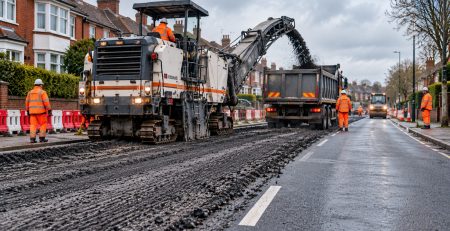
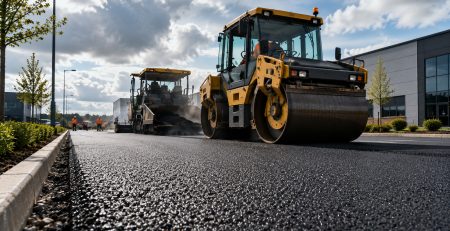
Machine laid tarmac can help where repeated vehicle movement, heavy use, and inconsistent hand-laid patches are causing scuffs, turning marks, or surface deformation. A smoother, better-compacted finish gives the driveway or access road a more stable wearing course.
For long driveways, shared access roads, commercial entrances, and car parks, tarmac installation in Hertfordshire can be a better fit than repeated patching if the surface is already uneven.
Tyre mark prevention is not only about material choice. The layout should reduce tight stationary turns, low spots, sharp edges, and awkward reversing movements that concentrate pressure in one place.
Block Paving Driveways And Tyre Marks
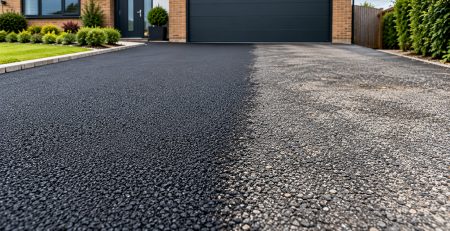
Block paving can show tyre marks where vehicles turn tightly, where sealers have been applied incorrectly, or where dirt and rubber settle into textured block faces. Lighter blocks and high-use turning areas usually show marks more clearly.
For homeowners planning a new layout, a block paving driveway in Hertfordshire can be installed with proper edge restraints, falls, and jointing so the surface stays cleaner and more stable.
Sealing may help some paving resist staining, but the surface must be clean and dry before work begins. The paver sealing preparation workflow explains why preparation matters before a protective finish is applied.
Oil, Rubber, And Mixed Driveway Staining
Tyre marks are often not the only stain on a driveway. Rubber can mix with oil, road grime, brake dust, fuel residue, and dirt, which makes the stain harder to diagnose and harder to remove.
If the mark has a greasy edge or spreads when wet, treat it as a mixed stain rather than a simple rubber scuff. The driveway oil stain removal steps are useful where tyre marks overlap with vehicle leaks.
For older or more stubborn staining, the oil stain treatment overview gives a separate process so rubber scuffs are not confused with oil contamination.
Potholes, Surface Wear, And Tyre Marking
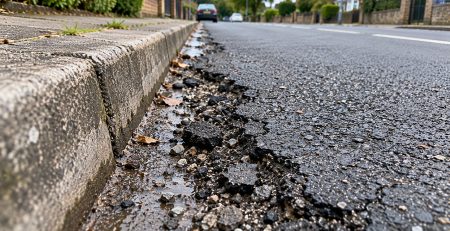
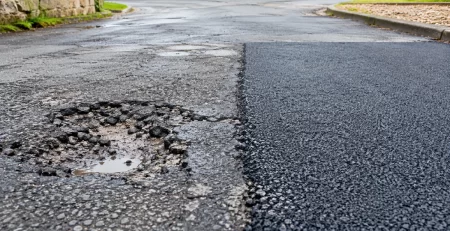
Tyre marks often become worse when the driveway surface is already damaged. Potholes, cracks, ruts, and loose patches force tyres to twist, scrub, and drag across unstable material.
Total Surfacing Solutions can provide surface repair in Hertfordshire where tyre marks are appearing around damaged areas, car park bays, access roads, or driveway entrances.
Repairing the defect matters because cleaning the tyre mark does not remove the cause. A stable surface reduces rubbing, water collection, dirt build-up, and repeated vehicle stress.
Line Marking And Commercial Driveway Control
On commercial sites, tyre marks often come from poor traffic flow. Vehicles turn too sharply, delivery drivers stop in the same spot, or parking bays encourage tight manoeuvres.
Total Surfacing Solutions can support car parks and business premises with coloured surfacing in Hertfordshire where visible layout guidance helps drivers move more predictably.
Line marking works best after the surface has been cleaned, repaired, or resurfaced. Marking a worn, stained, or unstable surface may improve layout temporarily but will not solve tyre scuffing at the source.
Brickwork, Edges, And Outdoor Steps
Tyre marks can become worse where driveway edges are weak or where vehicles mount kerbs, scrape boundaries, or turn tightly near steps. Edging, brickwork, and hard landscaping can shape how drivers use the space.
Where driveway borders, walls, or hard landscaping need attention, hard surface repair in Hertfordshire can help stabilise the surrounding structure.
For entrances where the driveway connects to steps, paths, or raised access areas, complete driveway solutions in Hertfordshire can make the layout safer and more practical while reducing awkward vehicle movement.
Low Maintenance Surfacing For Tyre Mark Control
Low maintenance surfacing is not maintenance-free, but it can reduce how often tyre marks, stains, and dirt become visible. A suitable surface should be easy to sweep, washable, stable under turning pressure, and appropriate for the vehicle load.
Total Surfacing Solutions provides low maintenance driveway in Hertfordshire options for residential driveways, private entrances, and commercial spaces where appearance and practical upkeep matter.
Long-term care still matters. The resin driveway lifespan care plan explains how routine maintenance protects the finish over time.
SUDS Compliant Surfacing And Driveway Performance
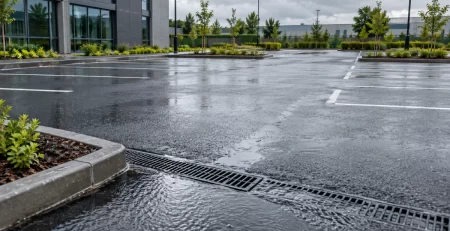
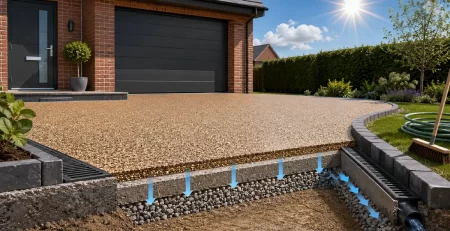
Drainage affects tyre marks because standing water, dirt, and softened surface areas can make staining worse. UK government guidance states that front garden hard surfacing over 5 square metres generally needs to be permeable or direct water to a permeable area to avoid planning permission for traditional impermeable paving.
This matters for new driveways because a surface that handles water properly is usually easier to keep clean. The Planning Portal also notes that permeable surfacing options can include gravel, permeable concrete block paving, or porous asphalt, or water can be directed to a lawn or border to drain naturally.
Total Surfacing Solutions can help choose driveway systems that consider appearance, vehicle use, drainage, maintenance, and SUDS expectations from the start.
Surface Choice For Tyre Mark Prevention
| Driveway surface | Tyre mark risk | Prevention priority |
| Resin bound | More visible on light colours and turning points | Avoid dry steering and clean early |
| Tarmacadam | Fresh surfaces can scuff under tight turns | Allow settling and reduce stationary turning |
| Asphalt | New or warm surfaces can mark under pressure | Control parking and use suitable surfacing |
| Block paving | Textured faces and sealers can show rubber | Clean, seal correctly, and maintain joints |
| Concrete | Rubber marks can sit on textured finish | Wash early and consider coating compatibility |
| Commercial surfacing | Repeated traffic creates concentrated marks | Improve layout, markings, and surface strength |
Fast Surfacing Installation Without Tyre Mark Issues
Fast installation should never mean skipping cure time, preparation, or surface suitability. A new driveway can look finished before it is ready for full vehicle use, especially where sealers, asphalt, tarmac, or resin systems need time before regular parking.
Total Surfacing Solutions provides driveway installation in Hertford for projects where the client needs a practical surface, but the process still needs the right base, drainage, material, and aftercare advice.
The first few days of use can affect how a driveway looks for years. Avoiding sharp turns, heavy parking, dragging bins, and repeated stationary steering gives the surface a better start.
How To Prevent Tyre Marks On Driveways? Area Coverage
Local driveway use varies by property type, parking layout, traffic level, and surface condition. Total Surfacing Solutions serves Hertfordshire, Bedfordshire, Oxford, Cambridgeshire, and Essex with practical surfacing, repair, and installation options for homeowners, commercial clients, private access roads, and car parks.
Bedfordshire
In Bedfordshire, tyre marks on driveways often become more noticeable where vehicles turn in tight residential spaces or park repeatedly in the same place. Total Surfacing Solutions can assess whether resin bound surfacing, tarmac, asphalt, or block paving is the right choice for a cleaner, more maintainable finish.
Oxford
Oxford driveway layouts can include compact entrances, older boundaries, and limited turning space. Total Surfacing Solutions can help design resin bound driveway options that reduce unnecessary tyre scrubbing while keeping the surface practical for daily parking.
Cambridgeshire
In Cambridgeshire, tyre mark prevention often comes down to surface suitability and driveway layout. Total Surfacing Solutions can advise on resin bound, tarmac, asphalt, or repair work where existing surfaces have become stained, uneven, or difficult to clean.
Essex Resin Bound Driveways
For Essex resin bound driveways, Total Surfacing Solutions can help clients choose a finish that balances appearance, maintenance, and normal vehicle use. Correct installation and aftercare make a major difference to how visible tyre marks become over time.
Essex Driveways
Essex driveway projects may involve resurfacing worn entrances, replacing stained paving, or installing a new surface for better daily use. Total Surfacing Solutions can match the driveway finish to parking habits, vehicle size, access width, and maintenance expectations.
Essex Pothole Repairs
Potholes in Essex driveways and car parks can make tyre marks worse because tyres twist and drag around damaged areas. Total Surfacing Solutions can repair these defects so the surface becomes safer, cleaner, and less prone to repeated scuffing.
Essex Machine Lay Tarmac
Machine lay tarmac in Essex is useful for larger driveways, access roads, and commercial surfaces where a consistent finish matters. A smooth and properly compacted tarmac surface can reduce the rough patches and weak areas that collect tyre marks.
Hertfordshire Resin Bound Driveways
For Hertfordshire resin bound driveways, Total Surfacing Solutions can install surfaces that are easier to maintain than loose, damaged, or heavily stained alternatives. The right aggregate choice, layout, and aftercare advice help reduce visible tyre marking.
Hertfordshire Driveways
Hertfordshire homeowners with recurring tyre marks may need more than cleaning. Total Surfacing Solutions can inspect the driveway surface, turning area, drainage, and material condition before recommending repair, resurfacing, or replacement.
Hertfordshire Pothole Repairs
Hertfordshire pothole repairs help prevent tyre marks from spreading around damaged driveway sections, car park bays, and access roads. Fixing weak areas gives vehicles a more stable path and reduces the rubbing that creates black surface marks.
Hertfordshire Machine Lay Tarmac
Machine lay tarmac in Hertfordshire can suit driveways and access roads that see regular vehicle movement. Total Surfacing Solutions can use this method where a smoother, stronger, more consistent surface is needed to reduce tyre scuffing and surface wear.
Final Advice From Total Surfacing Solutions
Tyre marks are easier to prevent than remove once they have bonded with dirt, oil, sealer, or a fresh surface. Total Surfacing Solutions can inspect the driveway, identify whether the issue is cleaning, curing, surface wear, layout, or material choice, and recommend a practical route forward. For homeowners and commercial sites needing driveway services in Hertford, the aim is to create a driveway that suits real vehicle use, not just looks clean on installation day. The right surface, sensible driving habits, and clear aftercare will do more than repeated scrubbing.
FAQs About How To Prevent Tyre Marks On Driveways?
What is the main reason tyre marks appear on driveways?
The main reason tyre marks appear on driveways is rubber transfer caused by turning, heat, pressure, or a surface that is still fresh or vulnerable. Stationary steering is especially common because the tyre twists against the same point rather than rolling across the surface. Lighter resin, sealed block paving, new asphalt, and warm tarmac can all show the mark more clearly. Prevention starts with better vehicle movement, correct cure time, and early cleaning.
How do I stop tyre marks on a resin driveway?
To stop tyre marks on a resin driveway, avoid turning the steering wheel while the vehicle is stationary, clean rubber marks early with warm water and mild detergent, and avoid harsh chemicals unless the product is resin-safe. Resin supplier guidance commonly warns that tyre marks may appear on lighter colours and can often be cleaned with appropriate washing methods. A well-installed resin surface and a good maintenance routine will reduce visible marking.
Can I park on a new asphalt driveway straight away?
You should not assume a new asphalt driveway is ready for normal parking immediately. Fresh asphalt can be more vulnerable to scuffing, indentation, and tyre marks, especially during warm weather or when tyres turn sharply. The correct waiting period depends on installation method, weather, thickness, and vehicle weight. The safest approach is to follow the installer’s aftercare instructions and avoid stationary steering or heavy vehicles during the early period.
Do hot tyres cause driveway marks?
Hot tyres can contribute to driveway marks because warm rubber is more likely to transfer onto the surface, especially after long journeys or during warm weather. The effect can be more noticeable on light resin, sealed paving, and fresh asphalt or tarmac. Prevention is practical rather than complicated: avoid tight stationary turns, keep the surface clean, allow new surfacing or sealer to cure, and deal with early marks before they collect dirt.
Will sealing a driveway prevent tyre marks?
Sealing can help some driveway surfaces resist staining, but it can also create tyre pickup if applied incorrectly, applied too thickly, or driven on before it has cured. Sealed block paving, concrete, asphalt, and other surfaces all need the correct preparation and drying conditions. Sealing should not be used to cover existing tyre marks without proper cleaning. A badly timed sealer can make the driveway more prone to marking rather than less.
Are tyre marks permanent on driveways?
Tyre marks are not always permanent. Fresh rubber transfer can often be cleaned if treated early with the right method for the surface. Marks become harder to remove when they combine with oil, dirt, sealer residue, heat, or surface wear. If the driveway is damaged, soft, or poorly maintained, the mark may keep returning even after cleaning. In that case, repair, resurfacing, or a better-suited material may be needed.
What driveway surface is best for reducing tyre marks?
The best driveway surface for reducing tyre marks depends on vehicle use, colour choice, layout, drainage, and maintenance. Resin bound surfacing can be easier to clean, but light colours may show marks. Tarmac and asphalt are practical for vehicle areas but need correct installation and early aftercare. Block paving can perform well when sealed and maintained correctly. Total Surfacing Solutions can recommend the right surface after assessing how vehicles use the driveway.
Why do tyre marks appear after driveway sealing?
Tyre marks can appear after driveway sealing when the sealer has not fully cured, the weather is too warm, the surface was not prepared correctly, or vehicles return too soon. Some coating guidance notes that hot weather can soften sealcoating and make tire marks more likely in turning areas. The best prevention is to follow drying guidance, keep vehicles off the surface until ready, and avoid turning tyres in place.