Can You Resurface a Driveway Without Digging It All Up?
A worn, cracked or tired-looking driveway does not automatically need to be completely excavated and rebuilt. In many cases, an existing driveway can provide a suitable foundation for a new surface, allowing resurfacing work to be completed without digging everything up.
Whether this approach is appropriate depends on the condition of the existing driveway, the stability of the underlying construction, drainage, surface levels and the type of deterioration that has occurred. A driveway that looks poor on the surface may still have a sound base underneath, while another driveway with relatively minor visible damage could be suffering from deeper structural problems.
For UK property owners considering driveway resurfacing, understanding this distinction is important. Resurfacing an appropriate existing driveway can reduce unnecessary excavation and disruption, but laying a new surface over a failing base is unlikely to provide a satisfactory long-term result.
What Does Driveway Resurfacing Actually Mean?
Driveway resurfacing generally involves improving or replacing the upper surface while retaining some or all of the existing construction beneath it. Instead of excavating the entire driveway down to the sub-base, contractors assess whether the existing material is sufficiently stable to support the proposed new finish.
The exact work required varies between properties. Some driveways need localised repairs and preparation before receiving a new surface. Others may require sections of damaged material to be removed while sound areas are retained.
This is different from a complete driveway reconstruction, where the existing surface and potentially the underlying materials are excavated before the driveway is rebuilt.
Professional domestic surfacing contractors should therefore assess what is underneath the visible surface rather than deciding purely on appearance. The objective is to retain sound construction where practical without compromising the performance of the finished driveway.
When Can an Existing Driveway Be Resurfaced?
An existing driveway is more likely to be suitable for resurfacing when its underlying construction remains stable. Surface deterioration alone does not necessarily mean that the entire driveway has failed.
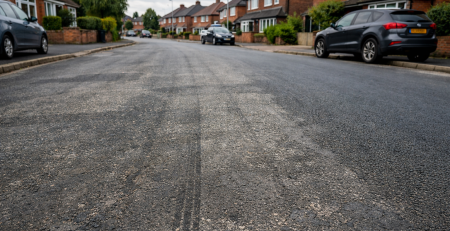
Ageing tarmac, general wear and minor surface defects can sometimes be dealt with through appropriate preparation and resurfacing. The important question is whether the driveway beneath those defects is still capable of providing adequate support.
A driveway that remains reasonably even, does not show widespread movement and has an established stable base may be a candidate for resurfacing. Any isolated defects can then be considered individually during preparation.
Where tarmac is the appropriate specification, professional tarmac installation and road surfacing services can provide a renewed wearing surface once the existing driveway has been properly assessed and prepared.
Why the Condition of the Base Matters
The finished surface is only one part of a driveway. Beneath it is the construction responsible for supporting vehicles and distributing loads into the ground.
If that supporting structure is unstable, simply covering it with new material does not remove the underlying problem. Movement can eventually transfer through the new surface, causing cracking, depressions or other deterioration.
This is why preparation is so important when resurfacing an existing driveway.
A contractor needs to consider whether existing defects are superficial or evidence of structural movement. Localised surface damage can potentially be repaired before resurfacing, whereas widespread instability may make more substantial reconstruction necessary.
The decision should therefore be based on the condition of the complete driveway rather than the appearance of its upper layer alone.
What Problems Can Prevent Simple Resurfacing?
Certain conditions can make resurfacing over an existing driveway inappropriate.
Significant Movement or Subsidence
Areas that have sunk, moved or become badly distorted can indicate problems beneath the surface. Adding another layer may improve their appearance temporarily, but it does not necessarily address why the movement occurred.
Where instability is concentrated in a particular section, it may be possible to excavate and reconstruct that area rather than digging up the entire driveway. More extensive movement may require a broader reconstruction.
Extensive Surface Failure
A small number of defects does not necessarily require complete excavation. However, widespread cracking and deterioration can suggest that the existing construction has reached the end of its useful service life.
Individual damaged areas can sometimes be addressed using professional pothole and surface repair methods before resurfacing. The suitability of that approach depends on the extent and cause of the deterioration.
Poor Drainage
Water management is another important consideration. A new surface should not simply conceal an existing drainage problem.
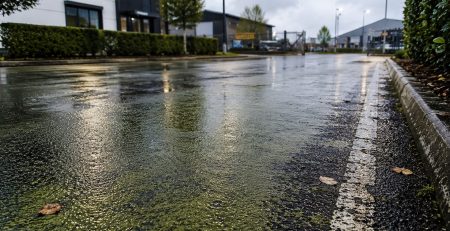
Standing water can indicate unsuitable falls, depressions or inadequate drainage arrangements. These issues need to be considered as part of the resurfacing design so that the completed driveway directs water appropriately rather than allowing it to collect.
Adding material also changes finished surface levels, which can affect how water moves towards buildings, boundaries, drainage channels and surrounding areas.
How Is a Driveway Prepared for Resurfacing?
Successful driveway resurfacing begins with assessment and preparation rather than simply placing new material over the old driveway.
The existing surface needs to provide a suitable platform for the proposed finish. Loose, contaminated or badly deteriorated material may need attention, while damaged sections may require localised removal and repair.
Edges and transitions are particularly important. The finished driveway needs to meet entrances, pavements, drainage features, garages and other fixed levels correctly. Increasing the height of a surface without considering these details can create practical problems.
Preparation therefore depends on the individual property. A driveway that is fundamentally sound may need comparatively limited intervention, while another may require significant remedial work before resurfacing becomes viable.
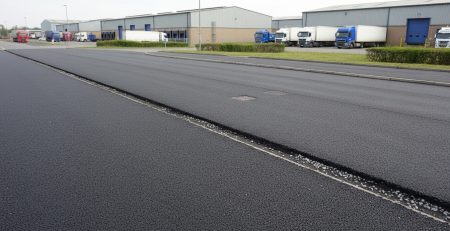
For larger areas where a consistent tarmac finish is required, machine-laid tarmac can provide an efficient and uniform approach where site access and the project specification allow.
Does Resurfacing Cost Less Than Digging Up a Driveway?
Retaining a sound existing base can reduce the amount of excavation, waste removal and replacement material required. As a result, resurfacing can sometimes be more economical than complete reconstruction.
However, cost should not be the only factor determining the method.
Choosing resurfacing purely because it requires less initial work can become a false economy if the existing construction is unsuitable. If substantial movement or base failure is already present, defects may return through the new surface and further repairs could then be required.
A sensible quotation should therefore reflect the actual condition of the driveway and the preparation needed to achieve a durable result.
Can Only Part of a Driveway Be Dug Up?
Yes. The choice is not necessarily between resurfacing everything untouched and excavating the entire driveway.
Where defects are localised, individual sections may be removed and reconstructed while stable areas remain in place. The repaired sections can then form part of the prepared surface before the final resurfacing work is completed.
This approach can be particularly useful where damage has occurred around a weak section, edge or isolated area rather than across the complete driveway.
The critical issue is identifying the reason for the failure. Repairing a depression without addressing the unstable material beneath it, for example, may allow the same problem to develop again.
What About Resurfacing With Resin?
The proposed final surface also affects the preparation required. A homeowner considering a resin driveway should not assume that resin can simply be installed over any old driveway.
The existing construction needs to be suitable for the intended surfacing system. Stability, condition, drainage and preparation all remain important considerations.
This reinforces a broader principle that applies to driveway resurfacing generally: the existing surface should be treated as part of the construction, not merely something that needs to be hidden.
How Long Should a Resurfaced Driveway Last?
There is no meaningful single lifespan that applies to every resurfaced driveway because performance depends on the existing base, preparation, materials, installation, drainage and level of use.
A correctly assessed and prepared driveway provides a much better foundation for long-term performance than one that has simply received a cosmetic covering.
Vehicle movements also matter. A domestic driveway used by ordinary cars experiences different loading from an access area regularly used by heavy commercial vehicles. The surfacing specification should reflect the expected use rather than relying on one standard approach for every property.
Regular observation after installation can also help identify developing problems early. Drainage should remain clear, standing water should be investigated and localised damage should be addressed before it develops into a larger defect.
When Is Full Driveway Replacement the Better Option?
There are situations where digging up the existing driveway is the more appropriate solution.
If the underlying construction is extensively unstable, if substantial areas have failed, or if existing levels and drainage cannot be corrected through reasonable preparation, rebuilding can provide a more reliable foundation for the new surface.
Full reconstruction also gives contractors greater control over the driveway’s construction from the ground upwards. This can be valuable when an existing driveway was poorly installed or when its underlying materials are unsuitable for current requirements.
The additional excavation involved should therefore not automatically be regarded as unnecessary expense. Where the base has genuinely failed, removing defective material can be an essential part of achieving a durable result.
How Do You Know Which Approach Your Driveway Needs?
Visual appearance provides useful clues, but it cannot always establish what is happening beneath the surface.
Cracks, depressions, loose material, standing water and uneven sections all deserve attention, but their significance depends on what caused them. A professional site assessment can determine whether defects are confined to the surface or indicate deeper construction problems.
This assessment should also consider existing levels, edges, drainage arrangements, access requirements and how the driveway is used. These factors influence both the preparation and the appropriate surfacing specification.
Examples of completed surfacing work can also help property owners understand how different site conditions are approached, and relevant surfacing case studies provide useful context when considering a project.
Is Driveway Resurfacing Without Full Excavation a Good Idea?
Driveway resurfacing without digging everything up can be an effective solution when the existing construction is sound enough to retain. It can avoid unnecessary excavation while providing a renewed, practical surface.
The key qualification is that the decision should follow an assessment of the driveway rather than being made simply to minimise work.
A stable base with manageable surface defects may only require appropriate preparation and resurfacing. Localised structural problems may justify excavation of individual sections. Widespread base failure, serious movement or unsuitable levels may make complete reconstruction the more dependable choice.
For property owners, the most useful question is therefore not simply whether a driveway can be resurfaced without digging it up. It is whether the existing driveway provides the right foundation for the proposed new surface.
A professional assessment from an experienced surfacing contractor can establish what can reasonably be retained and what needs remedial work, allowing the resurfacing specification to be based on the actual condition of the driveway rather than its appearance alone.