Can Driveway Be Damp When Applying Sealer?
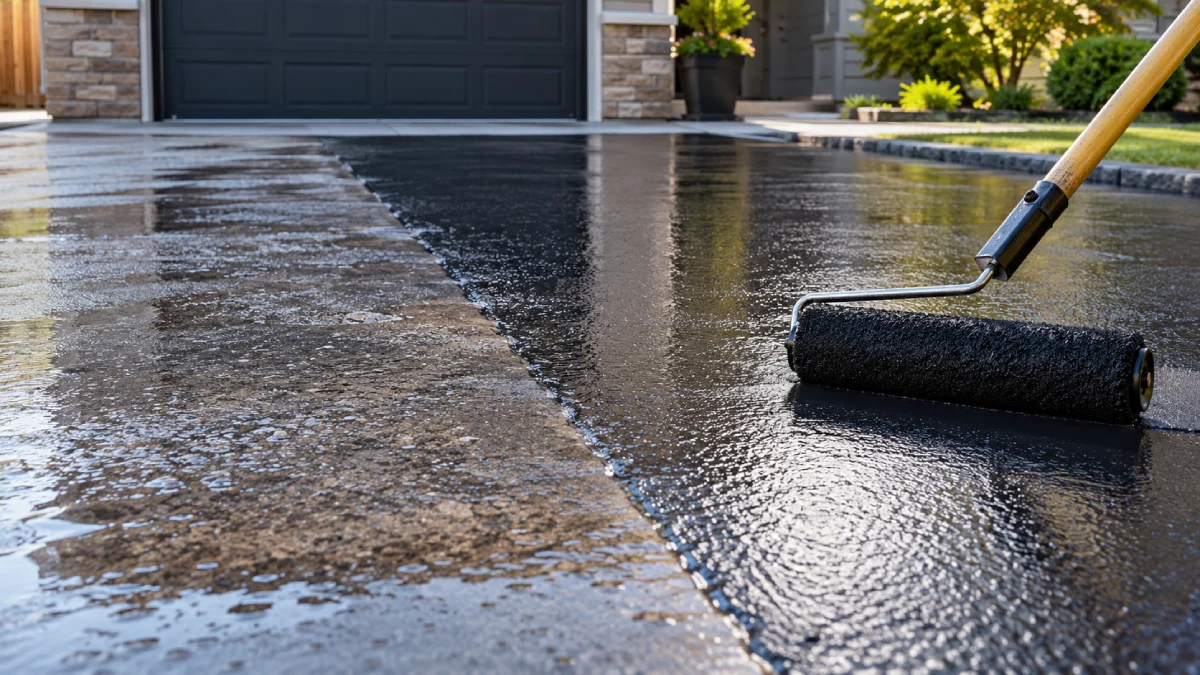
Can Driveway Be Damp When Applying Sealer? Generally, most conventional driveway sealers should be applied to a clean, dry surface. However, certain specialist coatings permit controlled surface dampness under specific conditions. Applying an unsuitable sealer to damp concrete, tarmac, or block paving can interfere with adhesion, cause cloudy patches, and affect the finished coating. The correct answer depends on the surface material, product formulation, and manufacturer’s instructions.
A driveway may look dry after rainfall while moisture remains inside cracks, pores, and paving joints. Applying sealer too soon can create uneven coverage or premature coating failure. Even water-based products may require completely dry conditions. Homeowners should also distinguish surface moisture before application from rainfall that arrives during curing.
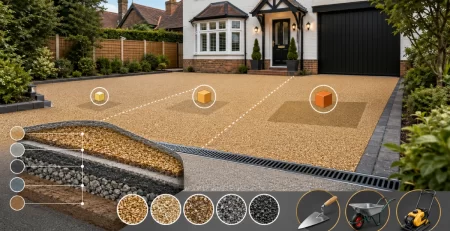
Total Surfacing Solutions works with homeowners and commercial clients across Hertfordshire, Bedfordshire, Oxford, Cambridgeshire, and Essex. The company provides resin-bound driveways, tarmac installation, block paving, and related surfacing services. Where damaged coatings reveal deeper driveway problems, the existing surface should be assessed before choosing another protective treatment.
Quick Check: If moisture has damaged an existing driveway coating or exposed surface defects, Total Surfacing Solutions can assess the condition. Our surfacing contractors Hertford can discuss appropriate maintenance, repairs, and resurfacing options.
Can Driveway Be Damp When Applying Sealer? What Happens?
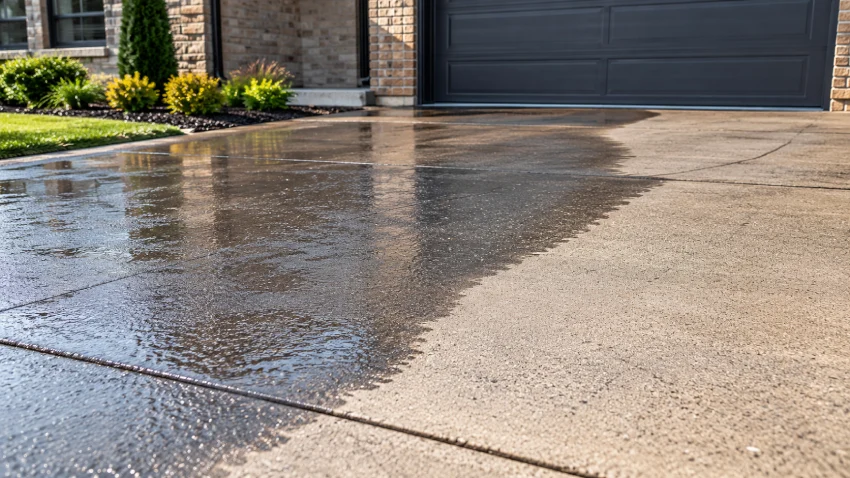
Applying driveway sealer to a damp surface can cause problems when the coating requires dry conditions. Water may prevent adequate contact between the product and the driveway material. The effects depend on the sealer formulation and how much moisture remains.
Some coatings penetrate the pores of concrete or paving. Others form a protective film over the surface. Trapped moisture can interfere with these processes and leave an uneven finish.
| Surface Condition | Possible Problem | Recommended Action |
| Slightly damp driveway | Reduced adhesion with incompatible products | Check the manufacturer’s instructions |
| Standing surface water | Coating dilution or uneven coverage | Remove water and postpone unsuitable applications |
| Moisture inside cracks | Trapped water beneath treatment | Inspect and prepare damaged areas |
| Recently pressure-washed surface | Moisture remains in porous materials | Allow the specified drying conditions |
| Rain during curing | Streaking or washed coating | Inspect after the surface dries |
| Dry and suitably prepared surface | Better conditions for compatible sealers | Follow the application instructions |
The key distinction is between acceptable surface dampness and moisture that exceeds the product’s stated limits.
Why Dampness Affects Driveway Sealer Adhesion?
Adhesion describes how firmly the applied coating bonds to the driveway surface. Water can interfere with that bond when the product requires a dry substrate.
Moisture may also affect how the coating spreads, penetrates, and develops its intended finish. Different formulations respond differently, so a single rule cannot cover every driveway product.
Water-Based Driveway Sealers
Water-based sealers contain ingredients carried in water. During drying, the coating develops its intended protective properties as the formulation changes.
However, water-based does not automatically mean suitable for a wet driveway.
Some water-based acrylic coatings need dry concrete or paving. Excess surface moisture can interfere with their application and appearance.
Solvent-Based Driveway Sealers
Solvent-based products may also require completely dry conditions before application.
Moisture beneath these coatings can contribute to poor adhesion or cloudy finishes. Product compatibility with previous coatings also affects the result.
A solvent-based formulation should never be treated as automatically suitable for damp surfaces.
Specialist Moisture-Tolerant Coatings
Some specialist resurfacing products permit controlled moisture or require slight surface dampening in particular conditions.
For example, Watco’s Asphalt & Concrete Resurfacer product guidance discusses damp substrate application. Its current technical guidance specifies dry preparation and limited dampening during hot conditions.
These instructions demonstrate why the exact product documentation matters. Moisture tolerance must not be assumed from a general product category.
For related details, the driveway sealer drying stages explain how drying and curing differ.
How Long Should a Damp Driveway Dry Before Sealing?
There is no universal drying period after rainfall or pressure washing.
A driveway’s drying time depends on temperature, humidity, exposure to sunlight, surface porosity, and retained moisture. Shaded areas can remain damp after more exposed sections appear dry.
The manufacturer’s instructions should determine whether the driveway is ready for coating.
Drying After Rainfall
Rain can leave water inside cracks and joints long after puddles disappear.
Inspect sheltered areas, low spots, and surface defects before applying sealer. Do not assume that a driveway becomes suitable after an arbitrary number of hours.
If rain is expected again soon, check whether the coating can develop sufficient rain resistance.
Drying After Pressure Washing
Pressure washing can leave significant moisture within porous driveway materials.
Concrete pores and paving joints may hold water after the exposed surface begins to dry. A leaf blower can remove visible water but cannot establish complete substrate dryness.
Allow the surface to meet the product’s specified moisture requirements before sealing.
Drying Before Vehicle Access
The time needed before applying sealer differs from the time needed before driving over it.
A coating may appear dry but remain vulnerable to tyre movement or other traffic. Follow the manufacturer’s access restrictions.
The driveway traffic reopening after sealing resource explains this separate curing consideration.
Can Concrete Driveways Be Sealed When Damp?
Concrete driveways can retain moisture beneath their visible surface. This makes the chosen sealer’s moisture requirements particularly important.
Penetrating treatments and film-forming coatings work differently. Some penetrate concrete pores, while others create a protective surface layer.
Applying an incompatible product over moisture can affect adhesion, appearance, or coating performance.
Surface Moisture and Concrete Pores
Concrete contains small pores that may retain water.
A dry-looking surface does not necessarily indicate that deeper areas meet the manufacturer’s requirements. Where specified, appropriate moisture testing can help establish readiness.
No single moisture percentage should be applied universally to every concrete sealer.
Cracks and Existing Surface Damage
Concrete cracks may collect water and interfere with subsequent coating work.
Repair suitability should be assessed before applying a protective layer. The concrete driveway crack repair preparation method provides related information about dealing with damaged sections.
A protective sealer cannot correct substantial structural defects.
Is Tarmac Driveway Sealing Possible on Damp Surfaces?
Tarmac and asphalt-compatible coatings have different moisture requirements depending on their formulation.
Some products require a dry surface. Certain specialist resurfacing materials permit limited dampness under defined conditions.
Rainfall, surface temperature, and curing requirements must still be checked before application.
Damp Tarmac and Coating Compatibility
A tarmac driveway may appear dry while moisture remains in surface cracks or depressions.
The existing coating should also be checked for compatibility with new treatment. Applying additional material over a deteriorated surface may conceal rather than correct damage.
When Tarmac Resurfacing Makes More Sense
A worn driveway with substantial cracking, potholes, or surface deterioration may need resurfacing.
Total Surfacing Solutions provides tarmac sealing in st albans as a supplied target keyword associated with its tarmac service page. The actual service page focuses on tarmac installation and road surfacing.
The tarmac driveway resurfacing assessment criteria provide further information about evaluating an existing surface.
Can Block Paving Be Sealed While Damp?
Block paving can retain moisture in both the paving units and the joints.
The blocks may appear dry while water remains beneath or between them. Sealing under unsuitable conditions can result in uneven treatment or moisture-related defects.
Preparation should address joint condition, cleaning, and the manufacturer’s drying requirements.
Moisture Within Paving Joints
Jointing materials may hold water after rain or washing.
If the sealer requires dry joints, the surface must be allowed to reach that condition. Trapped moisture should not be ignored simply because the exposed blocks look dry.
The block paving joint sealing process provides additional information about treating paved driveways.
Existing Block Paving Damage
Loose blocks, poor drainage, and uneven areas require separate attention.
A sealer cannot correct an unstable paving base. For surfaces requiring installation rather than routine coating, Total Surfacing Solutions provides block paving driveway hertfordshire services.
Can Resin-Bound Driveways Be Sealed When Damp?
Resin-bound driveways differ from conventional concrete and asphalt surfaces.
They contain aggregates held together by a resin binder. A properly designed permeable system allows rainwater to pass through interconnected voids.
Any additional protective coating must be compatible with the existing resin system.
Resin-Bound Surface Moisture
A permeable surface can drain visible water while retaining moisture in sheltered sections.
A general-purpose driveway sealer should not automatically be applied to resin-bound material. Incompatible treatments may change its appearance or drainage characteristics.
The resin-bound protective coating workflow explains related preparation considerations.
Resin Surface Replacement and Repairs
An existing resin-bound surface may require repairs rather than another protective coating.
Where substantial deterioration occurs, Total Surfacing Solutions provides resin coated driveways hertford through its resin driveway services.
The company also provides resin bound surface specialists for suitable surfacing projects.
The existing material should be assessed before selecting any replacement finish.
Cleaning a Damp Driveway Before Sealing
Cleaning is necessary for many sealing projects, but washing introduces additional moisture.
Surface debris, oil, loose material, and previous coatings can affect adhesion. Removing contamination should happen before judging whether the substrate is ready for treatment.
The cleaning method must suit the driveway material.
Cleaning Resin-Bound Surfaces
Resin-bound surfaces require cleaning methods compatible with their aggregate and binder.
Loose debris can collect in the surface texture. The resin driveway cleaning and maintenance steps explain related cleaning practices.
The driveway should reach the moisture condition permitted by any proposed coating.
Cleaning Block Paving
Block paving joints often contain dirt, moss, or loose material.
Cleaning may disturb jointing sand or leave additional moisture in the paving. The paving joint cleaning and maintenance process provides related guidance.
Joint preparation should be completed before applying a compatible sealer.
Driveway Pressure Washing Preparation
Pressure washing can remove contamination but may delay sealing until moisture evaporates.
For larger or heavily soiled areas, Total Surfacing Solutions provides driveway surface jet washing in Hertfordshire.
Homeowners assessing preparation requirements can also review the driveway power washing expense factors.
What Happens if Rain Falls After Applying Sealer?
Unexpected rainfall can damage certain driveway coatings before they develop sufficient water resistance.
The effects depend on the product, application thickness, temperature, and stage of curing. Rain that arrives shortly after application may cause different problems from rain after adequate curing.
Common Signs of Rain-Affected Sealer
Inspect the driveway for:
- White or cloudy patches
- Uneven sheen or surface colour
- Visible coating streaks
- Washed-away material
- Persistent soft or sticky areas
- Peeling or poor adhesion
These symptoms have several possible causes. Moisture is not automatically responsible for every coating defect.
What to Do After Unexpected Rain
Stop applying conventional sealer when rainfall begins.
Avoid brushing or spreading the wet coating in an attempt to correct it. Allow the surface to dry before inspecting the damage.
Consult the product instructions before attempting removal, recoating, or other treatments.
Applying another layer immediately can make an existing coating problem worse.
Best Weather Conditions for Sealing a Driveway
Suitable sealing weather depends on the exact product rather than a universal temperature or season.
The driveway should meet the specified moisture requirements. Air temperature, surface temperature, humidity, and forecast rain should also fall within the manufacturer’s limits.
Temperature and Humidity
Cold surfaces can slow drying or curing for some coatings.
High humidity may also delay evaporation. Conversely, strong heat can cause certain products to dry too rapidly during application.
Follow the acceptable conditions stated in the technical information.
Morning Dew and Shaded Areas
Morning dew can leave moisture on a driveway without recent rainfall.
Sections shaded by fences, buildings, or trees may dry more slowly. Inspect these areas before beginning treatment.
Seasonal Driveway Sealing
Spring, summer, and suitable autumn periods can provide useful sealing opportunities.
However, seasonal timing alone cannot establish acceptable conditions. The UK driveway sealing season requirements explain related weather considerations.
When Driveway Cracks Make Sealing Insufficient?
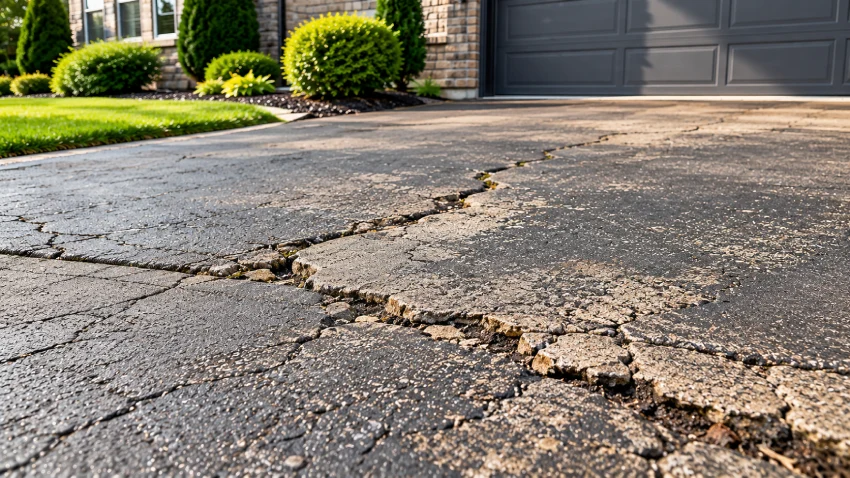
A driveway with widespread cracks or recurring damp patches may need more than sealer.
Water can enter existing fractures and reach underlying layers. Protective coatings cannot correct every structural or drainage problem.
Assess visible deterioration before deciding whether routine treatment is appropriate.
The early driveway cracking progression factors explain why neglected defects may become more difficult to address.
A structurally unsound surface may require repair or resurfacing before further protective treatment.
Can Driveway Be Damp When Applying Sealer? Area Coverage
Driveway sealing across Hertfordshire, Bedfordshire, Oxford, Cambridgeshire, and Essex requires careful moisture assessment. Homeowners should consider recent rainfall, surface materials, drying conditions, and product instructions before applying sealer. Total Surfacing Solutions provides driveway installation and resurfacing alternatives where existing surfaces need more than protective coatings.
Can You Seal a Damp Driveway in Bedfordshire?
Homeowners in Bedfordshire, including Bedford, Luton, and Dunstable, should check surface moisture before applying driveway sealer. Shaded areas and paving joints may retain water after rainfall. Total Surfacing Solutions provides resin-bound driveway installations where existing surfaces need replacement rather than further coating.
Can Driveway Sealer Be Applied to Damp Surfaces in Oxford?
Oxford homeowners should verify whether their chosen sealer permits damp substrate application. Driveways near buildings or shaded landscaping may require additional drying time. Total Surfacing Solutions provides resin-bound driveway installation in Oxford for property owners considering new surfacing.
Can You Apply Driveway Sealer After Rain in Cambridgeshire?
In Cambridgeshire, including Cambridge, Ely, and Huntingdon, driveway sealing should follow manufacturer moisture requirements. Different materials can retain water for varying periods. Total Surfacing Solutions offers resin-bound driveway installations for residential and commercial properties requiring suitable replacement surfaces.
Damp Driveway Sealing and Resin Surfacing in Essex
Essex homeowners in Chelmsford, Harlow, Colchester, and surrounding areas should assess moisture before applying sealer. Where deterioration makes further coating unsuitable, Total Surfacing Solutions provides resin-bound driveway installations with permeable finishes when supported by an appropriately designed base.
Wet Driveway Resurfacing and Sealing Options in Essex
Driveways in Essex affected by failed coatings, standing water, or worn surfacing may need additional work. Resealing cannot correct every drainage or structural defect. Total Surfacing Solutions provides driveway installation and resurfacing alternatives based on surface condition.
Can You Apply Sealer to a Damp Driveway in Hertfordshire?
Homeowners in Hertfordshire, including Hertford, Watford, Stevenage, and St Albans, should verify surface moisture before applying driveway sealer. Total Surfacing Solutions offers resin-bound driveway installation across the county where replacement provides a suitable alternative to repeated coating.
Damp Driveway Repair and Resurfacing in Hertfordshire
Hertfordshire driveways affected by recurring coating failures, cracks, or persistent dampness require careful assessment. Additional sealer may not address underlying damage. Total Surfacing Solutions provides residential and commercial driveway surfacing options where repairs or replacement are appropriate.
Choosing the Right Approach Before Sealing
Most conventional driveway sealers require suitably dry surfaces, but some specialist coatings permit controlled moisture. The manufacturer’s current instructions should determine whether application can proceed.
Inspect the substrate, prepare damaged areas, and confirm suitable weather before applying treatment. Where significant deterioration exists, Total Surfacing Solutions can assess whether maintenance, repair, or new surfacing is appropriate.
FAQs
Can a Driveway Be Slightly Damp Before Sealing?
Yes, but only when the chosen product explicitly permits slight dampness. Many conventional driveway sealers require dry substrates. Standing water should never be assumed acceptable.
The manufacturer may specify different moisture requirements for concrete, asphalt, or paving. Follow those instructions rather than relying solely on surface appearance.
How Long Should a Driveway Dry After Rain?
No universal waiting period applies to every driveway. Drying depends on the material, rainfall, temperature, humidity, and surface exposure.
Check sheltered areas and joints for retained moisture. Use the manufacturer’s required substrate conditions to determine application readiness.
Can Water-Based Sealer Be Applied to Damp Concrete?
Not necessarily. Water-based products can still require a completely dry concrete surface.
Some specialist formulations tolerate limited moisture, but their instructions must explicitly permit it. Never assume that a water-based coating is suitable for wet concrete.
Will Driveway Sealer Peel if Applied to Damp Ground?
Peeling can occur when moisture interferes with adhesion. However, contamination, previous incompatible coatings, and inadequate preparation can create similar problems.
Inspect the substrate and existing coating before identifying the cause. Choose corrective treatment based on the actual defect.
Why Does Driveway Sealer Turn White After Rain?
Certain coatings can develop cloudy or white patches after moisture exposure.
The cause may involve trapped moisture, coating incompatibility, or curing conditions. Allow the surface to dry before assessing the defect.
Avoid applying solvents or another coating without manufacturer guidance.
Can You Seal a Driveway Immediately After Pressure Washing?
Usually, the driveway needs additional drying time after washing.
Water can remain inside concrete pores, paving joints, and cracks. The required waiting period depends on the surface and selected sealer.
Check the moisture requirements before beginning application.
What Happens if It Rains During Sealer Application?
Rain may dilute or disturb certain uncured coatings.
Stop work when weather conditions no longer meet the manufacturer’s requirements. Allow the surface to dry before inspecting for damage.
Do not immediately spread additional sealer over an affected area.
Should You Reseal or Resurface a Damp Driveway?
Resealing may be suitable when the underlying driveway remains sound and compatible with treatment.
Resurfacing may be more appropriate when substantial cracks, settlement, or drainage defects exist. Assess the existing surface before choosing the next step.