Why Do Industrial Yards Need Different Surfacing From Residential Driveways?
At first glance, an industrial yard and a residential driveway perform a similar function. Both provide a hard surface for vehicles and pedestrians, both need to cope with the British climate, and both require suitable preparation before the final surface is installed. In practice, however, the demands placed on these two types of surface are very different.
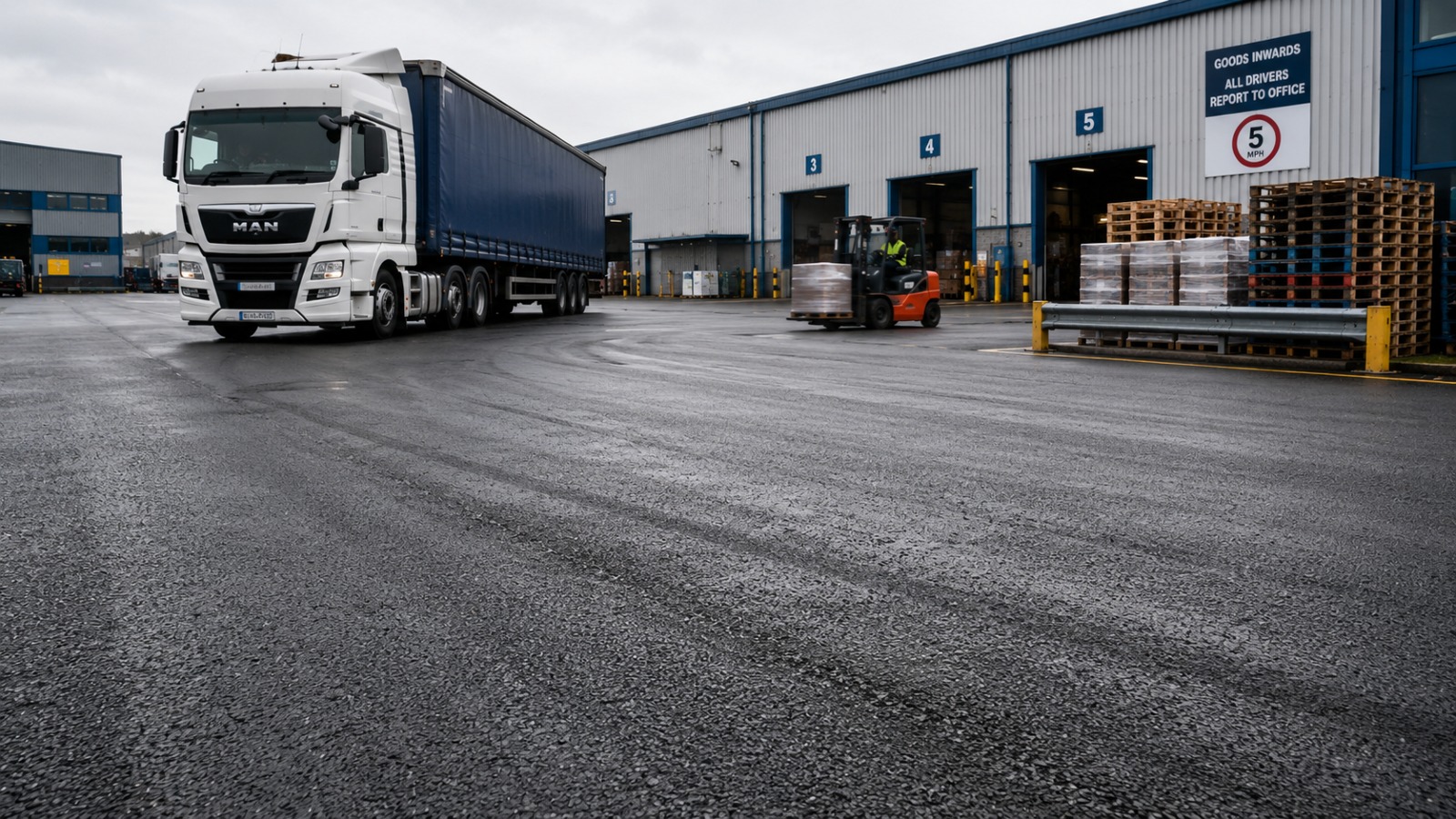
A residential driveway is normally designed around cars, light vans and relatively low levels of daily traffic. An industrial yard may have to accommodate articulated lorries, delivery vehicles, forklifts, loading equipment and other heavy machinery throughout the working day. Vehicles may repeatedly turn, brake, reverse and remain stationary while carrying significant loads.
These differences mean that industrial road surfacing UK projects need to be considered as working infrastructure rather than simply areas of hardstanding. The construction beneath the visible surface, the choice of material, drainage and the way the yard will actually be used all influence how well it performs.
For businesses planning a new yard or upgrading an existing site, working with experienced commercial surfacing contractors helps ensure that these operational requirements are considered before surfacing begins.
Industrial Yards Carry Much Heavier Loads
Vehicle weight is one of the most obvious differences between an industrial yard and a residential driveway. A domestic surface generally experiences comparatively light loads, even where several cars use it every day.
Industrial environments can be considerably more demanding. Heavy goods vehicles place much greater pressure on the pavement structure, particularly when they are fully loaded. Repeated vehicle movements can gradually expose weaknesses in a surface that was not designed for this type of use.
It is also important to consider where loads are concentrated. Industrial vehicles do not always travel smoothly across a yard and leave immediately. They may stop at loading bays, queue at entrances or manoeuvre repeatedly within relatively small areas. These locations can experience much greater stress than other parts of the site.
As a result, the design of industrial surfacing needs to reflect the actual traffic expected on the premises. Simply applying a domestic-style specification across a commercial yard can create avoidable maintenance problems if the underlying construction is unsuitable for the loads involved.
Vehicle Movements Create Additional Surface Stress
The weight of industrial vehicles is only part of the issue. The way those vehicles move across the surface can be equally important.
A residential car typically enters or leaves a driveway with relatively straightforward movements. Industrial yards frequently involve tight turning, repeated braking, reversing and slow manoeuvring. These actions create forces across the surface rather than applying pressure only vertically.
Turning and Manoeuvring Areas
Areas where heavy vehicles turn regularly require particular attention. Tyres can exert substantial stresses on the surface during low-speed steering, especially when vehicles are heavily loaded.
Repeated movements in the same locations can contribute to deformation or deterioration if the pavement construction is inadequate. Junctions within a yard, loading areas and vehicle turning circles therefore need to be considered carefully during planning.
Professional tarmac installation and road surfacing should take account of how the completed area will operate rather than treating every square metre of the site as though it experiences identical conditions.
Braking and Stationary Loads
Industrial vehicles also create additional demands when braking or remaining stationary. Loading bays, gates and access control points are common examples of locations where traffic repeatedly stops.
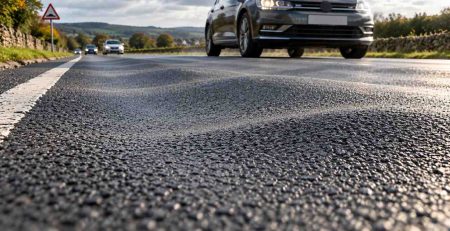
The surface in these areas needs sufficient stability to withstand regular operational pressure. Where the pavement structure is poorly designed or the underlying ground has not been prepared correctly, repeated loading can eventually contribute to depressions, cracking and other forms of deterioration.
The Construction Beneath the Surface Matters
The visible asphalt or tarmac layer is only one part of a durable industrial yard. What sits underneath it can be just as important.
A properly constructed pavement needs a stable foundation capable of distributing vehicle loads into the ground below. If the subgrade is weak, poorly compacted or unsuitable for the proposed traffic, problems can develop even when the finished surface initially appears satisfactory.
Site preparation therefore plays a major role in industrial surfacing. Existing ground conditions need to be considered alongside the expected traffic and intended use of the site. Appropriate excavation, formation preparation and installation of suitable underlying layers can provide the support needed for the finished surface.
This is one reason why industrial surfacing cannot simply be approached as a larger version of a domestic driveway. The area may be bigger, but the more significant difference is the engineering demand placed on the pavement structure.
Industrial Sites Usually Experience More Traffic
A residential driveway may experience only a handful of vehicle movements during a typical day. An active industrial site can experience traffic continuously throughout operating hours.
This difference matters because surfacing performance is influenced by repeated loading as well as individual vehicle weight. A single heavy vehicle movement is very different from hundreds or thousands of movements following similar routes over an extended period.
Entrances and exits can be particularly heavily used. Vehicles may follow almost exactly the same wheel paths every day, concentrating wear into specific sections of the yard.
Industrial road surfacing UK projects therefore need to account for traffic frequency and movement patterns. Understanding where vehicles travel, stop and turn allows the surface construction to be matched more closely to the operational demands of the premises.
For larger areas where consistent installation is required, machine-laid tarmac can provide an effective approach to achieving an even, professionally laid surface across suitable commercial sites.
Drainage Is Critical in Large Industrial Yards
Drainage is important for any external paved surface, but its significance increases as the size of the surfaced area grows. Industrial yards can cover substantial areas, which means rainfall may generate significant volumes of surface water.
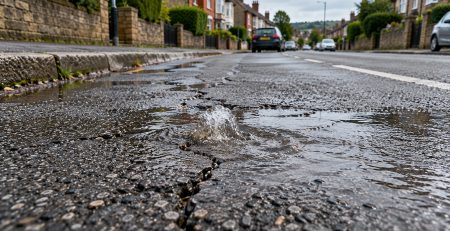
If water cannot leave the yard efficiently, ponding can occur. Standing water can interfere with vehicle and pedestrian movements and may contribute to deterioration over time, particularly if water reaches vulnerable parts of the pavement structure.
The levels and falls of an industrial yard therefore need careful consideration. Water should be directed towards appropriate drainage points rather than being allowed to collect in vehicle routes, loading areas or around buildings.
Drainage also needs to work alongside the surface design from the beginning of the project. Attempting to resolve water problems after a large yard has already been surfaced can be more disruptive than planning suitable falls and drainage arrangements during construction.
Industrial Surfacing Must Support Daily Operations
A residential driveway is primarily about convenient access to a property. An industrial yard forms part of the day-to-day operation of a business.
That difference changes the importance of surface performance. Damage to a domestic driveway may be inconvenient and unattractive, but deterioration in an industrial yard can affect deliveries, vehicle movements, staff access and general site efficiency.
Uneven surfaces and potholes can make vehicle movements less comfortable and create areas where water collects. They may also require drivers to alter their routes around a site, which can become increasingly disruptive in busy operational environments.
Prompt pothole repairs can therefore form an important part of maintaining established industrial yards. Addressing localised deterioration before it spreads can help preserve usable access and reduce the likelihood of damaged areas becoming more extensive.
Surface Consistency and Safety Need Greater Attention
Busy industrial yards are often shared by different types of users. Heavy vehicles may operate alongside vans, cars, forklifts and pedestrians, sometimes within the same general working area.
A consistent surface helps these movements take place more predictably. Significant depressions, broken edges and damaged sections can affect vehicle stability and create avoidable hazards for people moving around the premises.
Surface condition is particularly important around entrances, pedestrian routes, loading areas and frequently used access points. These are locations where different activities often overlap and where defects can have a disproportionate effect on everyday operations.
A professionally designed industrial surface therefore contributes to more than appearance. It supports the practical management of traffic and access throughout the site.
Residential Driveways Have Different Priorities
None of this means that domestic driveways require less care during installation. They simply operate under a different set of conditions.
Residential surfacing often places greater emphasis on appearance, access to the property and integration with surrounding landscaping. Vehicle loads and traffic frequency are usually much lower than those found on commercial and industrial premises.
Specialist domestic surfacing contractors can therefore approach residential work according to the needs of homeowners and private properties rather than applying specifications intended for heavily trafficked commercial environments.
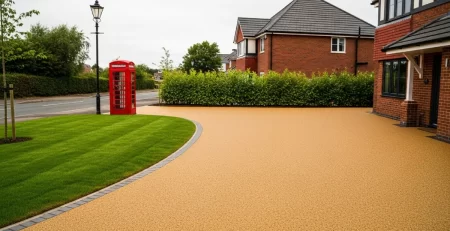
Material choices can also reflect these priorities. For example, resin driveways may be considered where a homeowner wants a particular decorative appearance alongside practical driveway performance.
The key distinction is that the correct surface is determined by its intended use. A solution that performs effectively for cars on a private driveway should not automatically be assumed suitable for an industrial yard carrying significantly heavier and more frequent traffic.
Maintenance Requirements Are Different Too
All external surfacing eventually requires inspection and maintenance. Industrial yards, however, often need closer attention because the consequences of deterioration can be greater and the surface is subjected to more demanding use.
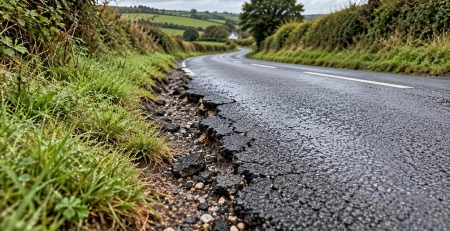
Small cracks, depressions or damaged areas can worsen when repeatedly crossed by heavy vehicles. Water can also enter defects and contribute to further deterioration, particularly through wet and cold conditions.
Regular observation allows site managers to identify changes before they become major operational problems. Particular attention should be given to heavily trafficked routes, loading zones, turning areas, drainage points and transitions between different surfaces.
The objective is not simply to keep the yard looking tidy. Maintenance helps protect the pavement structure and keeps the site functioning as intended.
Why Specification Should Follow Site Use
One of the most important principles in industrial surfacing is that the specification should reflect how the site actually operates.
Two industrial yards of the same size may require different approaches. One might mainly accommodate vans and employee vehicles, while another could receive frequent articulated lorry deliveries and operate heavy plant throughout the day. Their surfacing requirements should not automatically be identical.
Before work begins, consideration should be given to expected vehicle types, traffic volumes, loading areas, turning movements, existing ground conditions and drainage. Understanding these factors provides a much stronger basis for selecting the appropriate construction.
Examples of completed surfacing projects can also help property owners and site managers understand how professional surfacing is applied across different environments.
Building an Industrial Yard for Long-Term Performance
The difference between industrial yard surfacing and residential driveway surfacing ultimately comes down to purpose. Both require competent preparation and installation, but an industrial yard must cope with a considerably more demanding combination of vehicle weight, traffic frequency, manoeuvring and operational use.
A durable industrial surface starts below the finished layer. Stable preparation, an appropriate pavement construction, effective drainage and suitable surfacing all need to work together. The design must also account for the parts of the site that experience the greatest pressure, including entrances, loading zones and turning areas.
Choosing industrial road surfacing UK solutions according to these real operating conditions can help reduce premature deterioration and create a surface capable of supporting the site over the longer term. For commercial property owners and site managers, the priority should be a surfacing specification designed around the demands of the premises rather than simply applying a domestic approach on a larger scale.