Tarmac Breaking Away Around the Kerb Line – Causes & Repairs
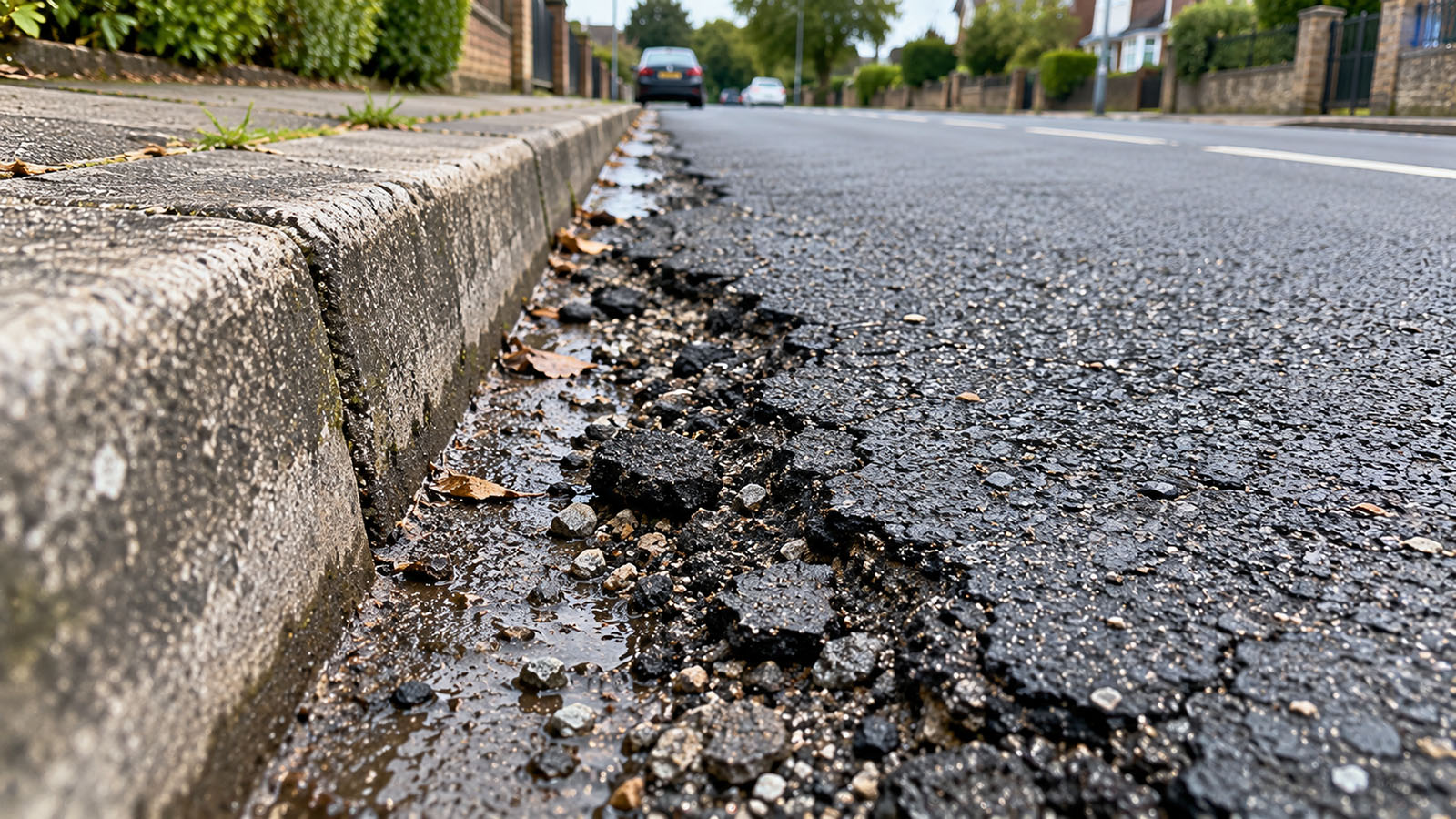
When tarmac starts breaking away around the kerb line, it can quickly change from a small cosmetic defect into a more significant surfacing problem. Kerbs form an important boundary around roads, car parks, access routes and driveways, so deterioration where the tarmac meets the kerb should not simply be ignored.
The edge of a tarmac surface is particularly vulnerable because it is where different materials and construction elements meet. Movement, water penetration, weak compaction and repeated vehicle loading can all contribute to the surface cracking or crumbling along this line.
Understanding why the problem occurs makes it easier to determine whether a local repair is appropriate or whether deterioration points to a wider issue with the surface or its foundations.
Why Does Tarmac Break Away Around Kerbs?
Tarmac relies on adequate preparation, compaction and support to remain stable. Although the main body of a road or car park may perform well, the areas immediately beside kerbs can experience different stresses.
During professional tarmac installation and road surfacing, careful attention needs to be given to these edges. The material must be properly compacted against the kerb while the supporting layers beneath it need to provide sufficient stability.
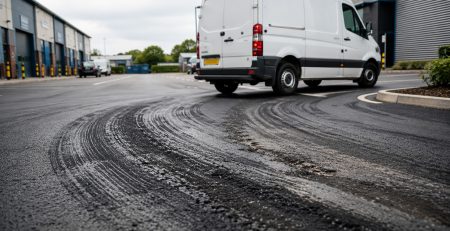
If there is a weakness at this interface, deterioration can gradually become visible. Small cracks may appear first, followed by loose aggregate and increasingly noticeable sections of broken tarmac.
Insufficient Compaction Near the Kerb
Compaction is essential to the performance of a tarmac surface. It creates a dense, stable layer capable of dealing with vehicle movements and changing weather conditions.
Kerb lines can sometimes be more difficult to compact than large open areas because conventional surfacing equipment has less room to operate immediately beside the edge. If the material is not compacted sufficiently, small voids can remain within the surface.
Over time, traffic loading and water can exploit these weaknesses. The tarmac may begin to loosen, eventually resulting in pieces breaking away from the kerb.
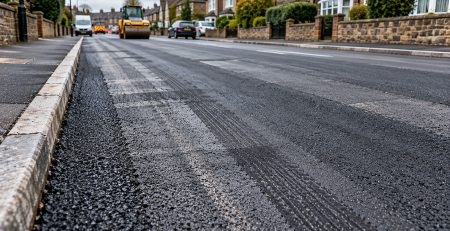
For larger sites, professional machine-laid tarmac can help create a consistent surface across suitable areas, although detailed edge preparation and finishing remain important around kerbs and other boundaries.
Water Penetration Around the Kerb Line
Water is one of the most important factors to consider when investigating damaged tarmac.
Rainwater naturally moves towards low points and drainage channels. Because kerbs frequently form part of the drainage arrangement around roads and car parks, considerable amounts of water can pass alongside them.
If a small opening develops between the kerb and tarmac, water may penetrate beneath the surface rather than flowing towards the intended drainage point.
How Water Makes Existing Damage Worse
Once moisture reaches the underlying construction layers, the support provided to the tarmac can begin to deteriorate. Fine material may move, saturated areas may become less stable and repeated wetting can contribute to progressive weakening.
The visible damage at the surface can therefore be only part of the problem.
Simply filling the top of a damaged area without considering why water has entered may provide only a temporary improvement. A lasting repair should address the condition of the surrounding tarmac, the supporting material underneath and the route water takes across the site.
Poor Edge Support
Tarmac performs best when it is properly contained and supported. Kerbs usually provide a strong physical edge, but the construction around them still needs to be correctly formed.
If the material beneath the tarmac has settled or was inadequately prepared, the surface may flex under loading. Cracking can then develop close to the kerb.
Once the edge begins to fail, deterioration can accelerate because the remaining tarmac has less support.
This is particularly relevant on access roads, commercial yards and car parks where vehicles repeatedly follow similar routes. Professional commercial surfacing contractors should therefore consider vehicle loading, site use, drainage and edge restraint as part of the overall surfacing specification rather than viewing the wearing course in isolation.
Vehicle Loading Close to Kerbs
Vehicle movements can place significant pressure on tarmac edges.
Cars, vans and heavier commercial vehicles do not always travel through the centre of a surfaced area. Drivers may repeatedly pass close to kerbs when entering gateways, negotiating narrow access roads, manoeuvring around car parks or approaching loading areas.
Repeated wheel loading near an inadequately supported edge can eventually cause cracking and deformation.
Heavy vehicles can make the problem more noticeable because greater loads are transferred through the surface. A construction designed for light residential traffic may not perform appropriately if the site’s use changes and larger vehicles begin travelling over it regularly.
Movement Between the Kerb and Tarmac
Kerbs and tarmac are different materials and behave differently under environmental and structural stresses.
Minor movement within the surrounding ground, settlement of the supporting layers or changes in temperature can place stress along the point where the materials meet. A well-constructed surface should be capable of dealing with normal conditions, but existing weaknesses can make this junction more susceptible to failure.
A narrow crack along the kerb may initially appear insignificant. However, once the joint opens sufficiently for water and debris to enter, deterioration can progress.
This is why early inspection is valuable. The extent of visible damage does not always reveal what is happening underneath the surface.
Why Small Areas of Damage Should Be Investigated
A short section of broken tarmac does not automatically mean that an entire road, driveway or car park needs resurfacing.
Localised deterioration can often be repaired when the surrounding construction remains sound. The important issue is establishing the extent and cause of the failure before deciding on the appropriate work.
If damaged material is removed and a stable foundation is found underneath, a properly constructed local repair may restore the affected area. Where deterioration extends deeper into the base, additional material may need to be removed before the new tarmac is installed.
Professional pothole repairs follow a similar principle: repairing only the obvious surface opening without addressing unstable material around or beneath it can reduce the effectiveness of the work.
Signs the Problem May Be More Widespread
Damage immediately beside a kerb should be considered alongside the condition of the surrounding surface.
Cracking extending away from the kerb can indicate that deterioration is no longer confined to the edge. Depressions may suggest movement within the supporting layers, while standing water can indicate that the surface profile or drainage arrangement is contributing to the problem.
Loose aggregate elsewhere on the surface can also be relevant, particularly on older tarmac where general deterioration has already begun.
The overall pattern of damage helps determine whether the kerb-line failure is an isolated defect or one symptom of a surface approaching the point where more extensive repairs are required.
Repairing Tarmac That Has Broken Away From a Kerb
A suitable repair begins with removing loose and failed material.
The repair should extend back to sound tarmac rather than simply covering the visibly damaged edge. This provides a stronger boundary for the replacement material and allows the underlying construction to be inspected.
If the base has deteriorated, it needs to be reinstated and adequately compacted before new surfacing material is placed. The replacement tarmac must then be installed and compacted correctly, with particular attention given to the connection between the repair, existing surface and kerb.
The objective is not merely to improve the appearance. A successful repair needs to restore structural support and reduce the opportunity for water to penetrate the repaired area.
When Resurfacing May Be More Appropriate
Local repairs are useful when deterioration is genuinely confined to a limited area. They become less economical when defects are widespread.
If tarmac is breaking away along substantial sections of kerb while the main surface is also cracked, uneven or deteriorated, repeatedly repairing individual sections may not address the overall condition.
Resurfacing provides an opportunity to deal with a larger area systematically. Depending on the condition of the existing construction, preparation may involve removing defective material, correcting local levels and addressing drainage or foundation problems before the new surface is installed.
The correct approach depends on the site rather than simply the age of the tarmac.
Drainage Should Be Checked Before Repair Work
Where kerb-line deterioration occurs repeatedly, drainage deserves particular attention.
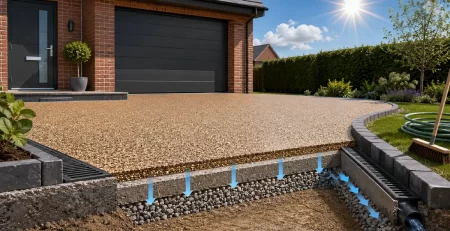
A road or car park should direct water towards appropriate drainage points rather than allowing it to remain against vulnerable edges. Incorrect falls, blocked drainage channels or local depressions can all increase the amount of water reaching damaged sections.
Repairing the tarmac without correcting a persistent drainage issue can allow the same problem to return.
The condition of gullies, channels and adjacent ground should therefore be considered when inspecting the damaged area. This is particularly important on commercial sites where large impermeable surfaces can collect considerable volumes of rainwater.
Preventing Future Kerb-Line Failure
Good construction is the most effective way to reduce the risk of premature deterioration.
The supporting layers need to be suitable for the expected traffic, properly prepared and thoroughly compacted. Kerbs should provide a secure boundary, while the tarmac itself should be installed to the appropriate depth and compacted carefully at the edges.
Drainage also needs to be considered as part of the complete surfacing system.
For property owners and site managers, routine inspections can help identify developing problems before they become disruptive. Small cracks, loose edges and localised settlement are easier to investigate while the affected area remains limited.
Examples of completed surfacing work can also be viewed through Total Surfacing Solutions’ surfacing case studies, which provide useful context for the types of environments where professional preparation and installation are important.
Assessing Tarmac Damage Around Your Kerbs
Tarmac breaking away around a kerb line should be assessed according to its cause, depth and extent rather than appearance alone.
A small isolated defect may require only a targeted repair. Repeated failure, extensive cracking, poor drainage or movement in the surrounding surface may justify more substantial remedial work.
The key is to determine whether the problem is confined to the wearing surface or whether the supporting construction has also deteriorated. Addressing that distinction before carrying out repairs can help avoid repeated failures and unnecessary expenditure.
Where the cause is uncertain, arranging a professional site assessment can provide a clearer understanding of the condition of the surface and the appropriate repair method. Total Surfacing Solutions can be contacted through the contact page to discuss road, access and tarmac surfacing requirements.