How Does Poor Road Surfacing Damage Roads Long Term?
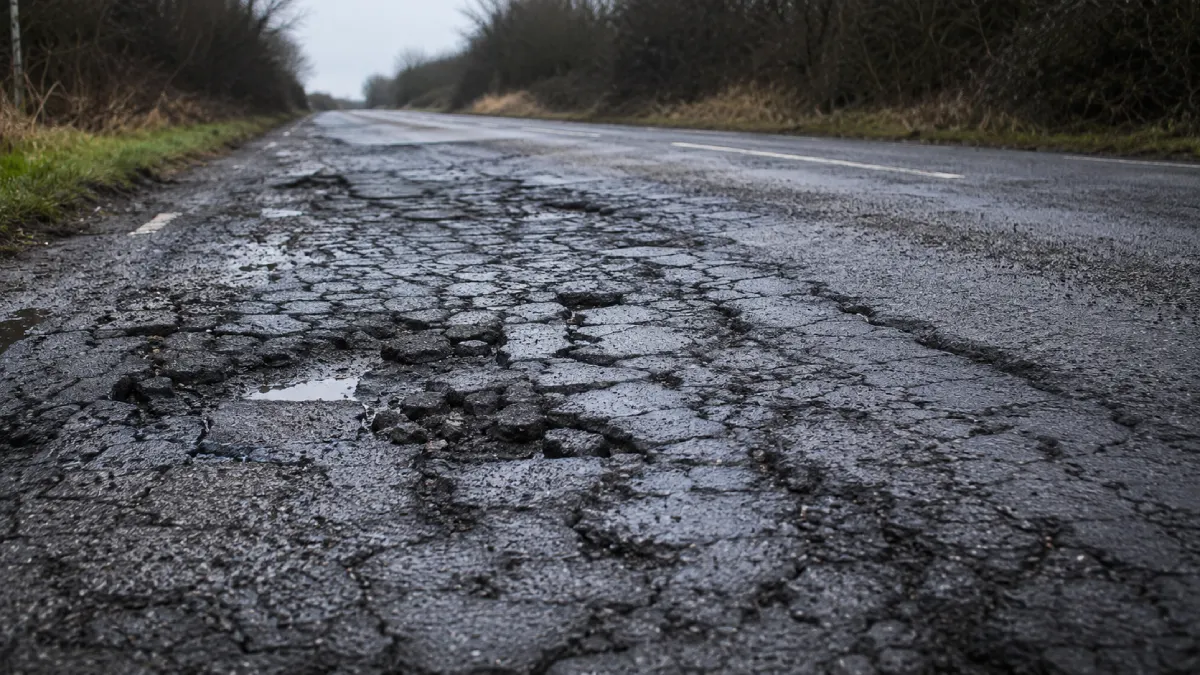
How does poor road surfacing damage roads long term? The damage often starts below what drivers can see. Poor compaction, weak reinstatement, open joints, cracking or bad drainage can let water and repeated traffic loads weaken the layers supporting the road.
A patch may look acceptable at first, yet settlement, fatigue cracking, rutting and potholes can appear later if the original weakness remains. The practical solution is to identify whether a defect is limited to the wearing surface or has already reached the binder, base or subgrade. That distinction determines whether maintenance, resurfacing or deeper reconstruction is required.
Quick Check: Before appointing a contractor, check that commercial road surfacing includes assessment of drainage, existing pavement layers, traffic loading, compaction and the actual depth of deterioration.
How Does Poor Road Surfacing Damage Roads Long Term? Causes
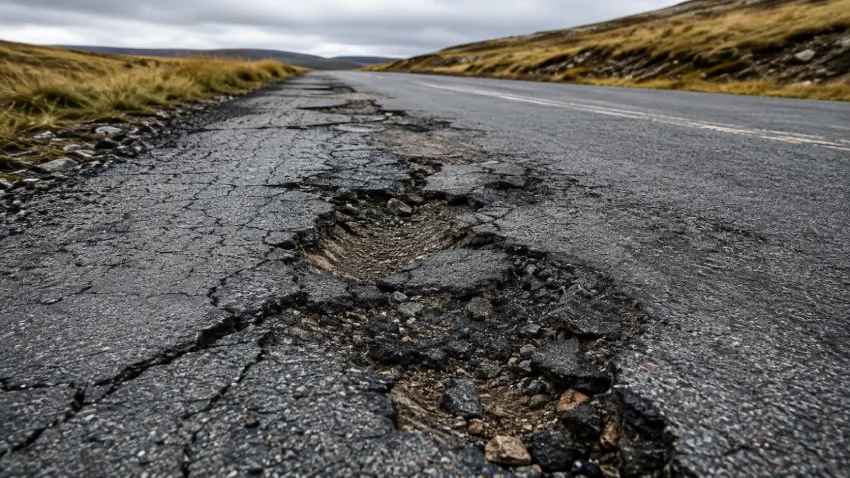
Poor road surfacing damage develops when defects in workmanship, joints, drainage or structural preparation allow movement and moisture into the pavement. Small weaknesses can then expand under traffic until a surface defect becomes a deeper pavement problem.
Poor road surfacing failure sequence
The important point with poor road surfacing is that deterioration normally follows a connected sequence rather than one isolated defect. Understanding that sequence helps explain why simply covering damaged asphalt does not always produce a durable repair.
| Stage | What happens | Likely visible result |
| Weak construction or reinstatement | Layers lack uniform support | Uneven surface or settlement |
| Cracks or weak joints develop | Water gains access | Fine cracking and edge deterioration |
| Base becomes wet or weak | Traffic creates greater movement | Rutting and fatigue cracking |
| Surface material loosens | Aggregate and asphalt break away | Fretting and shallow holes |
| Failure penetrates deeper | Supporting layers lose strength | Recurring potholes |
| Damage is left untreated | Repair depth increases | Resurfacing or reconstruction |
A road can look smooth after completion while still containing weaknesses below the surface. Poor preparation of the base course preparation factors can leave variable support beneath the asphalt, so vehicle loading eventually exposes settlement that was invisible when the work was finished.
The different road construction layer sequence matters because the wearing course is only one part of the pavement. If the supporting layers lose strength, placing another thin surface over them may improve appearance without correcting the movement responsible for the original failure.
Poor road surfacing from weak compaction
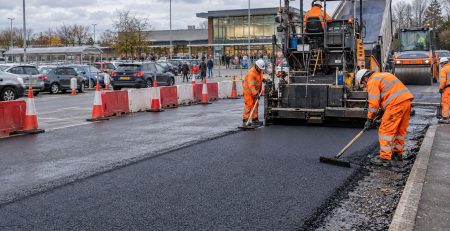
Poor road surfacing frequently begins with inadequate compaction after excavation or reinstatement. Material that has not reached a suitable density can continue settling after traffic returns, which may leave depressions, cracking, ponding or uncomfortable changes in road level.
Proper compaction has to occur through the road structure rather than only at the final surface. The road base and binder layer roles help explain why weak material beneath a good-looking wearing course can still allow the pavement to flex and crack.
Utility reinstatement is particularly sensitive because an existing pavement has been cut open and rebuilt locally. If the backfill, sub-base or asphalt layers do not match the required level and density, the reinstatement can settle differently from the surrounding road and create a permanent weak interface.
Poor road surfacing from weak patching
Poor road surfacing after trenching was one of the strongest complaints in the supplied real-user discussions. Drivers repeatedly described patches that felt like raised bumps, uneven transitions and sections that had been dug up and repaired several times.
Those complaints fit a recognised engineering problem rather than being only a comfort issue. The UK has detailed reinstatement requirements because trench dimensions, materials, compaction and pavement interfaces affect how a repaired section performs after traffic is restored.
Where potholes or failed reinstatements have already formed, pothole repair method differences matter because a shallow temporary treatment and a deeper structural repair are intended for different conditions. A repair should address the actual failed depth rather than merely fill the visible depression.
For local deterioration, hard surface repair in Hertfordshire and surfacing repair in Essex illustrate the type of intervention that should follow inspection of the defect and surrounding pavement rather than automatic surface patching.
Poor road surfacing and water ingress
Poor road surfacing becomes more vulnerable once cracks, joints or damaged edges admit water. Asphalt itself may still appear largely intact while moisture reaches supporting layers and changes the way the pavement responds to repeated vehicle loading.
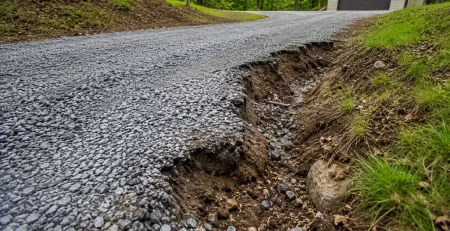
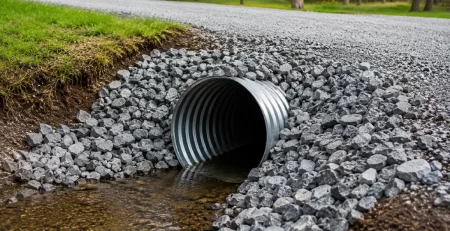
Water is particularly damaging where drainage is already poor. Runoff can enter open cracks, remain within the pavement structure or wash supporting material from edges, which is why surface erosion causes and prevention are closely connected with long-term surface stability.
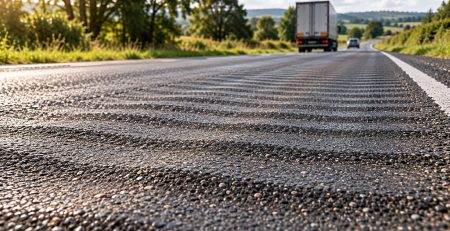
The problem becomes more severe when wet supporting material allows greater pavement deflection. Repeated wheel loads can then widen existing cracks and loosen material until the visible damage develops into fretting, rutting or potholes.
Poor road surfacing under heavy traffic
Poor road surfacing deteriorates faster when the pavement structure is weak and vehicle loading is high. HGVs, buses and repeated commercial traffic place much greater demands on already compromised road layers than occasional light vehicle movements.
The relationship between loading and pavement deterioration is why heavy-use road material durability should be considered when selecting materials and layer thicknesses. A surface intended for repeated heavy loading needs a structure capable of carrying that loading without excessive flexing.
Repeated flexing can lead to asphalt fatigue cracking causes, including interconnected cracking where wheel paths experience repeated stress. Once those cracks provide additional routes for moisture, deterioration can accelerate.
For heavily trafficked tarmac, the high-traffic tarmac performance factors also include compaction consistency, material choice, drainage and construction quality. Loading alone should not be blamed when the underlying pavement was already insufficient for its intended use.
How poor road surfacing damages roads long term? Damage
Poor road surfacing can progress from minor ride-quality problems to cracking, material loss, potholes and structural weakening. The rate of deterioration depends on moisture, traffic, pavement condition, drainage and whether early defects are repaired at the correct depth.
Poor road surfacing turns cracks into potholes
Poor road surfacing often gives warning signs before a pothole appears. Fine cracks, open joints, fretting or small depressions can allow water and traffic to attack the same weakened area repeatedly until pieces of the wearing surface begin to break away.
Once a pothole forms, simply replacing the missing surface material may not address why the hole developed. The pothole repair longevity factors depend partly on whether unstable or water-damaged material beneath the visible defect has been removed.
Repair technique also matters during colder or wetter periods. Winter pothole repair conditions can limit which materials and methods are appropriate, especially where moisture or low pavement temperatures make bonding and compaction more difficult.
The distinction between cold and hot patch differences is therefore useful when judging whether a treatment is intended as an immediate temporary response or a more durable repair under suitable conditions.
Poor road surfacing creates recurring failure
Poor road surfacing becomes expensive when the same location fails repeatedly because the repair never reaches the damaged structural layer. A surface patch can close a hole temporarily while soft base material, drainage failure or movement continues underneath.
This is why repeated patching should trigger a deeper assessment rather than another identical treatment. If cracks repeatedly form around the perimeter of a repair, the surrounding pavement may no longer provide stable support.
Business and industrial access roads face the same problem under frequent traffic. The business park pavement deterioration factors are useful where turning vehicles, deliveries, drainage and localised heavy loading combine with existing pavement defects.
Private developments can have different usage patterns but still require the pavement structure to match actual loading. The private estate road surface requirements become relevant when repeated surface defects suggest that construction depth or drainage may not suit the road’s current use.
Poor road surfacing and weather damage
Poor road surfacing becomes more exposed during prolonged wet weather because existing cracks give water more opportunities to reach vulnerable pavement layers. Cold conditions can worsen wet cracks where water freezes and expands within already damaged areas.
Freeze-thaw should not be blamed for every pothole. Poor road surfacing can fail during milder weather when foundations are weak, drainage is poor or traffic repeatedly flexes a compromised area, so winter is better understood as one possible accelerator.
Weather resistance also depends on construction consistency. The machine-laid tarmac lifespan factors include compaction, drainage, traffic and material performance rather than climate alone.
Where large surfaces require consistent placement, machine and hand laying differences can affect joint quality and compaction consistency. Poor transitions or inconsistent density can create local weak points that become more noticeable as the pavement ages.
For relevant local surfaces, tarmac surfacing in Hertfordshire and tarmac surfacing in Essex should therefore be assessed around expected traffic, drainage and pavement depth rather than the appearance of the final wearing course alone.
Poor road surfacing warning signs
Poor road surfacing normally provides visible clues before complete structural failure occurs. The challenge is identifying whether those signs represent surface ageing that can still be preserved or deeper movement that needs more extensive investigation.
| Warning sign | Possible underlying issue | Why it matters |
| Repeated cracks | Movement or fatigue | Water can penetrate further |
| Sunken patch | Poor compaction or weak support | Settlement may continue |
| Rutting | Repeated deformation | Structure may be overstressed |
| Fretting | Wearing-course material loss | Can progress towards potholing |
| Standing water | Levels or drainage problem | Increases moisture exposure |
| Edge breakup | Poor restraint or erosion | Failure can spread inward |
| Repeated pothole | Deeper weakness remains | Surface-only repair may fail again |
The road surfacing quality factors provide a useful checklist when these warning signs appear. Material selection matters, but correct preparation, compaction, drainage and layer construction are equally important when preventing premature failure.
Errors at the laying stage can also remain hidden until traffic and weather expose them. The machine-laid tarmac mistakes worth watching include weak joints, inconsistent compaction and poor preparation because each can create an early point of deterioration.
How Poor Road Surfacing Damages Roads Long Term? Costs
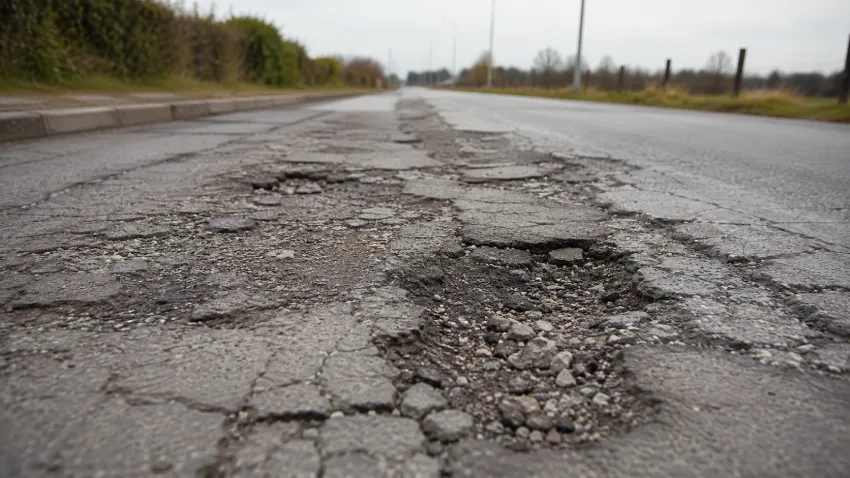
Poor road surfacing affects more than repair budgets. Delayed maintenance can increase treatment depth, while rough surfaces and potholes create vehicle, safety and ride-quality concerns for motorists, cyclists, businesses and road operators.
Poor road surfacing raises repair depth
Poor road surfacing is generally easier to manage while deterioration remains near the surface. Once water, cracking and repeated movement reach deeper supporting layers, the work needed to restore a stable pavement can become substantially more extensive.
Current UK data shows why preventative maintenance receives increasing attention. Department for Transport figures for 2025 indicated that 5% of local A-road length, 7% of B and C roads, and 17% of unclassified roads should have been considered for maintenance.
Industry survey data from ALARM 2026 reported 1.9 million potholes filled across England and Wales and an estimated £18.62 billion carriageway repair backlog. Those figures come from an industry survey and should not be presented as Department for Transport statistics.
The same ALARM research reported average pothole repair figures of £63.11 for planned work and £93.79 for reactive repair, alongside an estimated £149.3 million spent filling potholes. These figures support the value of planned intervention without claiming that every delayed repair follows a fixed cost multiplier.
Poor road surfacing can shorten road life
Poor road surfacing after repeated trenching can have effects beyond the immediate patch. TRL research on utility trenching estimated a median 17% reduction in pavement structural service life under the conditions studied, although that figure should not be applied universally to every excavation.
The important principle is that each road opening creates interfaces that must be reconstructed properly. Weak compaction, poorly formed joints or differential movement can make the reinstated section behave differently from the original surrounding pavement.
That is why repeated digging was such a strong theme in the real-user research. Drivers were not simply complaining about appearance; they were noticing humps, depressions and repeated rough transitions in areas that had undergone successive utility or construction works.
Poor road surfacing damages vehicle comfort
Poor road surfacing can affect vehicles before a road reaches complete structural failure. The strongest supplied user discussion included a highly engaged report of potholes damaging tyres and rims, while other drivers described suspension concerns and sudden jolts from uneven reinstatement.
The pothole vehicle damage risks include wheel and tyre impacts as well as the need for drivers to react suddenly to severe road defects. These concerns become more serious when holes, abrupt level changes or loose material appear on faster roads.
Ride quality is also a useful warning signal. A road that develops a noticeable wave, repeated bumps or abrupt patch transitions may indicate differential settlement or inconsistent reinstatement, especially where the change follows excavation works.
Poor road surfacing affects different road uses
Poor road surfacing requirements change with the road’s intended function. Residential streets, commercial access roads and high-traffic carriageways can experience very different vehicle numbers, axle loads, turning forces and maintenance demands.
The residential and commercial tarmac differences help explain why one pavement specification should not automatically be copied onto another site. Higher traffic loading may require changes to pavement thickness, materials or foundation preparation.
The goal is not simply to make asphalt thicker everywhere. Poor road surfacing damage is reduced when each layer is designed and constructed for the traffic, ground conditions and drainage expected at that location.
Poor road surfacing damage across UK areas
Poor road surfacing damage follows the same structural principles across Bedfordshire, Oxford, Cambridgeshire, Essex and Hertfordshire. Local drainage, ground conditions, traffic and existing pavement condition still determine which construction or surface treatment is appropriate.
Surface lifespan planning in Bedfordshire
Poor road surfacing in Bedfordshire should be assessed for drainage, foundation condition and intended traffic before selecting a replacement finish. Where alternative surfacing is considered, long-term surface performance in Bedfordshire should begin with a stable base rather than using a new finish to hide existing structural movement.
Drainage-led surfacing in Oxford
Poor road surfacing in Oxford can deteriorate faster where existing cracks and low areas allow water to remain around the pavement. When comparing alternative finishes, surface water control in Oxford should be considered alongside preparation and drainage so the replacement surface is not placed over the same unresolved moisture problem.
Pavement durability in Cambridgeshire
Poor road surfacing in Cambridgeshire should be investigated below the visible wearing surface when settlement or recurring cracking is present. For alternative treatments, long-term surfacing performance in Cambridgeshire depends on the supporting base remaining stable enough for the selected surface system.
Surface resilience in Essex
Poor road surfacing in Essex can develop from failed joints, water ingress or repeated loading even where the initial finish appeared satisfactory. Comparing durable surface options in Essex should therefore include the condition of the base and drainage rather than concentrating only on colour or appearance.
Surface condition planning in Hertfordshire
Poor road surfacing in Hertfordshire should be checked for recurring cracks, rutting, edge failure and drainage defects before deciding how much pavement needs replacing. Where a different finish is being considered, long-term surfacing durability in Hertfordshire still depends on correcting structural weaknesses first.
Poor road surfacing damage: the next step
Poor road surfacing should be investigated before a cosmetic repair is specified. Where cracking, rutting or recurring potholes suggest deeper failure, commercial road surfacing should start with the pavement condition, drainage, traffic and failed depth so the proposed treatment addresses the cause rather than only the visible symptom.
Poor road surfacing damage FAQs
Can poor road surfacing damage vehicles before potholes?
Yes. Poor road surfacing can affect vehicle movement before a deep pothole develops because sunken reinstatements, raised patches, rutting and abrupt level changes can create repeated impacts. The supplied real-user research included motorists reporting noticeable suspension jolts and rough transitions after roadworks. A surface does not need to contain a deep open hole before ride quality becomes a genuine concern.
Why can poor road surfacing fail when it looks new?
Poor road surfacing can look new because the wearing course hides the layers beneath it. If the underlying material was poorly compacted, remained wet, contained weak joints or was not suited to expected traffic, movement may only become visible after vehicles and weather have acted on the pavement for some time. A fresh black surface therefore does not prove that the entire road structure is sound.
Does poor road surfacing always fail in winter?
No. Poor road surfacing can fail in any season when the pavement already has weak support, drainage problems, fatigue cracking or inadequate compaction. Cold and freeze-thaw conditions can accelerate damage where water has entered cracks, but warmer-weather traffic can also break up a structurally weak surface. Treating winter as the sole cause can hide the underlying pavement problem.
Why does poor road surfacing feel like speed bumps?
Poor road surfacing can create a speed-bump effect where repaired sections finish above the surrounding road, backfilled material settles unevenly, or different reinstated sections end at different levels. This exact ride-quality problem appeared repeatedly in the supplied Reddit discussion. The final surface needs suitable level control as well as structural compaction so the repair does not become a new obstacle.
Can poor road surfacing follow repeated utility works?
Yes. Poor road surfacing can develop after repeated utility excavations because every trench introduces new joints and reconstructed pavement layers. The supplied research highlighted drivers noticing repeated dig-and-patch cycles, while UK research has also studied the structural effect of trenching. The outcome depends heavily on the quality of each reinstatement rather than excavation automatically causing failure.
Can poor road surfacing cause potholes without frost?
Yes. Poor road surfacing can produce potholes without freezing temperatures where cracks, water ingress, weak foundations, material loss and repeated traffic loading already exist. Frost can worsen a wet damaged pavement, but it is only one possible mechanism. This distinction matters in the UK because repeated pothole formation should prompt investigation of drainage and pavement condition rather than being dismissed as seasonal damage.
How can poor road surfacing be spotted early?
Early poor road surfacing signs can include fine cracking, fretting, local settlement, ponding, open joints, uneven reinstatements and repeated movement along wheel paths. One defect alone does not prove structural failure, but recurring defects in the same area deserve closer inspection. Early identification matters because a structurally sound pavement may still be suitable for preventative treatment before deeper reconstruction becomes necessary.