Can You Repair Block Paving Without Replacing It All?
Block paving is a popular choice for driveways, patios, pathways and commercial entrances across the UK because of its durability, attractive appearance and practical design. One of its greatest advantages over many other surfacing materials is that individual blocks can often be repaired or replaced without disturbing the entire surface. This makes block paving repair a cost-effective solution for many common problems.
Over time, even a professionally installed block paved surface will experience wear from weather, vehicle traffic and natural ground movement. However, damage rarely means that the whole area needs replacing. In many cases, skilled repairs can restore both the appearance and structural integrity of the paving while extending its lifespan for many more years.
Understanding what can be repaired and what requires more extensive work helps property owners make informed decisions and avoid unnecessary costs.
Common Problems That Can Be Repaired
Many issues affecting block paving are localised rather than widespread. Since the paving consists of individual blocks rather than a continuous surface, damaged sections can usually be lifted and repaired independently.
Sunken areas are among the most common issues. These often occur because the original sub-base has settled, drainage has washed away supporting material, or repeated traffic has compressed the ground beneath the paving. Rather than replacing the whole driveway, the affected blocks can be carefully removed, the foundation rebuilt and compacted correctly, and the original blocks reinstalled.
Loose or rocking blocks are another frequent problem. This typically happens when the jointing sand has been lost or movement has developed beneath individual blocks. Re-laying these sections normally restores stability without extensive reconstruction.
Cracked or damaged blocks can also be replaced individually. Matching replacement blocks allow repairs to blend naturally with the surrounding paving, particularly when the original materials remain available.
Weed growth between joints is another issue that many homeowners mistake for structural failure. In reality, weeds usually grow in accumulated debris rather than through the paving itself. Cleaning the joints thoroughly before reapplying kiln-dried sand often resolves the problem effectively.
How Professional Block Paving Repair Is Carried Out
A professional repair begins with a detailed inspection of the affected area. The contractor identifies whether the problem is confined to the surface or whether the underlying foundation has also been compromised.
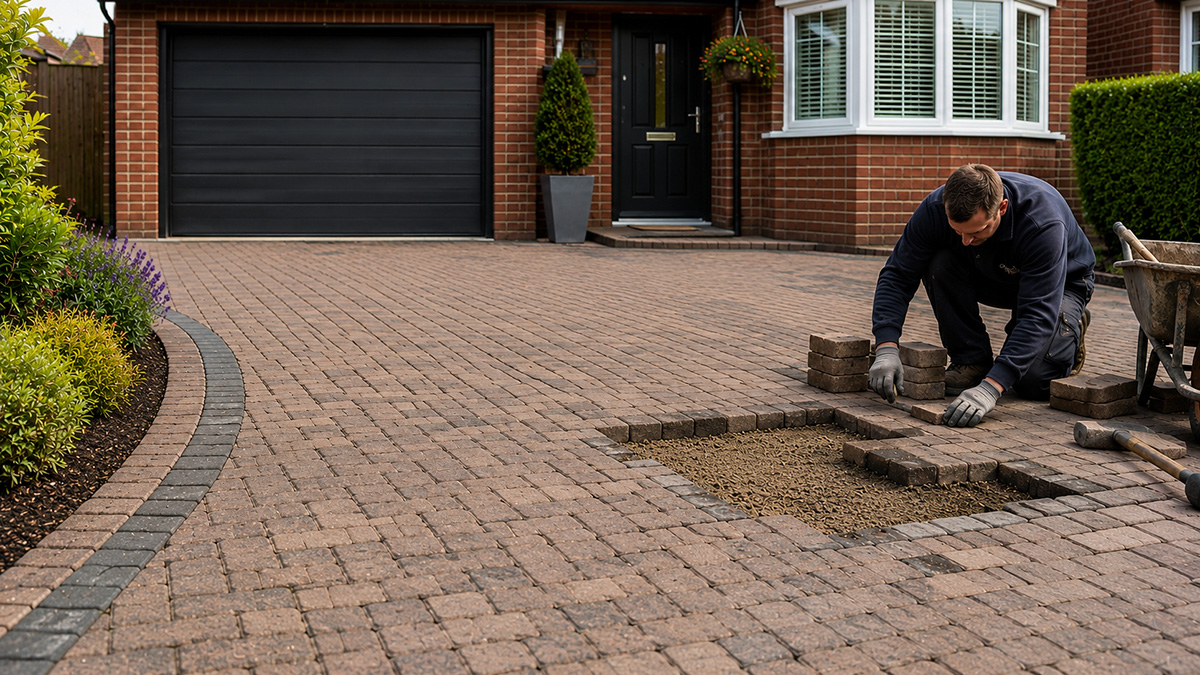
The damaged blocks are carefully lifted using specialist tools to prevent unnecessary breakage. Because block paving is designed as an interlocking system, surrounding blocks can usually remain undisturbed during the process.
If the sub-base has settled or deteriorated, the existing material is removed and replaced with properly compacted aggregate. This stage is crucial because simply replacing the blocks without correcting the underlying cause would only result in the problem returning.
Once the foundation has been rebuilt, the original blocks are reinstated wherever possible. Replacement blocks are used only when individual units are beyond repair. Fresh kiln-dried jointing sand is brushed into the joints before the entire repaired section is compacted to create a firm, level finish.
The result is a repaired surface that blends naturally with the existing paving while restoring its strength and stability.
When Local Repairs Are the Best Option
Block paving repair is often the most sensible solution when the damage is limited to specific areas rather than affecting the entire installation.
Driveways with isolated depressions, small sections of movement or minor damage can usually be restored quickly without major disruption. This approach minimises costs while preserving the majority of the existing surface.
Repairs are also ideal following utility works. If underground services have been accessed beneath a block paved driveway, the lifted area can normally be reinstated using the original paving once the excavation has been completed.
Many commercial properties also benefit from localised repairs, allowing high-traffic areas to remain operational while only the damaged sections are restored.
For property owners considering wider improvements to external surfacing, professional domestic surfacing contractors can assess whether targeted repairs or more extensive works would provide the best long-term value.
TS.Solutions Internal Links.pdf
Situations Where Full Replacement May Be Necessary
Although block paving repair is highly effective in many situations, there are occasions where complete replacement becomes the better investment.
If widespread settlement affects large sections of the driveway, repeated repairs may become less economical than rebuilding the surface properly. Extensive sub-base failure often indicates deeper construction issues that cannot be resolved through isolated repairs alone.
Similarly, if the original installation was carried out without adequate foundations or drainage, ongoing movement may continue despite repeated maintenance.
Very old block paving may also present challenges if replacement blocks are no longer available or if significant wear has altered the appearance of the existing paving to the point where repairs become visually obvious.
A professional assessment will determine whether repairs remain practical or whether replacement offers greater long-term reliability.
The Importance of Addressing Drainage Problems
Water is one of the biggest causes of block paving deterioration. Poor drainage allows water to penetrate beneath the paving, weakening the sub-base and leading to settlement over time.
During block paving repair, experienced contractors always investigate whether drainage issues have contributed to the damage. Correcting drainage at the same time prevents future movement and protects the repaired area.
Simple improvements such as adjusting falls, installing drainage channels or improving water runoff can significantly increase the lifespan of the repaired paving.
Ignoring drainage problems often results in recurring repairs and unnecessary expense.
Can DIY Repairs Be Successful?
Minor maintenance such as replacing jointing sand or removing weeds can often be carried out by homeowners. However, structural repairs involving sunken or uneven paving require specialist equipment and knowledge.
Incorrect lifting techniques may damage surrounding blocks, while poorly compacted foundations often result in recurring settlement within months.
Professional contractors have access to plate compactors, levelling equipment and suitable aggregates that ensure repairs meet the same standards as a new installation.
For valuable driveways or commercial premises, professional repairs generally provide better long-term performance and appearance.
Preventing Future Block Paving Repairs
Routine maintenance plays a significant role in extending the life of block paving.
Regular sweeping prevents debris from accumulating within joints, reducing weed growth and maintaining drainage. Occasional pressure washing, carried out carefully to avoid removing excessive jointing sand, helps keep the surface clean while preserving its appearance.
Reapplying kiln-dried sand after cleaning maintains the interlocking strength of the paving and reduces movement between blocks.
Promptly addressing small areas of settlement before they expand also prevents more extensive repairs becoming necessary.
Where surrounding surfacing works are planned, experienced specialists offering tarmac installation and complementary surfacing services can ensure the entire external area functions effectively together.
TS.Solutions Internal Links.pdf
Conclusion
In many cases, block paving repair offers an effective alternative to complete replacement. Because individual blocks can be lifted, repaired and reinstated, many common problems including sinking, loose blocks, isolated damage and minor settlement can be resolved without rebuilding the entire surface.
The key to a successful repair lies in identifying and correcting the underlying cause rather than simply treating the visible symptoms. Professional repairs restore structural stability, improve appearance and help maximise the lifespan of the original installation.
If your block paved driveway, patio or access road has developed localised problems, a professional assessment can often confirm that targeted repairs are both practical and cost-effective, allowing you to preserve your existing investment while avoiding unnecessary replacement.