Road Surface Rutting Causes And Repair Options
Road Surface Rutting Causes And Repair Options are important when wheel-track depressions stop being cosmetic marks and start affecting drainage, safety, and pavement life. Rutting is usually seen as long depressions where vehicle wheels repeatedly travel. UK road-condition guidance notes that wheel-track ruts can hold water and increase skid risk, especially in icy conditions.
Total Surfacing Solutions helps residential, commercial, and private-road clients identify whether rutting is a surface defect, a construction-layer failure, a drainage issue, or a sign that the road needs deeper reinstatement.
Quick Check: If rutting is forming in wheel paths or water is sitting in surface depressions, ask road surfacing contractors Hertfordshire to inspect the surface before a minor defect becomes a structural repair.
Road Surface Rutting Causes And Repair Options Explained

Road Surface Rutting Causes And Repair Options begin with one question: which layer has moved? Rutting can come from the surface course, binder course, base, sub-base, or the subgrade below the pavement. Pavement engineering references describe rutting as permanent deformation caused by traffic loading, compaction problems, weak support, or poor material behaviour.
Total Surfacing Solutions approaches rutting by inspecting the defect pattern, traffic use, surface cracking, water movement, and surrounding edges. A shallow rut may need planing and resurfacing. A deep rut may need excavation, base correction, binder replacement, and properly compacted reinstatement.
Rutting Cause And Repair Match
| Rutting sign | Likely cause | Practical repair option |
| Smooth wheel-path depression | Surface course movement | Plane and replace wearing course |
| Rutting with cracks | Binder or asphalt layer weakness | Remove failed material and reinstate layers |
| Deep rut with soft movement | Base, sub-base, or subgrade failure | Full-depth repair and foundation correction |
| Rutting after recent works | Poor compaction or layer thickness | Re-lay to correct specification |
| Rutting near drains or low spots | Water weakening the structure | Drainage correction plus surface repair |
| Rutting in loading bays | Repeated heavy traffic | Heavy-duty surfacing specification |
The binder course function overview is useful where rutting may be deeper than the visible wearing course. It explains why the middle pavement layers matter when wheel loads are repeated in the same track.
Surface Rutting In Asphalt And Tarmac
Surface rutting happens when the upper asphalt or tarmac layer deforms under repeated wheel loads. This may happen because of inadequate compaction, unsuitable material choice, excessive heat exposure, repeated braking, or turning stress. It can also develop when heavy vehicles use a surface that was not designed for that load.
For residential driveways, Total Surfacing Solutions checks whether the rut is limited to the wearing surface or linked to sub-base movement. For commercial surfacing, the team considers vehicle type, turning areas, delivery routes, and whether the surface needs machine-laid consistency.
Where the rutting appears beside cracking, the load-related asphalt cracking clues can help separate ordinary wear from structural fatigue. This distinction matters because crack-and-rut combinations often need more than a thin surface repair.
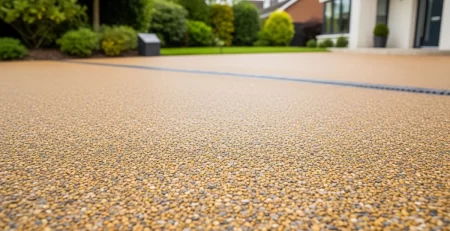
Where domestic finish, permeability, and appearance are important, resin bound surfacing for suitable driveways may be considered after the base has been checked. Resin bound surfacing should never be used simply to hide existing rutting without correcting the cause below.
Structural Rutting Below The Wearing Course
Deeper rutting usually points to a problem beneath the top layer. Pavement references note that permanent deformation can occur in several pavement layers, including the asphalt, base, sub-base, and subgrade. This is why a rut can return quickly when only the surface is patched.
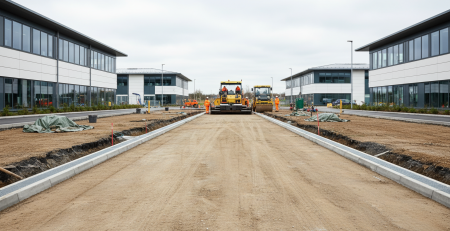
Total Surfacing Solutions inspects whether the rutting is confined to the upper course or whether the pavement has lost support. On estate roads, business parks, commercial yards, and access roads, a repeated wheel path may reveal a base that cannot spread load properly.
The pavement layer sequence guide is a strong next step for understanding how road surfaces are built. The base preparation control points are also relevant where rutting has appeared early after construction.
When rutting affects a private road, shared access lane, or business site, road surfacing for trafficked areas allows Total Surfacing Solutions to specify the repair around the surface’s real load demand.
Water, Drainage And Rutting Failure
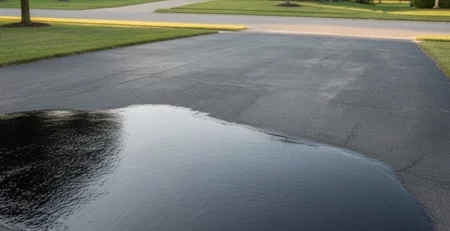
Water is one of the main reasons rutting becomes worse. Ruts hold water. Water enters cracks. Wet lower layers lose strength. In winter, freeze-thaw movement can expand cracks and accelerate surface breakdown. HSE workplace-transport guidance also highlights the need for suitable drainage on driving surfaces and notes that potholes should be repaired promptly.
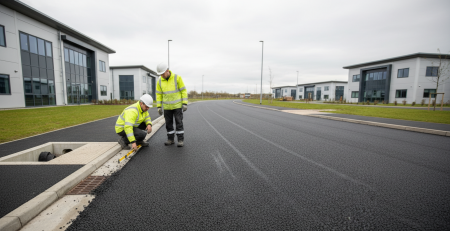
Total Surfacing Solutions checks falls, gullies, channels, low spots, and edge drainage before recommending a rutting repair. If water is not managed, a new surface can begin to deform again because the support beneath remains weak.
The freeze-thaw deterioration sequence is useful for understanding why wet defects spread in colder months. The surface neglect damage pathway also explains how small defects become larger structural problems when water reaches lower layers.
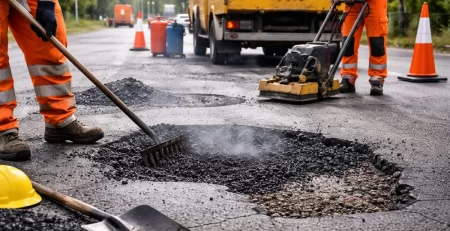
Where rutting has started to break into holes, local pothole repair works may be needed before the damage spreads into the surrounding surface.
Heavy Traffic Rutting On Commercial Sites
Commercial rutting is usually concentrated where vehicles follow predictable paths. Entrances, loading bays, turning circles, car park aisles, delivery routes, and service yards all suffer repeated load in narrow zones. The surface may be strong in general, but repeated loading in the same wheel track can still create permanent deformation.
Total Surfacing Solutions reviews how the site is used before recommending patching, resurfacing, machine-laid tarmac, or full-depth repair. A retail car park, a business park road, and an HGV yard do not need the same specification.
The heavy-load material selection factors help explain why heavier-use areas need more than a standard domestic build-up. The business park maintenance planning process is also relevant for sites that need predictable maintenance rather than repeated emergency repairs.
After rutting repair, traffic-flow line marking can help organise vehicle movement and reduce avoidable stress on repaired areas.
Machine Laid Tarmac For Longer Rut Sections
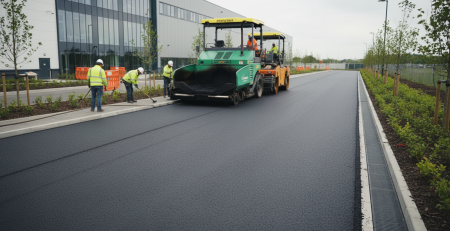
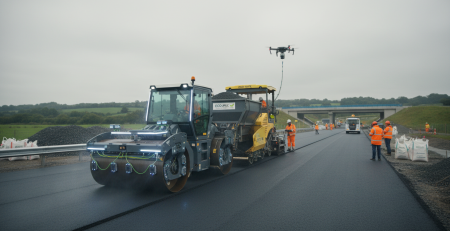
Machine laid tarmac is often suitable where rutting extends across longer lanes, car park aisles, estate roads, or commercial access routes. The advantage is consistency: controlled laying width, depth, level, and compaction across a larger area. This matters because uneven hand repairs can create weak joints and level changes.
Total Surfacing Solutions uses machine lay tarmac for rut-damaged routes where the surface area, site access, and traffic demand justify it. Smaller repairs may still be hand-laid, but larger wheel-track defects usually need a more controlled approach.
The machine laying comparison points explain when machine work is more appropriate than hand-laid tarmac. The machine-laid surface lifespan variables also help clarify why drainage, compaction, traffic, and preparation influence durability.
For larger commercial or private-road projects, tarmac surfacing for reinstatement works may be the most practical repair route where rutting is widespread.
Repair Options For Road Surface Rutting
The right rutting repair depends on the failure depth. A shallow rut in the wearing course may be repaired by planing and resurfacing. A rut caused by weak binder may need partial-depth replacement. A rut caused by base or subgrade movement usually needs full-depth reinstatement. Surface-only repair is not suitable when the lower structure has failed.
Rutting Repair Method Comparison
| Repair method | Suitable for | Not suitable for |
| Surface patching | Small, isolated deformation | Deep or repeated rutting |
| Plane and inlay | Upper-layer rutting | Failed base or subgrade |
| Regulating course | Level correction before resurfacing | Active structural movement |
| Full-depth reinstatement | Failed pavement layers | Cosmetic surface defects only |
| Drainage correction | Water-led rutting | Dry structural overload alone |
| Full resurfacing | Wider lane or car park rutting | Local defects with stable surface |
The resurfacing decision framework helps explain why repair scope should match pavement condition rather than appearance alone. The driveway overlay suitability steps are useful where rutting is on a domestic tarmac driveway.
Where the client wants a surface that is easier to keep presentable, low-maintenance driveway surfacing may be suitable if the structure below is corrected first. Where timing is important, fast driveway installation planning can help organise works efficiently without skipping preparation.
Residential Driveway Rutting
Residential driveway rutting often appears where vehicles repeatedly park, brake, or turn. It may be caused by weak sub-base depth, poor compaction, soft ground, poor edging, or an unsuitable surface for the vehicles using it. In many cases, the surface depression is only the visible part of the failure.
Total Surfacing Solutions assesses the driveway build-up before recommending repair. If the base is sound, resurfacing may be enough. If the surface has moved because the sub-base is weak, the failed area should be lifted and rebuilt.
For properties where paving is preferred, block paving for driveway wheel loads may be appropriate when edge restraint and base preparation are correct. Where the rutting is connected to weak edges, brickwork support for hardstanding edges can help create a more stable boundary.
Where the driveway includes level changes, outdoor step installation for access points can be considered as part of a wider hard landscaping and driveway improvement plan.
Commercial Car Park Rutting
Commercial car park rutting affects safety, drainage, presentation, and traffic flow. Ruts may hold water, obscure markings, create uneven movement for pedestrians, and cause vehicles to track through the same damaged zones. HSE drainage guidance notes that standing water can obscure road markings and increase accident likelihood.
Total Surfacing Solutions considers car park rutting as both a surfacing and site-management problem. Repair may involve resurfacing, deeper reinstatement, improved drainage, and revised markings where traffic movement has contributed to the defect.
The commercial car park surfacing criteria are relevant for businesses managing visitor, staff, and delivery traffic. The car park and road machine-lay rationale also explains why consistent laying matters across larger trafficked spaces.
SUDS Compliant Surfacing And Rutting

SUDS compliant surfacing can help manage surface water in suitable settings, but it does not remove the need for structural support. A permeable surface still needs the right base, edge restraint, drainage route, and material choice. If the existing surface is already rutted, the failure cause should be corrected before any new finish is installed.
For domestic driveways and some light-use areas, resin bound surfacing may support drainage goals when installed over the correct build-up. For heavy commercial roads, loading bays, and trafficked service yards, the specification may need stronger asphalt or tarmac layers with dedicated drainage.
Total Surfacing Solutions helps clients choose between resin bound surfacing, tarmacadam, asphalt surfacing, block paving, and other hard landscaping options based on the site’s actual use. Rutting repair should always consider water movement and loading together.
Road Surface Rutting Area Coverage
Road Surface Rutting Causes And Repair Options vary by site type, traffic use, drainage, and surface construction. Total Surfacing Solutions works across Hertfordshire, Bedfordshire, Oxford, Cambridgeshire, and Essex, helping homeowners, landlords, facilities teams, and commercial operators choose repair methods that match the damaged surface.
Bedfordshire Rutting Repair And Resin Driveway Surfaces
For Bedfordshire homes, rutting on driveways often needs more than a visual surface refresh. Total Surfacing Solutions checks whether the existing base, falls, and edge restraints can support a resin bound finish, so the new surface is not installed over a moving or weakened structure.
Oxford Wheel-Track Rutting And Resin Driveway Planning
In Oxford, Total Surfacing Solutions helps property owners assess whether driveway rutting is caused by surface wear, poor base support, or water movement. Resin bound surfacing may be suitable where the preparation and loading requirements are right, but rutting must be diagnosed first.
Cambridgeshire Driveway Rutting And Permeable Finish Options
For Cambridgeshire properties, rutting repairs should consider how vehicles turn, park, and drain across the driveway. Total Surfacing Solutions can advise whether a resin bound finish is suitable after failed or unstable layers are corrected.
Essex Rutting Checks For Resin Bound Driveways
In Essex, resin bound driveway work should start with the condition of the existing surface and base. Total Surfacing Solutions checks for rutting, cracks, soft areas, and water retention before recommending a new resin bound system.
Essex Driveway Rutting And Surface Replacement
For Essex driveways, rutting can come from repeated parking loads, soft sub-base material, poor edging, or drainage problems. Total Surfacing Solutions reviews the full driveway structure before recommending resurfacing, paving, or reconstruction.
Essex Pothole Repairs Linked To Rutting
In Essex, rutting and potholes often appear together when water enters cracks and weakens the pavement layers. Total Surfacing Solutions repairs potholes by considering the surrounding surface condition, so the visible hole is not treated in isolation.
Essex Machine Lay Tarmac For Rut-Damaged Routes
For larger Essex access roads, car parks, and commercial spaces, machine lay tarmac can help restore rut-damaged areas with consistent levels and compaction. Total Surfacing Solutions uses this method where the site size and defect pattern support it.
Hertfordshire Resin Driveway Rutting Assessment
In Hertfordshire, Total Surfacing Solutions assesses whether rutting on a domestic driveway is suitable for resin bound resurfacing or needs deeper correction first. The focus is on matching the surface finish to the condition of the base and expected vehicle use.
Hertfordshire Driveway Rutting And Hardstanding Repair
For Hertfordshire driveways, rutting often forms where vehicles repeatedly stop, turn, or park. Total Surfacing Solutions checks sub-base strength, drainage, edge restraint, and surface type before recommending a practical repair.
Hertfordshire Pothole Repair Around Rutted Surfaces
In Hertfordshire, potholes near rutted wheel paths can suggest water ingress or deeper weakness. Total Surfacing Solutions inspects the wider surface so pothole repairs are aligned with the rutting cause.
Hertfordshire Machine Lay Tarmac For Surface Deformation
For Hertfordshire roads, commercial car parks, and shared access routes, machine lay tarmac can be suitable where rutting extends over longer wheel paths. Total Surfacing Solutions uses controlled laying and compaction to reinstate a more even trafficked surface.
Preventing Road Surface Rutting Returning
Preventing rutting means controlling load, water, layer strength, and workmanship. The road or driveway must be prepared to the correct depth, compacted properly, drained effectively, and surfaced with a material suitable for its use. A repair that ignores any one of these can fail early.
The quality surfacing specification elements explain the practical details that influence long-term durability. The maintenance cost control principles are useful for commercial and private-road owners who want fewer repeat repairs.
For high-use routes, the high-traffic tarmac preparation workflow is relevant. The machine lay workmanship risk list also helps identify common causes of premature deformation.
Choosing The Right Rutting Repair Approach
Road Surface Rutting Causes And Repair Options should be based on diagnosis, not guesswork. Total Surfacing Solutions works across road surfacing, driveway installation, tarmacadam, asphalt surfacing, resin bound surfacing, block paving, pothole repairs, line marking, brickwork, outdoor steps, hard landscaping, commercial car parks, and residential driveways.
The right repair may be a local patch, a plane-and-inlay, machine laid tarmac, full-depth reinstatement, drainage correction, or a complete surface replacement. The decision depends on the layer that failed, the traffic using the surface, and whether water is contributing to the defect.
If rutting is spreading, holding water, cracking, or returning after previous repairs, contact road surfacing contractors in Hertfordshire for a practical inspection. Total Surfacing Solutions can identify the cause and recommend a repair option that fits the surface, the site, and the way it is used.
FAQs About Road Surface Rutting
What causes road surface rutting in asphalt?
Road surface rutting in asphalt is usually caused by permanent deformation under repeated wheel loads. The failure may be in the upper asphalt course, but it can also come from weak binder, base, sub-base, or subgrade layers. Poor compaction, unsuitable material choice, standing water, and heavy or channelised traffic can all contribute. The correct repair depends on identifying the failed layer before resurfacing begins.
Can road surface rutting be repaired with a patch?
Road surface rutting can sometimes be repaired with a patch when the defect is shallow, isolated, and not caused by deeper structural movement. However, patching is not enough when rutting is widespread, returning after repairs, holding water, or appearing with cracks and potholes. In those cases, the damaged layers may need to be removed and reinstated to restore support.
Why does rutting hold water after rain?
Rutting holds water because the wheel path has dropped below the surrounding surface level. This creates a channel or depression where rainfall cannot drain away properly. Water sitting in ruts can reduce surface safety, hide markings, enter cracks, and weaken the pavement below. Drainage correction may be needed alongside surfacing repair if water is part of the cause.
Is rutting a sign of structural road failure?
Rutting can be a sign of structural road failure, but not always. UK road-condition guidance notes that wheel-track rutting does not necessarily indicate structural damage if cracking is absent, although it is still undesirable because water can collect in the ruts. Deep rutting, cracking, potholes, soft movement, or repeat failure usually suggests a deeper pavement issue.
When should a rutted road be resurfaced?
A rutted road should be considered for resurfacing when the defect is widespread, affecting vehicle movement, holding water, or no longer suitable for local patch repair. If the lower layers are stable, planing and resurfacing may be enough. If the base or subgrade has failed, resurfacing alone may not last and full-depth reinstatement may be required.
Does poor compaction cause rutting?
Poor compaction can cause rutting because the pavement layers continue to compress under traffic after installation. This can create early wheel-path depressions, especially where heavy vehicles use the surface before the layers have adequate density and support. Correct compaction, layer depth, and material selection are essential for reducing the risk of rutting.
Can resin bound surfacing stop rutting?
Resin bound surfacing can be part of a driveway improvement where the base is suitable, but it should not be used to cover existing rutting without investigation. If rutting is caused by weak sub-base, poor compaction, or moving asphalt below, the underlying issue must be repaired first. The surface finish should be chosen after the structural condition is checked.
What is the difference between rutting and potholes?
Rutting is a long depression in the wheel path, while a pothole is a localised hole where surface material has broken away. They often connect because ruts can hold water, and water can enter cracks and weaken the pavement. A rutted surface with potholes usually needs a broader inspection than a simple fill-and-go repair.